
HT: antidismal.blogspot via cafehayek
Celebrating humanity's flourishing through the spread of capitalism and the rule of law
10 Jul 2014 2 Comments
in applied price theory, applied welfare economics, entrepreneurship, industrial organisation, market efficiency, survivor principle, technological progress Tags: entrepreneurship, innovation, Walmart
HT: antidismal.blogspot via cafehayek
06 Jul 2014 Leave a comment
in economics of regulation, environmental economics, health economics, technological progress, Thomas Schelling, transport economics Tags: Thomas Schelling, value of life

Thomas Schelling’s crucial contribution in 1968 at RAND was the notion of statistical lives—mortality risks—in contrast to valuing the lives of specific, identified individuals. His insight was that economists could evade the moral thicket of valuing life and instead focus on people’s willingness to trade-off money for small reductions in the risks they face.
05 Jul 2014 Leave a comment
in applied price theory, applied welfare economics, entrepreneurship, liberalism, technological progress Tags: The Great Enrichment, The Great Fact
from Would You Give Up The Internet For 1 Million Dollars? – YouTube via Luke Froeb.
04 Jul 2014 Leave a comment
in environmental economics, technological progress Tags: London smog, The Great Escape

A London bus conductor is forced to walk ahead of his vehicle to guide it through the smog, 9th December 1952.

In 1952, a choking cloud enveloped much of London and the Home Counties which killed thousands. Barbara Fewster walked 16-mile home – in heels – guiding her fiancé’s car.

the fog persisted until the 1960s when people stop using coal to heat their houses.

the London fogs which were regular from about the 1830s until the early 1960s were part of the good old days before the environment even got worse, if our friends in the environmental movement are to be believed.
via Missed In History: The Great London Smog | Stuff You Missed in History Class.
01 Jul 2014 Leave a comment
in technological progress Tags: product life cycles, technological diffusion

Why, in an era where there is supposed to be greater inequality and real wages are not growing , if our friends on the Left are to be believed, why do consumer technologies get into the hands are just about everybody just so much faster than in the good old days?
HT: slate.com
24 Jun 2014 Leave a comment

I had to go without my Visa card because it was swallowed by the ATM. It had been cloned. It took five days to replace
Talk about going back to the mid-20th century. I had to remember to carry cash, how much cash I would need each day, how much would I need for emergencies.

I had to remember how much I spent day to day and then budget for this and that. I never had thought about that much before. Carrying cash and remembering how to budget your wallet every day is a skill that I lost 20 years when I got my credit card.
This is was in my home town. Imagine the horrors if you were abroad and having to travel without a credit card.
Last time I had to do that was in Japan in 1993. Credit cards are not widely accepted in Japan. Cash is king. There were a few international ATMs in Japan at that time, maybe three in all of Tokyo.
22 Jun 2014 Leave a comment
in applied price theory, applied welfare economics, economics, economics of regulation, technological progress Tags: drug lags, health and safety
22 Jun 2014 Leave a comment
in personnel economics, technological progress Tags: research ethics
 I attended a course on ethics in field research once. It really was about how to get cover for using people as playthings in research.
At no time do they mention that people were gracious enough to give up their time to participate in your research and you should respect that. It was simply taken for granted that the subjects of the research were something that was to be used by the researcher.
The best example of this is the new fashion in economics and elsewhere of correspondence studies or audit studies.
Correspondence studies or audit studies are where you send thousands of dummy job applications out to job vacancies to see what happens in terms of how varying the race, the sex or other characteristics of otherwise identical dummy applicant influences the call-back rate to applicants.
 If the dummy application gets a call back, the researcher just says that the application has been withdrawn. The researcher never tells the employer who phoned that the application was a dummy and part of field research approved by an ethics board and that they were wasting that employer’s time when they made the dummy application.
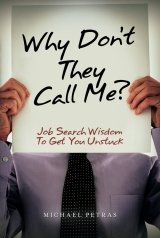 At no time, does the researcher express any regret that perhaps the employer might have called the dummy applicant in preference to a genuine applicant who was since moved on because they were not contacted in time. Time is money in the private sector and many small businesses operate on thin margins.
 These researchers were wasting peoples’ time.The rudeness of that was never discussed.
20 Jun 2014 Leave a comment
in economics of media and culture, entrepreneurship, technological progress Tags: creative destruction
04 Jun 2014 Leave a comment
in technological progress Tags: The Great Enrichment, The Great Fact
02 Jun 2014 Leave a comment
in applied price theory, technological progress Tags: technology diffusion, technology usage by age
Seniors use Tablets and Kindles as often as do teenagers. Seniors use what is useful to them. Their lower usage rates of other gadgets has little to do with been old fuddy-duddies and more to do with having more interesting things to do with their time.


via priceonomics.com
02 Jun 2014 1 Comment
in applied welfare economics, politics - USA, technological progress Tags: poverty, The Great Fact
In 1960-61, according to the BLS Consumer Expenditure Survey, the bottom one-fourth of American homes spent about 12 per cent more than their pre-tax reported incomes each year.
By 2011, according to that same survey, those in the lowest quintile were spending nearly 125 per cent more than their reported pre-tax incomes and nearly 120 per cent more than their reported post-tax, post-transfer incomes.
By 2011, average per capita housing space for people in poverty was higher than the U.S. average for 1980, and crowding (more than one person per room) was less common for the 2011 poor than for the non-poor in 1970.
More than three-quarters of the 2011 poor had access to one or more motor vehicles, whereas nearly three-fifths were without an auto in 1972-73.
Refrigerators, dishwashers, washers and dryers, and many other appliances were more common in officially impoverished homes in 2011 than in the typical American home of 1980 or earlier.
Microwaves were virtually universal in poor homes in 2011, and DVD players, personal computers, and home Internet access are now typical in their amenities of the poor that not even the richest U.S. households could avail themselves of at the start of the War on Poverty in 1964.
The charts the third of the charts below shows below show that below American households that are poor and that are not poor do not differ greatly in the consumer amenities that they.
Americans counted as poor today are manifestly living longer, are healthier, better nourished (or over-nourished), and more schooled than their predecessors half a century ago.
Celebrating humanity's flourishing through the spread of capitalism and the rule of law
Celebrating humanity's flourishing through the spread of capitalism and the rule of law
Celebrating humanity's flourishing through the spread of capitalism and the rule of law
Celebrating humanity's flourishing through the spread of capitalism and the rule of law
Celebrating humanity's flourishing through the spread of capitalism and the rule of law
Celebrating humanity's flourishing through the spread of capitalism and the rule of law
Celebrating humanity's flourishing through the spread of capitalism and the rule of law
A History of the Alt-Right
Econ Prof at George Mason University, Economic Historian, Québécois
Celebrating humanity's flourishing through the spread of capitalism and the rule of law
Scholarly commentary on law, economics, and more
Beatrice Cherrier's blog
Celebrating humanity's flourishing through the spread of capitalism and the rule of law
Celebrating humanity's flourishing through the spread of capitalism and the rule of law
Celebrating humanity's flourishing through the spread of capitalism and the rule of law
Why Evolution is True is a blog written by Jerry Coyne, centered on evolution and biology but also dealing with diverse topics like politics, culture, and cats.
Celebrating humanity's flourishing through the spread of capitalism and the rule of law
A rural perspective with a blue tint by Ele Ludemann
DPF's Kiwiblog - Fomenting Happy Mischief since 2003
Celebrating humanity's flourishing through the spread of capitalism and the rule of law
The world's most viewed site on global warming and climate change
Tim Harding's writings on rationality, informal logic and skepticism
A window into Doc Freiberger's library
Let's examine hard decisions!
Commentary on monetary policy in the spirit of R. G. Hawtrey
Thoughts on public policy and the media
Celebrating humanity's flourishing through the spread of capitalism and the rule of law
Politics and the economy
A blog (primarily) on Canadian and Commonwealth political history and institutions
Reading between the lines, and underneath the hype.
Economics, and such stuff as dreams are made on
"The British constitution has always been puzzling, and always will be." --Queen Elizabeth II
Celebrating humanity's flourishing through the spread of capitalism and the rule of law
Celebrating humanity's flourishing through the spread of capitalism and the rule of law
WORLD WAR II, MUSIC, HISTORY, HOLOCAUST
Undisciplined scholar, recovering academic
Celebrating humanity's flourishing through the spread of capitalism and the rule of law
Res ipsa loquitur - The thing itself speaks
In Hume’s spirit, I will attempt to serve as an ambassador from my world of economics, and help in “finding topics of conversation fit for the entertainment of rational creatures.”
Researching the House of Commons, 1832-1868
Articles and research from the History of Parliament Trust
Reflections on books and art
Posts on the History of Law, Crime, and Justice
Celebrating humanity's flourishing through the spread of capitalism and the rule of law
Exploring the Monarchs of Europe
Cutting edge science you can dice with


Recent Comments