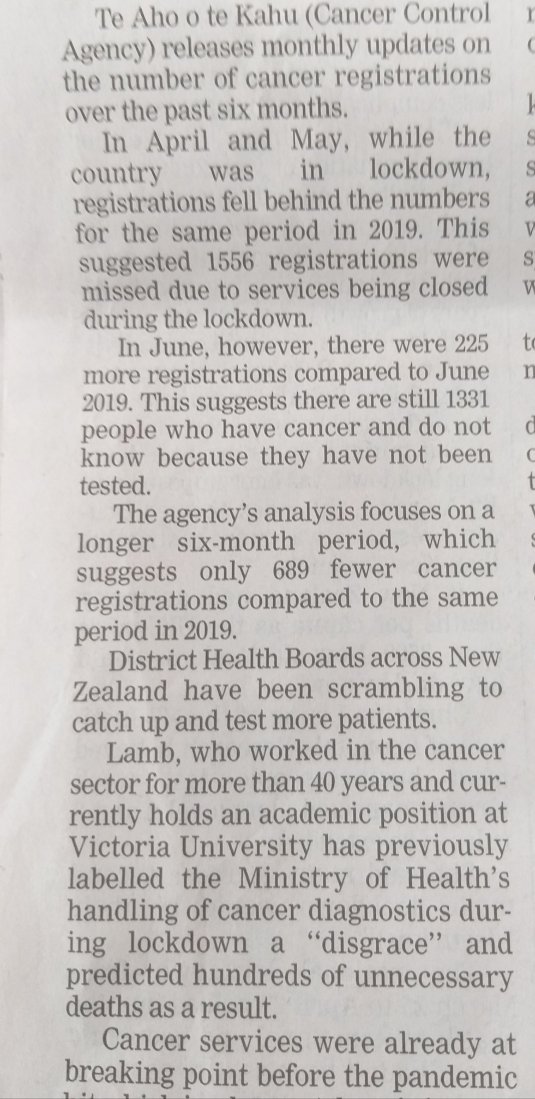
1331 already have cancer but don’t know because of #COVID19 lockdown @JacindaArdern
15 Aug 2020 Leave a comment
in health economics, politics - New Zealand Tags: economics of pandemics, offsetting behaviour, The fatal conceit, unintended consequences
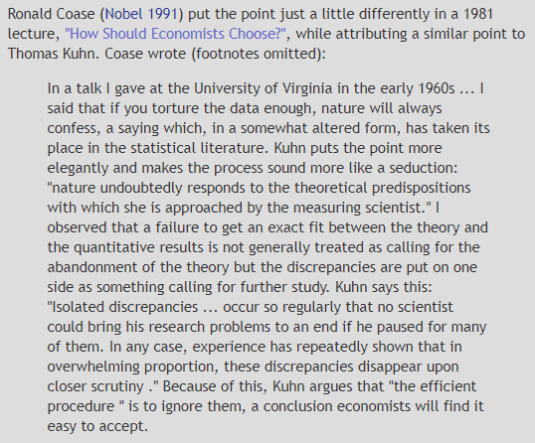
Coase channels Kuhn on Bayesian updating and data mining
15 Aug 2020 Leave a comment
in econometerics, Ronald Coase
Guest Post: Understanding the Life of Francis Drake: by Tony Riches, Author of Drake – Tudor Corsair
15 Aug 2020 Leave a comment

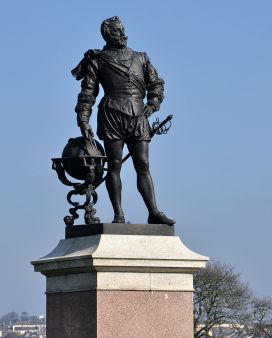 Two things I remember being taught about Francis Drake at school are he was the first British man to sail around the world, and that he nonchalantly played a game of bowls as the Spanish Armada sailed up the British Channel in 1588.
It’s true that Drake recreated the Portuguese explorer Ferdinand Magellan’s circumnavigation – although unlike Magellan, he survived being attacked by hostile islanders, and lived to tell the tale.
As for his game of bowls, there was a bowling green at his manor house, but the story first appeared thirty-seven years after the Armada. From what we know of the tide and weather on that day, Drake’s casual behaviour may well have been justified, but I believe it’s all part of the myth around Drake’s life, which he had good reason to encourage.
I’d been planning an Elizabethan series for some time, as my aim is to tell…
View original post 472 more words
Max Planck Institute For Meteorology Director Not Worried About Climate Tipping Points…Worried About Panic
15 Aug 2020 Leave a comment

In an interview with flagship daily Frankfurter Allgemeine Zeitung (FAZ here), Max-Planck Institute for Meteorology (MPIM) Director Dr. Jochen Marotzke said predicting how many degrees of warming we need to prepare for was like reading tea leaves and that he is not worried about “climate tipping points”.
He also spoke of the wide disagreement among climate models.

Max-Planck Institute for Meteorology (MPIM) Director Dr. Jochen Marotzke told the FAZ he doesn’t worry about climate “tipping points”, but worries about panic. Image: MPIM.
He told the FAZ that the worst case scenarios put out by some models were useful for the purpose of risk assessment, i.e. scenarios that are unlikely but cannot be ruled out. “In the latest generation of models, there are some models that are much more sensitive to greenhouse gases than previous models in terms of their temperature increase,” he said.
Five degrees “very very…
View original post 502 more words
Auckland lockdown is extended – but the Govt’s only press statement is about wage subsidies (and it’s short on detail)
15 Aug 2020 Leave a comment
You would have thought the government had ready to go contingency plans for this but they don’t

Latest from the Beehive
Yes, we all now know Auckland must spend another fortnight at level 3 lockdown while the rest of New Zealand continues under level-2 restrictions.
Until 11:59pm on August 26 Aucklanders are expected to stay home in a bid to stamp out what has been identified as a new strain of Covid-19.
According to the New Zealand Herald:
“Ardern said the alternative to a longer lockdown could have led to a “potential explosion in cases” and would be the worst thing for Auckland and the wider New Zealand economy.
“She also revealed some new information about the Auckland cluster – it was made up of a new strain of Covid-19, not seen in the country’s first wave.
“This means that Covid-19 has not been lying dormant in the community since the last outbreak.
“Ardern said this discovery showed Covid was not a “burning ember in our…
View original post 594 more words
Woke left feminism
15 Aug 2020 Leave a comment
in economics of religion, law and economics, liberalism, libertarianism, politics - Australia, politics - New Zealand, politics - USA Tags: Freedom of religion, political correctness, regressive left, useful idiots

@Greens @BernieSanders @NZGreens @AOC @Greenpeace
15 Aug 2020 Leave a comment
in economics of education, economics of information, economics of media and culture, politics - Australia, politics - New Zealand, politics - USA Tags: cognitive psychology, political psychology

Movie Review: Filipino life can be short and bleak when you’re on the “Watch List”
15 Aug 2020 Leave a comment


Only you know what your tolerance for dark, grim stories that offer little hope for justice in an unjust world, little hope for hope itself, for that matter.
But “Watch List” is a bleak but riveting thriller worth girding yourself for and immersing yourself in. It’s a Filipino thriller directed by American Ben Rekhi (“The Ashram”) about a newly-widowed mother of three, a recovered junkie, caught up in the authoritarian slaughter of President Rodrigo Duterte.
“Extra judicial killings” is one of those phrases, like “ethnic cleansing,” that tidies up a murderous horror. That’s what “Watch List” is about, the rapid descent of a half-compliant culture into off-the-books but state-sanctioned murder and “disappearances.”
A police van empties out in Quezon City’s District 120. It’s part of Operation Tokhang, which news footage shows the Filipino strong man authorizing. They’re rounding up everybody ever caught and convicted of using or selling drugs, giving…
View original post 679 more words
@oxfam @Greenpeace @jeremycorbyn @BernieSanders @SenWarren @Greens @NZGreens @AOC
15 Aug 2020 Leave a comment
Glenn C. Loury on Ethics of Affirmative Action in Higher Education
15 Aug 2020 Leave a comment
in discrimination, economics of education, human capital, income redistribution, labour economics, law and economics, occupational choice, politics - USA, poverty and inequality, Public Choice, rentseeking Tags: affirmative action, racial discrimination, regressive left
#COVID19 #OTD
14 Aug 2020 1 Comment
in health economics, politics - New Zealand Tags: economics of pandemics, The fatal conceit

Pirates and Time Travel
14 Aug 2020 Leave a comment

The ability to slide on the data visualization goggles to filter, pivot, animate, and otherwise magically parse a phenomenon is a real wonder.
This StoryMap walks through the visual analysis of 30 years of nautical piracy through various cross-sections of the calendar. While I am not a marine security expert or global economist/sociologist/explorer, I do make maps for these sorts of people. The story map presents nautical piracy in place and time, which offers up all sorts of questions. Questions I don’t know the answer to; but maps don’t necessarily have to answer questions. Maps prompt new and more specific questions.
Here are a couple extracts from the StoryMap. First, a linear look at the past three decades…
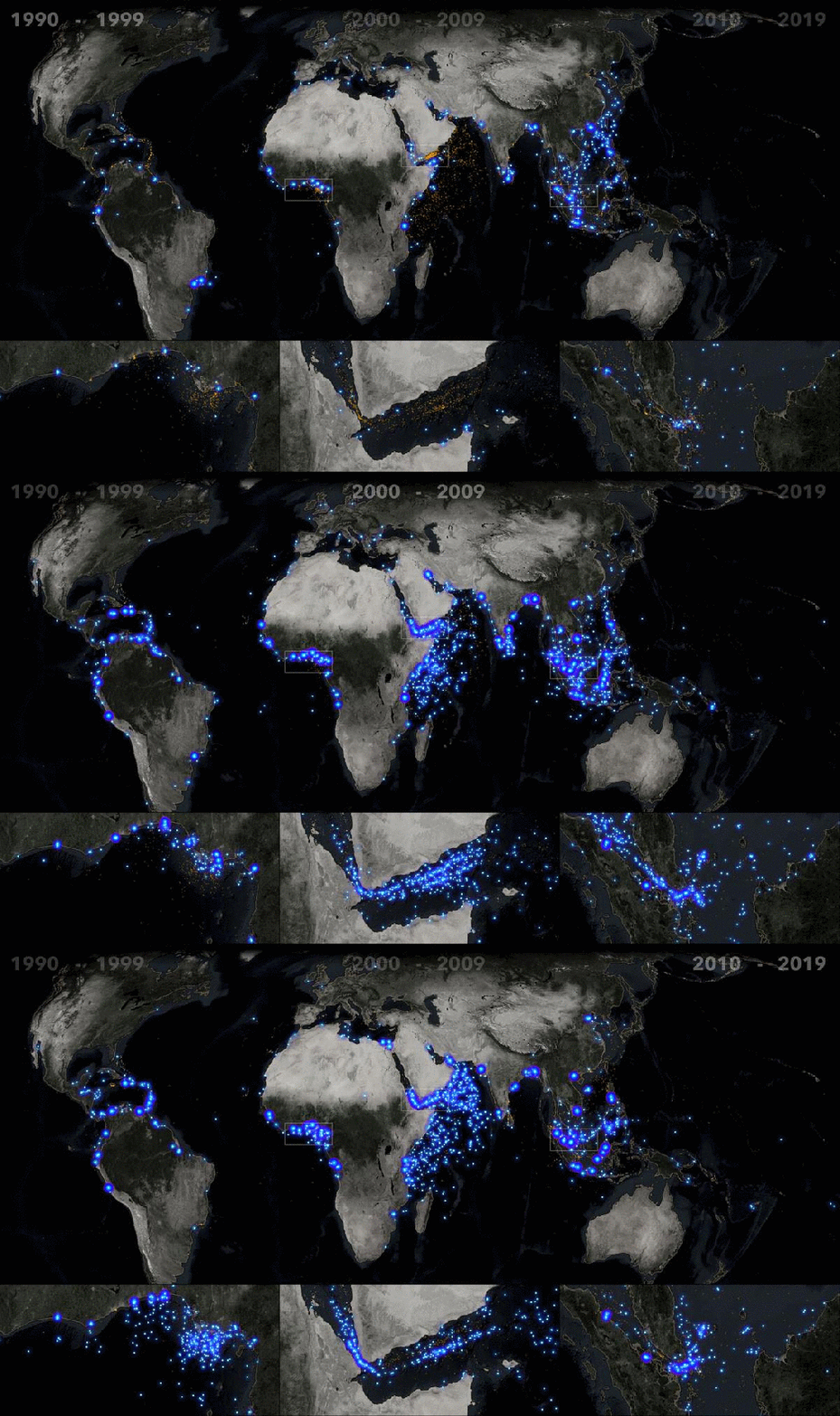
And here is a seasonal cross-section of this era…

I hope you check it out and ask questions of your own. The data is sourced from the National Geospatial Intelligence agency, and…
View original post 29 more words
Claim: cutting speed limits could slow climate change
14 Aug 2020 1 Comment

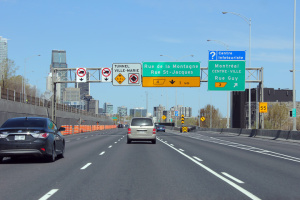
The assertion being of course that human-caused emissions of the trace gas carbon dioxide somehow have a specific effect on the Earth’s climate, which must be countered. But if everyone is forced into electric cars, the speed limit argument becomes obsolete. Lower speed limits also mean more vehicles on the road at any one time, trying to complete their journeys, which in turn could lead to more traffic delays, potentially undermining the whole idea. As usual they conflate pollution and climate arguments to cause confusion.
– – –
Canadian cities from Edmonton to Montreal are lowering speed limits, primarily in an attempt to save lives, says CBC News.
But slowing down may also be an easy way to reduce greenhouse gas emissions and air pollution — not just on urban roadways but also on highways (and even the high seas).
View original post 265 more words


Recent Comments