
Latest addition to my paid harlot collection following in jet-setting @Davidxvx Tong, @GeoffSimmonz @GarethMorgannz – all full-time paid lobbyists – and countless other professional activists
14 Aug 2020 Leave a comment
Woke birders win: McCown’s Longspur renamed because McCown was a Confederate general (though he made contributions to ornithology and repudiated the Confederacy)
14 Aug 2020 Leave a comment

Five days ago I wrote about a campaign by two birders, operating under the name Bird Names for Birds, that had singled out a number of birds whose common names honored people who performed actions seen as odious or unsavory in modern lights. Those included John James Audubon, whose oriole may now be renamed because he did this:
Audubon scoured the battlefield for the remains of Mexican soldiers. He decapitated several bodies and sent the heads to Samuel George Morton, a notorious practitioner of phrenology, a pseudoscience that attempted to use skull dimensions to prove the superiority of White Europeans to other races. For Audubon, this might have been just another way of practicing science — but his actions hardly align with modern values, and his scientific contributions do not excuse him from judgment.
Judging from the numerous comments on my post, readers were unanimously opposed to this renaming. (It appears…
View original post 1,436 more words
What does “statistically significant” mean?
14 Aug 2020 Leave a comment

Lately, social media has been flooded with people sharing studies about various aspects of COVID. This is potentially great. I’m all for people being more engaged with science. Unfortunately, many people lack a good foundation for understanding science, and a common point of confusion is the meaning of “statistically significant.” I’ve written about this at length several times before (e.g., here and here), so for this post, I’m just trying to give a brief overview to hopefully clear up some confusion. In short, “statistically significant” means that there is a low probability that a result as great or greater than the observed result could arise by chance. Statistical tests are designed to show you how likely it is that the sample in a study is representative of the entire population from which the sample was taken. I’ll elaborate on what that means below (don’t worry, I’m not going to…
View original post 1,265 more words
An interview with Noam Chomsky and why he signed the Harper’s letter
14 Aug 2020 1 Comment
I’ve been remiss in following—or even learning about—Noam Chomsky. I’m not much into linguistics, and, truth be told, I couldn’t even recount his big contributions there beyond the concept of Universal Grammar, or how well they’ve stood up over time. I have read several of his political pieces, so I’m aware of his severe criticism of the American government and its actions overseas, and not just under Trump. But in the past few years I haven’t read a word he’s written.
Chomsky is now 91, and when I saw him at a meeting in Puebla, Mexico a few years back, he was frail and needed help walking. But that’s to be expected at his age, and, according to the interview with Anand Giridharadas in The Ink (click on screenshot below), Chomsky is as sharp as ever. According to Wikipedia, he’s now a part-time professor of linguistics at the University…
View original post 909 more words
A Primer on the Laffer Curve
14 Aug 2020 Leave a comment

Last week, I gave a presentation on the Laffer Curve to a seminar organized by the New Economic School in the nation of Georgia.
A major goal was to help students understand that you can’t figure out how changes in tax rates affect tax revenues without also figuring out how changes in tax rates affect taxable income.
As you might expect, I showed the students a visual depiction of the Laffer Curve, explaining that the government won’t collect any revenue if the tax rate is zero (the left point of the horizontal axis), but also pointing out that the government won’t collect any revenue if tax rates are 100 percent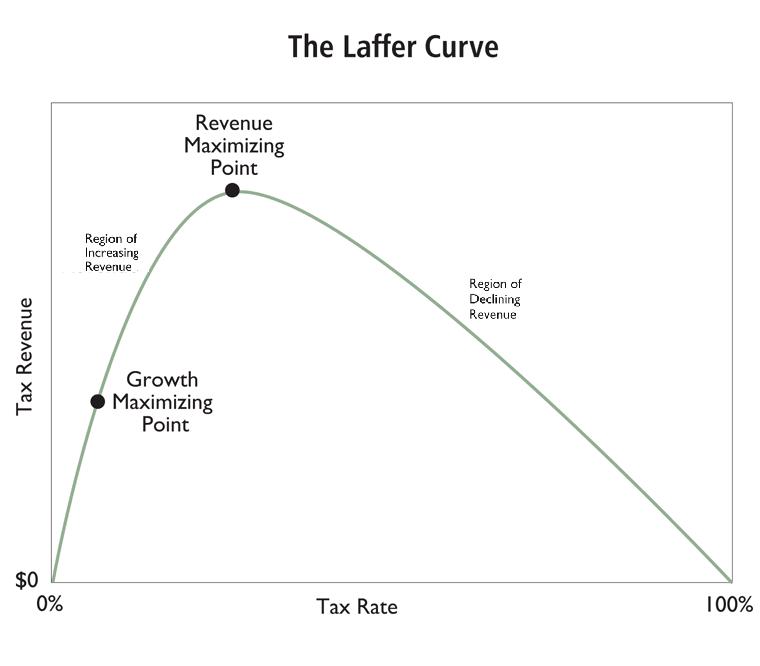 (the right point on the horizontal axis).
The curve between those two points shows how much tax is collected at various tax rates.
The upward-sloping part of the curve shows the “region of increasing revenue” (i.e., where higher tax rates…
View original post 590 more words
National Infrastructure Commission: Renewables could meet two-thirds of UK’s energy demand by 2030
14 Aug 2020 Leave a comment
Study outlines five thermal energy grand challenges for decarbonization
14 Aug 2020 Leave a comment

 Green dreamland
Only five ‘grand’ challenges? Better be quick — we keep hearing there’s supposed to be a climate emergency on. Yes, throw out existing successful energy solutions when there’s nothing of equivalence to replace them with. Then wonder what to do next, while muttering about climate change. Great plan! Or maybe not.
– – –
Solar and wind power are an important part of solving the problem of climate change, but these renewable technologies on their own probably will never provide the energy for many industrial processes, like making steel, reports TechXplore.
Approximately 90 percent of the world’s energy use involves generation or manipulation of heat, including the cooling of buildings and food.
Maintaining modern economies and improving life in developing economies while mitigating climate change will require five major advances in how we convert, store and transmit thermal energy, according to a new paper in Nature Energy…
View original post 332 more words
Evaluating choices
14 Aug 2020 Leave a comment

Back in the last “lockdown” I linked to various pieces of work by other economists attempting to make sense of, evaluate etc, choices the government was making. There was Ian Harrison’s work challenging some of the modelling estimates the Prime Minister liked to wave around and some aspects of the “Level 4” restrictions. There was an early attempt at a cost-benefit analysis by Bryce Wilkinson of the New Zealand Initiative, and another exercise looking at a similar question in a different way by John Gibson at Waikato University. There was another exercise that I never wrote about, but reported and linked to here, by Martin Lally, a consultant economist and former Victoria University academic.
What was striking, even at the time, was that there was no sign that the government had commissioned from officials, or officials had undertaken anyway, any sort of serious cost-benefit analysis of the sorts of…
View original post 1,741 more words
Hitler’s screen idol – Leni Riefenstahl – WW2 Biography Special
14 Aug 2020 Leave a comment
in defence economics, laws of war, movies, war and peace Tags: Nazi Germany, World War II
Thomas Sowell – Wealth Disparity
14 Aug 2020 Leave a comment
in discrimination, economics of education, entrepreneurship, gender, human capital, income redistribution, industrial organisation, labour economics, labour supply, law and economics, occupational choice, occupational regulation, poverty and inequality, property rights, survivor principle, Thomas Sowell, unemployment, welfare reform Tags: child poverty, family poverty, pessimism bias
Tourism and the #COVID19 reallocation shock
14 Aug 2020 Leave a comment
in business cycles, economic growth, international economics, macroeconomics, transport economics, urban economics Tags: economics of pandemics


Recent Comments