
Champ and Freeman on financial intermediation
19 Feb 2020 Leave a comment
in applied price theory, economics of information, industrial organisation, macroeconomics, monetary economics Tags: adverse selection, asymmetric information, monetary policy, moral hazard, rational expectations
The history behind Nicola Sturgeon’s call for a Claim of Right for Scotland
19 Feb 2020 Leave a comment


Nicola Sturgeon has stated her intention to endorse a modern Claim of Right for Scotland, but there has been little discussion about the 1988 Claim that is the precedent for her new proposal. David Torrance describes the Claim’s history, and argues that it has meant different things at different times to various people.
Speaking in Edinburgh last week, First Minister Nicola Sturgeon said she intended to invite Scotland’s ‘elected representatives’ to ‘come together to endorse a modern Claim of Right for Scotland through a new Constitutional Convention’ to:
‘declare that it is for the Scottish Parliament to decide whether and when there should be an independence choice and build support for that principle amongst civic Scotland.’
The First Minister was referring to the 1988/89 Claim of Right, which argued for a Scottish Constitutional Convention. That Claim is much cited but little studied. This blog will look at three different uses…
View original post 2,244 more words
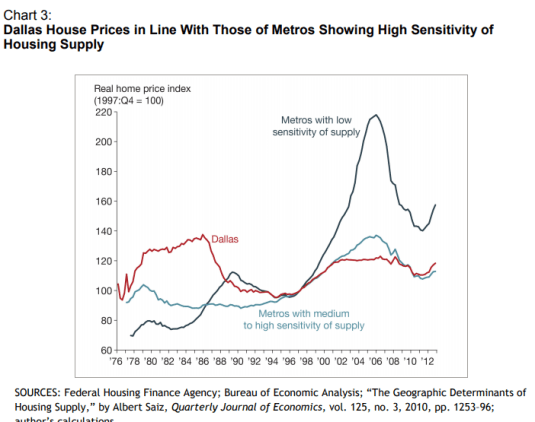
No housing bubbles if land supply is flexible
19 Feb 2020 Leave a comment
in applied price theory, business cycles, comparative institutional analysis, economics of regulation, global financial crisis (GFC), macroeconomics, politics - USA, Public Choice, rentseeking, urban economics
The key contributions of Fisher’s Appreciation and Interest (1896)
19 Feb 2020 Leave a comment
in business cycles, economics of information, history of economic thought, macroeconomics, monetary economics

What is the money illusion?
19 Feb 2020 Leave a comment
in business cycles, economics of information, history of economic thought, macroeconomics, monetary economics

Sir Robert Peel and the modern Conservative party
19 Feb 2020 Leave a comment

Today (5 Feb) marks the birthday of Sir Robert Peel (1788-1850), the 19th century prime minister traditionally credited with founding the modern Conservative party. Peel is also subject of a new BBC ‘Prime Properties’ episode – click here to view – and the latest video from the History of Parliament’s public engagement team.
 Perhaps more than any other Victorian leader, Peel’s career was dominated by themes and events that continue to have striking resonances today. These include implementing controversial constitutional reforms that divided his party, heading a short-lived minority Tory government and winning a landslide Conservative election victory using new electoral techniques. The extent of Peel’s role in rebuilding the Conservative party after its catastrophic election defeat in 1832, however, has always been a moot point. Peel was notoriously aloof and awkward as a leader. A new breed of party officials instead exerted considerable control behind the scenes during…
View original post 940 more words
Thomas Sowell on Intellectuals and Society
19 Feb 2020 Leave a comment
in economics of bureaucracy, economics of education, economics of information, history of economic thought, human capital, income redistribution, law and economics, occupational choice, Public Choice, rentseeking, Thomas Sowell Tags: The fatal conceit
How the management of monetary policy (and other RBNZ activities) are being steeped in Maori mythology
19 Feb 2020 Leave a comment
Whatever happened to the separation of church and state

Acculturation – the cultural modification of an individual, group, or people by adapting to or borrowing traits from another culture or a merging of cultures – is increasingly evident in this country’s public agencies.
The Reserve Bank of New Zealand has not escaped the process. In July 2018, soon after Adrian Orr became the governor, the Otago Daily Times reported the new head of the country’s august central bank was planning to shift the mindset of the institution towards better embracing the rich cultural diversity of the country.
Since he had taken up the post (the ODT reported)
… phrases like tikanga Maori and te reo have begun to feature prominently on its priority list.
And:
Under his watch, the bank’s Statement of Intent, where it sets out its strategic objectives to the Government for the next four years, highlights its intent to embed te reo and tikanga Maori into…
View original post 1,592 more words
“IN Searching For A New Enemy To Unite Us, We Came Up With The Threat Of Global Warming”
19 Feb 2020 Leave a comment

“The common enemy of humanity is man.
In searching for a new enemy to unite us, we came up
with the idea that pollution, the threat of global warming,
water shortages, famine and the like would fit the bill. All these
dangers are caused by human intervention, and it is only through
changed attitudes and behaviour that they can be overcome.
The real enemy then, is humanity itself.“
– Club of Rome,
premier environmental think-tank,
consultants to the United Nations
“Isn’t the only hope for the planet that the
industrialized civilizations collapse?
Isn’t it our responsiblity to bring that about?”
– Maurice Strong,
founder of the UN Environment Programme (UNEP)
•••

ANTHROPOGENIC “climate change”, and the control of carbon dioxide (energy) has deep roots in a radical, yet gravely misguided campaign to reduce the world’s population.
A misanthropic agenda engineered by the environmental movement in the…
View original post 2,734 more words
It’s NOT the settlements, stupid: UN blacklist gets the root of the conflict wrong
19 Feb 2020 1 Comment

 Whilst the Hollywood blacklisting of the mid-20th century claimed some innocent victims,it’s undeniable that the problem of communist infiltration into US society, including the motion picture industry, was a legitimate national security threat. So, if the means used to fight this threat were often flawed, it was certainly based on an entirely accurate diagnosis: That the root cause of the Cold War was Soviet Communism.
The recent release of the UN Human Rights Council’s (UNHRC)blacklist of (mostly Israeli) companies that operate in the Jewish Quarter of Jerusalem and other disputed territories across the 1949 Armistice lines represents a different dynamic: an entirely ahistorical diagnosis of the root cause of the Israeli-Palestinian conflict. The political premise of the blacklist, which represents conventional wisdom at international bodies like the UNHRC, in the mainstream media and, at least until recently, within the US government, is that Israeli ‘settlements’ represent the…
View original post 873 more words
ACLU joins lawsuit allowing biological males to compete in women’s sports
19 Feb 2020 Leave a comment

A few days ago, and previously as well, I discussed the difficult issue of transgender women seeking to compete in women’s sports. The thorny issue of “what do you do with males transitioning to the female gender?” or with those who have completed their transition, is often resolved by many with the simple Diktat: “Transgender women are women.” Well, when it comes to “transgender” women who have undergone no hormonal or medical therapy, but are simply biological men who have declared that they are women, the issue isn’t so simple, at least when it comes to sports.
Of course, as I’ve repeated endlessly, anybody who claims they’re a woman should be respected as such, and not discriminated against in nearly any way. But sports is an exception.
I won’t go into the issue of men who have had hormone therapy and the like, though many times they…
View original post 1,159 more words
A loose hijab spells trouble for an Iranian, even overseas
19 Feb 2020 Leave a comment
Shohreh Bayat is an Iranian chess master and an arbiter, or trainer, for FIDE, the international chess organization. Here’s her FIDE profile, in which she wears the obligatory hijab (click on screenshot to see more information on the profile):

But it’s that hijab, or rather the lack thereof, that got her into trouble, but also shows us that she’s one of those brave Iranian women who fights their government’s sexist laws.
Bayat describes what happened to her in this poignant article in the Washington Post (if you’re paywalled, copies are available via judicious inquiry).


Bayat loved chess but also was losing her faith in Islam. And she didn’t want to wear the hijab, which of course is obligatory in Iran, but is also obligatory for women representing Iran overseas. It wound up putting her at odds with her government’s chess federation. As she writes:
When traveling abroad for chess tournaments…
View original post 550 more words
IPCC baseline scenarios over-project CO2 emissions and economic growth
19 Feb 2020 Leave a comment


Our new paper on IPCC scenarios is now posted as a preprint. Details below and I have summarized it in a new column at Forbes.
Burgess, M. G., Ritchie, J., Shapland, J., & Pielke, R., Jr. (2020, February 18). IPCC baseline scenarios over-project CO2 emissions and economic growth. https://doi.org/10.31235/osf.io/ahsxw SocArXiv
Abstract
Scenarios used by the Intergovernmental Panel on Climate Change (IPCC) are central to climate science and policy. A recent Nature commentary found observed trends and International Energy Agency (IEA) projections of global CO2 emissions substantially diverging from high-emission scenarios such as RCP8.5, which are often treated as equivalent to ‘business as usual’ in climate research and assessment. Here, we quantify the bases for this divergence by comparing “baseline” (or “no policy”) scenario projections of key fossil-fuel CO2 emission drivers to observations from 2005-2017, and also to projections through 2040 from world energy outlooks. We find most of…
View original post 112 more words
Ross McKitrick on WUWT-TV Nov 15th 2012 economics of emissions
19 Feb 2020 Leave a comment
in economics of bureaucracy, energy economics, environmental economics, global warming, income redistribution, Public Choice, public economics, rentseeking Tags: carbon tax, carbon trading
Nobel Symposium Randall Kroszner Lessons from the global financial crisis, and crises past
19 Feb 2020 Leave a comment
in budget deficits, business cycles, economic growth, economic history, economics of information, economics of regulation, Euro crisis, financial economics, global financial crisis (GFC), great depression, great recession, law and economics, macroeconomics, monetary economics, property rights, Public Choice, public economics Tags: sovereign defaults


Recent Comments