IT’S OFFICIAL : South Australia Has The World’s Highest Power Prices!
12 Jan 2020 3 Comments


CONGRATULATION’s Jay Weatherill !
YOUR mad global warming policies and ruinously juvenile obsession with green power have rewarded South Australia with the World’s most expensive power prices, helping to destroy your economy and hurt the poor.
Bravo.
SA has the world’s highest power prices, Carbon and Energy Markets director Bruce Mountain says — so get off the grid
ESCAPING the electricity grid by pairing solar panels and new battery technology is the best way for SA households to escape the world’s most expensive power prices, a top expert says.
Carbon and Energy Markets director Bruce Mountain revealed in June that he was working on a study that found SA was passing Denmark as the most expensive place in the world to keep the lights on.
He has now published the results, which conclude SA’s prices are three times that recorded in the US and about 50 per cent higher than the…
View original post 850 more words
GREEN ENERGY FAIL : “We’ll Burn Coal Till The 2040s” – German Minister
12 Jan 2020 Leave a comment
 German minister: we’ll burn coal till the 2040s
AFTER spending upwards of a trillion Euros of taxpayers money on the disastrous Energiewende program, all but destroying Germany’s industrial heartland and causing widespread energy poverty to consumers and businesses alike, ideologically green-agressive Germany is giving up on its mad rush into unreliable ‘energy’ – wind and solar – undergoing the biggest coal-fired power expansion in her history…
View original post 611 more words
Bat-tered: Government Cancels Approval for Completed Wind Farm to Save Endangered Bat Species
12 Jan 2020 Leave a comment


Following the cancellation of 758 wind projects in Ontario, its government has further delighted locals with the decision to revoke approval for the (almost complete) Nations Rise project, at North Stormont, near Ottawa.
This time the decision announced by Jeff Yurek, Ontario’s Minister of Environment, Conservation and Parks, was not one based purely on the flawed economics of the project, as in the other 758 cases.
This time, the government pulled the plug in order to prevent the inevitable annihilation of Hoary, Big and Little Brown bats; the Little Brown bat is identified as one of Ontario’s ‘Species at Risk’.
We’ll hand over to – an obviously delighted – Sherri Lange.
A GREAT DAY FOR BATS WORLD WIDE
This is a completely brilliant move. The developers can never argue about the efficacy and ESSENTIAL power of saving nature’s quiet little eco warriors, Bats. They are in serious decline world wide.
View original post 1,662 more words
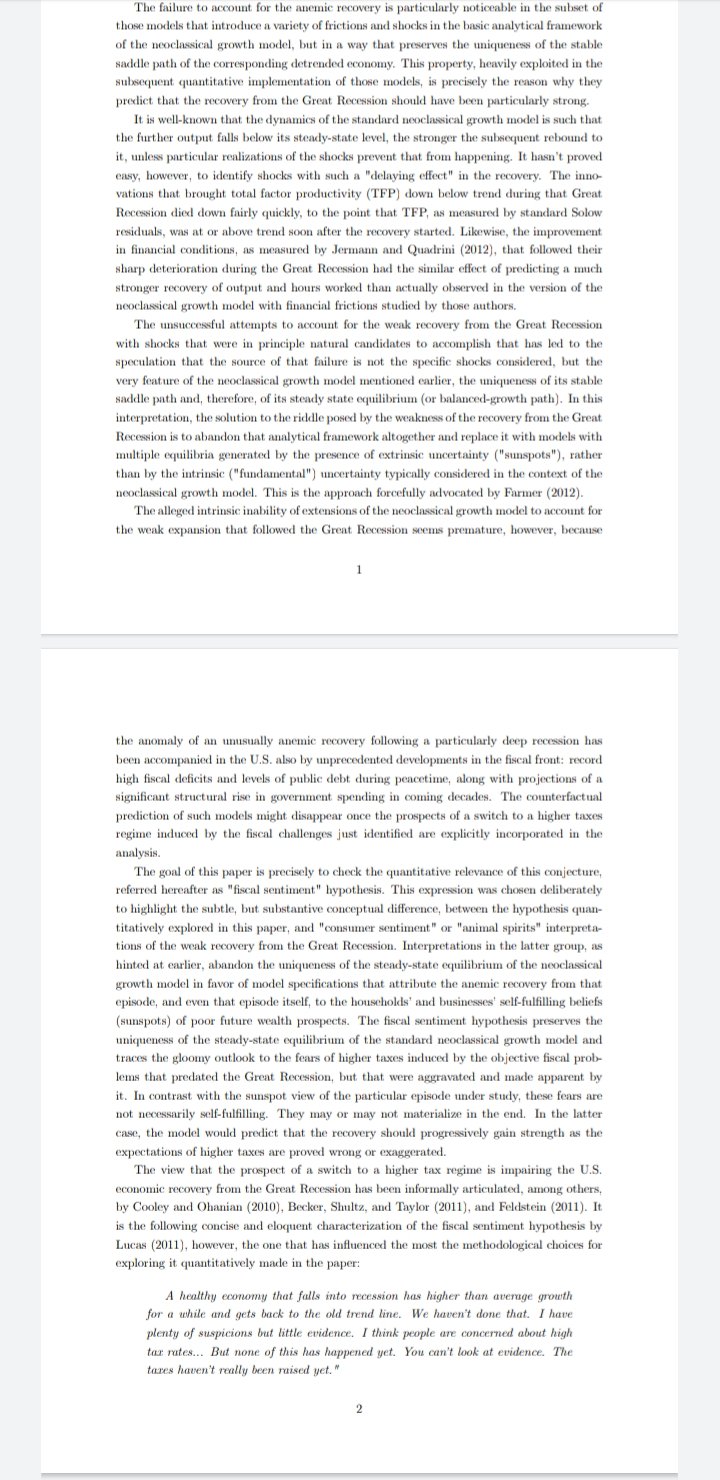
David K. Levine on who predicted the #GFC
12 Jan 2020 Leave a comment
in business cycles, economics of information, financial economics, global financial crisis (GFC), macroeconomics, monetary economics

John Cochrane on what the news shocks theory of the the business cycle can get by without
12 Jan 2020 Leave a comment
in applied price theory, business cycles, development economics, economic growth, energy economics, industrial organisation, labour economics, labour supply, macroeconomics, unemployment Tags: real business cycles

Fighting Far Away From Home – Allied Advance in Africa – WW2 – 072 – January 11 1941
12 Jan 2020 Leave a comment
in defence economics, war and peace Tags: World War II
Bertrand Russell on why the term “agnostic” is for show
12 Jan 2020 Leave a comment

Reader Dom sent me a Bertrand Russell quote from what appears to be a very short essay, “Am I An Atheist Or An Agnostic?” (1947)
As a philosopher, if I were speaking to a purely philosophic audience I should say that I ought to describe myself as an Agnostic, because I do not think that there is a conclusive argument by which one prove that there is not a God. On the other hand, if I am to convey the right impression to the ordinary man in the street I think that I ought to say that I am an Atheist, because, when I say that I cannot prove that there is not a God, I ought to add equally that I cannot prove that there are not the Homeric gods.
None of us would seriously consider the possibility that all the gods of Homer really exist, and yet…
View original post 202 more words
Richard Posner
12 Jan 2020 Leave a comment
in comparative institutional analysis, constitutional political economy, development economics, economics of bureaucracy, economics of crime, economics of education, growth disasters, history of economic thought, income redistribution, industrial organisation, labour economics, law and economics, Marxist economics, occupational choice, property rights, Public Choice, public economics Tags: useful idiots

David Levine on self-confirming equilibriums
12 Jan 2020 Leave a comment
in applied price theory, business cycles, economics of information, global financial crisis (GFC), great recession, labour economics, labour supply, macroeconomics, monetary economics, unemployment Tags: rational expectations
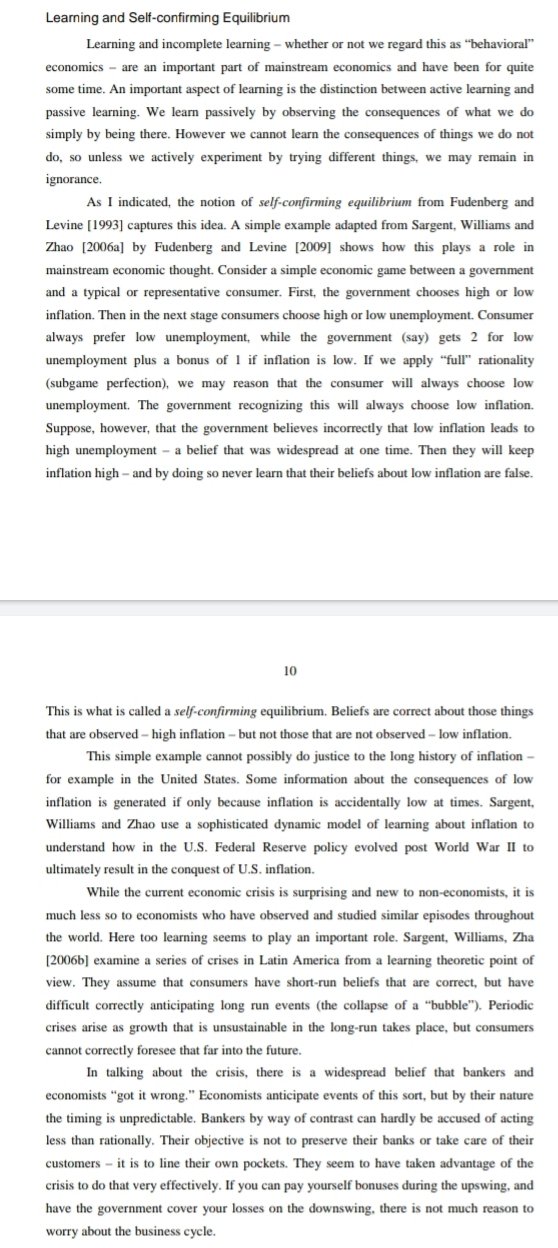

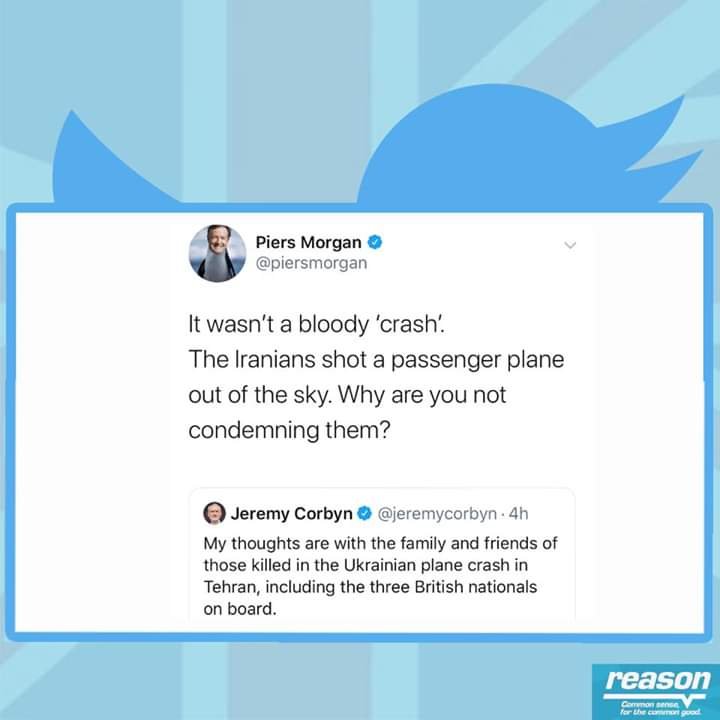
Fair question for @jeremycorbyn
12 Jan 2020 Leave a comment
in defence economics, economics of crime, International law, law and economics, laws of war, transport economics, war and peace Tags: air crashes, British politics, Iran, Middle-East politics, useful idiots
That Time the Nazis Planned to Ruin Britain’s Economy with Fake Money
12 Jan 2020 Leave a comment
in defence economics, macroeconomics, monetary economics, war and peace Tags: Counterfeiting, World War II
The Blind Watchmaker: Why the Evidence of Evolution Reveals a Universe without Design by Richard Dawkins (1986)
12 Jan 2020 Leave a comment

I hope that the reader is as awestruck as I am (p.37)
I first read this book 25 years ago and in the intervening years I had forgotten how naive, silly and embarrassingly earnest Dawkins can be.
The blind watchmaker
The basic premise is easily summarised. In a theological work published in 1802 – Natural Theology, or Evidences of the Existence and Attributes of the Deity – the English theologian William Paley said that if you were out for a walk and stumbled over a stone, you wouldn’t think anything of it, it is so obviously part of the natural world and you unthinkingly accept it as a product of impersonal geological forces.
But if you were out for a walk and stumbled over a watch, particularly if it was an 18th-century, ornately fashioned pocketwatch, you would immediately deduce that something so wonderfully crafted, with so many carefully calibrated…
View original post 5,520 more words


Recent Comments