Why a far-right candidate easily put an end to 13 years of corrupt left wing rule in Brazil
13 Jan 2019 Leave a comment
in comparative institutional analysis, constitutional political economy, defence economics, development economics, economic history, economics of crime, growth disasters, law and economics, Public Choice Tags: Brazil
Tim Page’s Nam (1983)
13 Jan 2019 Leave a comment

No one was really sane, everyone on the point of a total numb shock, of hysteria, a madness that shrinks have only now begun to diagnose. (p.98)
The times
Page is a legendary figure about whom legends were weaved during the climactic years of a war which itself became the stuff of legends, during the legendary 1960s.
I read Michael Herr’s book of journalism from the war, Despatches, which features Page as a central character, when it came out (1977), and bought this book when it was new in 1983. I saw The Deer Hunter (1978) and Apocalypse Now (1979) in cinemas when they were released, and in 1980 went hitch-hiking across the USA, getting a long lift through the mid-West from a Vietnam vet who’d had a leg amputated and was stoned all the time. In Boston I hung out with a would-be rock band which featured ‘Weird…
View original post 2,142 more words
The Tragedy of Liberation by Frank Dikötter (2013)
13 Jan 2019 Leave a comment
People were encouraged to transform themselves into what the communists called ‘New People’. Everywhere, in government offices, factories, workshops, schools and universities, they were ‘re-educated’ and made to study newspapers and textbooks, learning the right answers, the right ideas and the right slogans. While the violence abated after a few years, thought reform never ended, as people were compelled to scrutinise their every belief, suppressing the transitory impressions that might reveal hidden bourgeois thoughts behind a mask of social conformity. Again and again, in front of assembled crowds or in study sessions under strict supervision, they had to write confessions, denounce their friends, justify their past activities and answer questions about their political reliability. (p.xiii)
For three-quarters of the twentieth century China was the site of enormous turmoil, war, famine, tyranny and suffering. Frank Dikötter is a Dutch historian, professor of humanities at the University of Hong Kong, formerly of the School…
View original post 3,133 more words
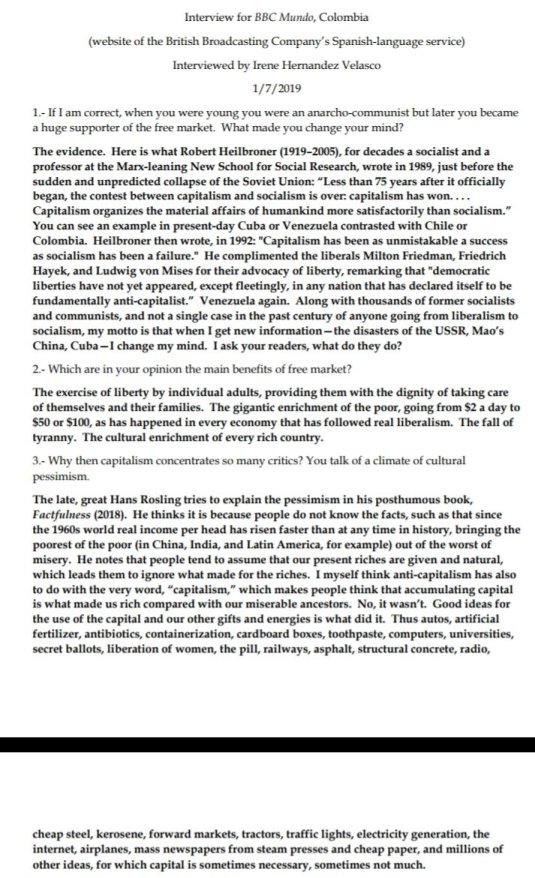
Is it Humane to be a Socialist?
13 Jan 2019 Leave a comment
in applied price theory, development economics, economic history, history of economic thought, income redistribution, Marxist economics, Public Choice Tags: Deirdre McCloskey, The Great Enrichment
Renewable Energy is a Useless Classification | Alex Epstein
13 Jan 2019 Leave a comment
in energy economics, environmental economics, global warming Tags: renewable energy, solar power, wind power
Aloha Airlines Flight 243
13 Jan 2019 Leave a comment
in transport economics Tags: air crashes, Air safety
How Aspirin Changed Medicine Forever
13 Jan 2019 Leave a comment
in economic history, health economics
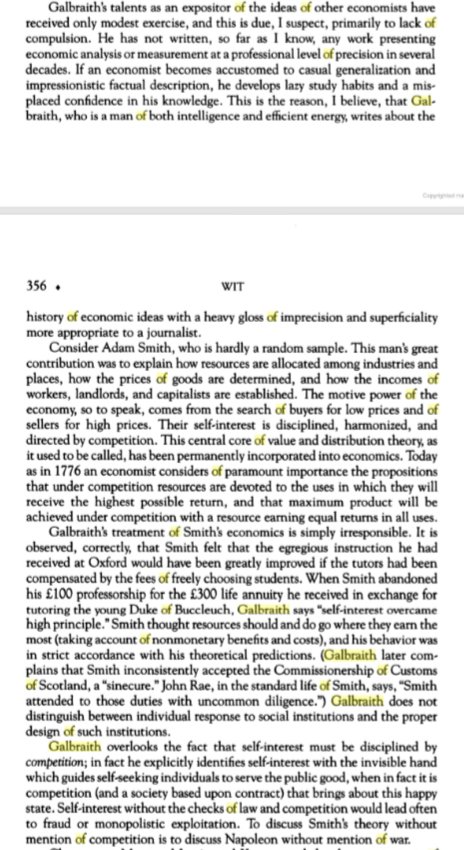
Stigler on Galbraith’s 1977 TV series discussing Adam Smith
13 Jan 2019 Leave a comment
in Adam Smith, George Stigler, history of economic thought, industrial organisation, labour economics, labour supply, occupational choice, television
Testing Milton Friedman: Equality of Opportunity – 2012 Free to Choose anniversary panel discussion
13 Jan 2019 Leave a comment
in comparative institutional analysis, development economics, economic history, economics of education, human capital, labour economics, law and economics, Milton Friedman, Rawls and Nozick
Eugene Fama- Efficient Markets and Asset Pricing Risk Return
13 Jan 2019 Leave a comment
in applied price theory, entrepreneurship, financial economics Tags: efficient markets hypothesis
Is this good or bad news about teenage social adjustment?
13 Jan 2019 Leave a comment
in economics of media and culture




Recent Comments