Sweden: Lessons for America? – Full Video
13 Oct 2018 Leave a comment
in applied price theory, development economics, economic history, economics of bureaucracy, economics of regulation, entrepreneurship, history of economic thought, income redistribution, international economics, labour economics, Public Choice, public economics, rentseeking, survivor principle Tags: Sweden
We, the people born between 1950-1989…are the blessed ones..
13 Oct 2018 Leave a comment
in economics of media and culture
AJP Taylor – “An Unusual Kind of Star”: Part 3
13 Oct 2018 Leave a comment
in defence economics, television, war and peace Tags: World War II
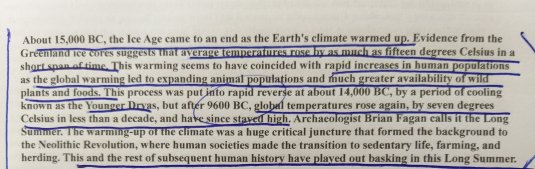
Why Nations Fail on the Long Summer
13 Oct 2018 Leave a comment
in economic history, environmental economics, global warming Tags: Little ice age
Climate Tipping Points Quiz
13 Oct 2018 Leave a comment


This post is a reblog of the Manhattan Contrarian Quiz — Climate Tipping Points Edition
October 11, 2018/ by Francis Menton. Text in italics with my bolds.
On Monday the UN IPCC came out with its latest Special Report, this one supposedly addressed specifically to the allegedly dire consequences of allowing world temperatures to increase by more than an arbitrarily-selected threshold. Here is a copy of the “Summary for Policymakers,” and here is a copy of the accompanying press release. But I urge you not to peek at those until you have taken today’s very important Manhattan Contrarian Climate Tipping Points Quiz.
Many have noted that this latest Report seems to step up the level of hysteria and shrieking about the threat of climate change to a whole new level. The gist is, we are doomed, doomed, doomed unless mankind takes immediate drastic action to reduce and then eliminate carbon…
View original post 1,722 more words
How We Create and Destroy Growth: A Nobel for Romer and Nordhaus
13 Oct 2018 Leave a comment

Occasionally, the Nobel Committee gives a prize which is unexpected, surprising, yet deft in how it points out underappreciated research. This year, they did no such thing. Both William Nordhaus and Paul Romer have been running favorites for years in my Nobel betting pool with friends at the Federal Reserve. The surprise, if anything, is that the prize went to both men together: Nordhaus is best known for his environmental economics, and Romer for his theory of “endogenous” growth.
On reflection, the connection between their work is obvious. But it is the connection that makes clear how inaccurate many of today’s headlines – “an economic prize for climate change” – really is. Because it is not the climate that both winners build on, but rather a more fundamental economic question: economic growth. Why are some places and times rich and others poor? And what is the impact of these differences?…
View original post 3,487 more words
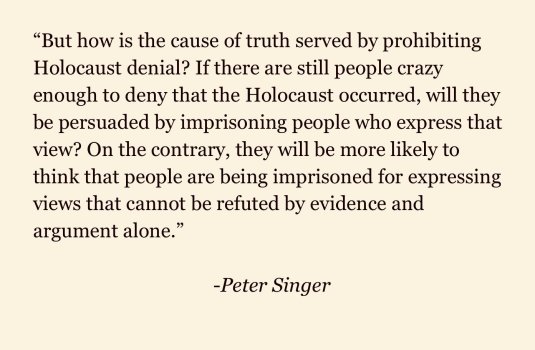
Three of Peter Singer’s grandparents died in the Holocaust
13 Oct 2018 Leave a comment
in liberalism, war and peace Tags: free speech
Indian feminism and the role of the environment: Why the Google memo is still right
13 Oct 2018 Leave a comment

In my previous post here I explained why the Google memo is fundamentally right in its factual claims about the broad population, which in turn explains the proportion of women in Google itself. Here I discuss some arguments against what has already been explained.
View original post 4,326 more words
Going for the 2°C (a Stern approach) could be twice as costly ($67.3tr) as doing nothing
13 Oct 2018 Leave a comment
in applied price theory, applied welfare economics, development economics, energy economics, environmental economics, global warming Tags: climate alarmism
How Politicians Can Use Big Data to Win Elections
12 Oct 2018 Leave a comment
in politics - USA, Public Choice


Recent Comments