Antonin Scalia – On American Exceptionalism
03 Sep 2018 Leave a comment
in comparative institutional analysis, constitutional political economy, politics - USA, Public Choice Tags: Antonin Scalia, constitutional law
Is Buying Organic Food Good for You and the Environment?
02 Sep 2018 Leave a comment

Earlier this month, a physician and molecular biologist named Henry Miller had an op-ed published in The Wall Street Journalpointing out the dubious claims and questionable science behind organic foods. Shortly after Dr. Miller’s commentary appeared, FDA Commissioner Scott Gottlieb expressed concern about information on organic food labels and the need to have more information put on them.
Consumers need to have full and factual information about products and services they shop for, including the food they consume. Overall, the idea behind organic foods sounds noble, but are they good for people and good for the natural environment overall? Bjorn Lomborg looks into this in the below video.
The dirty little secret about their substitute menu items is that they can be worse, and not better, for your health. It’s all about killing people off as fast as possible for the environmentalists, including lying about foods to include in…
View original post 2 more words
Almost a Miracle: The American Victory in the War of Independence by John Ferling (2007)
02 Sep 2018 Leave a comment

‘We are now launching into a wide and boundless field, puzzled with mazes and o’erspread with difficulties.’
George Washington, autumn 1779
At 680 larger-than-usual pages, this is a very long, very thorough and very heavy book.
I bought it under the misapprehension that it would explain the economic and political background to the American War of Independence, which was a mistake. Almost a Miracle is a highly detailed account of the arguments about military strategy conducted by both sides in the war, and of the actual battles fought during the war.
In this respect its focus on the nitty-gritty of military engagements large and small follows straight on from the couple of books I recently read about its immediate predecessor, the Seven Years War:
View original post 5,132 more words
Chomsky on the Soviet Union as a dungeon with social services @K_Niemietz
02 Sep 2018 Leave a comment
in defence economics, development economics, economic history, economics of bureaucracy, International law, law and economics, liberalism, Marxist economics, Public Choice Tags: fall of communism
Why Do Kids Have Their Own Bedrooms?
02 Sep 2018 Leave a comment
in economic history, population economics, urban economics Tags: The Great Enrichment
Casey Mulligan on another gender gap that dare not speak its name
02 Sep 2018 Leave a comment
in discrimination, gender, labour economics, labour supply Tags: reverse gender gap

Patton | Based on a True Story
02 Sep 2018 Leave a comment
in defence economics, movies Tags: Patton
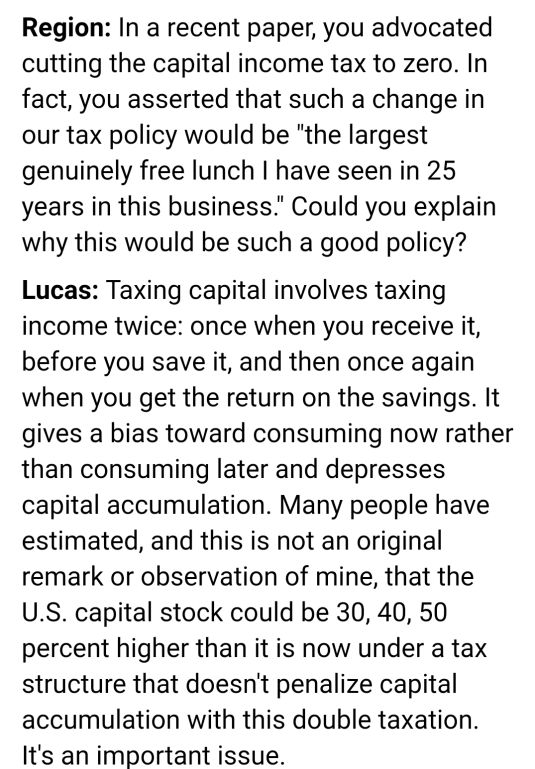
Speaking of capital gains taxes
02 Sep 2018 Leave a comment
in applied price theory, economic growth, macroeconomics, public economics, Robert E. Lucas Tags: capital gains tax, taxation and investment
Gender identity: Quick facts and stats
02 Sep 2018 Leave a comment
In New Zealand, Official Information Act requests have revealed that there are currently approximately thirty-three trans-identified males in New Zealand prisons in total. Eighteen are in for violent crimes, including sexual assault. Seven are in women’s prisons already. According to Corrections New Zealand, in 2017 alone, four assaults were reported against women by trans-identified persons in women’s prisons.

This is a collection of facts and statistics relating to gender identity, catered to a New Zealand audience.
Who identifies as transgender?
- Heterosexual adult males comprise the majority of adult-to-trans people (Sheila Jeffreys, Gender Hurts). Though transgenderism is often represented as indigenous, these men are mainly white. The overwhelming majority retain their male genitalia.
- Ruth Barrett reports in Female Erasure that an estimated 0.3% – 0.5% of males define themselves as women.
- According to a 2003 study by John Hopkins School of Medicine, one in 11,900 males and one in 30,400 females identify as “transgender”.
- A recent New Zealand study suggests that at least 1.2 percent of secondary school children identify as transgender (Jennifer Bilek and Mary Ceallaigh, in Female Erasure, 2016, source not cited.)
- Diane Ehrensahft, founding member of the Child and Adolescent Gender Centre in San Francisco, claims that infants who can’t yet speak can still be…
View original post 1,662 more words
Why obvious lies make great propaganda
02 Sep 2018 Leave a comment
in economics of information, politics - USA, Public Choice Tags: economics of advertising
#OTD Japan (1945)
02 Sep 2018 Leave a comment
in defence economics, economics, war and peace Tags: Japan, World War II
Can you really fight corruption? | The Economist
02 Sep 2018 Leave a comment
in economics of bureaucracy, economics of crime, law and economics, Public Choice, rentseeking Tags: bribery and corruption

My Silent War by Kim Philby (1968)
02 Sep 2018 Leave a comment
The old Turkey hands, of course, were aghast. But it is a good working rule, wherever you are, to ignore the old hands; their mentalities grow inwards like toenails. (p.191)
Strong sense of déjà vu about the story of Kim Philby, the greatest betrayer in British espionage history, because I’ve heard of the Cambridge spies all my life – attended the Alan Bennett play about Blunt, saw the TV play starring Alan Bates, read the sections of Graham Greene’s biography which describe GG working for him during the war – they’re as much a part of English 20th century folk lore as England winning the World Cup in 1966 or the Great Train Robbery.
And then, just in this volume, the outline of his story is told in the blurb on the back of the book, in a thorough summary on the inside page, then again in the introduction by…
View original post 2,779 more words


Recent Comments