The NY Times realizes that Trump is not a free market capitalist
The Party Dominated Economy, Part 2
Celebrating humanity's flourishing through the spread of capitalism and the rule of law
27 Feb 2026 Leave a comment
in applied price theory, comparative institutional analysis, constitutional political economy, industrial organisation, politics - USA

The NY Times realizes that Trump is not a free market capitalist
The Party Dominated Economy, Part 2
27 Feb 2026 Leave a comment
in applied price theory, health economics, industrial organisation
See The Weight-Loss Price Wars Are Breaking Big Pharma’s Business Model: Prices for GLP-1s are falling fast and forcing companies to adapt by David Wainer of The WSJ.”Two years ago, a GLP-1 prescription could cost an uninsured patient more than $1,000 a month. Today, Novo Nordisk’s Wegovy pill starts at just $149 through cash-pay programs.””Typically, drug…
Competition, elasticity and weight-loss drugs
27 Feb 2026 Leave a comment
in defence economics, economic history, economics of crime, law and economics, liberalism, politics, war and peace Tags: Nazi Germany, The Holocaust racial discrimination, World War II
Ashley Church writes: The Holocaust did not begin with the gas chambers of Auschwitz or Treblinka. It began much earlier, with ideas, laws, exclusions, and the slow normalisation of cruelty. The part that history often forgets. When Hitler became Chancellor of Germany in 1933, there was no plan to exterminate the Jews. What did exist…
The history of anti-semitism
27 Feb 2026 Leave a comment
in economics of education, health economics, liberalism, Marxist economics, politics - USA Tags: sex discrimination

For two reasons I think that Jesse Singal‘s long op-ed (really a “guest essay”) in today’s NYT will mark a turning point in public and professional attitudes towards “affirmative care.” First, the NYT saw fit to publish a piece showing that many American medical associations have promoted “affirmative care” of gender-dysphoric adolescents, despite those associations…
Jesse Singal’s op-ed in the NYT: A turning point in “affirmative care”?
27 Feb 2026 Leave a comment
in television, TV shows
26 Feb 2026 Leave a comment
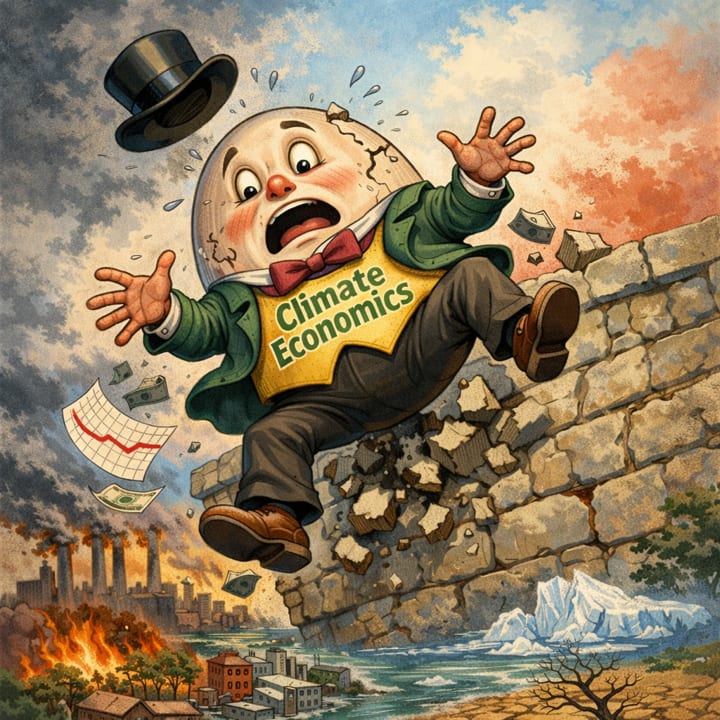
in economics of climate change, economics of education, economics of regulation, energy economics, environmental economics, environmentalism, global warming Tags: climate alarmism
By Paul Homewood Michael Shellenberger is one of the best communicators I have come across. Here he unpicks a lot of the myths around climate change. It is a long video – what I often do is watch 10 or 15 minute chunks Alternatively, watch the first couple of minutes and then fast forward […]
Seven Lies We’re Told About Climate Change | Michael Shellenberger
26 Feb 2026 Leave a comment
in economic history, economics of information, economics of media and culture, history of economic thought, industrial organisation

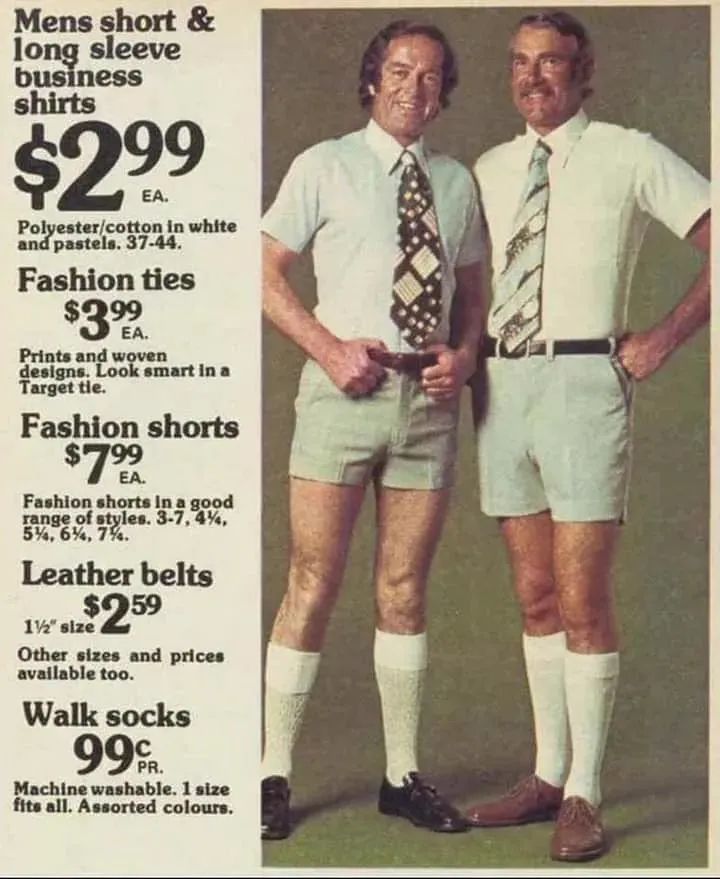
It is not often I am speechless but that is exactly what I was when I saw some of these advertisements and products from days of yore. You would not get away with it by today’s standards. Vintage newspaper ad for heroin Who doesn’t like a bit of cocaine on their candy. Stay fit and […]
The bizarre world of Advertising
26 Feb 2026 Leave a comment
in applied price theory, econometerics, economics of crime, law and economics, politics - USA Tags: crime and punishment, criminal deterrence, law and order
Using data from hundreds of closely contested partisan elections from 2010 to 2019 and a vote share regression discontinuity design, we find that narrow election of a Republican prosecutor reduces all-cause mortality rates among young men ages 20 to 29 by 6.6%. This decline is driven predominantly by reductions in firearm-related deaths, including a large reduction in firearm…
“Tough on crime” is good for young men
26 Feb 2026 Leave a comment
in labour economics, labour supply Tags: economics of immigration
I’m going to quote from UK’s Matt Goodwin. I do so as someone who is pro-immigration. I think moderate, controlled immigration is good for a country, and specifically has been good for New Zealand. But a good thing can become a bad thing is if it too large, or uncontrolled. If NZ took in 1…
The changing face of Europe
25 Feb 2026 Leave a comment
in defence economics, economics of education, economics of religion, politics - New Zealand
The Herald reports: A bicultural overhaul of Army doctrine that features Māori cosmology at its core has led to a Government revolt, with the NZ Defence Force putting on hold part of the controversial programme. The NZ Army’s new “general orders” to soldiers uses a pantheon of te ao Māori gods as guiding influences for…
Woke Wellington strikes again
25 Feb 2026 Leave a comment
in law and economics, liberalism, Marxist economics Tags: British politics, free speech, political correctness, regressive left

In the classic movie comedy, A Fish Called Wanda, John Cleese lamented, “do you have any idea what it’s like being English? Being so correct all the time, being so stifled by this dread of, of doing the wrong thing.” Now 86, Cleese has a more pressing concern about being English: whether his exercise of […]
No Laughing Matter: John Cleese Declares “I’m Afraid They are Going to Have to Arrest Me.”
25 Feb 2026 Leave a comment
in applied price theory, behavioural economics, economics of education
In the modern world, many of the topics about which people have opinions are some distance away from any actual experience or expertise that these same people have. In this situation, people are unlikely to form their opinions with a deep dive into relevant history, data, and academic research. Instead, they are more likely to…
What are Folk Economic Beliefs?
25 Feb 2026 Leave a comment
in labour economics, labour supply, population economics Tags: ageing society, Japan, population bust

24 Feb 2026 Leave a comment
in applied price theory, economics of regulation, entrepreneurship, history of economic thought, industrial organisation, law and economics Tags: competition law, creative destruction

Antitrust has always been a strange regulatory enterprise. Businesses are largely free to engage in various commercial practices involving price, output, product design, distribution, research, and innovation—until they’re not. Outside the paradigmatic examples of explicit agreements among competitors to fix price and output, many business practices live in a gray zone. Whether a particular pricing…
From Discount to Discrimination: The Strange Economics of Anti-Competitive Antitrust
24 Feb 2026 Leave a comment
in applied price theory, economic growth, economic history, fiscal policy, labour economics, labour supply, macroeconomics, politics - USA, Public Choice, public economics Tags: taxation and entrepreneurship, taxation and investment, taxation and labour supply

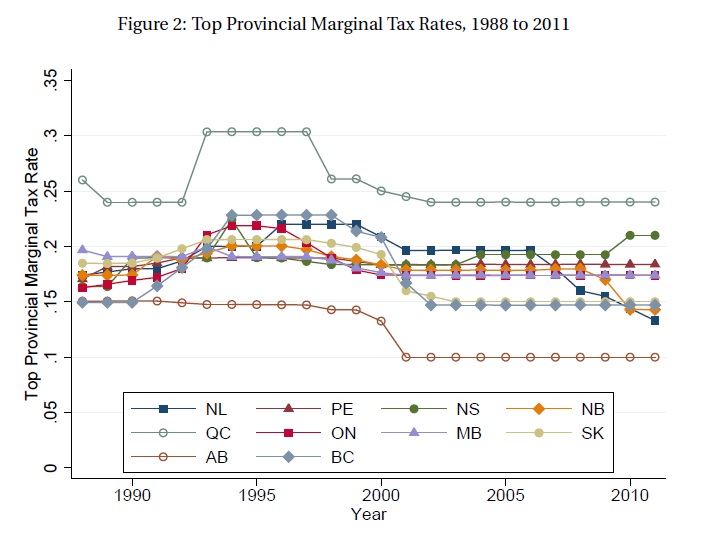
I’m a big fan of tax migration. I cheer when productive people escape high-tax states or high-tax nations. And when the geese with the golden eggs fly away, it thwarts the plans of greedy politicians. The latest example of this is the exodus of billionaires – worried about a wealth tax – from California (the […]
Is There a Political Downside to Tax Migration?
Celebrating humanity's flourishing through the spread of capitalism and the rule of law
A History of the Alt-Right
Econ Prof at George Mason University, Economic Historian, Québécois
Celebrating humanity's flourishing through the spread of capitalism and the rule of law
Scholarly commentary on law, economics, and more
Beatrice Cherrier's blog
Celebrating humanity's flourishing through the spread of capitalism and the rule of law
Why Evolution is True is a blog written by Jerry Coyne, centered on evolution and biology but also dealing with diverse topics like politics, culture, and cats.
Celebrating humanity's flourishing through the spread of capitalism and the rule of law
A rural perspective with a blue tint by Ele Ludemann
DPF's Kiwiblog - Fomenting Happy Mischief since 2003
Celebrating humanity's flourishing through the spread of capitalism and the rule of law
The world's most viewed site on global warming and climate change
Tim Harding's writings on rationality, informal logic and skepticism
A window into Doc Freiberger's library
Let's examine hard decisions!
Commentary on monetary policy in the spirit of R. G. Hawtrey
Thoughts on public policy and the media
Celebrating humanity's flourishing through the spread of capitalism and the rule of law
Politics and the economy
A blog (primarily) on Canadian and Commonwealth political history and institutions
Reading between the lines, and underneath the hype.
Economics, and such stuff as dreams are made on
"The British constitution has always been puzzling, and always will be." --Queen Elizabeth II
Celebrating humanity's flourishing through the spread of capitalism and the rule of law
WORLD WAR II, MUSIC, HISTORY, HOLOCAUST
Undisciplined scholar, recovering academic
Celebrating humanity's flourishing through the spread of capitalism and the rule of law
Res ipsa loquitur - The thing itself speaks
In Hume’s spirit, I will attempt to serve as an ambassador from my world of economics, and help in “finding topics of conversation fit for the entertainment of rational creatures.”
Researching the House of Commons, 1832-1868
Articles and research from the History of Parliament Trust
Reflections on books and art
Posts on the History of Law, Crime, and Justice
Celebrating humanity's flourishing through the spread of capitalism and the rule of law
Exploring the Monarchs of Europe
Cutting edge science you can dice with
Small Steps Toward A Much Better World
“We do not believe any group of men adequate enough or wise enough to operate without scrutiny or without criticism. We know that the only way to avoid error is to detect it, that the only way to detect it is to be free to inquire. We know that in secrecy error undetected will flourish and subvert”. - J Robert Oppenheimer.
Recent Comments