Robert Kee: Ireland – A Television History – Part 9 of 13 – ‘Terror 1919-1921’
14 Aug 2022 Leave a comment

Robert Kee (1919-2013) was already a veteran British broadcaster, writer, historian and journalist when his 1980 thirteen part series ‘Ireland: A Television History’ was first broadcast in Ireland and Britain.
The series was highly acclaimed as Kee followed Ireland’s complex history through the island’s development from pre-Christian times, to various uprisings down the centuries, explains the famine of 1845, the 1916 Rising, Independence and up to the late 1970s, with a specific emphasis on the creation of the modern independent republic and the roots of the Troubles. More importantly, the series presented many British viewers with their first detailed insight into the history of Irish politics, especially the issues surrounding sovereignty and identity in Northern Ireland. It could also be argued that the series did much the same for many Irish viewers too.
The series proved unexpectedly timely, since its broadcast coincided with increased tensions in Northern Ireland…
View original post 110 more words
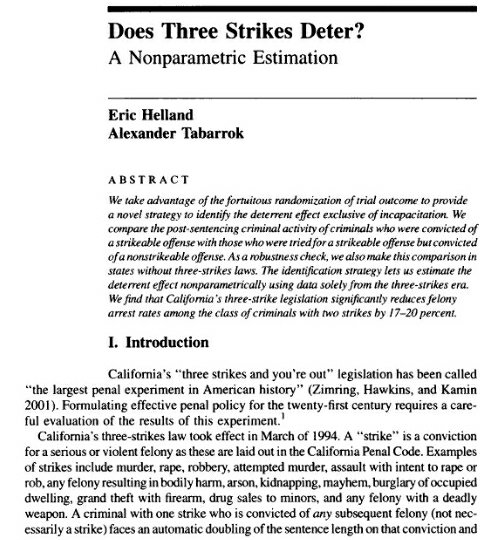
Does Three Strikes Deter?
14 Aug 2022 Leave a comment
in applied price theory, econometerics, economics of crime, law and economics Tags: crime and punishment, criminal deterrence

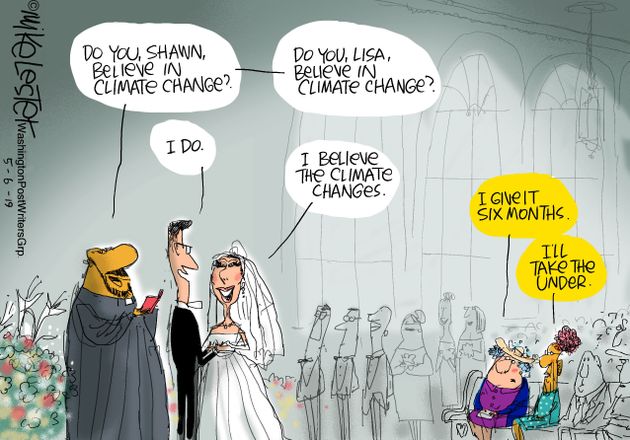
Yes, The Climate Changes
14 Aug 2022 Leave a comment

Michael Foley writes at Quora(Excerpts in italics with my bolds and added images.)
Q: Why do most scientists believe that the climate is changing?
A: Because it is. But most scientists do not believe
human activity is the cause of the change.
The 97% of scientists belief fraud, which has been proven to be a fraud over and over again, was based on a review of the scientific literature on climate. Over 10,000 papers were reviewed and of those only about 2,000 mentioned climate change of those 1,900 were eliminated for various reasons (some of those reasons were bias based) resulting in 100 papers. Of those 100 papers 97 concluded that man’s activity may have a roll in climate change. They ranged from very likely to maybe, which is what came to be reported as the 97% figure.
There is no argument that the climate is changing,
it always…
View original post 972 more words
BBC overlooks lack of wind: ‘Drought highlights dangers for electricity supplies’
13 Aug 2022 Leave a comment

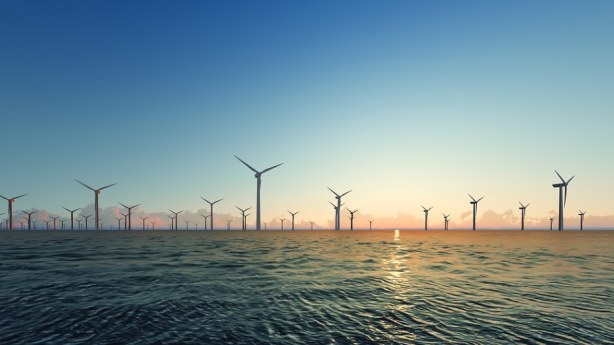 Hornsea wind project
At least they admit solar panels don’t like too much sun: ‘work much less well in high temperatures’. But high pressure systems often mean very low wind speeds.
– – –
The ongoing drought in the UK and Europe is putting electricity generation under pressure, say experts.
Electricity from hydropower – which uses water to generate power – has dropped by 20% overall, says BBC News.
And nuclear facilities, which are cooled using river water, have been restricted.
There are fears that the shortfalls are a taste of what will happen in the coming winter.
View original post 147 more words
Money, Output, and the Nominal National Debt
13 Aug 2022 Leave a comment
in business cycles, financial economics, macroeconomics, monetary economics, public economics

Aboriginal and Torres Strait Islander Voice
13 Aug 2022 Leave a comment
The committee will just have the right to make representations to the government. It will make no difference until a court implies into the spartan text of the constitutional alteration the Principles of the Aboriginal Voice.
Robert Kee: Ireland – A Television History – Part 8 of 13 – ‘Rising’
13 Aug 2022 Leave a comment
Robert Kee (1919-2013) was already a veteran British broadcaster, writer, historian and journalist when his 1980 thirteen part series ‘Ireland: A Television History’ was first broadcast in Ireland and Britain.
The series was highly acclaimed as Kee followed Ireland’s complex history through the island’s development from pre-Christian times, to various uprisings down the centuries, explains the famine of 1845, the 1916 Rising, Independence and up to the late 1970s, with a specific emphasis on the creation of the modern independent republic and the roots of the Troubles. More importantly, the series presented many British viewers with their first detailed insight into the history of Irish politics, especially the issues surrounding sovereignty and identity in Northern Ireland. It could also be argued that the series did much the same for many Irish viewers too.
The series proved unexpectedly timely, since its broadcast coincided with increased tensions in Northern Ireland…
View original post 110 more words
Nationalisation of energy suppliers would solve nothing – and could make the crisis even worse
13 Aug 2022 Leave a comment

Kudos to Gordon Brown. The former Labour Prime Minister and Chancellor is at least coming up with bold ideas to tackle soaring energy bills. Unfortunately, his ideas are not new, and they are not good ones either.
Brown’s starting point is that the energy price cap should be ‘suspended’ before the results of the latest review are announced on 26 August, which presumably means that the cap would be frozen at the current level. Ed Davey, speaking for the Liberal Democrats, has also called for the rise in the cap to be scrapped.
This would obviously be popular, but it would still be poor economics. Global energy prices have jumped because supply and demand are out of balance. Market signals need to be allowed to work properly, increasing the incentives for producers to raise output and for consumers to economise, where they can.
Of course, many households are already struggling…
View original post 831 more words
The Dissolution of the Holy Roman Empire. Part V: Austrian & Prussian Rivalry
13 Aug 2022 Leave a comment

Austria and Prussia were the most powerful states in the Holy Roman Empire by the 18th and 19th centuries and had engaged in a struggle for supremacy in Germany. The rivalry was characterized by major territorial conflicts and economic, cultural and political aspects. Therefore, the rivalry continued after the Holy Roman Empire was dissolved and was an important element of the so called German question in the 19th centure.
The Margraviate of Brandenburg was officially declared one of the seven electorates of the Holy Roman Empire by the Golden Bull of 1356. It had extended most of its territory into the eastern Neumark region, and after the War of the Jülich succession by the 1614 Treaty of Xanten also gained the Duchy of Cleves as well as the counties of Mark and Ravensberg located in northwestern Germany.
Brandenburg finally grew out of the Imperial borders when in 1618 the Hohenzollern…
View original post 927 more words


Recent Comments