The kittens were born from different mothers but played together happily.
10 Apr 2022 Leave a comment
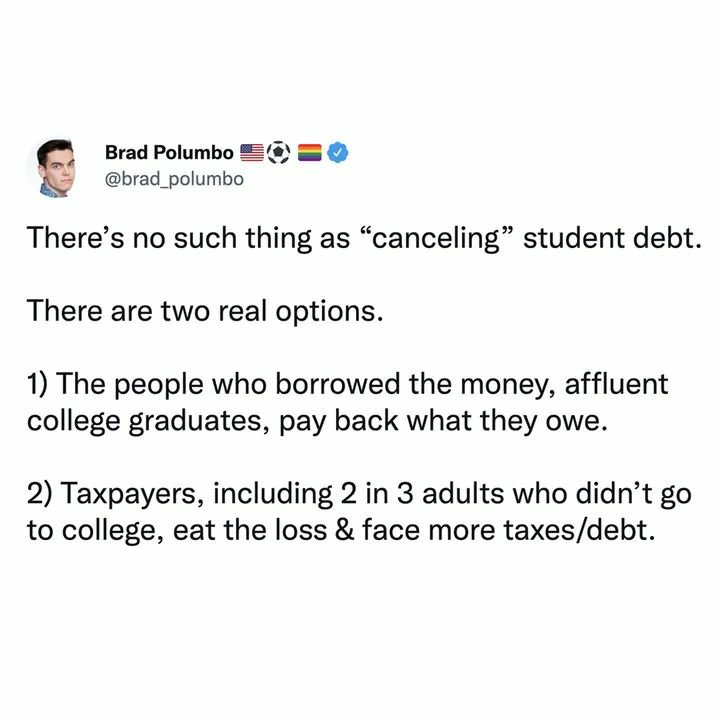
Handouts for the well to do of tommorow
10 Apr 2022 Leave a comment
in economics of education, income redistribution, Public Choice, rentseeking Tags: College premium, education premium, regressive left
Reliable & Affordable Electricity Means Unscrambling Subsidised Wind & Solar Debacle
09 Apr 2022 Leave a comment


An aggressive and ambitious Russian has caused policymakers to reflect on the debacle that is subsidised wind and solar. National security is now taken to equate with energy security; a chap with an insatiable thirst for power has revealed what Europe’s renewable energy transition will ultimately mean for those still pretending an all wind and sun-powered future is in the offing.
Obsessive reliance on wind and solar (and the gas inevitably required to provide power when the sun sets and calm weather sets in) has left Europeans vulnerable to the dictates of an erstwhile dictator. As they say, be prepared to reap precisely what you sow.
Putin’s adventures in Ukraine have thrown up an opportunity for our political betters to get a grip and start unscrambling the suicidal energy policies that beset us, before the power pricing and supply calamity seen in Europe spreads further afield, and ruins us, too.
View original post 1,038 more words
More than half of all new UK cars to be electric by 2028 in bid to ditch petrol and diesel
09 Apr 2022 Leave a comment
Government says half of all new UK cars should be electric by 2028
09 Apr 2022 Leave a comment


The availability of new hybrids after 2030 is also thrown into question, as the government puts its foot on the climate obsession accelerator. Sales figures of full EVs will now be part of that policy decision. Basically freedom of choice will end in 2027, well before the government’s latest energy strategy has had much chance to take any effect. This looks over-ambitious in terms of electricity supply, to put it mildly.
– – –
More than half of all new cars sold in the UK must be fully electric by 2028, under detailed government proposals unveiled on Thursday to pave the way for phasing out the sale of traditional petrol and diesel vehicles by the end of the decade, says DUK News.
Ministers want to bring in a China-style sales mandate from 2024, which would force carmakers to increase the proportion of electric cars as a percentage of their…
View original post 223 more words
Robert Walpole, Prime Minister of Great Britain. Conclusion
09 Apr 2022 Leave a comment

Walpole secured the support of the people and of the House of Commons with a policy of avoiding war. He used his influence to prevent George II from entering the War of the Polish Succession in 1733, because it was a dispute between the Bourbons and the Habsburgs. He boasted, “There are 50,000 men slain in Europe this year, and not one Englishman.” By avoiding wars, Walpole could lower taxes.
After the general elections of 1734, Walpole’s supporters still formed a majority in the House of Commons although they were less numerous than before. He maintained both his parliamentary supremacy and his popularity in Norfolk, his home county.
In 1736 an increase in the tax on gin inspired riots in London. The even more serious Porteous riots broke out in Edinburgh after the King pardoned a captain of the guard (John Porteous) who had commanded his troops to shoot a…
View original post 1,033 more words
The Armenian Genocide I THE GREAT WAR – Week 37
09 Apr 2022 Leave a comment
in defence economics, laws of war, war and peace Tags: World War I
Europe’s Self-inflicted Renewable Energy Disaster Drives Nuclear Power Renaissance
08 Apr 2022 Leave a comment
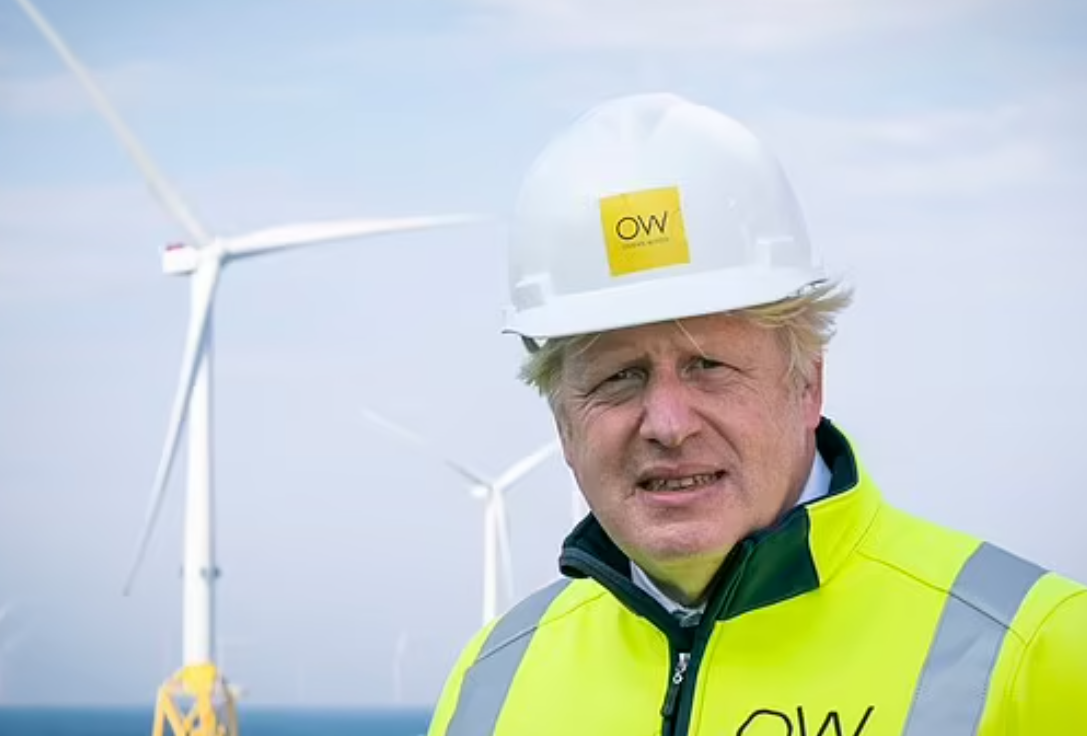
The race to secure reliable and affordable power is on and nuclear power has already crossed the finish line.
2021 was the year when the inherent unreliability of wind and solar revealed how everything depends upon reliable and affordable power supplies.
The wind and solar ‘industries’ talk a big game; and in their wilder moments even claim to be capable of replacing conventional coal, gas and nuclear generators, altogether. Europe’s months-long wind drought in the last half of 2021 demonstrated otherwise. And the peculiar disappearance of solar power, every day is readily explained by that phenomenon known as “sunset”.
The mega-batteries touted as a solution are nothing but an expensive pipe dream.
Which is why the French, among others, are now talking about nuclear power as if it was their very first love.
Faced with the reality of actually trying to rely exclusively on wind and solar, even
View original post 444 more words
Movie Review: “Tinker Tailor Soldier Spy” is spyfiction at its cinematic best
08 Apr 2022 Leave a comment

Movie Review: Tinker Tailor Soldier Spy

In the world of spy fiction, there’s John le Carre, and legions of mere mortals, the men and women who give us “Bourne” this and “Bond” that.
And “Tinker Tailor Soldier Spy,” le Carre’s spin on the days when Britain’s spy service was staggering from one “mole” scandal to another — almost fatally compromised for decades — is his masterwork, a subtle and somber thriller about realistic spies engaged in genuine spycraft.
The Oscar nominated film of it, by the Swedish director of “Let the Right One In,” glories in le Carre’s nuances, the intricate mental work of umasking a traitor. It revels in the long, studied pauses of its anti-hero, George Smiley, a disgraced spymaster working outside of the agency, nicknamed “The Circus,” trying to puzzle out/trip up whichever former colleague was actually working for the Soviets the whole time the rest…
View original post 596 more words
It’s Still Hard to Find Good Help These Days
08 Apr 2022 Leave a comment

Consumption is the largest component of GDP. In 2019, it composed 67.5% of all spending in the US. During the Covid-19 recession, real consumption fell about 18% and took just over a year to recover. But consumption of services, composing 69% of consumption spending, hadn’t recovered almost two years after the 2020 pre-recession peak. For those keeping up with the math, service consumption composed 46.5% of the economic spending in 2019.
We can decompose service consumption even further. The table below illustrates the breakdown of service consumption expenditures in 2019.
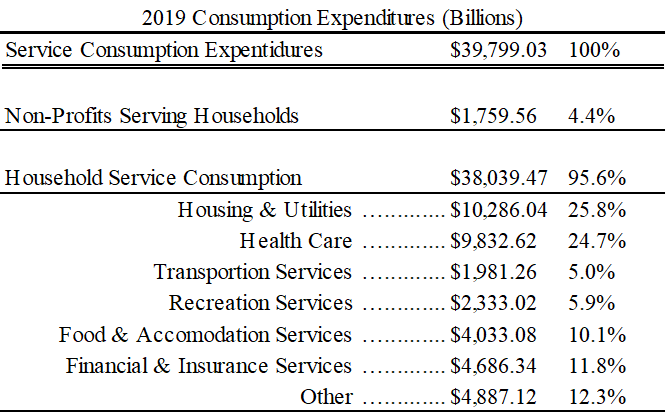
I argued in my previous post that the Covid-19 pandemic was primarily a demand shock insofar as consumption was concerned, though potential output for services may have fallen somewhat. When something is 67.5% of the economy, ‘somewhat’ can be a big deal. So, below I breakdown services into its components to identify which experienced supply or demand…
View original post 780 more words



Recent Comments