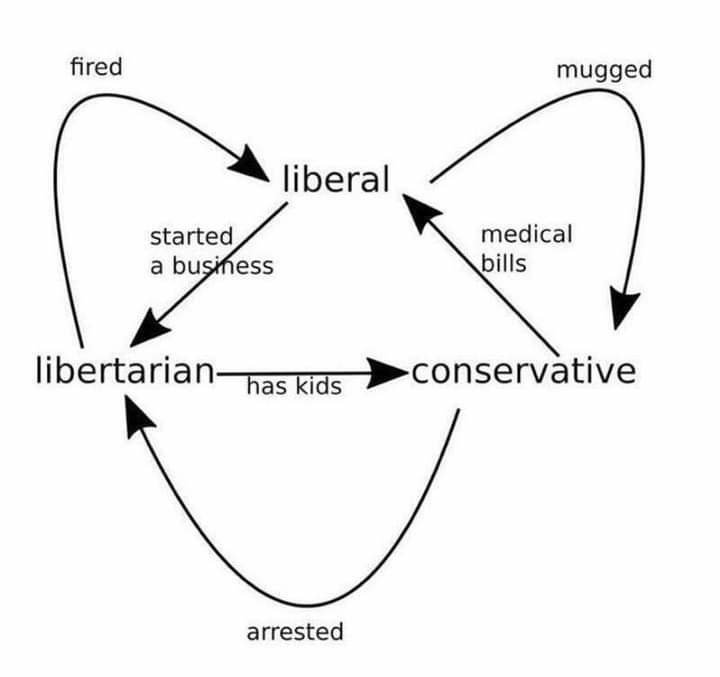
Passages of life
20 Mar 2022 Leave a comment
in economics of crime, economics of regulation, entrepreneurship, health economics, income redistribution, industrial organisation, labour economics, law and economics, liberalism, libertarianism, Marxist economics, occupational choice, Public Choice, survivor principle, unemployment Tags: employment law, law and order
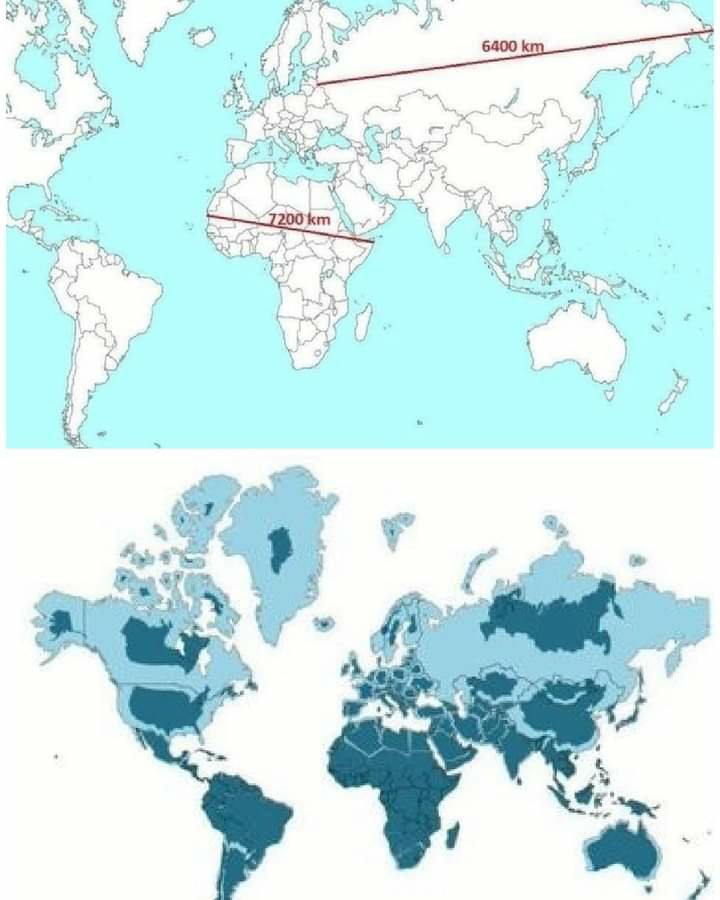
Map projections
20 Mar 2022 Leave a comment
in economics of education, economics of media and culture Tags: maps
Old King Coal Trumps Wind & Solar: In An Energy Starved World the Black Stuff Still Rules
20 Mar 2022 Leave a comment


Wind and solar advocates keep carping that ‘coal is dead’, as if thermal power generation had gone the same way as the dodo and flared trousers.
This wouldn’t be the first time an obituary has been published way to early. Mark Twain noted that reports of his death had been greatly exaggerated. So too, coal-fired power.
Thermal coal prices are off the charts, with record demand driving record prices: Australian thermal coal prices recently hit $US$400 ($548 a tonne), with prices still on the rise.
True enough, the ex-KGB lad with his sights set on crushing Ukraine has played his part. But, so too has the West’s suicidal obsession with chaotically intermittent and heavily subsidised wind and solar. In Europe, Germany in particular, the harsh reckoning of foolishly locking themselves into reliance on Russian oil and gas has caused a major rethink about their attempt to run on sunshine and…
View original post 716 more words
Another gender gap
19 Mar 2022 Leave a comment
in discrimination, economic history, gender, human capital, labour economics, labour supply, occupational choice Tags: gender wage gap

Russia’s Ukrainian Invasion Equation: Europe Ditches Wind & Solar Transition
19 Mar 2022 Leave a comment

Like a jilted bride, wind and solar have lost all love and favour as Europe scrambles for reliable and affordable energy.
Now it seems that the only inevitable thing about the ‘inevitable transition’ is that when people are forced to choose between electricity delivered reliably and affordably and the purportedly clean and green kind, they couldn’t care less about where it comes from.
Even Germany’s Greens have backflipped on their policy to kill off its nuclear and coal-fired plants; all of a sudden infantile ideology has given way to necessity and sound engineering.
Who would have thought that a modern Stalin would herald the end for chaotically intermittent wind and solar?
Hitherto the model was fairly simple: Europe would ditch its reliable and affordable generation systems; squander billions of euros on subsidies to inherently unreliable wind and solar; and use Russian oil and gas to run highly inefficient gas…
View original post 892 more words
In a Tweet, Everything You Need to Know about Living Standards in the United States and Europe
19 Mar 2022 Leave a comment

When debating big issues such as the size and scope of government, I like to think that facts matter. Maybe I’m being naive, but people should look at evidence before deciding whether to make government bigger or smaller.
And with Biden proposing a big expansion in the size of the welfare state, this is why I regularly compare the economic performance of the United States and various European nations.
After all, if we’re going to make America more like Europe, shouldn’t we try to understand what that might mean for the well being of the citizenry?
With this in mind, I want to share this tweet (based on this data) from Stefan Schubert at the London School of Economics.
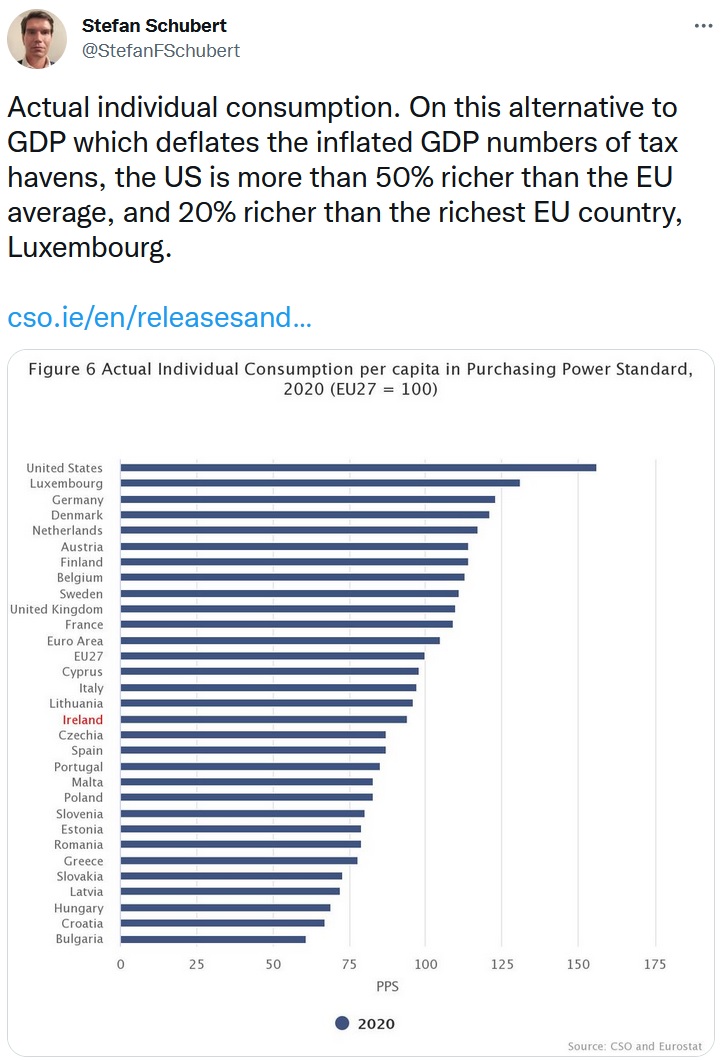
The obvious takeaway is that the average person in the United States enjoys much higher living standards (more than 50 percent higher) than the average person in…
View original post 171 more words
Planet Normal: Race report author Dr Tony Sewell on attempts to discredit his findings on race relations
19 Mar 2022 Leave a comment
in discrimination, economic history, economics of bureaucracy, human capital, labour economics, labour supply, law and economics, poverty and inequality, Public Choice, rentseeking Tags: racial discrimination
Addressing economic disparity challenges in NZ
19 Mar 2022 Leave a comment
in applied price theory, applied welfare economics, discrimination, economic history, economics of education, entrepreneurship, gender, human capital, industrial organisation, labour economics, labour supply, occupational choice, poverty and inequality, survivor principle Tags: child poverty, family poverty


Recent Comments