Steven Pinker: Danger of moral panic over “fake news”
23 Nov 2021 Leave a comment
in economics of bureaucracy, economics of education, politics - Australia, politics - New Zealand, politics - USA, Public Choice Tags: free speech, philosophy of science, political correctness, regressive left
Britons face £15,000 bill for heat pump upgrade – report exposes ‘significant’ hidden cost
23 Nov 2021 Leave a comment
November 22, 1975: Juan Carlos becomes King of Spain
23 Nov 2021 Leave a comment

Juan Carlos I (Spanish: Juan Carlos Alfonso Víctor María de Borbón y Borbón-Dos Sicilias, born January 5, 1938) is a member of the Spanish royal family who reigned as King of Spain from November 22, 1975 until his abdication on June 19, 2014. In Spain, since his abdication, Juan Carlos has usually been referred to as the Rey Emérito (“King Emeritus”).
Juan Carlos is the grandson of Alfonso XIII, the last king of Spain before the abolition of the monarchy in 1931 and the subsequent declaration of the Second Spanish Republic. Juan Carlos was born in Rome during his family’s exile. Francisco Franco took over the government of Spain after his victory in the Spanish Civil War in 1939, yet in 1947 Spain’s status as a monarchy was affirmed and a law was passed allowing Franco to choose his successor.
 Juan Carlos’s father, Juan, was the third son of King…
View original post 425 more words
The Anachronism of State-controlled Money | George Selgin
22 Nov 2021 Leave a comment
in applied price theory, applied welfare economics, Austrian economics, business cycles, comparative institutional analysis, constitutional political economy, economic history, history of economic thought, industrial organisation, law and economics, macroeconomics, monetary economics, property rights Tags: monetary policy
What Makes A Good Leader? On The Caine Mutiny
22 Nov 2021 Leave a comment

“War is a business in which a lot of people watch a few people get killed
and are damn glad it wasn’t them.”
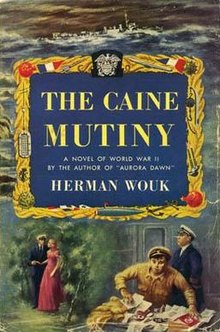
Just as important as exploring the particular qualities that constitute a successful leader, Herman Wouk’s Pulitzer Prize-winning masterpiece The Caine Mutiny examines the situations that inspire men to commit grave revolutionary acts –like the act of mutiny. Often compared to 1932’s Mutiny on the Bounty, The Caine Mutiny is a truly wonderful novel. Thus far in my quest to read the Pulitzer Prize-winners, I have been stuck in a string of novels offering mostly plotless portraits of struggling rural farmers, and so it was a delight for me to shift into a bit more levity with 1951’s The Caine Mutiny, a rare bestseller on top of being a Pulitzer Prize-winner. The tone is light, playful, almost satirical a la Joseph Heller’s Catch-22, even though…
View original post 2,074 more words
Ed Prescott Says ‘Partial’ Default Is Likely for Greece
22 Nov 2021 Leave a comment
in applied price theory, applied welfare economics, budget deficits, business cycles, comparative institutional analysis, currency unions, economic growth, economic history, Edward Prescott, Euro crisis, fiscal policy, global financial crisis (GFC), great recession, history of economic thought, labour economics, labour supply, macroeconomics, monetary economics, unemployment Tags: real business cycles


Recent Comments