
Biden’s spending bill will lavish over half a $1 trillion on projects geared to combating human-caused climate change. In reality, environmentalist groups will be given most of the money to continue their political activities. Two years ago, climate scientist Patrick Michaels was on the Laura Ingraham Show on Fox News to discuss what the program is really all about and doom and gloom predictions.
What Lessons Can Be Learned by Comparing European Countries and American States?
17 Nov 2021 Leave a comment

I regularly cite data about Europe’s sub-par economic outcomes in hopes of driving home the point that the United States should not copy that continent’s approach of onerous fiscal burdens.
Which is now a very relevant topic with Biden pushing for a big expansion of the welfare state.
This is not a good idea. Americans are richer than their counterparts on the other side of the Atlantic. Even more remarkably, lower-income people in the United States often have living standards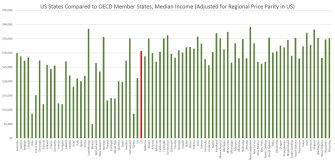 equal to – or even greater than – middle-income Europeans.
Another way of making this point is to compare economic outcomes in American states compared to European countries.
I first did that back in 2015, citing data to show that all be the very-richest European nations would be considered poor if they were part of the United States.
I want to augment that comparison today. I’m motivated by a
View original post 403 more words
$5.7 billion
17 Nov 2021 Leave a comment

A few weeks ago I wrote a fairly discursive post on the losses the Reserve Bank had run up on its Large Scale Asset Purchase programme. I know some readers found the basic point a little hard to grasp (no doubt a reflection on my storytelling), so today I’m going to do a very stylised representation of what has gone on.
But first, as I noted in that post, as market interest rates rise losses mount. The Bank has now released its end-October balance sheet and this is the line item representing their claim on the Crown (the Minister of Finance indemnified the Bank for losses incurred).

So the losses have now reached $5.7 billion (roughly 1.6% of annual GDP). Market interest rates fluctuate each day, but as of yesterday’s rate current losses are likely to be very similar to those as at 31 October. Perhaps Covid has inured us…
View original post 1,857 more words
Prescott on real business cycle theory’s successes
17 Nov 2021 Leave a comment
in business cycles, development economics, economic growth, growth miracles, macroeconomics, monetary economics
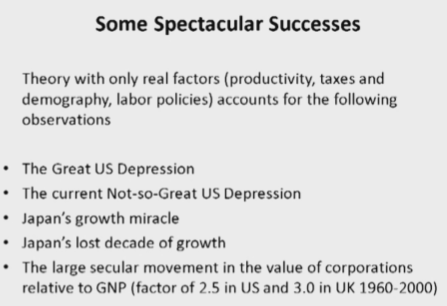
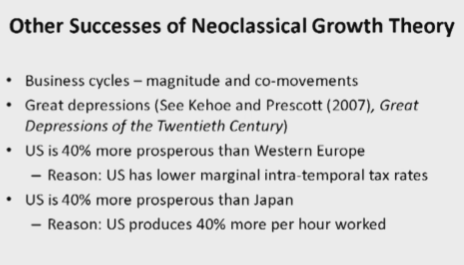
Edward C. Prescott 2015 Nov 11. Video – Edward C. Prescott (2014) – The Revolution in Aggregate Economics https://www.mediatheque.lindau-nobel.org/videos/33975/edward-prescott/laureate-prescott Accessed 2021 Nov 15.
Top 11 Misconceptions of World War 2 #Eurocentric Edition
17 Nov 2021 Leave a comment
in defence economics, war and peace Tags: World War II
The best monkey grooming, look very so good monkey grooming
16 Nov 2021 Leave a comment
in economics of media and culture
Prescott on business cycles
16 Nov 2021 Leave a comment
in business cycles, Edward Prescott, history of economic thought, labour supply, macroeconomics, monetary economics, public economics
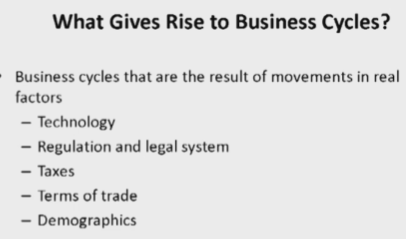
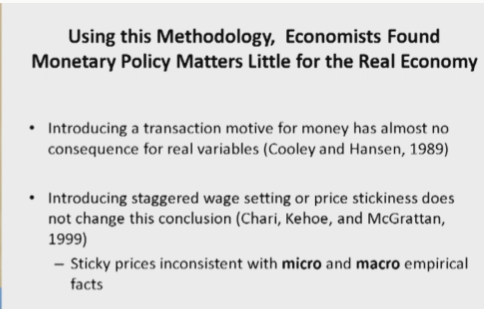
Edward C. Prescott 2015 Nov 11. Video – Edward C. Prescott (2014) – The Revolution in Aggregate Economics https://www.mediatheque.lindau-nobel.org/videos/33975/edward-prescott/laureate-prescott Accessed 2021 Nov 15.
Prescott on business cycles
16 Nov 2021 Leave a comment
in business cycles, Edward Prescott, history of economic thought, labour supply, macroeconomics, monetary economics, public economics
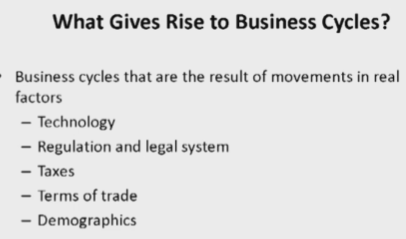
Edward C. Prescott 2015 Nov 11. Video – Edward C. Prescott (2014) – The Revolution in Aggregate Economics <https://www.mediatheque.lindau-nobel.org/videos/33975/edward-prescott/laureate-prescott>. Accessed 2021 Nov 15.
Why did Sweden and Norway Break Up?
16 Nov 2021 Leave a comment
in economic history, International law, war and peace Tags: Denmark, Norway, Sweden


Recent Comments