On appeals to emotion
11 Apr 2015 Leave a comment
in development economics, energy economics, environmental economics, environmentalism, global warming, growth disasters, health economics, liberalism, resource economics Tags: activists, bootleggers and baptists, climate alarmism, conjecture and refutation, green rent seeking, peak oil, population bomb, precautionary principle
Whatever happened to the population bomb that so troubled the environmentalist doomsday prophets?
09 Apr 2015 Leave a comment
in development economics, growth miracles, population economics Tags: activists, cranks, doomsday prophets, population bomb, the economics of fertility
The world is making less people en.wikipedia.org/wiki/Total_fer… | http://t.co/FlgwlrkUJO—
Charts and Maps (@ChartsAndMaps) April 04, 2015
The mass kidnappings of environmental activists has extended to Europe
06 Apr 2015 Leave a comment
in environmental economics, environmentalism Tags: activists, capitalism and freedom, do gooders, green hypocrisy
Europe is getting greener.
Here is the comparison between today and 1900. http://t.co/GFMXD6Bd6c—
Max Roser (@MaxCRoser) March 15, 2015
There is no other explanation for why they are not dancing in the streets to celebrate the greening of Europe under capitalism and freedom.
What if McDonald’s workers were paid $15 per hour
06 Apr 2015 Leave a comment
in industrial organisation, labour economics, labour supply, minimum wage, occupational choice, survivor principle Tags: activists, compensating differentials, do gooders, Leftover Left, living wage
Still more evidence of mass kidnappings of environmental activists
25 Mar 2015 Leave a comment
in energy economics, environmental economics, environmentalism, global warming Tags: activists, Big Wind, bootleggers and baptists, do gooders, green hypocrisy, green rent seeking, trade-offs, world heritage areas
Far Left Mana Movement admits it’s really cheap to feed the kids
23 Mar 2015 Leave a comment
in applied welfare economics, labour economics, politics - New Zealand, poverty and inequality, welfare reform Tags: activists, child poverty, Leftover Left, school breakfast programmes
Joe Trinder, the Mana News editor, today blogged about the great expense of feeding the kids for ordinary families. In the course of doing so, he showed how extremely cheap it was for parents to make their children breakfast. The Far Left has inadvertently capitulated on school breakfast programmes been outside the reach of ordinary families.

I completely agree with Joe. A 1 kg box of Weet-Bix costs $7 and a 2 L bottle of milk costs $5.55. I buy the cheaper brands of Weet-Bix than this myself.

1 kg box of Weet-Bix will last maybe two weeks. 2 L of milk will last not much less than that if you pour the milk on Weet-Bix to the extent I do. Two weeks breakfast will cost much less than one dollar per breakfast as argued by Eugene Rush in her letter to the editor a few months ago.
If a family can’t find $.55 to make their children breakfast, they need targeted specific intervention from Work and Income New Zealand to see what additional financial assistance they need, including budget advice, and from the child protection agency, Child, Youth and Families.
- Providing a hungry child with breakfast at school through a Feed the Kids Bill is parliamentary grandstanding that doesn’t strike at the root of the problem.
- These hungry children are not provided with breakfast either at the weekend or during the school holidays. They are abandoned by the process set up under the Feed the Kids Bill championed by the hard left.
- Worst of all, what about the parents? No good parent would have breakfast while their child goes hungry.
No provision is made by the hard left in its Feed the Kids Bill to feed the parents of these hungry children who also go hungry every morning. There is no other charitable explanation as to why their children were not given breakfast. No one in the house can afford breakfast both during school days, at the weekend and in school holidays.

As shown from the screenshot above, the Otago University’s annual Food Cost Survey suggests that to meet basic needs, a family must spend $44 per week for a five-year-old and $34 per week for a four-year-old in Wellington, which is where I live. That is, it costs about five or six dollars per day per child to feed them. A liberal diet for a small child for a day costs not much more than a cup of coffee at a cafe where I’m going shortly. The real issue is the income of parents.
The best solution to poverty is to move people into a job. Simon Chapple is quite clear in his book in the middle of last year with Jonathan Boston that a sole parent in full-time work, and a two parent family with one earner with one full-time and one part-time worker, even at low wages, will earn enough to lift their children above most poverty thresholds.
Sustained full-time employment of sole parents and the fulltime and part-time employment of two parents, even at low wages, are sufficient to pull the majority of children above most poverty lines, given the various existing tax credits and family supports.
The best available analysis, the most credible analysis, the most independent analysis in New Zealand or anywhere else in the world that having a job and marrying the father of your child is the secret to escaping poverty is recently by the Living Wage movement in New Zealand.
According to the calculations of the Living Wage movement, earning only $18.80 per hour with a second earner working only 20 hours per week affords their two children, including a teenager, Sky TV, pets, international travel, video games and 10 hours childcare. This analysis of the Living Wage movement shows that finishing school so your job pays something reasonable and marrying the father of your child affords a comfortable family life.
Simon-Ehrlich wager
20 Mar 2015 Leave a comment
in market efficiency, resource economics Tags: activists, commodity prices, doomsday prophecies, Julian Simon, Paul Ehrlich, peak oil, Simon-Ehrlich wager

On ad hominem attacks
26 Feb 2015 Leave a comment
in development economics, environmental economics, environmentalism, global warming Tags: activists, climate alarmism, conjecture and refutation, green rent seeking, philosophy of science, precautionary principle


Who gains from global warming alarmism?
18 Feb 2015 2 Comments
in environmental economics, global warming, Public Choice, rentseeking Tags: activists, climate alarmism, global warming, green rent seeking
I, Pencil versus Global Disinvestment Day in fossil fuels
16 Feb 2015 Leave a comment
in entrepreneurship, environmentalism, theory of the firm Tags: activists, CEO pay, Global disinvestment day, global warming, separation of ownership and control
I, Pencil is a 1958 classic economics polemic by Leonard Read explaining about how nobody knows how even the most basic items in a consumer society are made and more importantly, they don’t need to know.
The relevance of I, Pencil to environmental activists on Global Disinvestment Day is they pretend to know enough about the vast number of products made by the many companies within the average share portfolio to be out of work out whether these companies are investing in fossil fuels so they can sell their shares in them.
I, Pencil made the point that people simply don’t know how the most basic products are made, much less who made them, and with what. Even if they did know, this information would become rapidly out of date. The marvel of the market is the remarkably small amount of information that people need to go about their business. Prices summarise much of what people need to know.

The whole point of the separation of ownership and control in modern corporations such as those listed on share markets is shareholders simply have no chance of monitoring the day to day affairs of companies in which they invest.

Many shareholders have too small a stake to gain from monitoring managerial effort, employee performance, capital budgets, the control of costs and investment policies (Manne 1965; Fama 1980; Fama and Jensen 1983a, 1983b; Williamson 1985; Jensen and Meckling 1976). This lack of interest by small and diversified investors does not undo the status of the firm as a competitive investment.

Day-to-day management and risk bearing are split into separate tasks with various governance structures developed to ensure that the professional management teams serve the interests of the owners who invested in the company, along with their many other investments that compete for their attention. Large firms are run by managers hired by diversified owners because this outcome is the most profitable form of organisation to raise capital and then find the managerial talent to put this pool of capital to its most profitable uses (Fama and Jensen 1983a, 1983b, 1985; Demsetz and Lehn 1985; Alchian and Woodward 1987, 1988).

Firms who are not alert enough to develop cost effective solutions to incentive conflicts and misalignments will not grow to displace rival forms of corporate organisation and methods of raising equity capital and loans, allocating legal liability, diversifying risk, organising production, replacing less able management teams, and monitoring and rewarding employees (Fama and Jensen 1983a, 1983b; Fama 1980; Alchian 1950).

Indeed, our friends on the Left do go on about the power of boards of directors to set their own exorbitant salaries because shareholders lack of control them because they know so little about what they do.
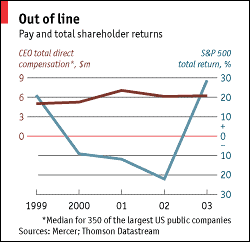
That is, according to our friends on the Green Left, shareholders are not supposed to know enough about company performance and operations to work out if the salaries of top executives are justified. Top executive pay is always published in annual reports of companies.

Activist shareholders concerned about fossil fuel use nonetheless will be able to work out what the companies in their share portfolios are investing in and whether these investments are in fossil fuels. Details of these investments are much less public than the pay of top executives.
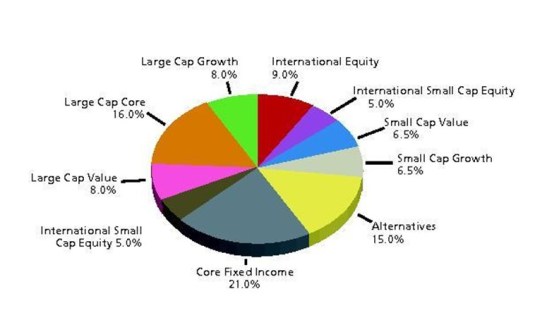
This continuous monitoring of corporate investment policies and associated buying and selling of shares will make investing in small parcels of shares in smaller companies listed on the share market rather expensive. Diversified share portfolios in index linked funds can have hundreds of companies in them. Some of these companies receive next to no media coverage that will simplify the cost to activist shareholders of monitoring their investments in fossil fuels.
 Utopia, you are standing in it!
Recent Comments