Over the past half-century, the share of men enrolled in college has steadily declined relative to women. Today, 1.6 million more women than men attend four-year colleges in the U.S. This trend has not lowered marriage rates for college women, a substantial share of whom have historically married economically stable men without college degrees. Both […]
Gender gaps in education and declining marriage rates
Gender gaps in education and declining marriage rates
06 Feb 2025 Leave a comment
in applied price theory, econometerics, economics of love and marriage, economics of marriage, human capital, labour economics, law and economics, poverty and inequality Tags: assortative mating, economics of fertility
How modern families increase social inequality | The Economist
19 Nov 2019 Leave a comment
in economics of education, economics of love and marriage, human capital, labour economics, labour supply, law and economics, occupational choice, poverty and inequality Tags: assortative mating, dating market, marriage and divorce
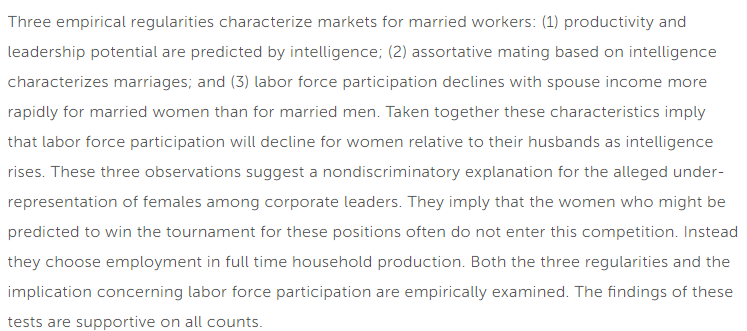
ASSORTATIVE MATING OR GLASS CEILING?
22 May 2017 Leave a comment
in discrimination, economics of love and marriage, gender, human capital, labour economics, labour supply, occupational choice Tags: assortative mating, dating market, gender wage gap, glass ceiling
The new era of segregation
07 Mar 2017 Leave a comment
in economics, economics of love and marriage, human capital, labour economics, labour supply, occupational choice Tags: assortative mating
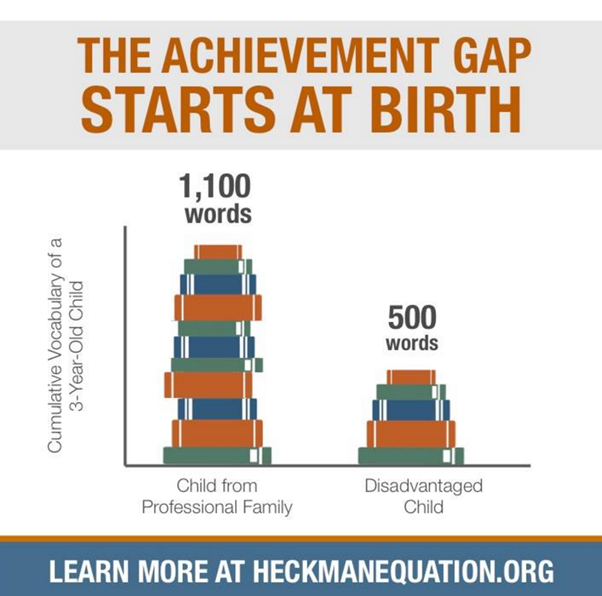
The importance of talking to your children @GreenCatherine @jacindaardern @Maori_party
06 May 2016 Leave a comment
The dating gap on campus
06 Oct 2015 Leave a comment
in economics of education, economics of love and marriage, gender, health and safety, labour economics Tags: assortative mating, asymmetric marriage premium, College premium, dating market, marriage market, power couples, reversing gender gap, search and matching
Why dating in America for college-educated women is completely unfair wapo.st/1L1lULW http://t.co/hTCYCR5GCm—
Know More (@knowmorewp) September 09, 2015
Will the standard policy response to a labour market crisis reduce inequality?
24 Sep 2015 2 Comments
in applied price theory, applied welfare economics, economic history, economics of bureaucracy, economics of education, human capital, labour economics, occupational choice, poverty and inequality, Public Choice Tags: assortative mating, asymmetric marriage premium, College premium, economics of higher education, economics of schooling, economics of universities, graduate premium, marriage and divorce, power couples, university premium
Whenever there is a crisis in the labour market, the standard policy response is send them on a course. That makes you look like you care and by the time they graduate the problem will probably fixed itself. Most problems do. I found this bureaucratic response to labour market crises to repeat itself over and over again while working in the bureaucracy.
Inequality – What can be done?
Stefan Thewissen reviews Tony Atkinson’s book
bit.ly/1h0KDDF http://t.co/KiiGgFQJau—
Max Roser (@MaxCRoser) September 27, 2015
The standard policy response to a normal problem in the labour market is send them on a course. Clever geeks as yourself sitting at your desk as a policy analysis or minister did well at university. You assume others will as well including those who have neither the ability or aptitude to succeed in education. Lowering university tuition fees and easing the terms of student loans simply means that those who do well at university will not have to pay back as much to the government. People who succeed at university already have above average IQs so they already had a good head start in life.
Will more education decrease inequality? A simulation provided an answer. nyti.ms/1xw5m9W http://t.co/paQp19BEWc—
The Upshot (@UpshotNYT) March 31, 2015
The standard solution to growing inequality is to send people on a course. Trouble is that just make smart people wealthier without helping the not so smart and increases the chance of smart men and women marrying off together. This increases the inequality between power couples and the rest.
The asymmetric marriage premium and assortative mating illustrated
08 Jun 2015 Leave a comment
in economics of love and marriage, law and economics, population economics Tags: assortative mating, asymmetric marriage premium
Spouses’ personalities affect employees’ work outcomes s.hbr.org/1HlhQVX http://t.co/P0rWgN8OEd—
Harvard Biz Review (@HarvardBiz) May 16, 2015
What is assortative mating?
02 May 2015 Leave a comment
in discrimination, economics of education, economics of love and marriage, gender, human capital, labour economics, labour supply, law and economics, occupational choice Tags: assortative mating
#Dailychart: Sex and money: How women's equality increases wealth inequality. econ.st/1kCYG1R http://t.co/dfrYJs4vBs—
The Economist (@ECONdailycharts) February 13, 2014
Economists find rare empirical evidence of love in unique marriage survey
20 Jan 2015 Leave a comment
in applied price theory, applied welfare economics, economics of love and marriage, economics of marriage, labour economics Tags: assortative mating

The key research questions that reveal all are:
- How happy are you in your marriage relative to how happy you would be if you weren’t in the marriage? [Much worse; worse; same; better; much better.]
- How do you think your spouse answered that question?
via Economists find rare empirical evidence of love in unique marriage survey.


 Utopia, you are standing in it!
Recent Comments