This paper examines the impact of the emergence of the “gig economy” on the broader labor market by exploiting the staggered introduction of the ridesharing service Uber to American Cities between 2013 and 2018. Using difference-in-differences methods, Callaway and Sant’Anna’s doubly robust difference-in-differences estimator, Chaisemartin and D’Haultoeuille’s time-corrected Wald estimator, and Abadie et al’s synthetic control method, I […]
The economics of ride-sharing
The Creation of Ride-sharing and the Creativity of Markets
10 Aug 2024 Leave a comment
in applied price theory, econometerics, economic history, economics of regulation, income redistribution, industrial organisation, labour economics, labour supply, law and economics, occupational choice, politics - USA, property rights, Public Choice, public economics, regulation, rentseeking, survivor principle, theory of the firm Tags: barriers to entry, creative destruction, taxi regulation

The idea behind Uber first arose, the story goes, on a snowy evening in Paris back around 2008, when Travis Kalanick and Garrett Camp found themselves stuck in Paris on a snowy evening, unable to find a taxi. They wondered “What if you could request a ride simply by tapping your phone?” They co-founded Uber based…
The Creation of Ride-sharing and the Creativity of Markets
Creative destruction 1946, not
24 Dec 2021 Leave a comment
in economic history, economics of media and culture, economics of regulation, entrepreneurship Tags: barriers to entry, creative destruction
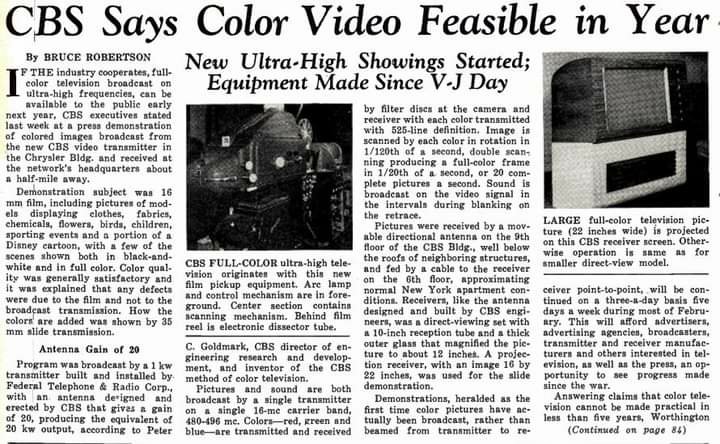
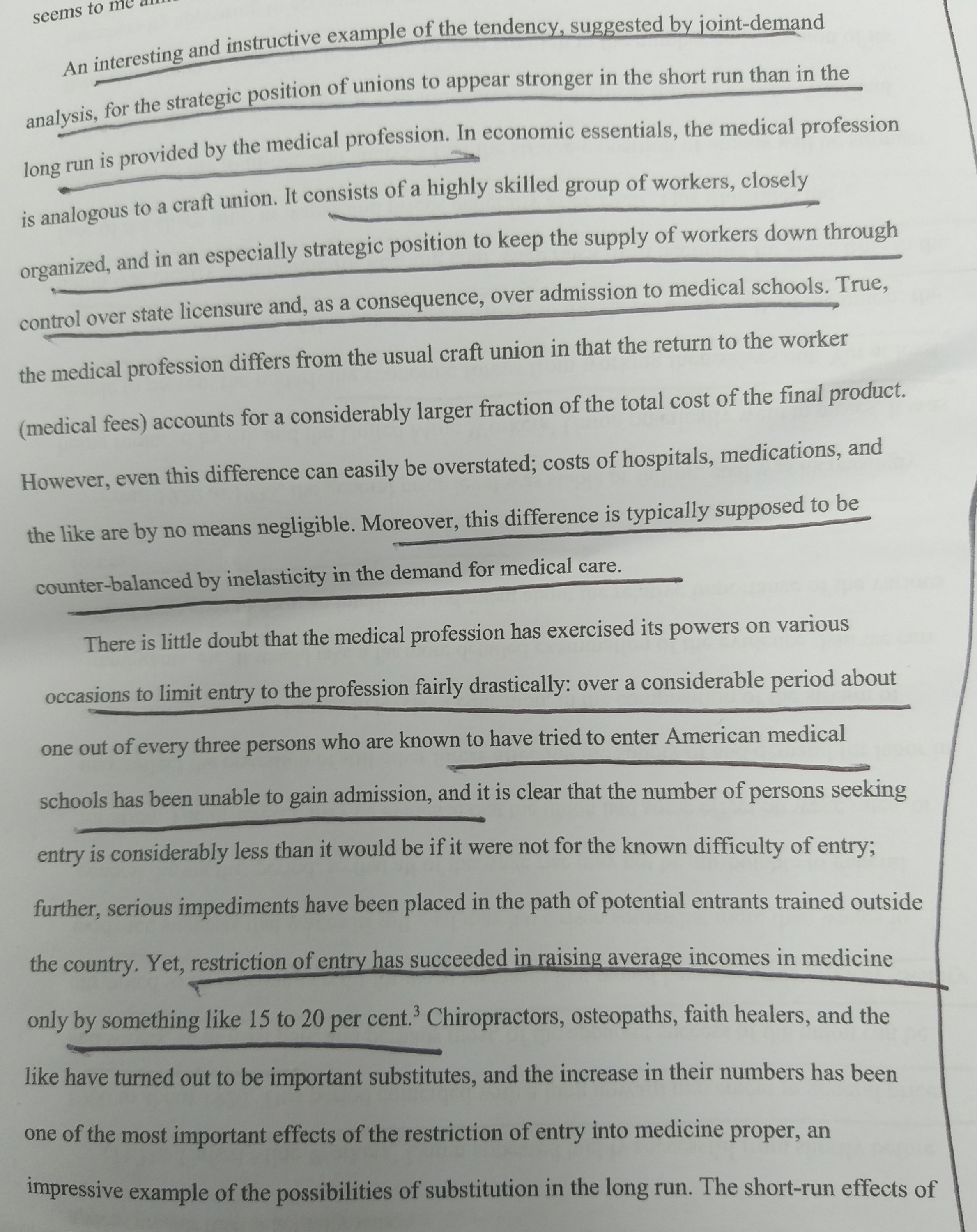
Friedman (1951) thought the union wage premium was overstated because it can’t be as big as doctors’ extract from occupational licensing
02 Dec 2019 Leave a comment
in applied price theory, econometerics, economics of regulation, labour economics, labour supply, Milton Friedman, occupational choice, occupational regulation, Public Choice, rentseeking, unions Tags: barriers to entry, occupational licensing, union power, union wage premium
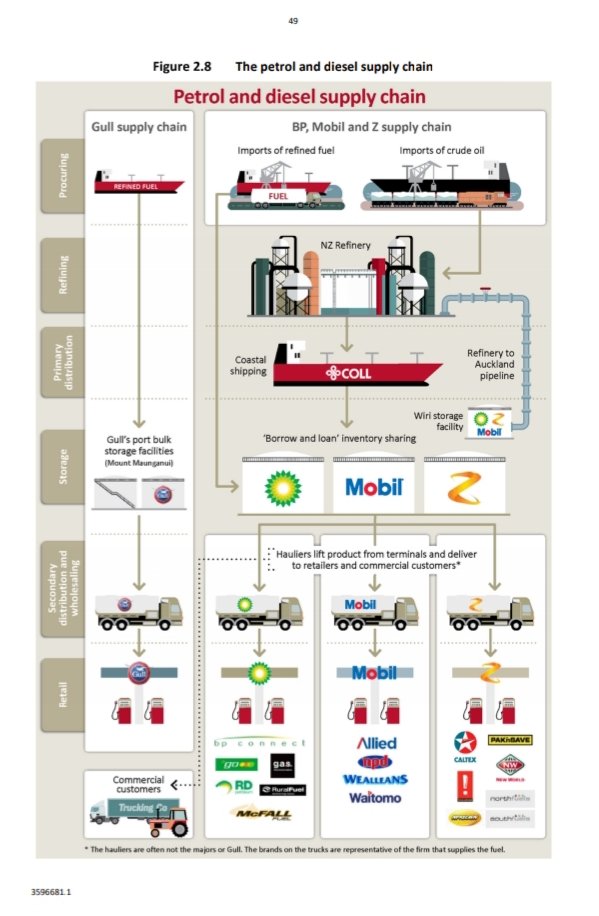
Despite itself, @nzcomcom shows free entry into petrol supply because independents can import as much as they need
21 Aug 2019 Leave a comment
in applied price theory, energy economics, entrepreneurship, industrial organisation, law and economics, politics - New Zealand, survivor principle Tags: barriers to entry, competition law
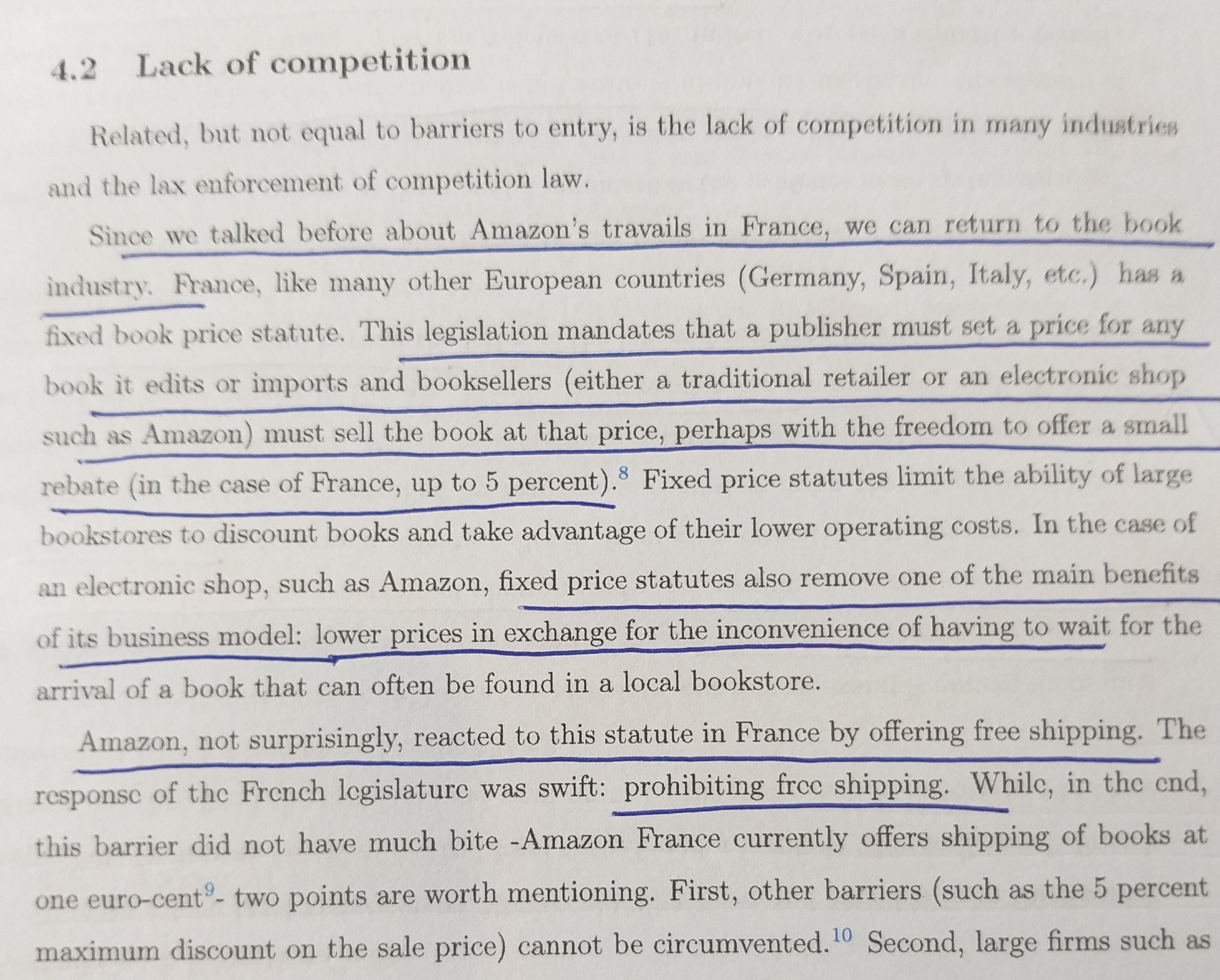
Amazon v. France
23 Jul 2019 Leave a comment
in comparative institutional analysis, economics of bureaucracy, economics of regulation, entrepreneurship, industrial organisation, Public Choice, rentseeking Tags: barriers to entry, competition law, France
Who said mobile phone networks were not contestable?
31 May 2016 Leave a comment
in industrial organisation, politics - New Zealand, survivor principle, technological progress Tags: anti-trust economics, barriers to entry, competition law, creative destruction, network goods, The meaning of competition
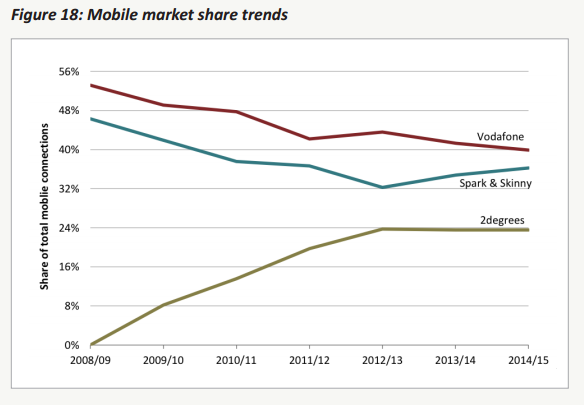
Source: New Zealand Commerce Commission.
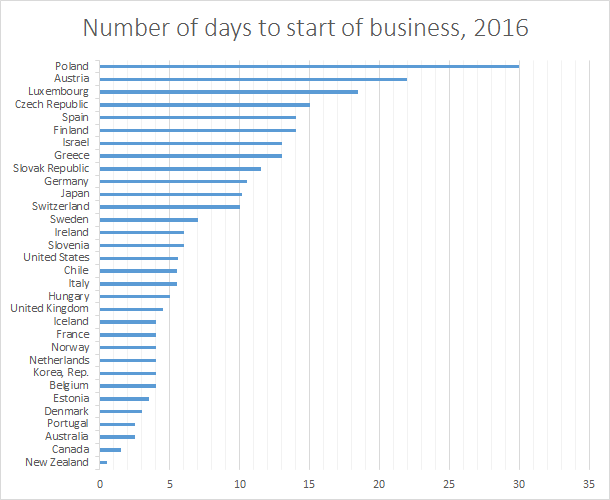
Numbers of days needed to start a business in high income countries
11 May 2016 Leave a comment
in economics of regulation, industrial organisation, law and economics, property rights Tags: barriers to entry, doing business
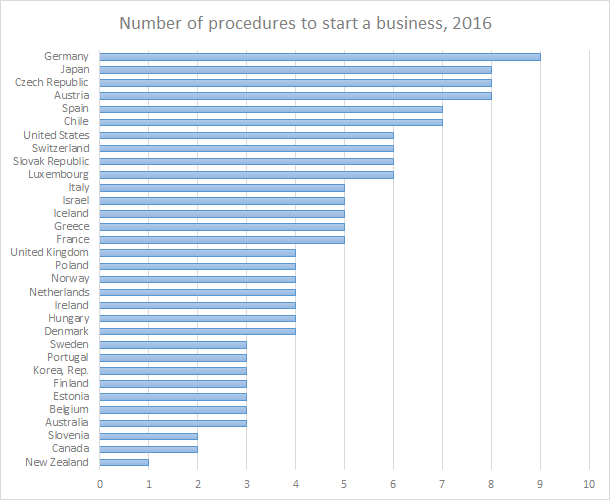
Number of procedures required to start a business in high income countries
10 May 2016 Leave a comment
in economics of regulation, entrepreneurship, industrial organisation, law and economics, property rights Tags: barriers to entry, doing business
Waiting for the permits to come in: business start-up fees and lost output waiting in Europe and North America
09 May 2016 Leave a comment
in economics of regulation, law and economics Tags: barriers to entry, Belgium, British economy, Canada, cost of doing business, Denmark, France, Germany, Greece, Italy, Spain
Expediting the processing of permits can actually make quite a difference to firm start-up costs even in countries with few barriers to starting up a business.
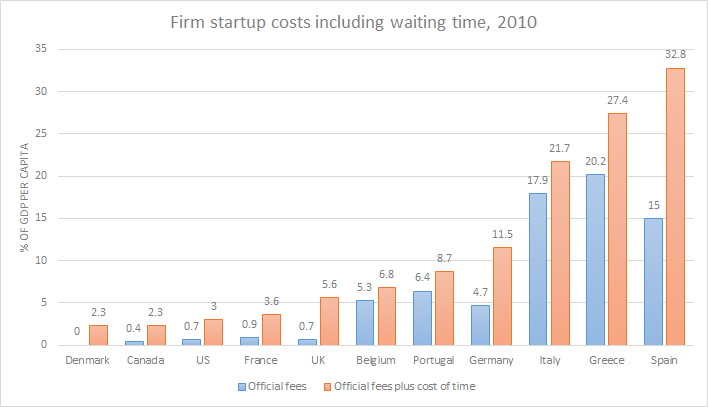
Source: Markus Poschke (2011) Entry regulation: Still costly | VOX, CEPR’s Policy Portal.
Note: The value of time is set to a business day’s output per day of waiting time at 22 business days per month.
 Utopia, you are standing in it!
Recent Comments