https://twitter.com/GuidoFawkes/status/617999678634917888/photo/1


Celebrating humanity's flourishing through the spread of capitalism and the rule of law
06 Jul 2015 Leave a comment
in income redistribution, industrial organisation, labour economics, minimum wage, poverty and inequality, Public Choice, rentseeking, survivor principle Tags: British economy, British politics, Church of England, expressive voting, Fabian Society, hard budget constraints, Left-wing hypocrisy, living wage, market selection
03 Jul 2015 Leave a comment
in constitutional political economy, income redistribution, Public Choice, public economics, rentseeking Tags: British economy, British politics, Director's Law, expressive voting, growth of government, median voter theorem, size of government
No, most U.K. homes do not get more in benefits than they pay in tax ow.ly/3y0nEo http://t.co/LaXvGa8ro2—
Bloomberg VisualData (@BBGVisualData) July 02, 2015
…the poorest 30 percent of households receive significantly more in cash benefits than they pay in tax. The next 10 percent receive on average £596 pounds a year more in cash benefits than they pay in tax, and the top 60 percent all pay more in tax than they get back in cash benefits.
New data from the ONS show the huge growth in state dependency under New Labour. Analysis at cps.org.uk/files/factshee… http://t.co/OLjRoxt3eg—
CPS Think Tank (@CPSThinkTank) June 29, 2015
24 May 2015 Leave a comment
Via @PrivateEyeNews http://t.co/w3IMNRViJJ—
Emily Gray (@missemilygray) May 15, 2015
08 May 2015 Leave a comment
in Public Choice Tags: British general election, British politics, voter demographics
Labourites ought to realise that their party has been in decline since 1950s – it's terminal http://t.co/xRuStRhr0a—
Jon Holbrook (@JonHolb) May 07, 2015
19 Apr 2015 Leave a comment
in applied welfare economics, behavioural economics, economics of education, history of economic thought Tags: academic bias, British politics, UK politics
Here are the choices of essay questions for the RES Economics Essay Competition for 2015 beta.tutor2u.net/economics/blog… http://t.co/iurHfRGOd9—
tutor2u Economics (@economicsuk) April 19, 2015
16 Apr 2015 Leave a comment
in Public Choice Tags: British general election, British politics, Scotland, Tory party
There was a time when Scotland was more Conservative than England. blogs.lse.ac.uk/politicsandpol… http://t.co/JykfZuq4iZ—
(@UberSerf) March 27, 2015
15 Apr 2015 Leave a comment
in income redistribution, Public Choice, rentseeking Tags: British general election, British politics, Scotland, Scottish National party
SNP manifesto. #PrivateEye http://t.co/oD3iuyajBl—
Wire Spy (@wirespyuk) April 02, 2015
20 Feb 2015 1 Comment
in war and peace Tags: British politics, European politics, obsolete military technology, Russian politics
The Russian Bear bomber is a reverse engineering job on several B-29 American bombers that ran short of fuel and had to land in Vladivostok in 1945. Obviously, the KGB was hopeless at penetrating the American strategic bombing programs. Spies and traitors were the only way they ever upgraded their aircraft and military technology. The Bear entered service with the Soviet Union in 1956 and is expected to serve the Russian Air Force until at least 2040!

HT: http://www.theguardian.com/uk-news/2015/feb/19/russian-bomber-flew-inland-cornwall-uk-airspace-witness and http://www.dailymail.co.uk/news/article-2959849/Typhoon-fighter-jets-scrambled-intercept-two-Russian-Bear-bombers.html
16 Feb 2015 Leave a comment
in constitutional political economy, law and economics Tags: British constitutional law, British justice, British politics, republicanism, treason
Under the Treason Felony Act (1848), it is treason felony to “compass, imagine, invent, devise, or intend”:
The act was passed in 1848, a year of revolutionary fervour across Europe. Its express purpose was to punish those who called for the establishment of a republic in Britain.
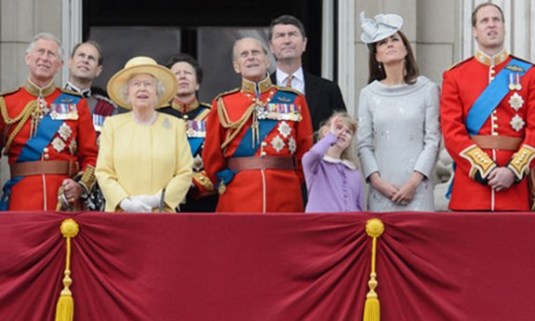
The act makes it a criminal offence, punishable by life imprisonment, to advocate abolition of the monarchy even by peaceful means. In 2013, the Ministry of Justice said:
Section 3 of the Treason Felony Act 1848 has not been repealed.
The last reported prosecution under the Act in the United Kingdom was in 1883, although the Act was used in Australia in 1916 to prosecute the “Sydney Twelve“.
In 2001, the Guardian initiated a legal challenge against the antique statute on the grounds that it prevented freedom of expression as guaranteed by the Human Rights Act 1998.
The law lords dismissed the newspaper’s case on the grounds that it was unnecessary. Lord Steyn explained:
“The part of section 3 of the 1848 Act which appears to criminalise the advocacy of republicanism is a relic of a bygone age, and does not fit into the fabric of our modern legal system. The idea that s3 could survive scrutiny under the Human Rights Act is unreal.” But, he added, courts should not be used as “an instrument … [to] chivvy parliament into spring-cleaning the statute book”.
The Guardian then noted that 327 other obscure offences had been subsequently spring cleaned from the British statute books including being an incorrigible rogue under the Vagrancy Act of 1824.

Her Majesty’s Attorney General for England and Wales made no submission on his prosecution policy to the House of Lords when the legal challenge was heard. But the Law Lords said if he had:
It could only have been to accept that, at least since October 2 2000 when the Human Rights Act 1998 came into force, no one who advocates the abolition of the monarchy by peaceful and constitutional means has been at any risk of prosecution (other than a private prosecution) or of conviction.
Lord Hutton said:
It is not the function of the courts to decide hypothetical questions which do not impact on the parties before them,
Lord Scott of Foscote said:
No one who advocates the peaceful abolition of the monarchy and its replacement by a republican form of government is at any risk of prosecution. No attorney general or director of public prosecutions would or could authorise a prosecution for such advocacy without becoming a laughing stock. To do so would be an unlawful act under s6 (1) of the 1998 Act.
Lord Walker of Gestingthorpe said:
It is most undesirable that obsolete statutes should remain unrepealed. Quaint language and interesting historical associations are no justification for preserving obsolete statutes in a mummified state. But … it is still the role of the legislature, rather than that of the courts, to decide whether to repeal or retain legislation.
Lord Styen also said
…counsel for the Attorney General accepted that the 1848 Act must be construed as an always speaking statute in a modern democracy. In this context it may well be that the strong operative words “deprive or depose” import the idea of changing our form of government by unlawful force. If this interpretation is correct, the reason for the present litigation collapses at the threshold.
His Lordship added that the passage of the Human Rights Act in 1998 had significant relevance to the interpretation of prior legislation:
Freedom of political speech is a core value of our legal system. Without it the rule of law cannot be maintained. Whatever may have been the position before the Human Rights Act came into operation, it is difficult to think of any rational argument justifying the criminalisation of the conduct of citizens who wish to argue for a different form of government… The idea that section 3 could survive scrutiny under the Human Rights Act is unreal. The fears of the editor of The Guardian were more than a trifle alarmist. In my view the courts ought not to be troubled further with this unnecessary litigation.
The only risk under the Treason Felony Act 1848 is a rogue prosecution. The director of public prosecutions would take over such a prosecution immediately and offer no evidence. He has an absolute right to take over private prosecutions. As Lord Rogers said:
Nor is the threat of a rogue private prosecution any more substantial, since the reality is that, having regard to the public interest, the Director of Public Prosecutions would take it over and discontinue it or the Attorney-General would enter a nolle prosequi.
Celebrating humanity's flourishing through the spread of capitalism and the rule of law
Scholarly commentary on law, economics, and more
Beatrice Cherrier's blog
Celebrating humanity's flourishing through the spread of capitalism and the rule of law
Celebrating humanity's flourishing through the spread of capitalism and the rule of law
Celebrating humanity's flourishing through the spread of capitalism and the rule of law
Why Evolution is True is a blog written by Jerry Coyne, centered on evolution and biology but also dealing with diverse topics like politics, culture, and cats.
Celebrating humanity's flourishing through the spread of capitalism and the rule of law
Celebrating humanity's flourishing through the spread of capitalism and the rule of law
A rural perspective with a blue tint by Ele Ludemann
DPF's Kiwiblog - Fomenting Happy Mischief since 2003
Celebrating humanity's flourishing through the spread of capitalism and the rule of law
The world's most viewed site on global warming and climate change
Tim Harding's writings on rationality, informal logic and skepticism
A window into Doc Freiberger's library
Let's examine hard decisions!
Commentary on monetary policy in the spirit of R. G. Hawtrey
Thoughts on public policy and the media
Celebrating humanity's flourishing through the spread of capitalism and the rule of law
Politics and the economy
A blog (primarily) on Canadian and Commonwealth political history and institutions
Reading between the lines, and underneath the hype.
Economics, and such stuff as dreams are made on
"The British constitution has always been puzzling, and always will be." --Queen Elizabeth II
Celebrating humanity's flourishing through the spread of capitalism and the rule of law
Celebrating humanity's flourishing through the spread of capitalism and the rule of law
WORLD WAR II, MUSIC, HISTORY, HOLOCAUST
Undisciplined scholar, recovering academic
Celebrating humanity's flourishing through the spread of capitalism and the rule of law
Res ipsa loquitur - The thing itself speaks
Celebrating humanity's flourishing through the spread of capitalism and the rule of law
Researching the House of Commons, 1832-1868
Articles and research from the History of Parliament Trust
Reflections on books and art
Posts on the History of Law, Crime, and Justice
Celebrating humanity's flourishing through the spread of capitalism and the rule of law
Exploring the Monarchs of Europe
Cutting edge science you can dice with
Small Steps Toward A Much Better World
“We do not believe any group of men adequate enough or wise enough to operate without scrutiny or without criticism. We know that the only way to avoid error is to detect it, that the only way to detect it is to be free to inquire. We know that in secrecy error undetected will flourish and subvert”. - J Robert Oppenheimer.
The truth about the great wind power fraud - we're not here to debate the wind industry, we're here to destroy it.
Celebrating humanity's flourishing through the spread of capitalism and the rule of law
Celebrating humanity's flourishing through the spread of capitalism and the rule of law
Economics, public policy, monetary policy, financial regulation, with a New Zealand perspective
Celebrating humanity's flourishing through the spread of capitalism and the rule of law
Restraining Government in America and Around the World
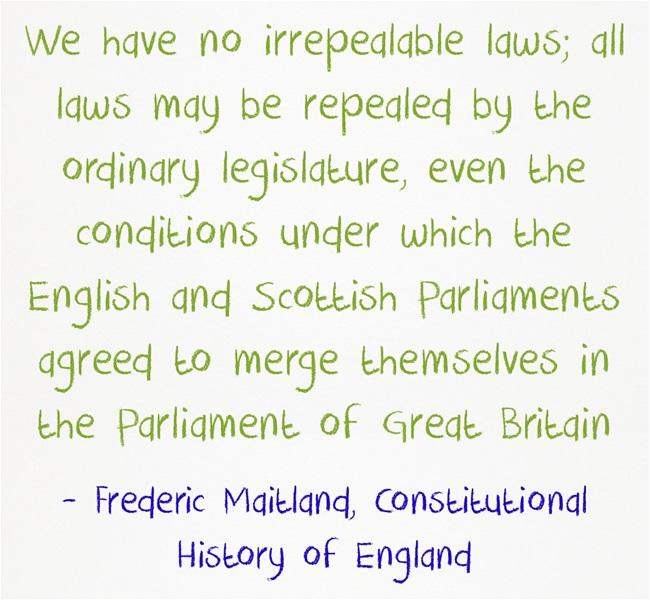


 Utopia, you are standing in it!
Recent Comments