Apparently there are people who claim they haven’t used the Internet
25 Mar 2015 Leave a comment
in economics of media and culture, industrial organisation Tags: creative destruction, Internet, opinion polls, revealed preference
Another job that was replaced by a robot
25 Mar 2015 Leave a comment
in applied welfare economics, labour economics, labour supply, occupational choice, technological progress Tags: automation, creative destruction, technological unemployment
Was the spread of the internet really fast?
23 Mar 2015 Leave a comment
in economics of media and culture, technological progress Tags: creative destruction, Internet, technology diffusion
Landlines are certainly on the way out
21 Mar 2015 Leave a comment
in economics of media and culture, entrepreneurship, industrial organisation, survivor principle Tags: cell phones, creative destruction, mobile phones, network industries
Filipinos love social networking more than any other country
20 Mar 2015 Leave a comment
in development economics, economics of media and culture, growth miracles Tags: creative destruction, Philippines, technology diffusion

Digital devices are taking over the day
20 Mar 2015 Leave a comment
in economics of media and culture, industrial organisation, survivor principle Tags: creative destruction, network industries, The Great Enrichment
17 equations that change the world
19 Mar 2015 2 Comments
in economic history, economics of media and culture, human capital Tags: creative destruction, innovation
First push-button Phone, 1948
18 Mar 2015 Leave a comment
Creative destruction defined
18 Mar 2015 Leave a comment
in economics of media and culture, entrepreneurship, industrial organisation, survivor principle Tags: creative destruction, entrepreneurial alertness, Iphone, Joseph Schumpeter
Trends in DNA Sequencing Costs
14 Mar 2015 Leave a comment
in entrepreneurship, health economics Tags: creative destruction, innovation, Moore's law, The Great Enrichment, The Great Escape

via DNA Sequencing Costs.
Many more birds to be incinerated as solar energy becomes cost competitive; climate alarmists face mass layoffs
13 Mar 2015 Leave a comment
in energy economics, environmental economics, global warming Tags: climate alarmism, creative destruction, global warming, killer green technologies, solar power

Unsubsidized rooftop solar electricity costs anywhere between $0.13 and $0.23/kWh today, well below retail price of electricity in many markets globally.
The economics of solar have improved significantly due to the reduction in solar panel costs, financing costs and balance of system costs. We expect solar system costs to decrease 5-15% annually over the next 3+ years which could result in grid parity within ~50% of the target markets.
If global electricity prices were to increase at 3% per year and cost reduction occurred at 5-15% CAGR, solar would achieve grid parity in an additional ~30% of target markets globally. We believe the cumulative incremental total available market for solar is currently around ~140GW/year and could potentially increase to ~260GW/year over the next 5 years as solar achieves grid parity in more markets globally and electric capacity needs increase…
solar system costs have declined at ~15% CAGR over the past 8 years and we expect 40% cost reduction over the next 4-5 years as a solar module costs continue to decline, panel efficiencies gradually improve, balance of system costs decline due to scale and competition, global financing costs decline due to development of new business models and customer acquisition costs decline as a result of increasing customer awareness and more seamless technology adoption enabled by storage solutions…
oil represents only about 5% of global electricity production and in some of the important solar markets such as US, China, oil based electricity generation is less than 5% of the total. Moreover, the cost of oil based electricity generation even at $50 oil prices is the 7-9c/kWh range and as shown in the note, the marginal cost is higher than solar in many regions worldwide. Bottom line is that oil prices do not have a material impact on solar demand.

About the only losers from this creative destruction in energy production, aside from the tens of thousands of public officials, academics and NGO employees who jobs and research grants depend up climate alarmism, are the birds that happen to fly past these solar power stations and are incinerated.

via Deutsche Bank’s 2015 solar outlook: accelerating investment and cost competitiveness – Deutsche Bank Responsibility and Deutsche Bank report: Solar grid parity in a low oil price era – Deutsche Bank Responsibility.
Is poverty in America not having a cell phone, or not having a smart phone?
13 Mar 2015 Leave a comment
in economics of media and culture, poverty and inequality, technological progress Tags: cell phones, creative destruction, iPhones, technological diffusion


Chiselling on the Closer Economic Relations agreement between New Zealand and Australia
10 Mar 2015 Leave a comment
in economics of media and culture, economics of regulation, politics - Australia, politics - New Zealand, rentseeking Tags: barriers to entry, closer economic relations, creative destruction, export pricing, free trade, Hollywood economics, price discrimination, protectionism, rent seeking
Back in the day, New Zealand television programming was sold cheaply into the Australian market. Many cultural and other products are exported into foreign markets and sold for whatever they can get above the price of shipping or digital transmission. What else explains all that rubbish on cable TV?
Under the Closer Economic Relations agreement that creates a single market between Australia and New Zealand, New Zealand made television programming content must be treated the same way as Australian content so it was included in their 50% local content rules for commercial television back from whenever I remember this story from. There was a Federal Court of Australia case that ruled that New Zealand television programming was Australian content programming for the purposes of the relevant media regulations because of Closer Economic Relations.

From the late 1990s, with revival of the New Zealand film and television industry, New Zealand content was starting to flood the Australian market, especially in the off-season in the summer when stations were looking for cheap content to fill a low ratings period.

Naturally, this Kiwi invasion did not please the rent seeking Australian television programme production industry and many a mendicant actor, writer and producer
Where there is a will, where there is a way: minimum quality standards are introduced into the Australian content rules defined by price – a price that happen to be above what the television stations used to pay for New Zealand made programming.
Why delicious Indian food is surprisingly unpopular in the U.S.
05 Mar 2015 Leave a comment
in applied price theory, industrial organisation, survivor principle Tags: creative destruction, food, Indian food
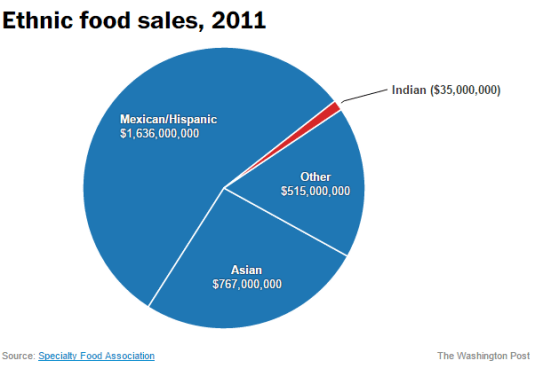
No need to rage against the gaucheness of Americans who, in fact, have embraced many foods:
The cuisine is among the most labor intensive in the world. And yet Americans are unwilling to pay beyond a certain, and decidedly low, price point.
Via Why delicious Indian food is surprisingly unpopular in the U.S. – The Washington Post.
 Utopia, you are standing in it!
Recent Comments