Mises on the origin of profits
19 Jul 2015 Leave a comment
in applied price theory, applied welfare economics, entrepreneurship, industrial organisation, Ludwig von Mises, survivor principle Tags: creative destruction, entrepreneurial alertness, market process, profit and loss, The meaning of competition
1st cellphone
18 Jul 2015 Leave a comment
in economic history, economics of media and culture, entrepreneurship, technological progress Tags: cell phones, creative destruction, entrepreneurial alertness
This is the first cellphone.
It went on sale 30 years ago today for $4,000 http://t.co/6zFIf3cxDV—
History Pics (@HistoryPixs) March 14, 2014
Entrepreneurial alertness in green, clean technologies
17 Jul 2015 Leave a comment
in economics of information, economics of media and culture, environmental economics, global warming, Public Choice Tags: climate alarmism, creative destruction, entrepreneurial alertness, global warming, green technologies, innovation
And the rich got richer, who cares
16 Jul 2015 Leave a comment
in applied price theory, applied welfare economics, Austrian economics, comparative institutional analysis, constitutional political economy, development economics, economic history, economics of bureaucracy, economics of education, economics of regulation, economics of religion, energy economics, entrepreneurship, environmental economics, financial economics, growth disasters, growth miracles, income redistribution, industrial organisation, international economics, labour economics, labour supply, liberalism, poverty and inequality, Public Choice, rentseeking, survivor principle, transport economics, urban economics Tags: Deirdre McCloskey, entrepreneurial alertness, The Great Enrichment, The Great Escape, The Great Fact, top 1%
"The rich got richer, true. But…" —@DeirdreMcClosk buff.ly/1Imdv4o http://t.co/M3ERx3JTIn—
HumanProgress.org (@humanprogress) June 28, 2015
The rise and rise of Amazon
16 Jul 2015 Leave a comment
in economic history, economics of media and culture, entrepreneurship, industrial organisation, survivor principle Tags: amazon, creative destruction, e-commerce, entrepreneurial alertness
The rise and rise of Amazon in two charts econ.st/1Od8KdV http://t.co/HTs0zngL0Y—
The Economist (@TheEconomist) July 15, 2015
Was the Chinese share market crash rational asset-price movements without news?
14 Jul 2015 1 Comment
in business cycles, entrepreneurship, financial economics, macroeconomics Tags: competition as a discovery procedure, dot.com bubble, entrepreneurial alertness, event studies, learning by doing, sharemarket bubbles, sharemarket crashes
Large share market crashes such as over the recent months in China and the 1987 Wall Street crash do not necessarily imply an economic slowdown.
As the stock market gets rocked, let's remember this one thing about the crash of 1987 businessinsider.com/lets-remember-… http://t.co/BDgy5h5UN0—
Elena Holodny (@elenaholodny) August 21, 2015
The majority of major share market movements occur without any particular news hitting the market. Studies of the 50 largest share market movements in the US stock market between 1946 and 1987 found that the majority of them could not be explained by news. That includes the 1987 share market crash. In October 1987, shares fell by 20% in one day for no obvious reason.
China's stock market selloff explained in 6 charts bloom.bg/1HStJSe http://t.co/0CpoU21RpY—
Bloomberg Business (@business) July 13, 2015
David Romer explained these booms and busts, including the 1987 share market crash in two ways: investor uncertainty about the quality of other investors’ information; and dispersion of information and small costs to trading:
Asset prices can change because initially the market does an imperfect job of revealing the relevant information possessed by different investors and because developments within the market can then somehow cause more of that information to be revealed…
The possibility of imperfect aggregation implies an alternative to external news and irrationality as a potential source of asset-price movements: some price changes may be caused by “internal” news.
That is, asset prices can change because initially the market does an imperfect job of revealing the relevant information possessed by different investors and because developments within the market can then somehow cause more of that information to be revealed.
Either of these models are perfectly plausible. Investors learn from each other through trading and improve their estimations of the value of various shares.
#China Reality Check: #Stocks Are Still Too Expensive for @MarkMobius bloom.bg/1Monzct via @business @frostyhk http://t.co/e3Lv3KwgTZ—
Fion Li (@fion_li) July 13, 2015
As such, through internal learning and discovery within the share market there can be booms and crashes despite no new information, no communication, and no coordination among the participants in trading. Underneath the surface, there is a gradual updating of information by the participants and at a certain point in time, this causes a sudden change of behaviour.
Dow and Gorton made similar points to David Romer about how share market learning is a process of learning, judgement and error correction rather than an instant adjustment:
Strategic interaction and the complexity of the information result in a protracted price response.
Indeed, equilibrium price paths of the model may display reversals in which the two traders rationally revise their beliefs, first in one direction, and then in the opposite direction, even though no new information has entered the system.
A piece of information which is initially thought to be bad news may be revealed, through trading, to be good news.
Bubbles and crashes are consistent with private information held by a few slowly dispersing among market participants until this knowledge was reflected in stock prices as in Hayek’s (1945) analysis of the price mechanism as a means of communicating information.
HT: The one thing you should remember about the stock market crash of 1987 | Business Insider.
Creative destruction in Polaroid cameras
12 Jul 2015 Leave a comment
in applied welfare economics, economic history, entrepreneurship, technological progress Tags: cameras, creative destruction, entrepreneurial alertness
On this day in 1948, the 1st polaroid camera was sold for $89.75 in Boston at the Jordan Marsh department store. http://t.co/hyuXjccsHw—
Historical Pics (@HistoricalPics) November 26, 2014
Creative destruction in 1990s memories
11 Jul 2015 Leave a comment
in economic history, economics of media and culture, entrepreneurship Tags: creative destruction, entrepreneurial alertness, good old days


Entrepreneurial alertness in index-linked passive investing front-running
11 Jul 2015 Leave a comment
in entrepreneurship, financial economics Tags: active investing, arbitrage, efficient markets hypothesis, entrepreneurial alertness, passive investing, Speculation
There's an easy way to game the stock market, and it's getting easier by the day bloom.bg/1NNmHPs http://t.co/GFtBhKH2fo—
Bloomberg Business (@business) July 08, 2015
The traders are simply buying stocks before they’re added to the indexes that, by definition, index funds must track.
As the popularity of index investing soars to new heights, the emergence of index front-running is raising fundamental questions about so-called passive investment strategies, as well as how indexes are compiled and the role the funds themselves play in elevating costs.
By one estimate, it gouges owners of funds tracking the Standard & Poor’s 500 Index to the tune of $4.3 billion a year, a sum that can double or even triple the cost of such investments…
Take American Airlines Group Inc., which joined the S&P 500 after markets closed on March 20. Because the addition of the carrier was announced four days earlier, nimble traders had plenty of time to get in front of the less fleet-footed. American jumped 11 percent over the span.
The cost was ultimately borne by index funds, which sparked an $8 billion buying frenzy in the two minutes right before the close — an amount equal to more than two weeks of the stock’s typical volume…
Market segmentation in the London newspaper market
11 Jul 2015 Leave a comment
in constitutional political economy, economic history, economics of media and culture, entrepreneurship, industrial organisation, Public Choice, survivor principle Tags: British elections, British politics, consumer sovereignty, creative destruction, entrepreneurial alertness, expressive voting, London newspapers, market selection, media bias, product differentiation, rational ignorance, rational irrationality, The meaning of competition
The truth about the press and power? Readers, not editors, decide elections. @RobertdgSmith specc.ie/1c58mAr http://t.co/Vhit9P9iM7—
Fraser Nelson (@FraserNelson) May 06, 2015
Satellite relay TV started this day, 1962
10 Jul 2015 Leave a comment
in applied welfare economics, economic history, economics of media and culture, entrepreneurship, technological progress Tags: creative destruction, entrepreneurial alertness, innovation
10 July 1962: The 'Telstar' Communications satellite was launched. It was the beginning of satellite relayed TV. http://t.co/6kW3aAAEpF—
History (@HistoryTime_) July 10, 2015
Creative destruction in Internet diffusion
10 Jul 2015 Leave a comment
in economic history, economics of media and culture, entrepreneurship Tags: cell phones, Digital poverty, entrepreneurial alertness, Internet, mobile phones, technology diffusion
Mobile broadband could reach saturation even faster than the mobile phone before it econ.st/1LJ3mhy http://t.co/2809LNCWwZ—
The Economist (@ECONdailycharts) May 27, 2015
It is Nikola Tesla’s birthday
09 Jul 2015 Leave a comment
in economic history, economics of media and culture, entrepreneurship Tags: creative destruction, entrepreneurial alertness, Nikola Tesla
It is Nikola Tesla's birthday. His 1926 description of today's smartphone is truly remarkable http://t.co/AAkeSsWfpl—
paulkirby (@paul1kirby) July 10, 2015
Can NZ double migrant investors and entrepreneurs from $3.5 billion to $7 billion at no cost to taxpayers!?
07 Jul 2015 Leave a comment
in applied price theory, applied welfare economics, comparative institutional analysis, economics of bureaucracy, entrepreneurship, income redistribution, industrial organisation, managerial economics, organisational economics, politics - New Zealand, Public Choice, public economics, rentseeking, survivor principle Tags: corporate welfare, entrepreneurial alertness, industry policy, industry targeting, The fatal conceit, The pretence to knowledge


I didn’t notice any discussion in the Cabinet paper of a government doing this before and whether their investment promotion efforts succeeded or not. This latest policy proposal cannot even count as evidence-based policy dreaming, much less a serious contribution to public policy.

Hoping to double incoming foreign investor and entrepreneur migration from $3.5 billion to $7 billion inside three years without spending any extra public money is breathless public policy making. I am sure lots of governments previously tried to get something for nothing.

It will be helpful if ministers pointed to where overseas governments have been successful in doubling foreign investment by simply reprioritising existing investment promotion efforts.

There are at least 2,500 national, provincial and city investment promotion agencies out. Some of them must have been subject to some sort of evaluation as to their success.

This overseas literature review would be in addition to the recent findings of the Ministry of Economic Development about the poor performance and perhaps futility of the foreign direct investment promotion by New Zealand Trade and Enterprise.
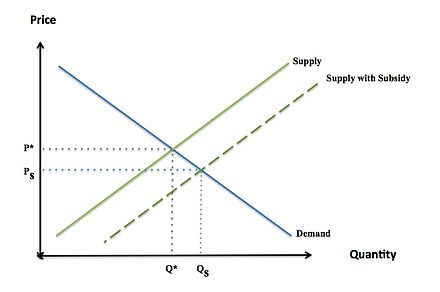
Imagine how much bigger a boost in foreign investor and entrepreneur migration lays before us if actual real new money was put on the table.
via beehive.govt.nz – Strategy targets international investors and Evaluation of NZTE investment support activities [929 KB PDF]
.

 Utopia, you are standing in it!
Recent Comments