The French Resistance – was it of any use to anyone?
19 Feb 2019 Leave a comment
in defence economics, war and peace Tags: France, World War II
What Next for France’s ‘Yellow Vests’? | Dispatches @nytimes
26 Dec 2018 Leave a comment
in fiscal policy, law and economics, Public Choice, public economics Tags: France, tax rebellions
Ten Minute English and British History #15 – The Hundred Years’ War
20 Dec 2018 Leave a comment
in defence economics, Public Choice, war and peace Tags: British history, France
What Is France’s ‘Gilets Jaunes’ or ‘Yellow Vests’ Protest Movement?
08 Dec 2018 Leave a comment
in economics of bureaucracy, fiscal policy, income redistribution, macroeconomics, Public Choice, public economics Tags: France

Behind on my French socialist bashing
22 Aug 2018 Leave a comment
in applied price theory, business cycles, comparative institutional analysis, economic growth, economic history, economics of regulation, financial economics, fiscal policy, industrial organisation, macroeconomics, Public Choice, rentseeking Tags: economics of socialism, France, The fatal conceit

How did Napoleon lose in Russia? | Animated History
19 Aug 2018 Leave a comment
in economic history Tags: France, Napoleon, Russia
It Happened In Paris: WWII Nazi Occupation (1942 & 1944) | British Pathé”
03 May 2018 1 Comment
in laws of war, war and peace Tags: France, World War II
Noam Chomsky: The Strange Bubble of French Intellectuals. Brilliant! Almost makes up for all his other rubbish?
29 Jan 2018 Leave a comment
in Marxist economics Tags: France, moral philosophy, political philosophy
French Overseas Regions and Territories Explained
20 May 2017 Leave a comment
in constitutional political economy Tags: France
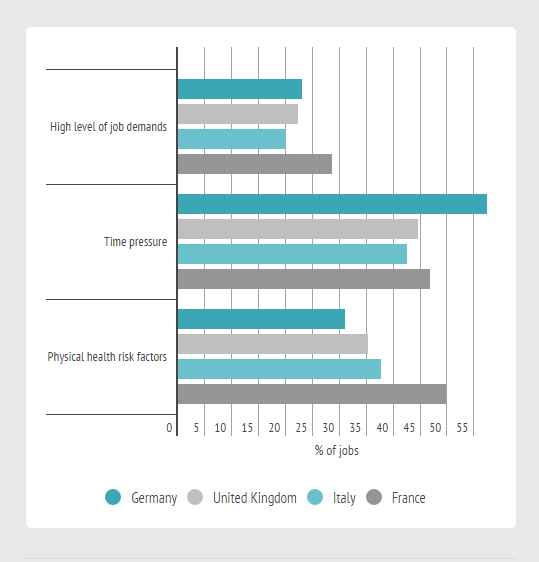
Why are French jobs so miserable and dangerous?
13 Mar 2017 Leave a comment
in labour economics Tags: British economy, compensating differentials, Denmark, France, Germany, Italy
Cohabitation after the French presidential and parliamentary elections
06 Feb 2017 Leave a comment
in constitutional political economy, politics, Public Choice Tags: France
The run-off in the next French presidential election in May is likely to be between an independent who was formerly a socialist party economy minister and the National Front candidate. Over 80% of French vote for other parties so these parties are likely to still do well in the parliamentary election that will occur in June.
This leads to what was supposed to have been solved by making the presidential and parliamentary terms the same 5 years which is cohabitation.
The French system is a semi-presidential system. The president is directly elected but the Prime Minister must have the confidence of the National Assembly.
When the prime minister comes from the same party as the president, the French president reigns supreme and chooses his own Prime Minister from within his party. The French Constitution naturally is silent on the ability of the president to dismiss the prime minister.
There were several periods where the president and prime minister were from different parties. This was known as cohabitation. They occurred with the Mitterrand-Chirac Period (1986-1988), Mitterrand-Balladur Period (1993-1995) and Chirac-Jospin Period (1997-2002).
Each of these periods, the president largely confined himself to foreign affairs and defence with the Prime Minister running the internal affairs of the country. The Prime Minister or other ministers must countersign almost all of the official acts of the French president.
When a French president who was cohabitating with a political opponent refused to sign official decrees and other documents, the Prime Minister can always pass an act of Parliament.
It is important for the National Front candidate to note that in times of cohabitation, many argue that the French system becomes a Parliamentary system with the president having few powers.
It is the Prime Minister, not the President, who under Article 21 of the constitution “directs the action of government,” under Article 20 “shall determine and conduct the policy of the Nation, ” and also “ensures the execution of laws,” and “proposes constitutional amendments to the president.” The Prime Minister’s government can legislate through decrees, ordinances, and regulations, and, under Article 38 of the constitution, may ask the National Assembly to delegate power to issue decrees in areas normally under the legislature’s jurisdiction.
Short of dissolving parliament and calling for new elections, the president is left with little power to influence public policy. The main independent power of the French president is to dissolve parliament at his own initiative. There is no requirement for the Prime Minister to countersign.

The National Front has two seats in the outgoing French National Assembly. In the 2-round system of French Parliamentary elections, there is a run-off between the candidates who receive more than 12.5% of the vote on a first past the post basis.
That system will apply again in the forthcoming Parliamentary elections in July making it very difficult for the National Front to break through to a parliamentary majority even with a presidential win.
Candidates who advance to the second round have the option of withdrawing and 3rd placed candidates often do for tactical reasons. The parties of the mainstream left have a long-standing agreement whereby they do not stand against one another in the second round. The less-well-placed automatically withdraws.
The National Front ran for president over the years as a way of raising its profile. Winning the presidency is of no moment unless there is success also in the parliamentary elections.
A newly elected National Front presidential cannot dismiss the socialist prime minister. The National Front may boast its current two seats to be a minor coalition partner after the parliamentary elections.
The History of France: Every Year
29 Dec 2016 Leave a comment
in economic history Tags: France, maps
Paris Delivered (1944)
26 Aug 2016 Leave a comment
in defence economics, economic history Tags: France, Paris, World War II
 Utopia, you are standing in it!
Recent Comments