We study the macroeconomic effects of tariff policy using U.S. historical data from 1840–2024. We construct a narrative series of plausibly exogenous tariff changes – based on major legislative actions, multilateral negotiations, and temporary surcharges – and use it as an instrument to identify a structural tariff shock. Tariff increases are contractionary: imports fall sharply,…
The Macroeconomic Effects of Tariffs
The Macroeconomic Effects of Tariffs
02 Mar 2026 Leave a comment
in applied price theory, econometerics, economic history, history of economic thought, international economics Tags: free trade, tariffs
Trump’s Tariffs Have Not Shifted the Trade Deficit
21 Feb 2026 1 Comment
in international economics, politics - USA Tags: free trade, tarrifs

The recent Supreme Court decision that President Trump did not have arbitrary and unbounded powers he has claimed to impose or retrace tariffs came as no surprise, for a variety reasons laid out in earlier posts here, here, and here. But here I want to focus on a different claim: that the reason for tariffs…
Trump’s Tariffs Have Not Shifted the Trade Deficit
The Economic Burden of Protectionism, Part II
18 Feb 2026 Leave a comment
in applied price theory, industrial organisation, international economics, politics - USA Tags: free trade, tarrifs

In Part I of this series, we reviewed some new research from the New York Federal Reserve. That study showed that Americans bear about 90 percent of the burden of Trump’s Liberation Day trade taxes. Though I added my own two cents because I don’t actually care that much about who bears the burden of […]
The Economic Burden of Protectionism, Part II
The economic impacts of the 2008 NZ-China Free Trade Agreement
06 Feb 2026 1 Comment
in applied price theory, econometerics, industrial organisation, international economics, politics - New Zealand Tags: China, free trade, free trade agreements, tariffs

New Zealand was the first Western developed country to sign a free trade agreement with China, and it came into force in 2008. At the time, the New Zealand government estimated an increase in exports to China of between NZ$225 million and NZ$350 million (between US$180 million and US$280 million), and Ministry of Foreign Affairs…
The economic impacts of the 2008 NZ-China Free Trade Agreement
Tariffs and Inflation: Where Are We?
05 Feb 2026 Leave a comment
in applied price theory, econometerics, international economics, politics - USA Tags: free trade, tariffs

One of the predictions made by economists when President Trump announce the start of his freewheeling tariff policies in April 2025 was that the costs of the tariffs would ultimately be passed through to consumers, leading to overall higher inflation. Well, President Trump has been tossing out tariff threats, keeping some and withdrawing others. However,…
Tariffs and Inflation: Where Are We?
Debunking Trump’s Error-Filled WSJ Column
04 Feb 2026 Leave a comment
in applied price theory, budget deficits, economic growth, economic history, fisheries economics, history of economic thought, income redistribution, industrial organisation, international economic law, international economics, macroeconomics, politics - USA, Public Choice, rentseeking Tags: free trade, tarrifs
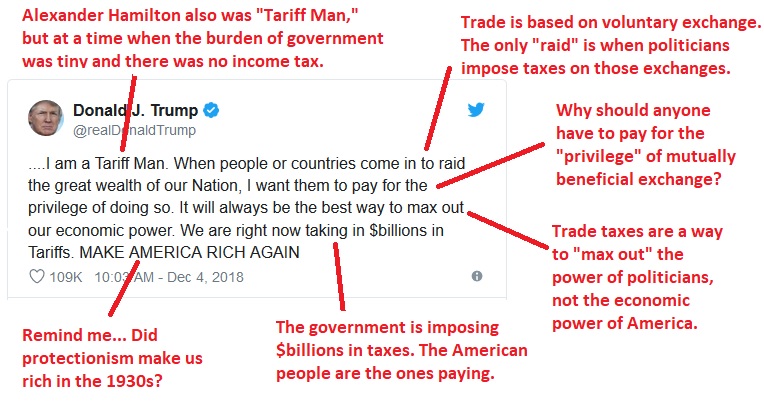
Donald Trump, who describes himself as “Tariff Man,” recently wrote a column in defense of his protectionist trade policy for the Wall Street Journal. After reading the column, my first thought was that Trump was trying to show he is more economically illiterate than Joe Biden (a big challenge, as seen here and here). And […]
Debunking Trump’s Error-Filled WSJ Column
The Macroeconomic Effects of Tariffs: Evidence From U.S. Historical Data
31 Dec 2025 Leave a comment
in applied price theory, econometerics, economic history, international economics Tags: free trade, tariffs
We study the macroeconomic effects of tariff policy using U.S. historical data from 1840–2024. We construct a narrative series of plausibly exogenous tariff changes based on major legislative actions, multilateral negotiations, and temporary surcharges– and use it as an instrument to identify a structural tariff shock. Tariff increases are consistently contractionary: imports fall sharply, exports…
The Macroeconomic Effects of Tariffs: Evidence From U.S. Historical Data
Stop Slaying the Strawman Case Against Tariffs
19 Dec 2025 1 Comment
in applied price theory, applied welfare economics, international economics, politics - USA Tags: free trade, tariffs
TweetHere’s a letter to a new correspondent. Mr. W__: Because I read the Wall Street Journal avidly, I was familiar, before you sent it, with its report titled “Why Everyone Got Trump’s Tariffs Wrong.” Nevertheless, thanks for your email in which you suggest that this report should prompt me to humbly reassess what you call…
Stop Slaying the Strawman Case Against Tariffs
Lessons from Brexit
19 Dec 2025 Leave a comment
in applied price theory, applied welfare economics, comparative institutional analysis, constitutional political economy, economic growth, international economic law, international economics, macroeconomics Tags: British politics, economics of customs unions, free trade, tariffs
How we connect economically with the world is critical. Brian Easton writes – The British Labour Government is struggling. Partly it is because they were badly prepared in opposition: the Conservative Government was making such a charlie of itself that Labour expected that it would do better and gave little thought as to how it […]
Lessons from Brexit
Humanity Has a Huge Surplus of Economic Misunderstanding
13 Dec 2025 Leave a comment
in applied price theory, history of economic thought, industrial organisation, international economics, politics - USA, Public Choice, rentseeking Tags: free trade, tarrifs
TweetHere’s a letter to AP Fact Check. Editor: Melissa Goldin does a deep dive into the cause(s) of the U.S. “agricultural trade deficit” (“FACT FOCUS: Trump blames Biden for the agricultural trade deficit. It’s not that simple,” December 10). To what extent is this “deficit” caused by the policies of Biden? To what extent is…
Humanity Has a Huge Surplus of Economic Misunderstanding
Quotation of the Day…
19 Nov 2025 Leave a comment
in applied price theory, history of economic thought, income redistribution, industrial organisation, international economics, Milton Friedman, politics - USA, Public Choice, rentseeking Tags: free trade, tariffs

Tweet… is from page 158 of Milton Friedman’s 1953 paper “The Case for Flexible Exchange Rates,” as this paper is reprinted in Friedman’s 1953 collection, Essays in Positive Economics: In brief, it [free trade] is desirable in its own right as one of the basic freedoms we cherish; it promotes the efficient use of resources…
Quotation of the Day…
Economists on the Trump Tariffs Supreme Court Case
07 Nov 2025 Leave a comment
in applied price theory, applied welfare economics, economic history, economics of bureaucracy, income redistribution, international economic law, international economics, International law, politics - USA, Public Choice Tags: free trade, tarrifs
It seems as if a few times every week, I see a headline about President Trump announcing a new tariff or repealing a tariff, sometimes involve many countries and sometime just a few. However, it is not at all clear that any president has a right to alter tariffs. This question was raised before Trump…
Economists on the Trump Tariffs Supreme Court Case
H1-B visa fees and the academic job market
28 Sep 2025 1 Comment
in applied price theory, economics of education, international economic law, international economics, politics - USA, Public Choice, rentseeking Tags: free trade, tariffs
Assume the courts do not strike this down (perhaps they will?). Will foreigners still be hired at the entry level with an extra 100k surcharge? I would think not,as university budgets are tight these days. I presume there is some way to turn them down legally, without courting discrimination lawsuits? What if you ask them […]
H1-B visa fees and the academic job market
Vernon Smith on Donald Trump’s Protectionism
11 Sep 2025 Leave a comment
in applied price theory, development economics, economic history, economics of bureaucracy, history of economic thought, income redistribution, international economics, politics - USA, Public Choice, rentseeking Tags: free trade, tariffs
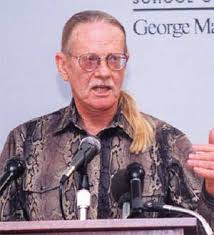
TweetMy emeritus Nobel-laureate colleague, Vernon Smith, sent the following email to me in response to this post. I share Vernon’s note with his kind permission. Don, Trump, like all businesspersons turned political, wants government favors, that is Mercantilism which is as bad today as when Adam Smith railed against such cozy relationships. Same for labor…
Vernon Smith on Donald Trump’s Protectionism
 Utopia, you are standing in it!
Recent Comments