Forward looking behaviour and occupational segregation

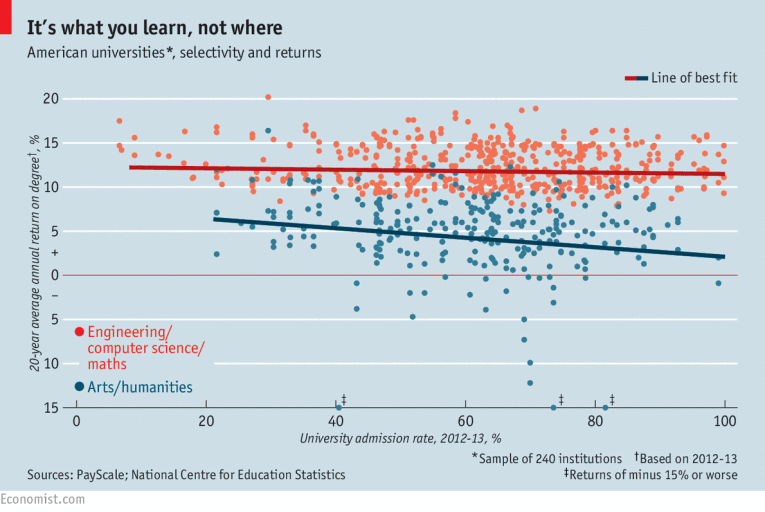
Rosen (2004) suggests that the engineering market responds strongly to economic forces. The demand for engineers responds to the price of engineering services and demand shocks such as recessions and defence cuts. Supply and enrolment decisions are remarkably sensitive to career prospects in engineering. Students also appear to use some forward-looking elements to forecast demand for engineers. Many students also change their majors in light on more information on whether the like their current choices and other news (Bettinger 2010).

This evidence of students use forward-looking elements to forecasting the occupational demand for human capital suggests that better information may improve these choices. The government has made a distributional judgment to expand the choices open to women. The growing evidence of relatively accurate forward looking decisions making by students suggests that they will respond to additional information on prospects in different careers.

college_return

In addition, earnings from some occupations are also more uncertain than others. The STEM occupations are an example where shortages and, in particular, surpluses are more common because durable goods industries bear the bulk of business cycle risk. There is also the political unpredictability of defence and R&D spending. Women seem to prefer jobs that are more secure. Some occupations have higher risks of injury than others. Fewer parents, and both single fathers and single mothers, in particular, enter these more injury prone occupations.

These gender-based preferences about hazards and uncertainties will lead to fewer women entering occupations that are more injury prone or more at risk to recessions and industry-specific downturns. Occupational segregation will still persist in the labour market in the relative absence of either discrimination or a gendered division of labour and household effort.

Choice and Change: How to Close the Gender Gap | Learn Liberty

Changing labour supply composition and the supply of work-life balance by employers

The growing number of women in the workforce and the domination of women of the graduate labour supply will increase the incentive of employers to make the workplace more family-friendly. Those that do not will lose access to the majority of graduate and other talent.

Various work place amenities can be traded-off in salary packages. In industries and occupations where this is cheap to do, the wage offset will be least. These industries and occupations will attract a large number of women because the net returns to them in cash wages plus amenities is higher than for men who value the greater work life balance less.

share-of-labor-force-with-part-time-jobs-women-men_chartbuilder

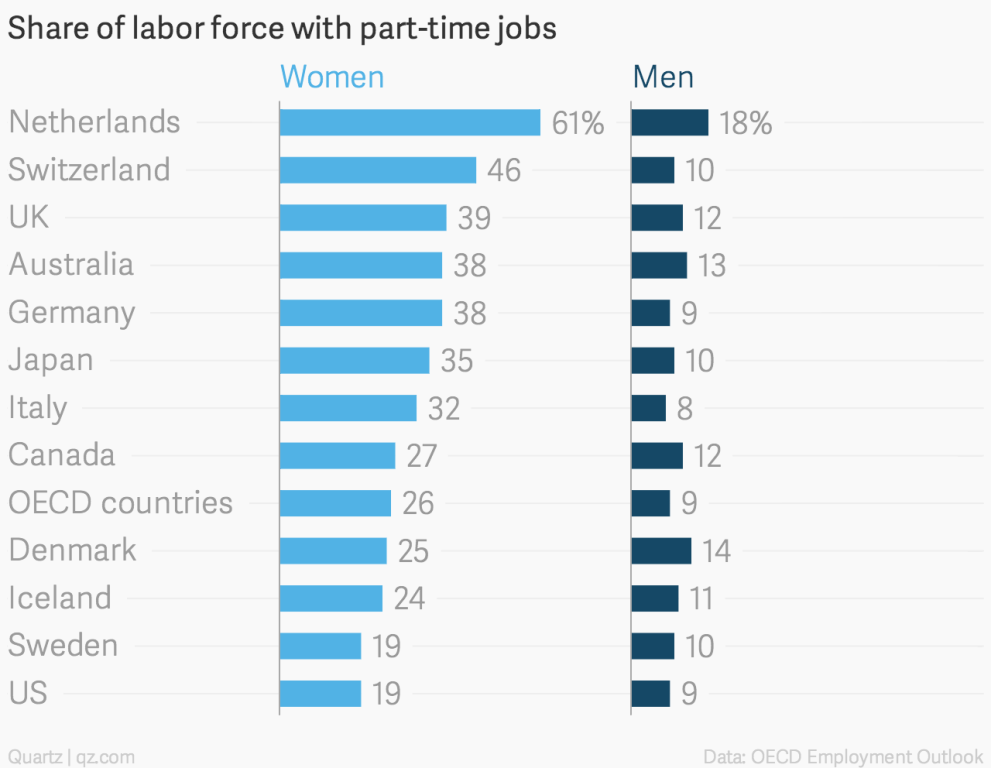
Occupational segregation around the clock illustrates the delicate trade-off between cash wages and the costs of flexible hours. Men and women work in much the same occupations between 8 and 6. There are big gaps if you are an early starter or work over dinner time.

Changing the production processes of these industries to induce more women to work unsocial hours would require large reduction in production and pay. Fewer women will not enter occupations with more unsocial hours unless they are paid more than in other jobs where it is cheaper to provide work-life balance and still pay higher cash wages.

Occupations and industries where family friendliness is more costly will be male dominated because women qualified enough to enter these occupations will go elsewhere where the cash wages sacrifice is less for work-life balance. Influxes of women will occur in industries where technological trends lower the cost of work-life amenities and the growing number of female skilled workers forces employers’ hands. They must adapt or lose out in competition for talent. The large influx of women into male dominated higher skilled occupations and professions suggests that some occupations can provide work-life balance at a lower cost than others.

The traditional drivers of occupational segregation

The main drivers of female occupational choice are supply-side (Chiswick 2006, 2007). This self-selection of females into occupations with more durable human capital, and into more general educations and more mobile training that allows women to change jobs more often and move in and out of the workforce at less cost to earning power and skills sets.

Chiswick (2006) and Becker (1985, 1993) then suggest that these supply side choices about education and careers are made against a background of a gendered division of labour and effort in the home, and in particular, in housework and the raising of children. These choices in turn reflect how individual preferences and social roles are formed and evolve in society.

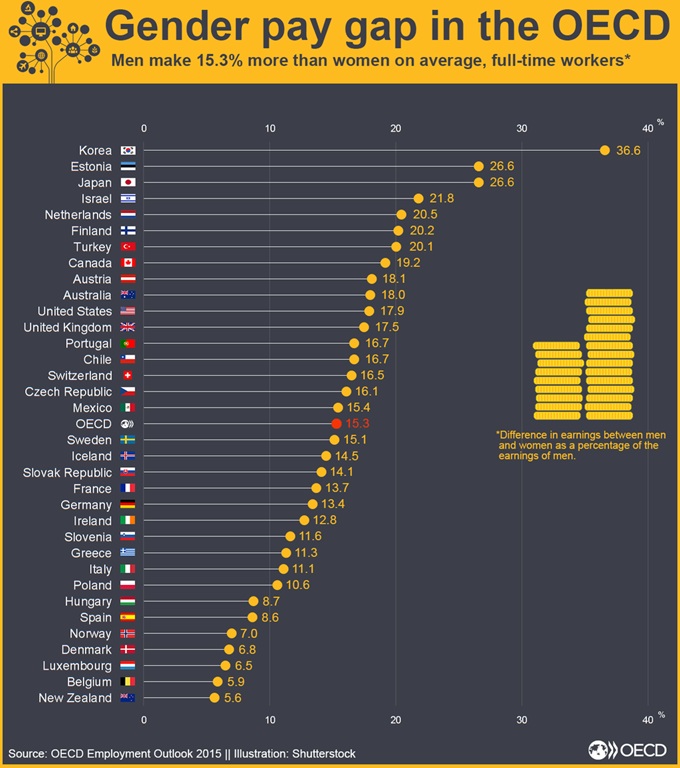
gender pay gap in the OECD

These adaptations of women to the operation of the labour market, in turn, reflect a gendered division of labour and household effort in raising families and the accidents of birth as to who has these roles (Chiswick 2006, 2007; Becker 1981, 1985, 1993).

The market is operating fairly well in terms of rewarding what skills and talents people bring to it in light of a gendered division of labour and household effort and the accidents of birth. The issue is one of distributive justice about how these skills and family commitments are allocated and should be allocated outside the market between men and women when raising children. As in related areas such as racial and ethnic wage and employment gaps, these gaps are driven by differences in the skills and talents that people acquired prior to entering the labour market. …

The changing nature and scale of the gender gap

Developments in recent decades greatly increased the options for women to combine careers and family. The unadjusted gender wage gap is narrow while the gender education gap has reversed. The progress with closing the gender gaps in employment and education in recent decades makes the crafting of further gender-based policy interventions more challenging.

The remaining gender gaps reflect much more thorny issues such as work-life balance rather than mid and late 20th century concerns such as large gender differences in education participation and attainment, sex discrimination and full-time motherhood raising much larger families.

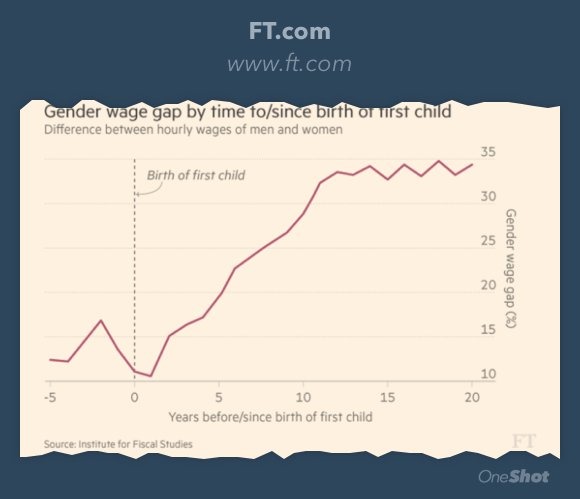
gender wage gap and birth of first child

Parental leave, early childhood education and child care subsidies have increased in New Zealand in recent years. Early childhood education spending is high in New Zealand by international standards but spending on child care subsidies is less generous (OECD 2012).

The main drivers of greater female labour force participation and greater investment in long-duration professional educations were access to reliable contraception, the rise of service sector and other jobs that depend on brains instead of brawn, the automation of housework with white goods, and rising incomes increasing the opportunity cost of having a large number of children.

This is a first in a series of blogs on occupational segregation and gender.

The biggest gender gap that dare not speak its name

Gender gaps in injuries and fatalities go beyond those industries demanding physical.strength.

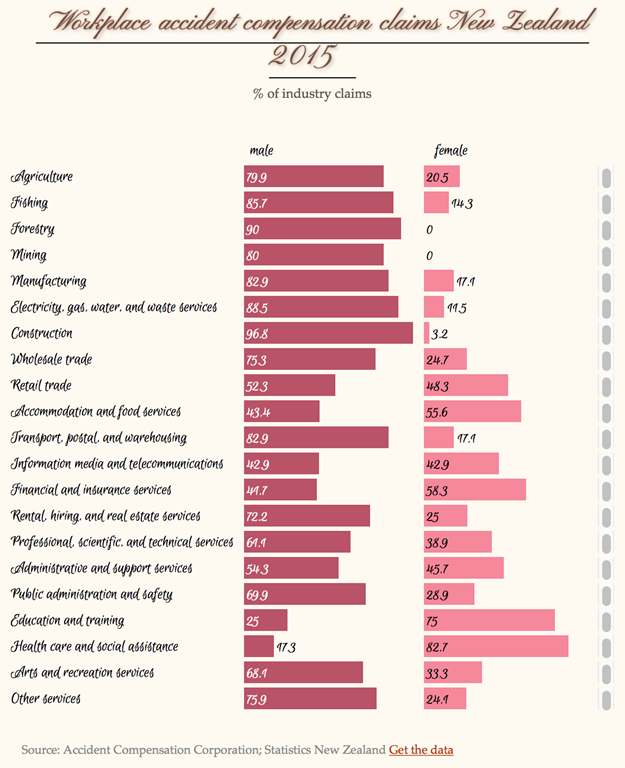
accident compensation claims by gender

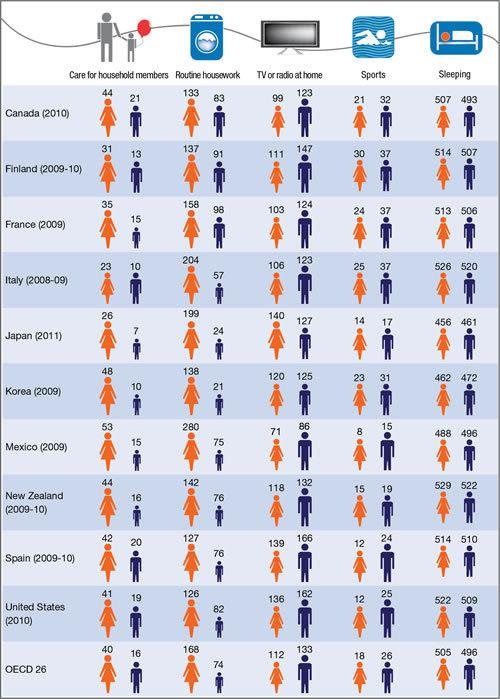
There are noticeable differences in the occupational choices of single people, parents, and single parents. Women choose safer jobs than men; single moms or dads are most averse to fatal risk because they have the most to lose. About one quarter of occupational differences between men and women can be attributed to the risks of injury and death.

All but 3 of the fatal workplace accidents in New Zealand in 2015 were men.

image_thumb[1]

Source: Accident Compensation Corporation,  Statistics New Zealand.

This gender gap in the risk of injury and death can lead to a significant gender wage gap because of the wage premium associated with these risks and in particular the risk of death as Viscusi explained.

The bottom line is that market forces have a powerful influence on job safety. The $120 billion in annual wage premiums referred to earlier is in addition to the value of workers’ compensation. Workers on moderately risky blue-collar jobs, whose annual risk of getting killed is 1 in 10,000, earn a premium of $300 to $500 per year.

The imputed compensation per “statistical death” (10,000 times $300 to $500) is therefore $3 million to $5 million. Even workers who are not strongly averse to risk and who have voluntarily chosen extremely risky jobs, such as coal miners and firemen, receive compensation on the order of $600,000 per statistical death…

Other evidence that the safety market works comes from the decrease in the riskiness of jobs throughout the century. One would predict that as workers become wealthier they will be less desperate to earn money and will therefore demand more safety.

A German study was able to reduce a raw gender wage gap of 20% to 1% after accounting for differences between gender in the risk of injury and death in addition to the usual factors. This 2007 study found that they were the 2nd study ever to make this adjustment.

Nurses are better paid than I thought

Image

Occupational choice and superior female reading and verbal skills

Image

The gender wage gap is an entrepreneurial opportunity

What people miss about the gender wage gap

Usual grumblers please note

Why no unconscious bias against 20 something women to keep their pay down?

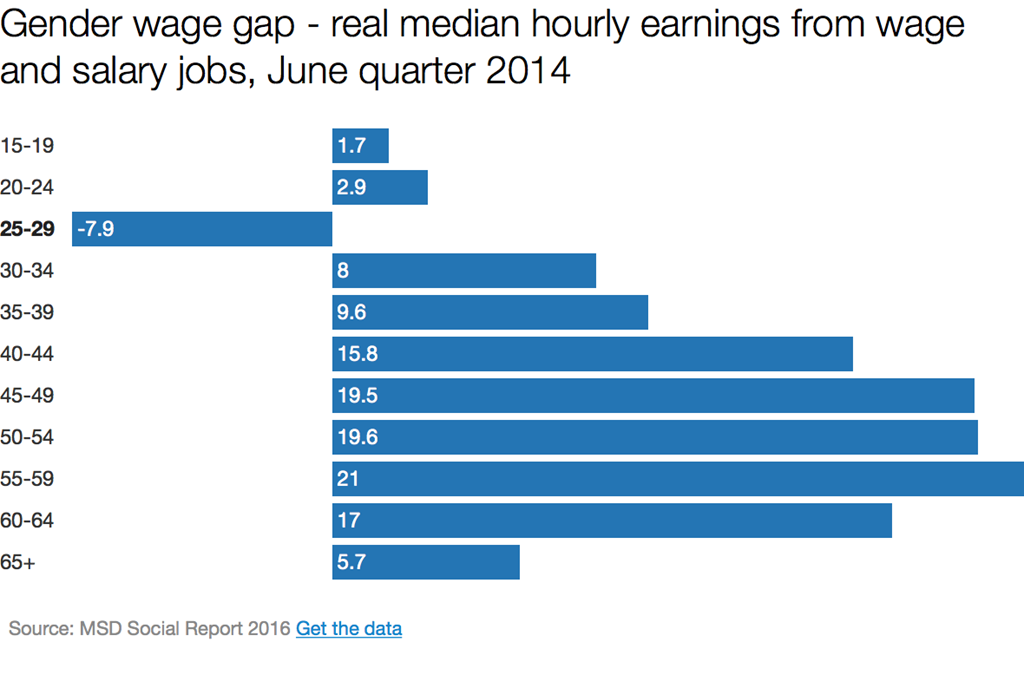
New Zealand gender gap by age bracket

Tom Sowell on wage gaps

What does an adjusted gender wage gap mean?

Image

Why do we men, bastards all, have a stronger unconscious bias against well-paid women?

image

Source: OECD employment database.

Previous Older Entries Next Newer Entries

Bassett, Brash & Hide

Celebrating humanity's flourishing through the spread of capitalism and the rule of law

Truth on the Market

Scholarly commentary on law, economics, and more

The Undercover Historian

Beatrice Cherrier's blog

Matua Kahurangi

Celebrating humanity's flourishing through the spread of capitalism and the rule of law

Temple of Sociology

Celebrating humanity's flourishing through the spread of capitalism and the rule of law

Velvet Glove, Iron Fist

Celebrating humanity's flourishing through the spread of capitalism and the rule of law

Why Evolution Is True

Why Evolution is True is a blog written by Jerry Coyne, centered on evolution and biology but also dealing with diverse topics like politics, culture, and cats.

Down to Earth Kiwi

Celebrating humanity's flourishing through the spread of capitalism and the rule of law

NoTricksZone

Celebrating humanity's flourishing through the spread of capitalism and the rule of law

Homepaddock

A rural perspective with a blue tint by Ele Ludemann

Kiwiblog

DPF's Kiwiblog - Fomenting Happy Mischief since 2003

The Dangerous Economist

Celebrating humanity's flourishing through the spread of capitalism and the rule of law

Watts Up With That?

The world's most viewed site on global warming and climate change

The Logical Place

Tim Harding's writings on rationality, informal logic and skepticism

Doc's Books

A window into Doc Freiberger's library

The Risk-Monger

Let's examine hard decisions!

Uneasy Money

Commentary on monetary policy in the spirit of R. G. Hawtrey

Barrie Saunders

Thoughts on public policy and the media

Liberty Scott

Celebrating humanity's flourishing through the spread of capitalism and the rule of law

Point of Order

Politics and the economy

James Bowden's Blog

A blog (primarily) on Canadian and Commonwealth political history and institutions

Science Matters

Reading between the lines, and underneath the hype.

Peter Winsley

Economics, and such stuff as dreams are made on

A Venerable Puzzle

"The British constitution has always been puzzling, and always will be." --Queen Elizabeth II

The Antiplanner

Celebrating humanity's flourishing through the spread of capitalism and the rule of law

Bet On It

Celebrating humanity's flourishing through the spread of capitalism and the rule of law

History of Sorts

WORLD WAR II, MUSIC, HISTORY, HOLOCAUST

Roger Pielke Jr.

Undisciplined scholar, recovering academic

Offsetting Behaviour

Celebrating humanity's flourishing through the spread of capitalism and the rule of law

JONATHAN TURLEY

Res ipsa loquitur - The thing itself speaks

Conversable Economist

Celebrating humanity's flourishing through the spread of capitalism and the rule of law

The Victorian Commons

Researching the House of Commons, 1832-1868

The History of Parliament

Articles and research from the History of Parliament Trust

Books & Boots

Reflections on books and art

Legal History Miscellany

Posts on the History of Law, Crime, and Justice

Sex, Drugs and Economics

Celebrating humanity's flourishing through the spread of capitalism and the rule of law

European Royal History

Exploring the Monarchs of Europe

Tallbloke's Talkshop

Cutting edge science you can dice with

Marginal REVOLUTION

Small Steps Toward A Much Better World

NOT A LOT OF PEOPLE KNOW THAT

“We do not believe any group of men adequate enough or wise enough to operate without scrutiny or without criticism. We know that the only way to avoid error is to detect it, that the only way to detect it is to be free to inquire. We know that in secrecy error undetected will flourish and subvert”. - J Robert Oppenheimer.

STOP THESE THINGS

The truth about the great wind power fraud - we're not here to debate the wind industry, we're here to destroy it.

Lindsay Mitchell

Celebrating humanity's flourishing through the spread of capitalism and the rule of law

Alt-M

Celebrating humanity's flourishing through the spread of capitalism and the rule of law

croaking cassandra

Economics, public policy, monetary policy, financial regulation, with a New Zealand perspective

The Grumpy Economist

Celebrating humanity's flourishing through the spread of capitalism and the rule of law

International Liberty

Restraining Government in America and Around the World