Just increase the supply of land. Extending the capital gains tax and banning foreigners from buying land will do no good. An average house price 10 times the average income in Auckland is not a demand-side problem.
There are plenty of examples of US cities with different land supply restrictions but common national surges in demand for housing such as prior to the GFC. Cities with liberal land supply experienced only small increases in house prices.
The Greens should follow ACT and the Labour Party in calling for the abolition of the Auckland urban limit and changes in council finances so they can fund the necessary infrastructure quickly.
There has been an unexpected outbreak of political courage on the left of New Zealand politics.
The Labour Party wants to crash housing prices by not only abolishing the Auckland urban limit, but ensuring councils can fund the necessary infrastructure to bring new land to the market:
Labour will remove the Auckland urban growth boundary and free up density controls. This will give Auckland more options to grow, as well as stopping land bankers profiteering and holding up development. New developments, both in Auckland and the rest of New Zealand, will be funded through innovative infrastructure bonds.
Like Labour, we believe that people should have a choice about where they live. But a lot of people want to live close to the central city where they work or study. That means delivering more high-quality, inner city housing options, not endless sprawling new suburbs.
It’s often easier and cheaper to revitalise central suburbs than it is to build new suburbs on the city fringes. Infrastructure for new sprawling subdivisions is very expensive.
This outbreak of courage is surprising after the resolute opposition of these parties to any reform of the Resource Management Act to loosen up the land supply.
It is a breakthrough nonetheless because at least the Labour Party admits that housing affordability is about increasing land supply by removing the Auckland urban limit.
Morgan Foundation wants the National party-led government to take on NIMBYs not only with more high-rises and urban intensification but congestion charges too! There is only so much courage you can expect in one term of government. Relaxing the Auckland urban limit, which will hopefully cause housing prices to stop rising in Auckland was not enough.
No softly softly catchy monkey here. No concept of winning the battles you can win.
Chinese tax residents bought 321 Auckland properties (29.5 per cent of the total); Australian tax residents purchased 312 Auckland properties (28.6 per cent).
A critical aspect of a land tax rarely addressed in public debate is its “economic incidence – or who actually bears the burden of the – tax as opposed to its statutory incidence, or who literally pays the tax.
John Key has floated a land tax as an option to deal with rising land prices in Auckland if a large number of buyers are foreign.
It is pretty standard public economics the elasticities of supply and demand essential to working out who actually pays tax rather than who sends the cheque.
More of the taxes paid by either the buyer or seller who is demand or supply is more inelastic; responds less to changes in price.
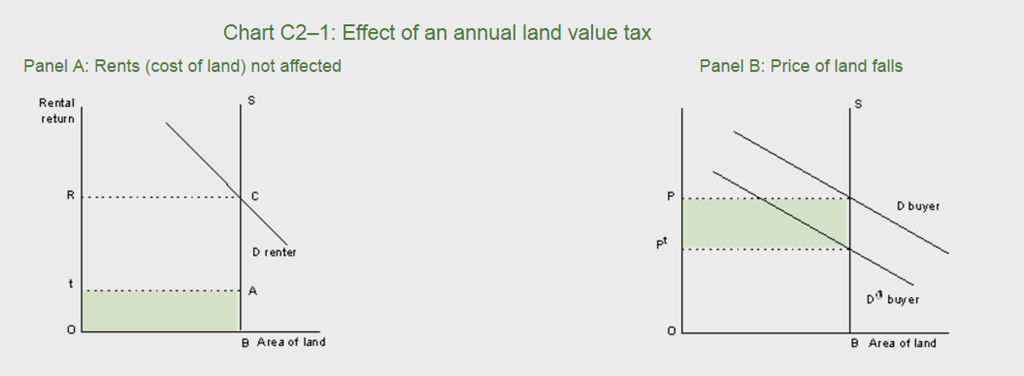
In the case of land, supply is looked upon as highly inelastic. Because of this lack of responsiveness of suppliers to changes in price, most to all of the tax is paid by sellers of land.
Since supply is fixed, the same amount of land is still available The owner now has a lower after-tax rental return of his land. As the Australian Treasury explains
As the capital value of the land is equal to the discounted present value of all the future expected rental returns, a lower rental return implies a one-off fall in the value of all land. Owners of land bear the incidence of the land value tax even if they sell their land in response to the tax.
This reduction in the rental value of land will mean future buyers will pay less for land. The price of land will fall in the future because returns are less after-tax.
The introduction of a land tax by John Key will mean the price of land might fall by the present value of the land tax. Zodrow explains
In principle, the economic incidence of all of these capitalization effects is on the owners of land and housing at the time of the imposition of the tax, when the effects are “capitalized” as one-time changes in the prices of these assets..
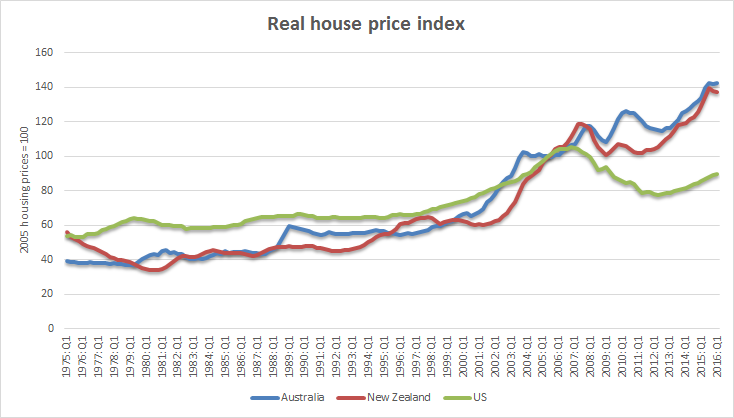
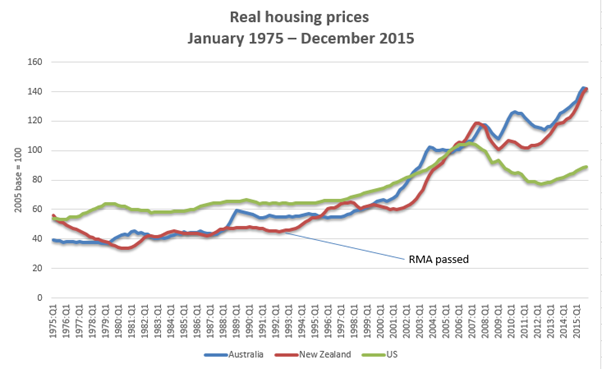
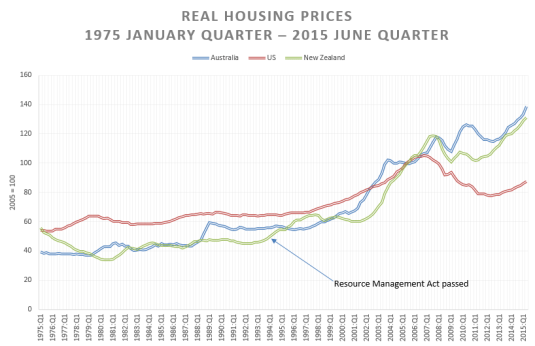
New Zealand housing prices were pretty flat up for the two decades until the passage of the Resource Management Act (RMA) in 1993. They then soared well before any foreign buyers such as from China entered the market.
Most of the housing price rises were under the watch of a Labour Government – a party which is supposed to look out for working families.
The failure of the Labour Party to nip the problem in the bud when they had a working majority in Parliament means future solutions run into the political problem that any significant increase in supply of land may push many with recent mortgages such as in Auckland into negative equity.
Since they left office in 2008, leaving land supply regulation in a mess, the approach of Labour has been political opportunism rather than supporting RMA reform.
Labour recently admitted the need to increase the supply of land, but have not put forward practical ideas to increase the supply of land.
The National Party is not much better in terms of real solutions to regulatory constraints on the supply of land.
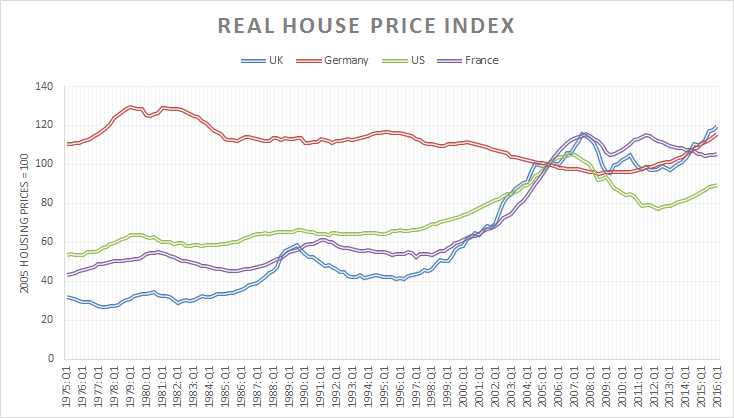
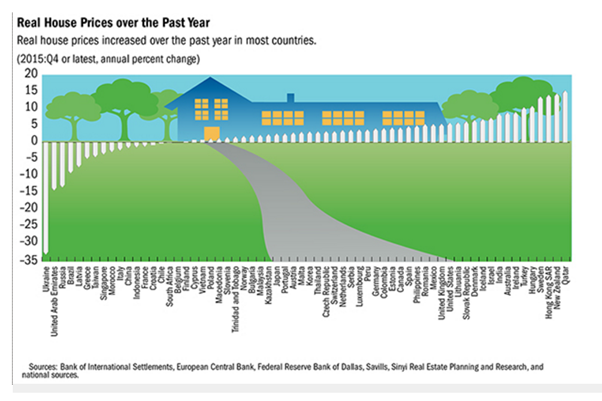
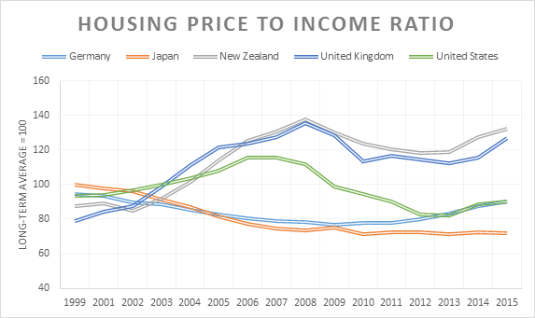
Japan and Germany seem to be pretty relaxed places to buy a house over the last 15 years. The USA had a bit of a bubble but it burst. New Zealand and the UK are dogs of places if you are young and house-hunting.
Source: OECD Economic Outlook November 2015, Annex Table 61.
Labour will free up density and height controls to allow more medium density housing and reform the use of urban growth boundaries so they don’t drive up section costs. This will curb land bankers and speculators.
Labour has struck at the heart of two major constraints on urban land supply New Zealand: restrictions on density and height of new developments, and much more importantly, the use of urban growth boundaries to drive up land prices. These proposed regulatory reforms could not be more welcome.
The other new element is changing the way we fund infrastructure for new developments. Currently those costs are either subsidised by the ratepayer or passed by the developer onto the price tag of a new home. That makes houses much more expensive. It also means they are paid off through mortgages at expensive bank interest rates.
Our new policy will see infrastructure funded by local government bonds, paid off over the lifetime of the asset through a targeted rate on the properties in the new development. This will substantially reduce the cost of new housing.
The reforms proposed by Labour to local government financing will reduce the financial burden on existing ratepayers of the local government funded infrastructure necessary to support new land developments.
These Labour Party reforms are fantastic because the main party on the left-wing of New Zealand politics has faced up to restricted land supply as a key reason behind housing unaffordability. I wonder what the New Zealand Greens will think of these major new reforms.
A few more sensible economic and fiscal policy announcements such as those today by the New Zealand Labour Party and it will start looking like a credible alternative government.
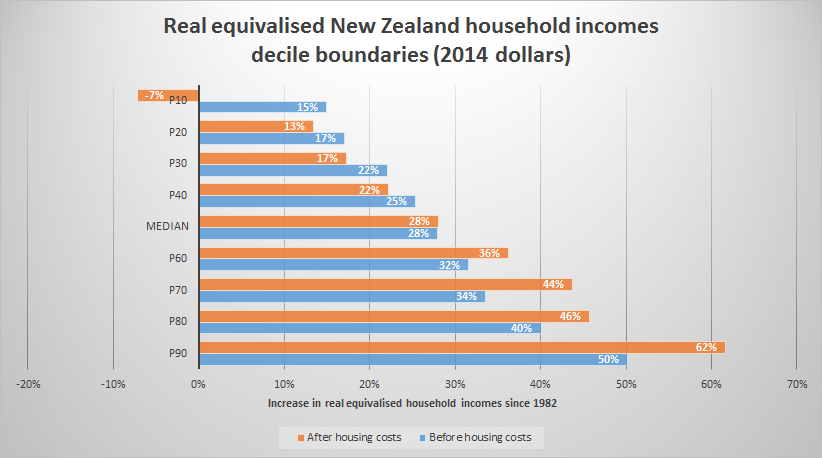
It is those below median household income that are suffering more from rising housing costs in New Zealand since 1982. Those on low incomes in particular have suffered the most.
Why Evolution is True is a blog written by Jerry Coyne, centered on evolution and biology but also dealing with diverse topics like politics, culture, and cats.
“We do not believe any group of men adequate enough or wise enough to operate without scrutiny or without criticism. We know that the only way to avoid error is to detect it, that the only way to detect it is to be free to inquire. We know that in secrecy error undetected will flourish and subvert”. - J Robert Oppenheimer.






 Utopia, you are standing in it!
Recent Comments