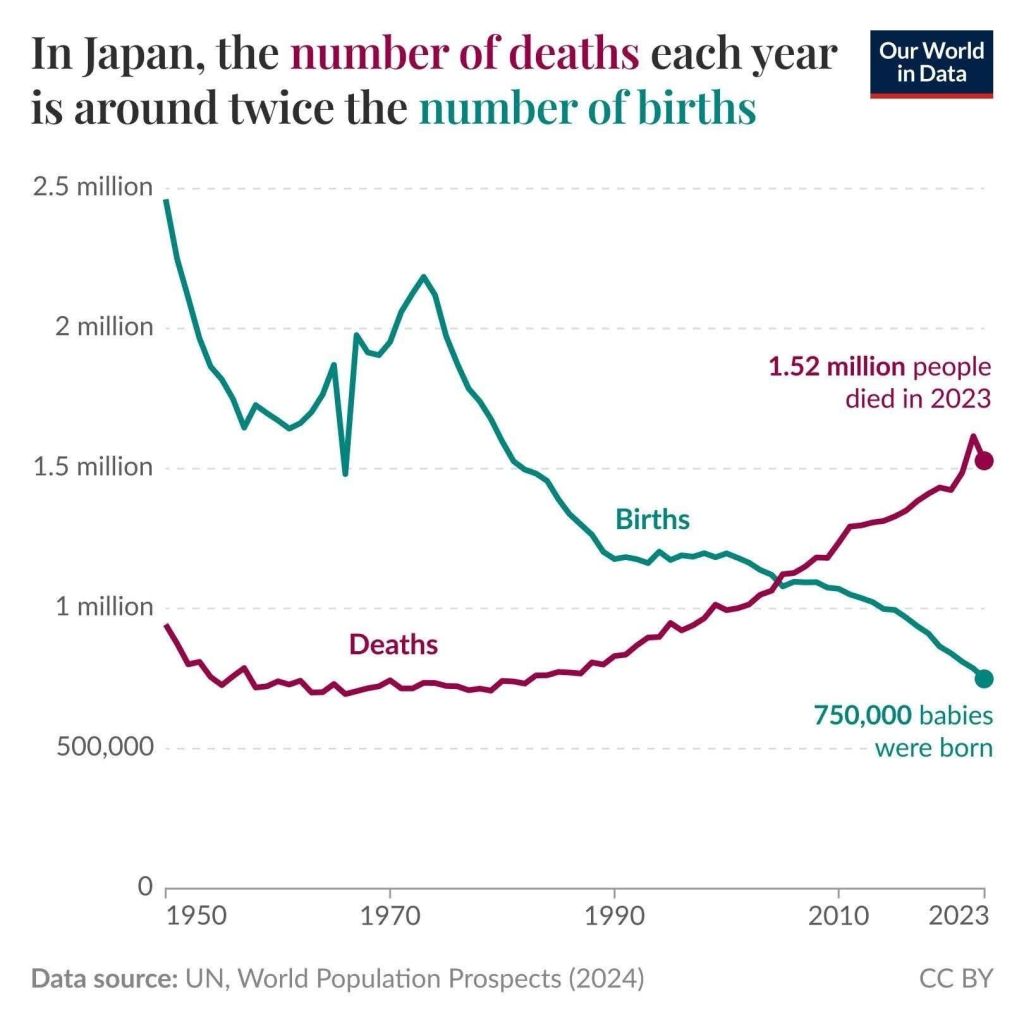
So much for the population bomb
25 Feb 2026 Leave a comment
in labour economics, labour supply, population economics Tags: ageing society, Japan, population bust
Japan 2026: A landslide enabled by the electoral system, but tempered by the nomination strategy
14 Feb 2026 1 Comment
This landslide really was made possible by the electoral system and opposition fragmentation more so than LDP popularity. It could have been a little bigger if only the LDP had presented a few more list candidates.
Japan 2026: A landslide enabled by the electoral system, but tempered by the nomination strategy
Asian Americans: Two Alternate Histories
10 Feb 2026 Leave a comment
in economic history, human capital, labour economics, labour supply Tags: China, economics of immigration, Japan, The Philippines
In editing two papers on Asian American immigration for the Winter 2026 issue of the Journal of Economic Perspectives (where I work as Managing Editor), I found myself musing over two alternative histories: one about more such immigration, one about less. Hannah Postel describes “Asian Immigration to the United States in Historical Perspective” (Journal of Economic…
Asian Americans: Two Alternate Histories
The evil of Japan during WWII
09 Feb 2026 Leave a comment
in defence economics, laws of war, war and peace Tags: Japan, World War II

Many people forget that the Japanese war crimes were as bad if not worse then those committed by the Nazi’s albeit it on a marginal lesser scale. Beside the crimes and experiment committed by Unit 731 there were a great number of other atrocities, including cannibalism. https://dirkdeklein.net/2016/07/01/unit-731-japanese-wwii-experiments/ In “The Knights of Bushido”, Lord Russell […]
The evil of Japan during WWII
The economics of currency values
25 Jan 2026 1 Comment
in applied price theory, economic history, financial economics, international economics, macroeconomics, monetary economics Tags: Japan
That is the topic of my latest Free Press column, here is one excerpt: What else are currency values telling us today? The Japanese yen continues a very weak run, now coming in at about 158 to the U.S. dollar. I can recall when it was common for the yen to stand at about 100…
The economics of currency values
Human Capital Hara-Kiri
06 Dec 2025 Leave a comment
in human capital, labour economics, labour supply, occupational choice, poverty and inequality Tags: economics of immigration, Japan

In Japan, you see native-born East Asians doing menial jobs everywhere you look. You see Japanese janitors, Japanese street-sweepers, Japanese convenience store workers, Japanese crossing guards, Japanese taxi drivers, and Japanese laborers on construction sites. 904 more words
Human Capital Hara-Kiri
Japan’s Growing Burden of Government Means an Inevitable Fiscal Crisis
03 Dec 2025 Leave a comment
in budget deficits, economic growth, economic history, financial economics, fiscal policy, macroeconomics, population economics, public economics Tags: ageing society, Japan, population bust

I often get asked when the United States will suffer a Greek-style fiscal crisis. My answer is always “I don’t know,” though I freely admit we are heading in that direction. My lack of specificity isn’t merely because economists are lousy forecasters. I tell people it’s all about investor sentiment, and it’s hard to know […]
Japan’s Growing Burden of Government Means an Inevitable Fiscal Crisis
Why did the 1945 Japanese Army coup against the Emperor fail? (Short Ani…
01 Dec 2025 Leave a comment
in defence economics, economic history, war and peace Tags: Japan, World War II
Some Links
07 Sep 2025 Leave a comment
in applied price theory, economic history, entrepreneurship, financial economics, macroeconomics Tags: China, Japan
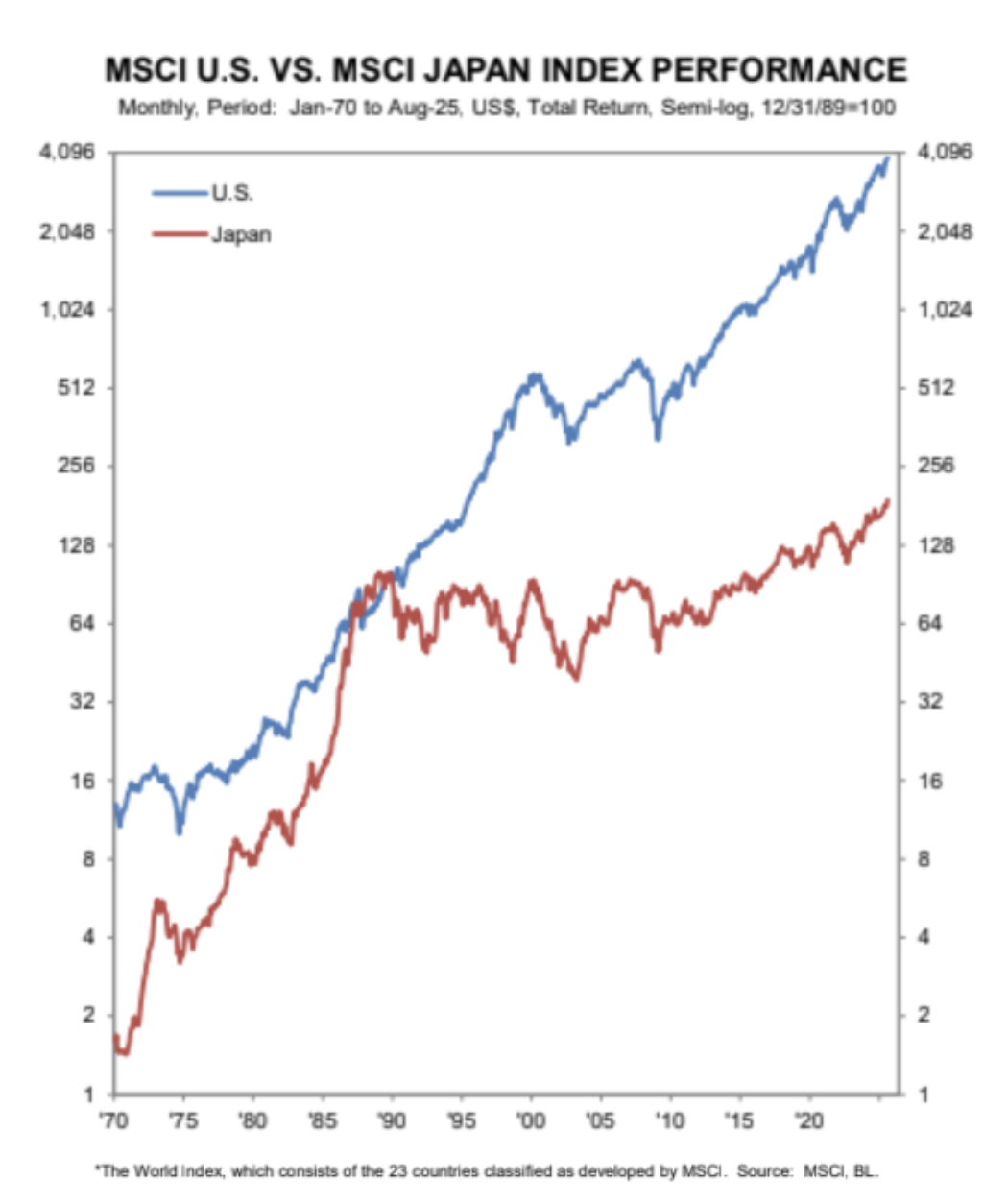
TweetThe folks at Unleash Prosperity share a chart that shows that Japanese industrial policy – which we Americans a few decades ago were warned by oh so very many pundits, professors, and politicians left, right, and center would propel Japan’s economy to great heights and leave America’s in the dust – was a curse to…
Some Links
Japanese Instrument of Surrender-the end of WWII
02 Sep 2025 Leave a comment
in defence economics, war and peace Tags: Japan, World War II

On September 2, 1945, representatives from the Japanese government and Allied forces assembled aboard the USS Missouri in Tokyo Bay to sign the Japanese Instrument of Surrender, which effectively ended World War II. The document was prepared by the U.S. War Department and approved by President Harry S. Truman. Eight short paragraphs formalized the “unconditional surrender to […]
Japanese Instrument of Surrender-the end of WWII
Japan facts of the day
12 Jun 2025 1 Comment
in labour economics, labour supply, population economics Tags: ageing society, Japan, population bust
Japan must stop being overly optimistic about how quickly its population is going to shrink, economists have warned, as births plunge at a pace far ahead of core estimates. Japan this month said there were a total of 686,000 Japanese births in 2024, falling below 700,000 for the first time since records began in the […]
Japan facts of the day
Japan’s population crisis reaches tipping point | FT Film
26 May 2025 1 Comment
in labour economics, labour supply, population economics Tags: ageing society, Japan
Nobuo Fujita-the only Japanese pilot to bomb mainland America, 1942
14 Apr 2025 Leave a comment
in defence economics, war and peace Tags: Japan, World War II

Nobuo Fujita was a Japanese naval officer and aviator who holds a unique place in World War II history—as the only person to conduct an aerial bombing of the continental United States. His story, however, goes far beyond this singular event, evolving into a remarkable tale of reconciliation, peace, and personal transformation. The War Years […]
Nobuo Fujita-the only Japanese pilot to bomb mainland America, 1942
The Shinkansen and Japan’s Lost Decades
30 Oct 2024 Leave a comment
in applied price theory, economic growth, economics of bureaucracy, industrial organisation, macroeconomics, Public Choice, public economics, survivor principle, transport economics, urban economics Tags: Japan
Japan is known for many things, but two of them are the Shinkansen high-speed trains and the nation’s three Lost Decades of slow economic growth. Unfortunately, most tourists who go to Japan see the former and don’t see the latter and especially don’t see the connection between the two. The … Continue reading →
The Shinkansen and Japan’s Lost Decades
The Puzzle of Japan’s Economy: When Productivity Gains Are Outside National Borders
26 Oct 2024 Leave a comment
in development economics, economic growth, economic history, growth miracles, labour economics, labour supply, macroeconomics, population economics Tags: economics of fertility, Japan
In total size, Japan’s economy is fourth-largest in the world, just behind Germany for third-largest. In per capita GDP, Japan is ahead of Spain and South Korea, although well behind Italy and France. With a life expectancy at birth of 84 years, ,Japan has one of the highest levels in the world. Clearly, Japan has…
The Puzzle of Japan’s Economy: When Productivity Gains Are Outside National Borders
 Utopia, you are standing in it!
Recent Comments