The Vietnam draft conscripted hundreds of thousands of young Americans into an integrated military. I combine near-random draft lottery variation with administrative voter data to study the long-run racial integration effects of coerced national service. Black and Native American veterans became more likely to marry white spouses, identify as Republicans, and live in more-integrated neighborhoods.…
The Vietnam War and racial integration
The Vietnam War and racial integration
07 Mar 2026 Leave a comment
in defence economics, discrimination, economics of love and marriage, politics - USA, war and peace Tags: marriage and divorce, racial discrimination, Vietnam war
These are large differences
03 Nov 2025 Leave a comment
in economics of love and marriage Tags: dating markets, economics of fertility, marriage and divorce
The Indian Wedding
08 Aug 2025 1 Comment
in economics of love and marriage, law and economics Tags: India, marriage and divorce
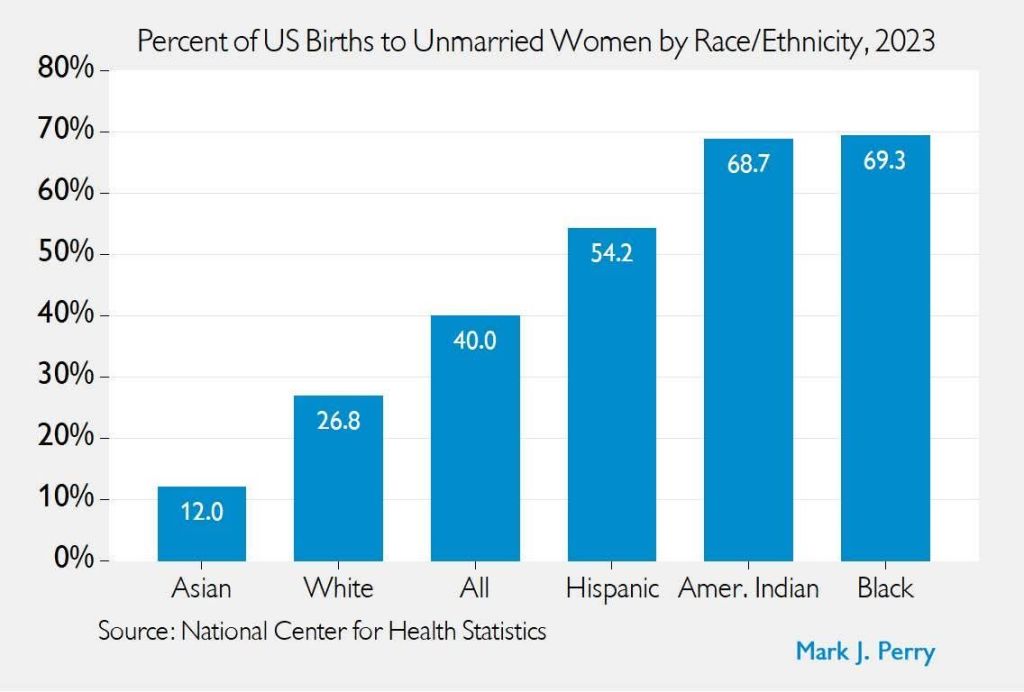
Another great piece by Samir Varma on Indian marriages—where deep traditions endure, even as subtle revolutions unfold around the edges.. It starts with this kicker: When I told my mother I was marrying my girlfriend, an Italian Jew, she called all my friends in the US asking them to break us up. When that failed, […]
The Indian Wedding
Marriage is in decline
25 Apr 2025 Leave a comment
in economic history, economics of love and marriage, gender, labour economics, law and economics Tags: marriage and divorce
The Anatomy of Marital Happiness
22 Mar 2025 Leave a comment
in applied price theory, econometerics, economic history, economics of love and marriage, industrial organisation, labour economics, population economics Tags: dating markets, economics of fertility, marriage and divorce, marriage premium
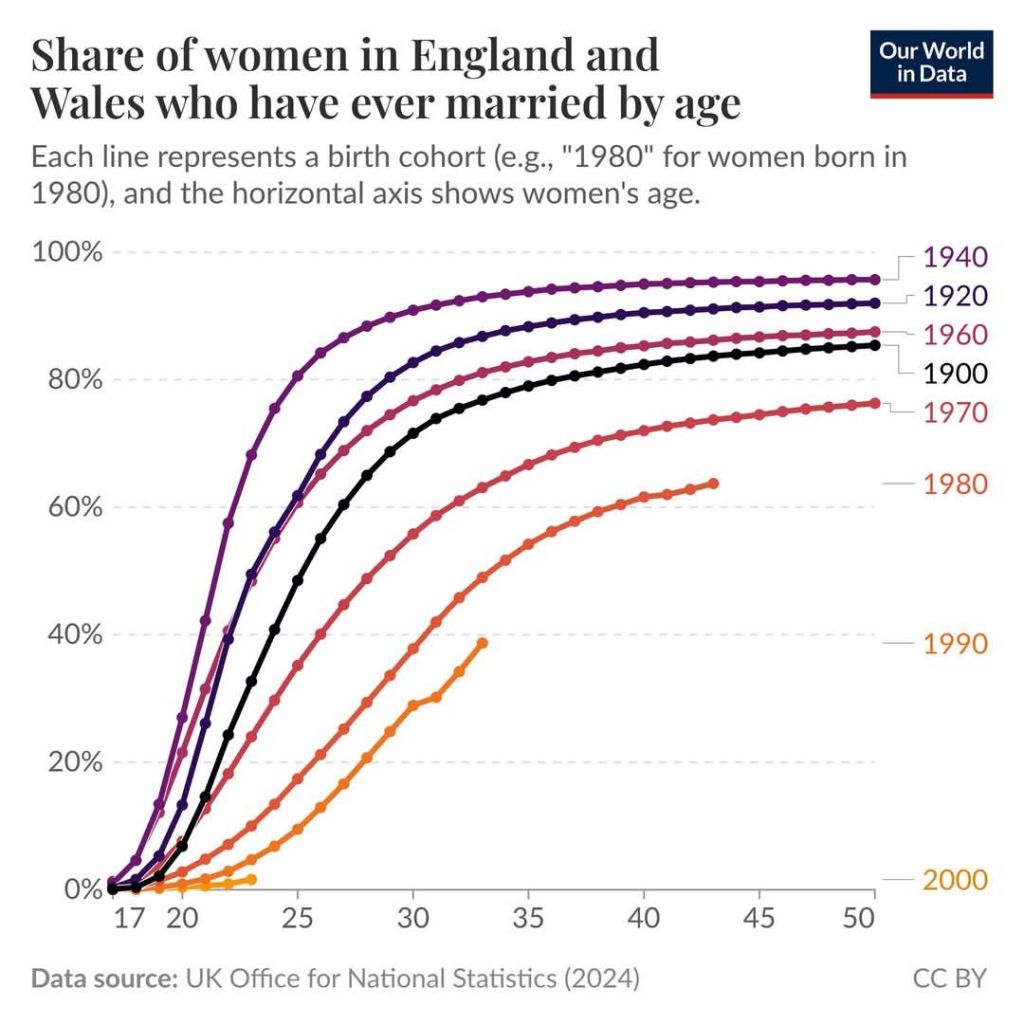
How can I not link to a new Sam Peltzman piece on such a topic? Here goes: Since 1972, the General Social Survey has periodically asked whether people are happy with Yes, Maybe or No type answers. Here I use a net “happiness” measure, which is percentage Yes less percentage No with Maybe treated as […]
The Anatomy of Marital Happiness
Jane Austen was wrong: women don’t marry up for money and status
10 Mar 2025 1 Comment
in economics of love and marriage, economics of marriage, human capital, labour economics, law and economics, poverty and inequality Tags: dating markets, gender wage gap, marriage and divorce, sex discrimination
A new study debunks the myth of the gold-digging wife, finding that women are no more likely to marry above their social class than menBy Ben Spencer, Science Editor of The Sunday Times. Excerpts:”The young pretty women who seek to “marry up” for money and status, from the Bennet sisters in Pride and Prejudice to…
Jane Austen was wrong: women don’t marry up for money and status
If You Date Me, You Date My Debt
27 Feb 2025 Leave a comment
in applied price theory, economics of education, economics of love and marriage, gender, law and economics Tags: College premium, dating markets, marriage and divorce
Romance can pose challenges to those with large credit balances, student loans or other financial obligationsBy Julia Munslow of The WSJ. Excerpts:”For daters, debt can be a turnoff. In a 2024 survey from the Achieve Center for Consumer Insights, 64% of respondents said they wouldn’t want to date someone with a lot of debt.””The economics…
If You Date Me, You Date My Debt
The Child Penalty: An International View
03 Feb 2025 Leave a comment
in applied price theory, discrimination, econometerics, economics of education, gender, human capital, labour economics, labour supply, occupational choice Tags: economics of fertility, gender wage gap, marriage and divorce

It’s well-known that when a couple has a child, the average woman experiences a “child penalty” in labor market outcomes, while outcomes for the man are largely unchanged. For a discussion of this pattern using US data, here’s an article by Jane Waldfogel from back in 1998 in the Journal of Economic Perspectives. As that…
The Child Penalty: An International View
Babies and the Macroeconomy
02 Feb 2025 Leave a comment
in applied price theory, development economics, economic history, economics of love and marriage, economics of marriage, human capital, labour economics, labour supply Tags: ageing society, economics of fertility, marriage and divorce
By Claudia Goldin. From NPR’s Planet Money.”Countries around the world have seen a jaw-dropping decline in fertility rates. In this paper, Claudia Goldin, the 2023 winner of the Nobel Prize in economic sciences, offers a new theory to help explain why (listen to The Indicator’s conversation with her back in 2021). Goldin starts by providing…
Babies and the Macroeconomy
Who Matters More in a Move: You or Your Spouse?
04 Nov 2024 Leave a comment
in applied price theory, discrimination, econometerics, economics of love and marriage, gender, human capital, labour economics, labour supply, law and economics, occupational choice, poverty and inequality Tags: gender wage gap, marriage and divorce, sex discrimination
New research finds couples are more likely to move for a job when it benefits the man, even when the woman’s career stands to benefit more by movingBy Dalvin Brown of The WSJ. Excerpts:”Couples are moving again for better job opportunities. They are more likely to make those moves when the husband’s earnings stand to…
Who Matters More in a Move: You or Your Spouse?
Times are a changing
27 Mar 2024 Leave a comment
in economics of education, economics of love and marriage, law and economics Tags: marriage and divorce, political correctness, regressive left
What media bias looks like
11 Mar 2024 Leave a comment
in labour economics, labour supply, politics - New Zealand, poverty and inequality, welfare reform Tags: marriage and divorce
Lindsay Mitchell writes – When news media took a pummelling last week at both TVNZ and TV3, a number of critics said part of the reason ratings are poor is the public don’t trust them. The public believe that the media is biased. The print media is similarly suspect. An article in Stuff on Sunday […]
What media bias looks like
Creative destruction in dating
14 Feb 2024 Leave a comment
in economics of education, economics of information, economics of love and marriage, economics of media and culture, law and economics Tags: dating markets, marriage and divorce
Correlations between spouses
11 Feb 2024 Leave a comment
in economics of love and marriage, economics of media and culture, human capital, labour economics, law and economics, population economics Tags: marriage and divorce
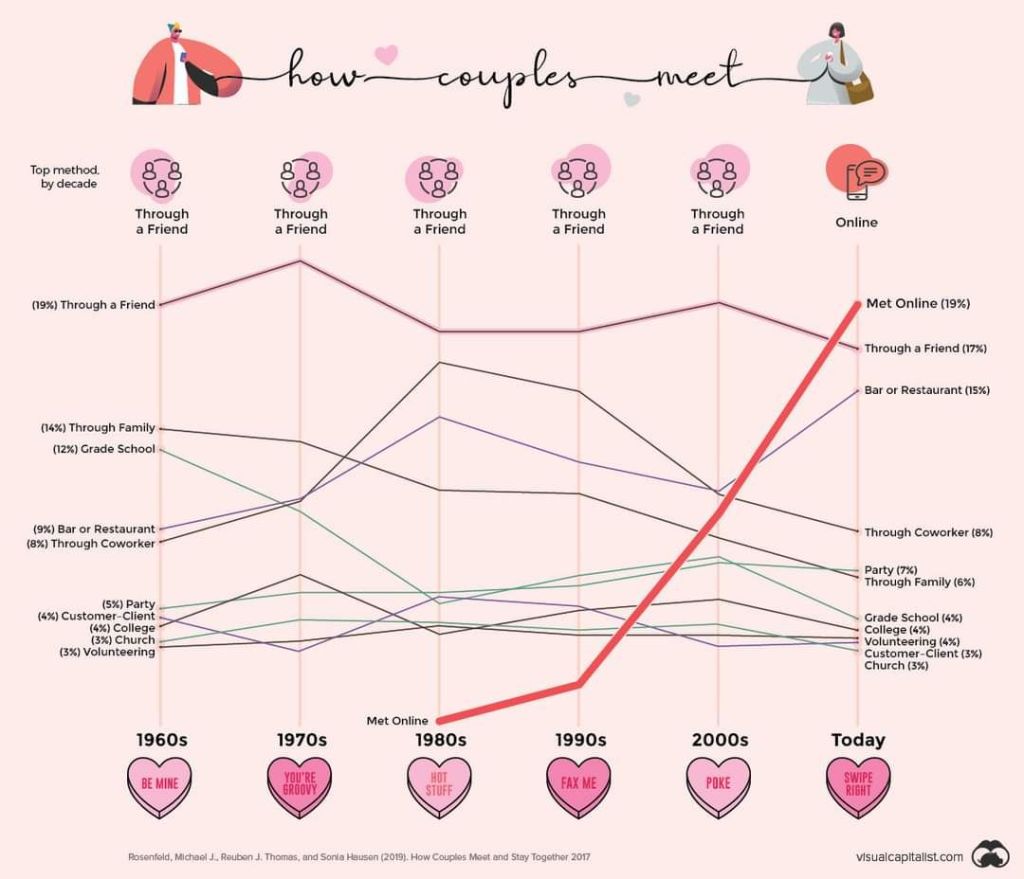
Correlations between spouses Extraversion: r= .005Neuroticism: .082Height: .227Weight: .154Education: .5Political party: .6 “Mates tend to be positively but weakly concordant on personality and physical traits, but concordance of political attitudes is extremely high” pic.twitter.com/BmdpySfakh — Rob Henderson (@robkhenderson) February 10, 2024
Correlations between spouses
 Utopia, you are standing in it!
Recent Comments