The Lucas Revolution
09 Apr 2019 Leave a comment
in budget deficits, business cycles, economic growth, fiscal policy, macroeconomics, monetary economics, Robert E. Lucas Tags: new classical macroeconomics

Greg Mankiw on the zero influence of modern macroeconomics on monetary policy making
17 Sep 2015 1 Comment
in business cycles, history of economic thought, inflation targeting, macroeconomics, managerial economics, monetarism, monetary economics, organisational economics Tags: Alan Blinder, Alan Greenspan, credible commitments, Greg Mankiw, modern macroeconomics, monetary policy, neo-Keynesian macroeconomics, new classical macroeconomics, The Fed, timing inconsistency
Two of my brothers studied economics in the early 1970s and then went on to different paths in law and computing respectively. If Greg Mankiw is right, my two older brothers could happily conduct a conversation with a modern central banker. Their 1970s macroeconomics, albeit batting for memory, would be enough for them to hold their own.
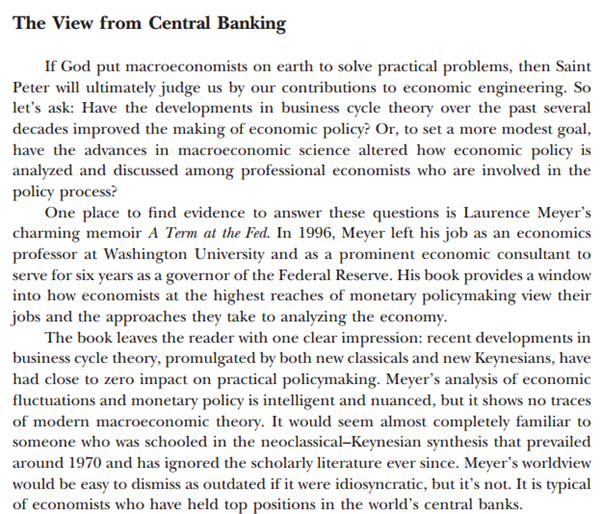
Source: AEAweb: JEP (20,4) p. 29 – The Macroeconomist as Scientist and Engineer – Greg Mankiw (2006).
I would spend my time arguing with a central banker that Milton Friedman may be right and central banks should be replaced with a computer. The success of inflation targeting is forcing me to think more deeply about that position. In particular the rise of pension fund socialism means that most voters are very adverse to inflation because of their retirement savings and that is before you consider housing costs are much largest proportions of household budgets these days.

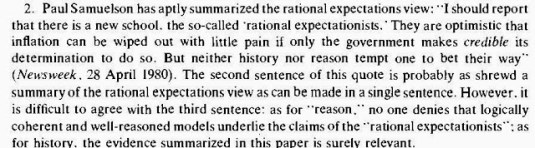
The shrewdest summary of rational expectations economic policy was by Paul Samuelson
02 Feb 2015 Leave a comment
in business cycles, fiscal policy, inflation targeting, macroeconomics, monetary economics Tags: new classical macroeconomics, Paul Samuelson, policy credibility, rational expectations, regime uncertainty, Stephen Williamson, time inconsistency, Tom Sargent
 Utopia, you are standing in it!
Recent Comments