Bouncing Back: The Role of Social Safety Nets
03 Nov 2021 Leave a comment
in applied price theory, economics of education, entrepreneurship, fiscal policy, human capital, income redistribution, labour economics, labour supply, occupational choice, politics - USA, poverty and inequality, Public Choice Tags: poverty traps
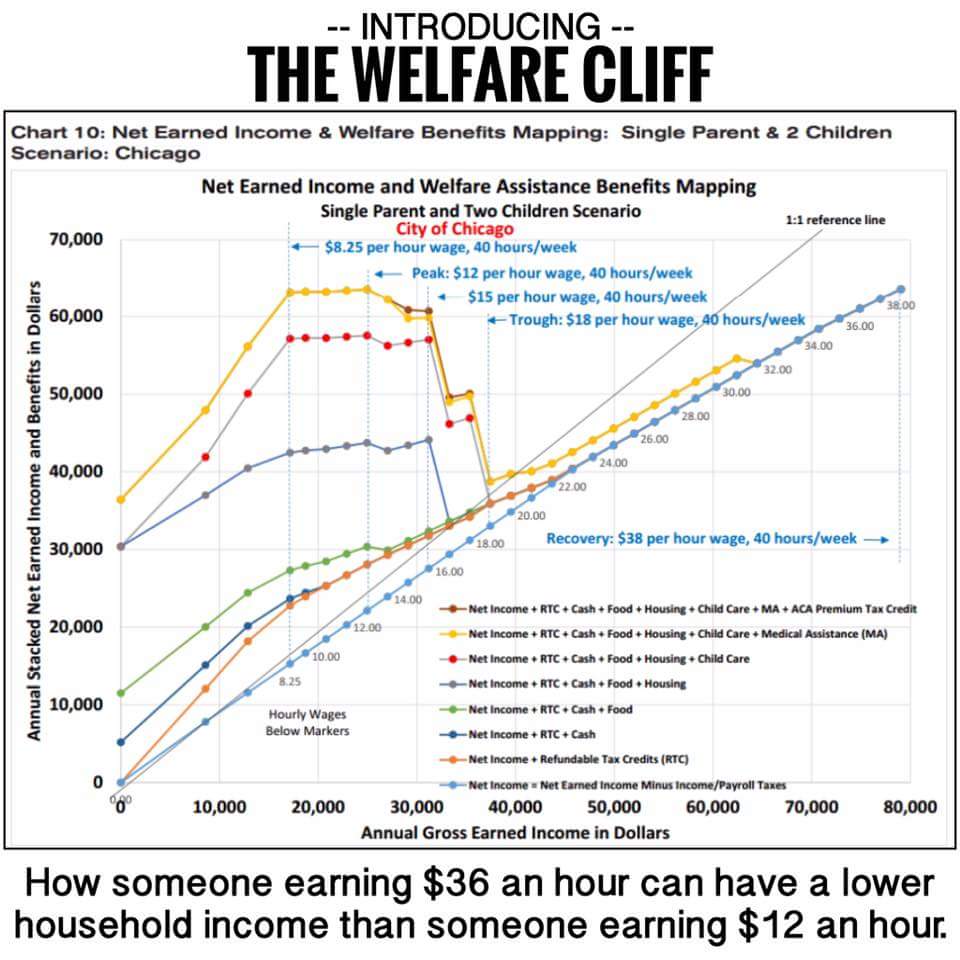
Poverty traps explained
21 Jun 2018 Leave a comment
in applied price theory, labour economics, labour supply, politics - New Zealand, public economics, welfare reform Tags: family poverty, poverty traps

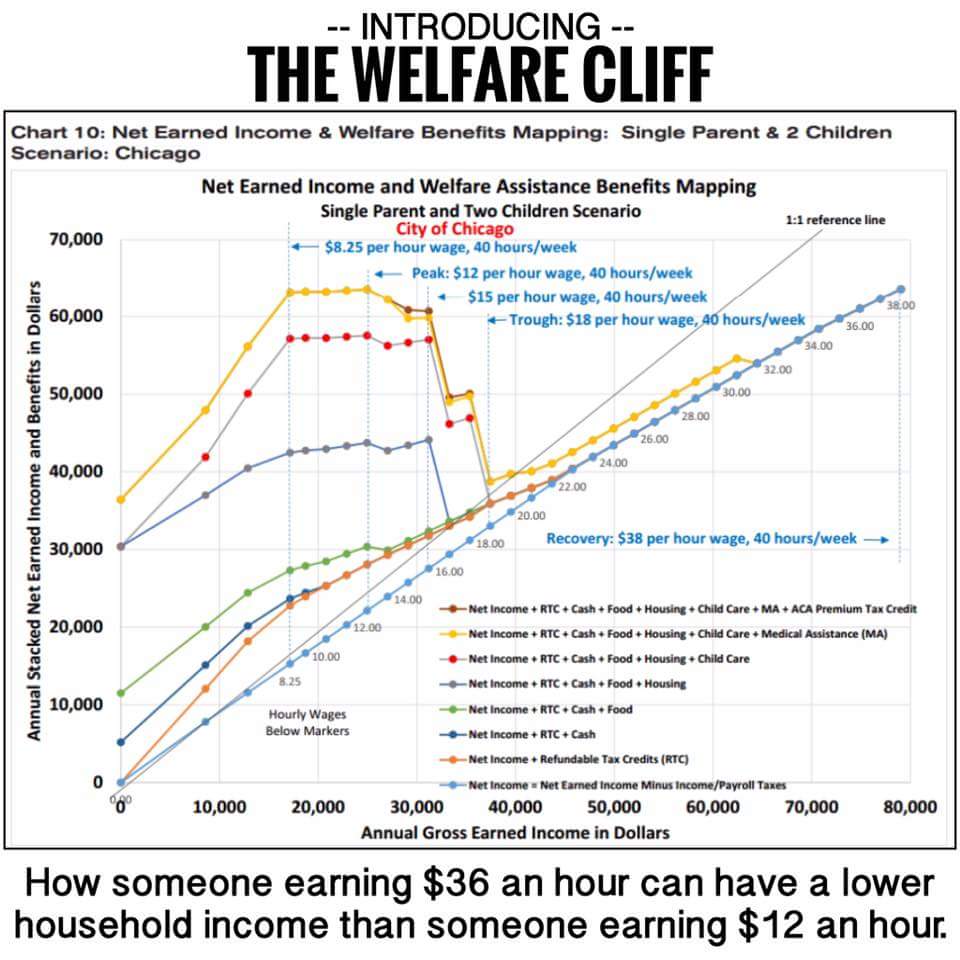
@BernieSanders @GrantRobertson1 why does anyone bother to work in #Denmark?
06 Apr 2016 Leave a comment
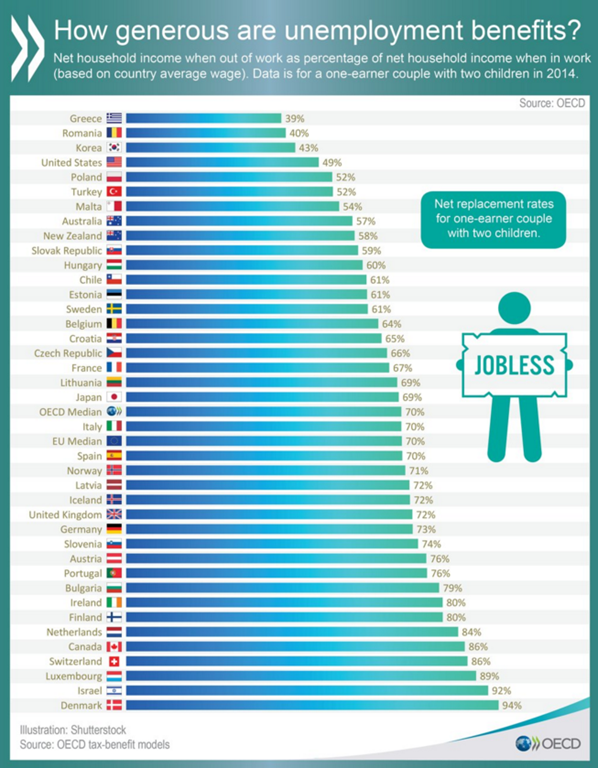
Effective marginal tax rates on single and dual earner families in the USA, Britain, France, Germany, Canada, Italy, Sweden, Denmark, Australia and New Zealand
05 Mar 2016 Leave a comment
in economics of love and marriage, fiscal policy, gender, labour economics, labour supply, law and economics, politics - Australia, politics - New Zealand, politics - USA, public economics Tags: Australia, British economy, Canada, Denmark, effective marginal tax rates, family tax benefits, family tax credits, France, Germany, in-work tax credits, Italy, poverty traps, rational irrationality, social insurance, Sweden, taxation and labour supply
Some countries including New Zealand and Australia do not give ordinary families much of an incentive to earn more. Effective marginal tax rates on low income families is one of the few times that the Left discovers supply-side economics.
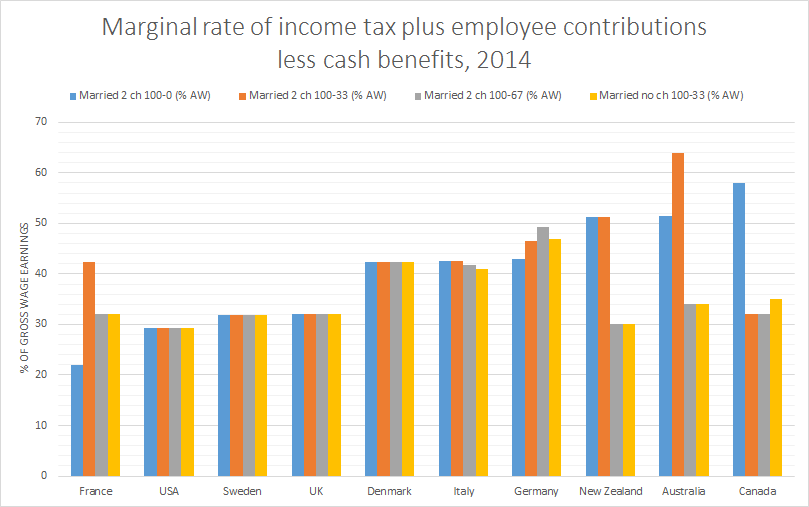
Source: Taxing Wages 2015 – OECD 2015.
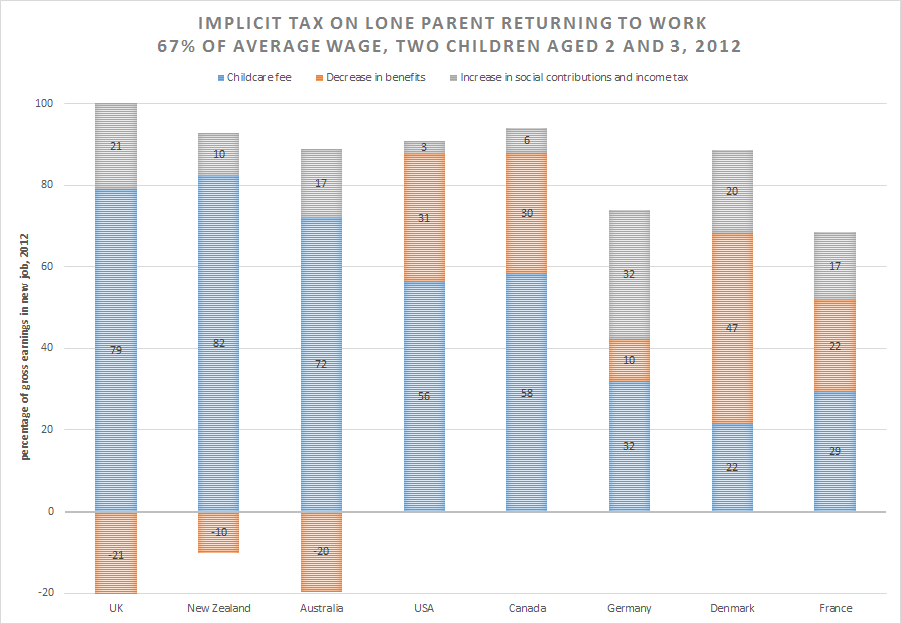
Implicit tax on a lone parent returning to a low-paid job in the USA, UK, Denmark, France, Germany, Canada, Australia and New Zealand
28 Feb 2016 Leave a comment
in applied price theory, fiscal policy, labour economics, labour supply, politics - Australia, politics - New Zealand, politics - USA, poverty and inequality, public economics, welfare reform Tags: poverty traps, single mothers, single parents, social insurance, taxation and labour supply, welfare state
Poverty traps in America
02 Oct 2015 Leave a comment
in applied welfare economics, behavioural economics, labour economics, labour supply, politics - USA, poverty and inequality, public economics, welfare reform Tags: poverty traps, taxation and labour supply, welfare state
German unemployment incidence by duration since 1983
11 Aug 2015 Leave a comment
in economic history, Euro crisis, fiscal policy, job search and matching, labour economics, labour supply, macroeconomics, unemployment, welfare reform Tags: equilibrium unemployment rate, Eurosclerosis, German unification, Germany, natural unemployment rate, poverty traps, unemployment duration, unemployment insurance, welfare state
German long term unemployment has been pretty stable albeit with an up-and-down after German unification. There is also a fall in long-term unemployment after some labour market reforms around 2005.

Source: OECD StatExtract.
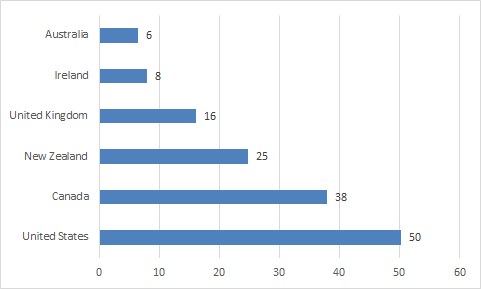
In which Anglo-Saxon country is full-time work not enough to escape family poverty on the minimum wage?
07 Jun 2015 1 Comment
in labour economics, minimum wage, politics - Australia, politics - New Zealand, politics - USA, population economics, poverty and inequality, welfare reform Tags: earned income tax credit, poverty traps, single parents, taxation and the labour supply, welfare state
Figure 1: Weekly working hours needed at minimum-wage to move above a 50% relative poverty line after taxes, mandatory social or private contributions payable by workers, and family benefits for lone parent with two children, Anglo-Saxon countries, 2013
 Utopia, you are standing in it!
Recent Comments