The explosion in women’s professional education just after the pill became widely available
07 Mar 2015 Leave a comment
in discrimination, economic history, economics of education, gender, labour economics, labour supply, occupational choice, politics - USA Tags: economics of fertility, engines of liberation, female labour supply, gender wage gap, reversing gender gap, The Pill
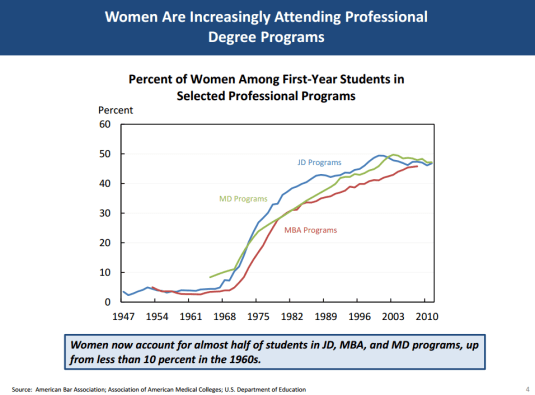
Source: whitehouse.gov
Are women just too smart to be computer scientists?
02 Mar 2015 1 Comment
in discrimination, economics of education, gender, human capital, labour economics, occupational choice Tags: gender wage gap, reversing gender gap
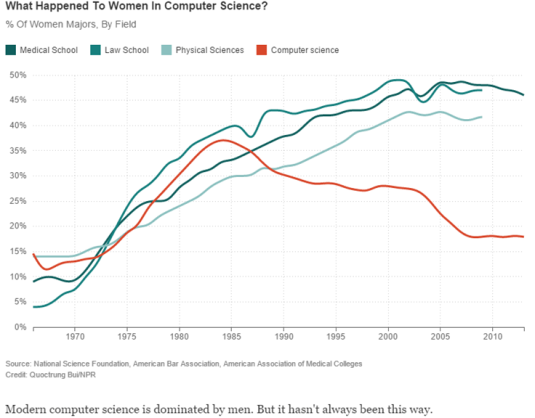
Women started drifting away from computer science in the mid-1980s. The interpretation put forward by the professional grievance industry, that is, by National Public Radio in the USA is:
The share of women in computer science started falling at roughly the same moment when personal computers started showing up in U.S. homes in significant numbers.
These early personal computers weren’t much more than toys. You could play pong or simple shooting games, maybe do some word processing.
And these toys were marketed almost entirely to men and boys. This idea that computers are for boys became a narrative. It became the story we told ourselves about the computing revolution. It helped define who geeks were, and it created techie culture.
Source: NPR
Another interpretation is there are systematic differences between teenage boys and teenage girls in verbal and written skills. Young women moved away from enrolling in computer science because they could make better use of their superior written and verbal skills in medicine and law. Computer science is for those with inferior social skills, on average.
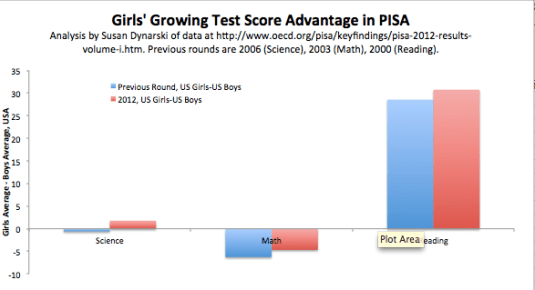
As for computers in the early days been marketed to men and boys, people with inferior verbal and reading skills would be attracted to sitting in front of the computer playing games because of their inferior social skills. Computers were expensive back in the 80s so marketing them to people with fewer social skills is sensible as they were more willing to spend money to fill the extra time they spend on their own.
The difference in reading and verbal skills between girls and boys at the age of 15 is equal to 6-months extra schooling. Six months schooling explains a lot of the wage gaps on ethnic, racial and gender lines. Not surprisingly, fewer women do computer science because their superior reading and verbal skills qualify them for medicine and law where they can take greater advantage of their mix of talents.
It is all about being the best you can be. As many women as men ending up in STEM occupations does not necessarily mean people are making the choices that help them be the best they can be because some women may not be taking advantage of their superior reading skills.
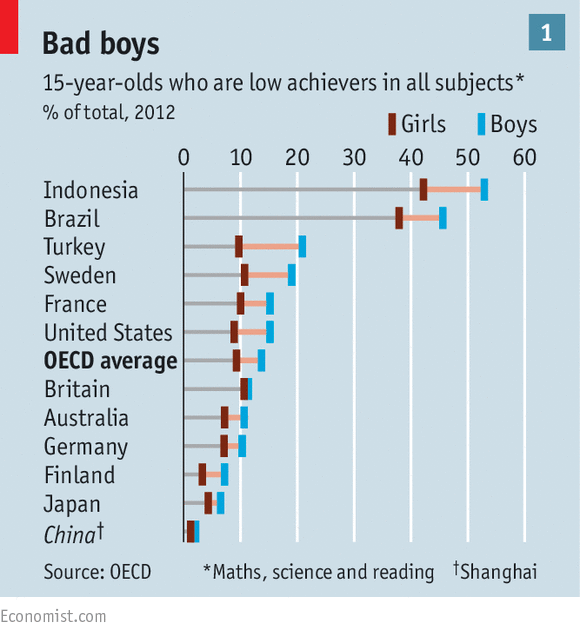
Men are turning into a bunch of losers, academically speaking.
13 Jan 2015 Leave a comment
in discrimination, gender, human capital, labour economics Tags: gender analysis, gender gap, reversing gender gap


The reverse gender gap in part-time employment
04 Oct 2014 Leave a comment
in discrimination, gender, human capital, labour economics, occupational choice Tags: compensating differentials, gender wage gap, part-time work, reversing gender gap

HT: economix
The reversing gender gap in education
03 Jul 2014 Leave a comment
in economics of education, gender, human capital, labour economics, occupational choice Tags: reversing gender gap
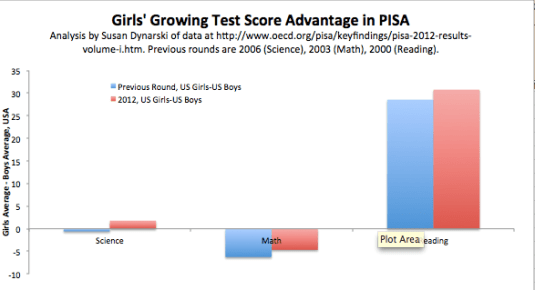
The difference in reading and verbal skills between girls and boys at the age of 15 is equal to 6-months extra schooling. Six months schooling explains a lot of the wage gaps with a long ethnic, racial and previously on gender lines.
Not surprisingly, fewer women do science and engineering degrees because their superior reading and verbal skills qualify them for medicine and other sciences that take advantage of these talents.
 Utopia, you are standing in it!
Recent Comments