Since I’m currently in Europe as part of the Free Market Road Show, I’m going to share some more data (for other examples, see here, here, here, and here) on why the United States should not become more like Europe. As I noted a few years ago, people in the United States enjoy much higher levels […]
I frequently make the point that America’s tax system is more progressive than European tax systems. But not because the United States imposes higher tax rates on upper-income households. Instead, the big difference is that lower-income and middle-class households in the United States face much lower tax burdens than their European counterparts. In those columns, […]
Neither theory, history nor the latest data suggests a recession driven by AI job dislocation is likely By Greg Ip. Excerpts:”Technological advancements always cost some people their jobs—those whose skills can be easily substituted by tech. But their loss is more than offset through three other channels. The new technology enhances the skills of some survivors,…
TweetIn today’s National Post I celebrate the 250th anniversary – which is this coming Monday, March 9th – of the publication of Adam Smith’s An Inquiry Into the Nature and Causes of the Wealth of Nations. A slice: Smith then inquired into wealth’s causes. He didn’t inquire into the causes of poverty. Smith understood that…
In our textbook, Modern Principles, Tyler and I write: Imagine how difficult it would be to get a date if every date required marriage? In the same way, it’s more difficult to find a job when every job requires a long-term commitment from the employer. In two new excellent pieces, Brian Albrecht and Pieter Garicano…
When Milton Friedman pondered what would happen if a helicopter dropped $1,000 from the sky, he likely never imagined that one day a military cargo plane would scatter millions of dollars into one of Bolivia’s largest cities. But while the Nobel Prize-winning economist worried about the inflation that an influx of cash could generate, the impact in…
Is it time to pack our belongings and head to Argentina, where Javier Milei is dramatically improving economic policy and cultural attitudes? I’m joking, but also not joking. The reason I’m not joking is that there’s a very depressing scenario for America’s near-term economic outlook. It involves these six potential developments. Thanks in part to […]
Law & economics traces its intellectual roots to the University of Chicago. That lineage still shapes how the field is understood. Chicago price theory—especially Gary Becker’s (1976) systematic application of maximization, equilibrium, and stable preferences across social life, and George Stigler’s (1992, p. 459) suggestion that “every durable social institution or practice is efficient, or…
We study the macroeconomic effects of tariff policy using U.S. historical data from 1840–2024. We construct a narrative series of plausibly exogenous tariff changes – based on major legislative actions, multilateral negotiations, and temporary surcharges – and use it as an instrument to identify a structural tariff shock. Tariff increases are contractionary: imports fall sharply,…
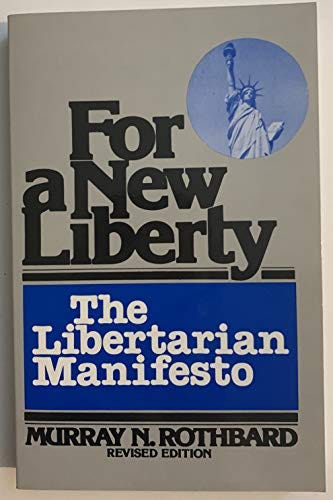
Update: I’m doing a Substack Live today on You Have No Right to Your Culture with the Boyd Institute’s Peter Banks. 4 PM ET.SummaryThis is the shortest chapter of the book, just six pages long. Rothbard makes a laundry list of what he calls “the major problem areas of our society” and argues that government…
When thinking about what makes an economy flourish, many of us tend to focus on the success stories of innovation and growth. After all, success stories involve an element of risk, which means a chance of failure. When it’s more expensive to fail, then avoiding the risk of failure–by avoiding innovative but risky business choices–starts…
See The Weight-Loss Price Wars Are Breaking Big Pharma’s Business Model: Prices for GLP-1s are falling fast and forcing companies to adapt by David Wainer of The WSJ.”Two years ago, a GLP-1 prescription could cost an uninsured patient more than $1,000 a month. Today, Novo Nordisk’s Wegovy pill starts at just $149 through cash-pay programs.””Typically, drug…
Using data from hundreds of closely contested partisan elections from 2010 to 2019 and a vote share regression discontinuity design, we find that narrow election of a Republican prosecutor reduces all-cause mortality rates among young men ages 20 to 29 by 6.6%. This decline is driven predominantly by reductions in firearm-related deaths, including a large reduction in firearm…
Why Evolution is True is a blog written by Jerry Coyne, centered on evolution and biology but also dealing with diverse topics like politics, culture, and cats.
“We do not believe any group of men adequate enough or wise enough to operate without scrutiny or without criticism. We know that the only way to avoid error is to detect it, that the only way to detect it is to be free to inquire. We know that in secrecy error undetected will flourish and subvert”. - J Robert Oppenheimer.





 Utopia, you are standing in it!
Recent Comments