The Government announced: The Coalition Government will support at risk regional air routes with up to $30 million in loans from the Regional Infrastructure Fund for small passenger airlines, Regional Development Minister Shane Jones and Associate Transport Minister James Meager say. “Reliable air services are critical for the economic and social wellbeing of regional New […]
More corporate welfare for airlines
More corporate welfare for airlines
18 Sep 2025 Leave a comment
in applied price theory, entrepreneurship, industrial organisation, politics - New Zealand, survivor principle, transport economics
The United States vs. Europe, Part IV
17 Sep 2025 Leave a comment
in applied price theory, economic growth, economic history, economics of regulation, labour economics, labour supply, macroeconomics, Public Choice, rentseeking Tags: European Union

I put a lot of focus on “convergence” and “divergence” because economic theory says rich countries should not grow faster than poor countries. So when there are examples of divergence, especially when looking at decades of data, we can learn very important lessons about economic policy. Those lessons, in every single case, teach us that […]
The United States vs. Europe, Part IV
Predistribution, Not Redistribution, in the Nordic Countries
15 Sep 2025 Leave a comment
in applied price theory, economic growth, economics of education, fiscal policy, income redistribution, labour economics, labour supply, macroeconomics, poverty and inequality, Public Choice, public economics, rentseeking Tags: Denmark, Finland, Norway, Sweden
Maybe it’s just because I live in Minnesota, a state where the differences between immigrants from Sweden, Norway, and Finland are still apparent in the names of towns and the surnames of people. But when I run into people who would prefer that the US distribution of income be more equal, they often point to…
Predistribution, Not Redistribution, in the Nordic Countries
Mario Rizzo on behavioural economics
14 Sep 2025 1 Comment
in applied price theory, Austrian economics, behavioural economics
I was delighted to share a stage with Prof Mario Rizzo, co-author of Escaping Paternalism and other fine works, at the IEA earlier this year. I never got around to posting the video, but here it is. Mario is an articulate critique of behavioural economics and “nudge” policies. I also mentioned his work on the slippery slope…
Mario Rizzo on behavioural economics
Red Tape and Unintended Consequences
13 Sep 2025 Leave a comment
in applied price theory, economics of bureaucracy, economics of regulation, environmental economics, income redistribution, labour economics, labour supply, law and economics, occupational regulation, property rights, Public Choice, rentseeking Tags: France

I’ve written endlessly about the negative effect of high tax rates on productive behavior, as well as some quirky examples of how taxes lead to some unintended consequences. Today, let’s consider how government regulations distort behavior. We’ll start with a video from Reason about government policies that backfire. In this case, note the second example. […]
Red Tape and Unintended Consequences
Mises, Bastiat, Public Opinion, and Public Choice
12 Sep 2025 Leave a comment
in applied price theory, Austrian economics, Public Choice

20th anniversary of my prize-winning paper with Ed Stringham
Mises, Bastiat, Public Opinion, and Public Choice
Vernon Smith on Donald Trump’s Protectionism
11 Sep 2025 Leave a comment
in applied price theory, development economics, economic history, economics of bureaucracy, history of economic thought, income redistribution, international economics, politics - USA, Public Choice, rentseeking Tags: free trade, tariffs
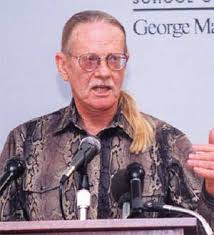
TweetMy emeritus Nobel-laureate colleague, Vernon Smith, sent the following email to me in response to this post. I share Vernon’s note with his kind permission. Don, Trump, like all businesspersons turned political, wants government favors, that is Mercantilism which is as bad today as when Adam Smith railed against such cozy relationships. Same for labor…
Vernon Smith on Donald Trump’s Protectionism
Greens say taxing supermarkets more will lower food prices!
10 Sep 2025 Leave a comment
in applied price theory, economics of regulation, industrial organisation, Marxist economics, politics - New Zealand, Public Choice, public economics Tags: competition law
Radio NZ reports: But the Greens’ commerce and consumer affairs spokesperson Ricardo Menéndez March told RNZ that was only “one part of the puzzle” and the government needed to explore all its options – including breaking up the supermarket duopoly. “While we support having new players in the market, Nicola Willis is banking on big […]
Greens say taxing supermarkets more will lower food prices!
A Positive Account of Rights with David Friedman
09 Sep 2025 Leave a comment
in applied price theory, constitutional political economy, David Friedman, economic history, economics of crime, Gordon Tullock, history of economic thought, law and economics, liberalism, libertarianism, property rights, Public Choice
Some Links
07 Sep 2025 Leave a comment
in applied price theory, economic history, entrepreneurship, financial economics, macroeconomics Tags: China, Japan
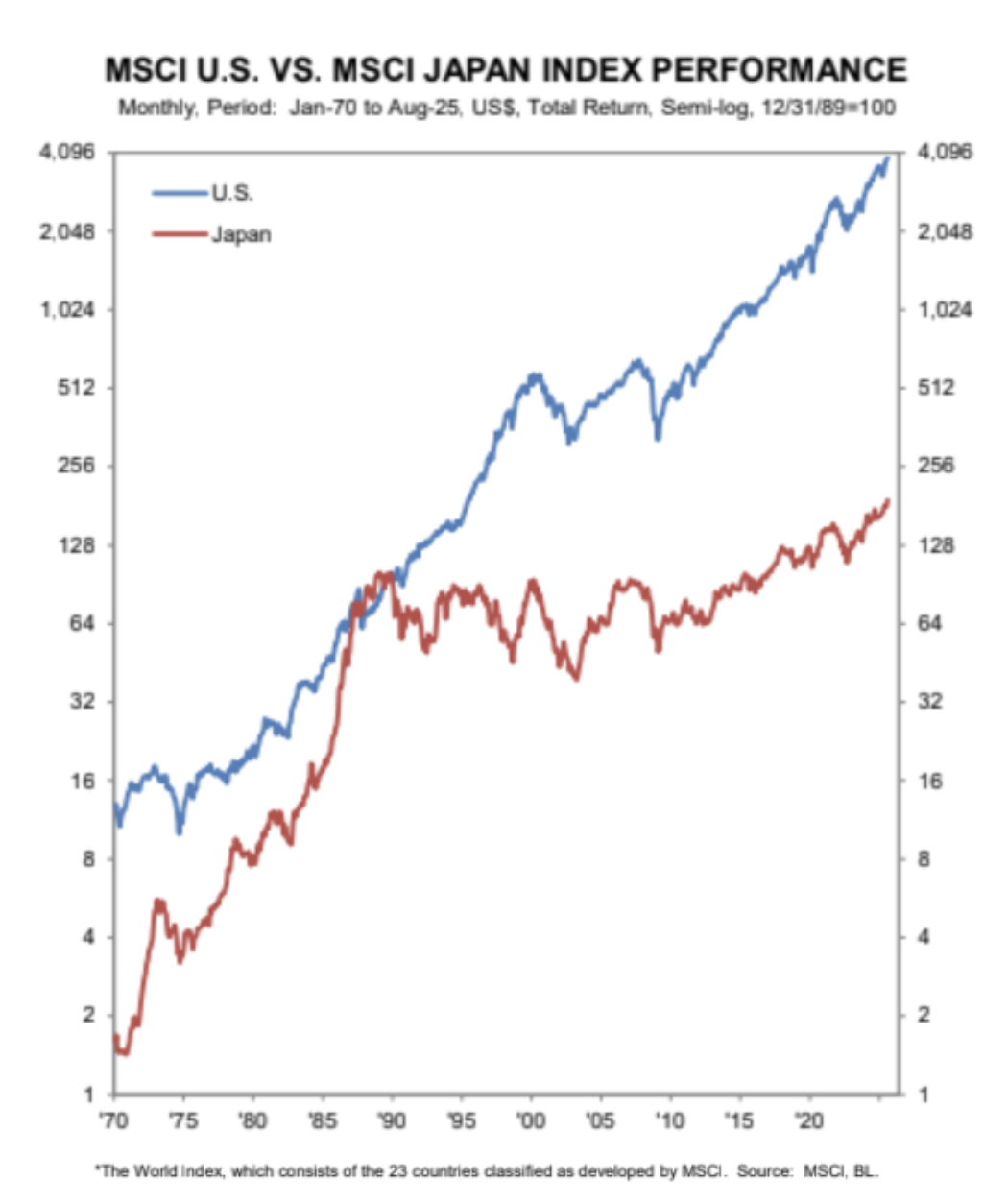
TweetThe folks at Unleash Prosperity share a chart that shows that Japanese industrial policy – which we Americans a few decades ago were warned by oh so very many pundits, professors, and politicians left, right, and center would propel Japan’s economy to great heights and leave America’s in the dust – was a curse to…
Some Links
How well did Katrina reconstruction go?
05 Sep 2025 Leave a comment
in applied price theory, economic history, economics of bureaucracy, economics of natural disasters, income redistribution, politics - USA, Public Choice, public economics, rentseeking
…the federal government did something extraordinary: It committed more than $140 billion toward the region’s recovery. Adjusted for inflation, that’s more than was spent on the post-World War II Marshall Plan to rebuild Europe or for the rebuilding of Lower Manhattan after the Sept. 11 attacks. It remains the largest post-disaster domestic recovery effort in […]
How well did Katrina reconstruction go?
Do rising house prices damage economic growth?
01 Sep 2025 Leave a comment
in applied price theory, economic growth, economics of bureaucracy, economics of regulation, macroeconomics, politics - New Zealand, Public Choice, regulation, rentseeking, urban economics Tags: housing affordability
Don Brash writes – In recent years, when addressing Rotary and other audiences, I often talk about the five big challenges facing New Zealand – persistently slow growth in productivity, and therefore in income levels; ridiculously unaffordable house prices; the increasing division of our society into those with a Maori ancestor and those without; the […]
Do rising house prices damage economic growth?
David Splinter on how much tax billionaires pay
30 Aug 2025 Leave a comment
in applied price theory, econometerics, entrepreneurship, human capital, income redistribution, labour economics, labour supply, politics - USA, poverty and inequality, Public Choice, public economics Tags: taxation and entrepreneurship, taxation and investment
Here is his comment on the paper presented here: Summary: The U.S. tax system is highly progressive. Effective tax rates increase from 2% for the bottom quintile of income to 45% for the top hundredth of one percent. But rates may be lower among those with the highest wealth. This comment starts with the “top 400” […]
David Splinter on how much tax billionaires pay
The Ongoing Tragedy of Cuban Socialism
30 Aug 2025 Leave a comment
in applied price theory, development economics, econometerics, economic history, economics of bureaucracy, growth disasters, history of economic thought, industrial organisation, law and economics, Marxist economics, property rights, Public Choice Tags: Cuba

I’ve written several articles about the failure of Cuban socialism (2024, 2022, 2021, 2019, and 2016). My leftist friends almost always respond by claiming that U.S.-imposed trade restrictions are the primary reason for Cuba’s terrible economy. Since I like free trade, I certainly agree that trade restrictions are bad for growth (a lesson I wish […]
The Ongoing Tragedy of Cuban Socialism
Why Are Electricity Prices So High?–Dieter Helm
29 Aug 2025 1 Comment
in applied price theory, economics of climate change, economics of regulation, energy economics, environmental economics, environmentalism, global warming, industrial organisation Tags: British politics, climate activists, wind power

By Paul Homewood Why is the price of electricity so high? It’s a puzzle, because successive politicians (Blair, Cameron, May, Johnson and now Starmer and Miliband) and lots of lobbyists have told us we should have expected quite the opposite: cheap energy, to be achieved by getting out of fossil fuels. First exit […]
Why Are Electricity Prices So High?–Dieter Helm
 Utopia, you are standing in it!
Recent Comments