Stats NZ reports: The gender pay gap was 5.2 percent in the June 2025 quarter, down from 8.2 percent in the June 2024 quarter, according to figures released by Stats NZ today. “The June 2025 quarter gender pay gap of 5.2 percent is the lowest since the series began in 1998,” labour market spokesperson Abby […]
The smallest gender pay gap in history
The smallest gender pay gap in history
28 Aug 2025 Leave a comment
in applied price theory, discrimination, econometerics, economic history, gender, human capital, labour economics, labour supply, occupational choice, politics - New Zealand, poverty and inequality Tags: gender wage gap, sex discrimination
Voltaire on the Civility of Markets
28 Aug 2025 Leave a comment
in applied price theory, history of economic thought
A person does not really read Voltaire’s Philosophical Dictionary (1764)–or at least I don’t –but instead surfs through it from time to time, trying to hit some of the high spots. Here are a couple of comments for reflection on a summer’s day, from the 1901 translation by William Fleming. In the entry under “Presbyterian,”…
Voltaire on the Civility of Markets
Civitas Institute’s Tariff Symposium
28 Aug 2025 Leave a comment
in applied price theory, applied welfare economics, development economics, history of economic thought, international economics, politics - USA Tags: tarrifs
TweetThe Civitas Institute at UT-Austin just published a superb symposium on tariffs, with contributions by Richard Epstein, Samuel Gregg, Dirk Mateer, Dominic Pino, and my intrepid Mercatus Center colleague, Veronique de Rugy. Below are some slices. “The Man Who Knew Too Little: Donald Trump on Tariffs” (Richard Epstein): It is a dangerous state of affairs…
Civitas Institute’s Tariff Symposium
The Most Important Election(s) of 2025
28 Aug 2025 Leave a comment
in applied price theory, Austrian economics, development economics, economic growth, economics of regulation, fiscal policy, growth disasters, labour economics, labour supply, law and economics, liberalism, libertarianism, macroeconomics, monetary economics, Public Choice, unemployment Tags: Argentina

Javier Milei has generated amazingly good results in just 20 months. But more reform is needed to undo the damage of 80 years of Peronism, which is why I explain that Argentina’s mid-term elections will be very important. Milei wants to turn Argentina into the world’s freest economy. That won’t be possible so long as […]
The Most Important Election(s) of 2025
World War II Liberty Ships and the Law of Increasing Opportunity Cost
27 Aug 2025 1 Comment
in applied price theory, defence economics, economic history, entrepreneurship, industrial organisation, labour economics, labour supply, occupational choice, war and peace Tags: World War II
See ‘Launching Liberty’ Review: Shipyard Victory The U.S. quickly constructed a fleet of vessels to carry vital war supplies across the oceans. Did the rush to build so fast affect quality? by Marc Levinson. He reviewed the book Launching Liberty: The Epic Race to Build the Ships That Took America to War by Doug Most.The Liberty…
World War II Liberty Ships and the Law of Increasing Opportunity Cost
Some Links
25 Aug 2025 Leave a comment
in applied price theory, international economics, politics - New Zealand
TweetJeff Jacoby eloquently argues that “the convictions that count are the ones that sometimes sting.” A slice: What makes this problem worse is the increasingly common belief that only those who agree with us are legitimate participants in American life. Too many on the right write off their opponents as anti-American, while too many on…
Some Links
More On Alleged Chinese Dumping
24 Aug 2025 Leave a comment
in applied price theory, development economics, economic history, entrepreneurship, growth miracles, history of economic thought, industrial organisation, international economics, politics - USA, Public Choice, rentseeking Tags: free trade, tariffs
TweetHere’s a second note to a commenter at my Facebook page. Mr. Schlomach: Commenting on my Facebook page, you allege that China ‘dumps’ goods in the U.S. and, in doing so, “has used our love of cheap stuff to suck our country of strategically critical technology/industry.” By suggesting that your fellow Americans buy stuff simply…
More On Alleged Chinese Dumping
Why is Europe Falling Behind?
23 Aug 2025 Leave a comment
in applied price theory, economic growth, labour economics, labour supply, macroeconomics Tags: European Union
WSJ: Europe is Losing Europeans live longer, have more leisure time and less income inequality, and often live in stunning cities and towns built over the centuries. But increasingly, Americans enjoy a higher standard of living. They have over 50% more living space on average per person. More than four in five Americans have air…
Why is Europe Falling Behind?
For a de minimus threshold for mergers
16 Aug 2025 1 Comment
in applied price theory, economics of bureaucracy, industrial organisation, law and economics, politics - New Zealand, Public Choice Tags: competition law, merger law enforcement
I’ve spent the last couple of days at the Competition Law and Policy Institute’s annual workshop.Webb-Henderson’s Lucy Wright made a good case for a de minimus threshold for merger controls. Small mergers could have a safe harbour, or mergers in markets of insufficient NZ importance.If we need to set a monetary threshold for a market…
For a de minimus threshold for mergers
FERC Must Seize the Supreme Court’s Energy Opportunity
15 Aug 2025 1 Comment
in applied price theory, comparative institutional analysis, economics of bureaucracy, economics of regulation, energy economics, environmental economics, environmentalism, law and economics, politics - USA, property rights, Public Choice, rentseeking Tags: nuisance suits
The Court has provided the legal framework. FERC must provide the will to use it.
FERC Must Seize the Supreme Court’s Energy Opportunity
Is anyone worth a billion dollars?
12 Aug 2025 1 Comment
in applied price theory, entrepreneurship, industrial organisation Tags: superstar wages
That is the topic of my latest Free Press column. Excerpt: …in recent years they [Meta] have moved into AI in a big way. Over that same time period, the valuation of the company has risen from about $236 billion in November 2022 to almost $2 trillion at the end of this July. The reasons for […]
Is anyone worth a billion dollars?
Some Links
11 Aug 2025 1 Comment
in applied price theory, economic history, history of economic thought, international economics, politics - USA Tags: tarrifs
TweetFareed Zakaria, writing in the Washington Post, eloquently corrects many of the fallacies believed by MAGA-types (and also by many – most? – progressives’) about the American economy. Two slices: The Organization for Economic Cooperation and Development’s measure of median disposable household income in America was higher than in all but one advanced industrial economy…
Some Links
Chlöe Swarbrick’s homelessness hyperbole
11 Aug 2025 Leave a comment
in applied price theory, economic history, economics of regulation, human capital, labour economics, law and economics, liberalism, Marxist economics, politics - New Zealand, poverty and inequality, property rights, Public Choice, rentseeking, transport economics, urban economics Tags: family poverty, homelessness, regressive left
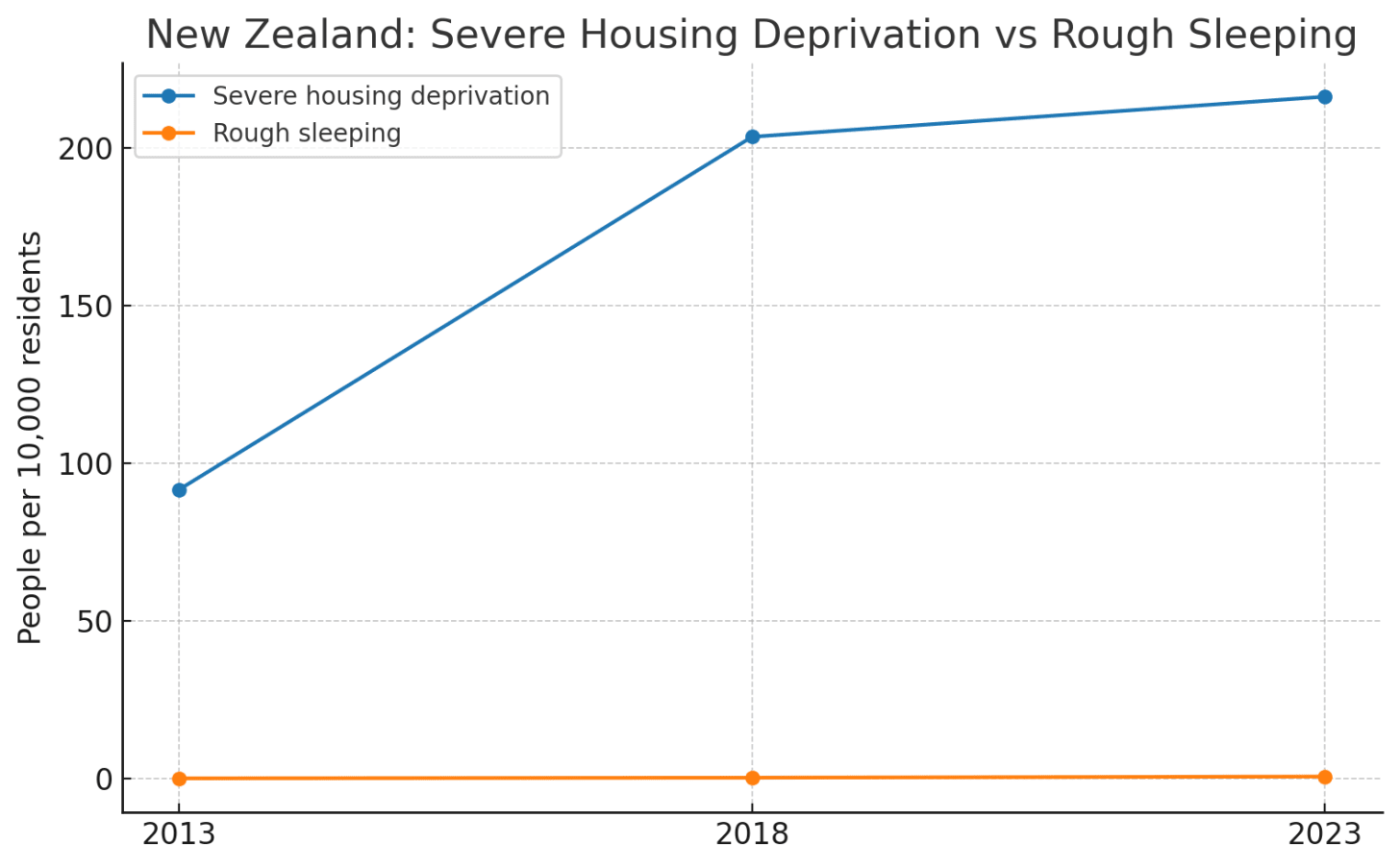
Ani O’Brien writes – Chlöe Swarbrick wants you to believe the Government is intentionally increasing homelessness. She told RNZ’s Mata with Mihingarangi Forbes: “The only conclusion that I can really come to is that this Government has intentionally increased homelessness…” It’s the kind of soundbite that plays well on social media. Outrage travels faster than nuance, and a […]
Chlöe Swarbrick’s homelessness hyperbole
Diocletian, the Roman Empire, and Forever Failing Price Controls
08 Aug 2025 1 Comment
in applied price theory, economic history, economics of regulation, history of economic thought Tags: price controls, Roman empire
By Tarnell Brown. At EconLog.”The Roman Empire was in trouble. During the fifty-plus years known as the Crisis of the Third Century (235-284 AD), the throne of Rome changed some 26 times, with the Roman Army engaging in a steady diet of crowning and removing claimants to the throne. These autocrats, known as “barracks emperors,”…
Diocletian, the Roman Empire, and Forever Failing Price Controls
Did the Minnesota housing reform lower housing costs?
07 Aug 2025 1 Comment
in applied price theory, law and economics, politics - USA, property rights, Public Choice, rentseeking, urban economics Tags: housing affordability, land supply, zoning
Yes: In December 2018, Minneapolis became the first U.S. city to eliminate single-family zoning through the Minneapolis 2040 Plan, a landmark reform with a central focus on improving housing affordability. This paper estimates the effect of the Minneapolis 2040 Plan on home values and rental prices. Using a synthetic control approach we find that the […]
Did the Minnesota housing reform lower housing costs?
 Utopia, you are standing in it!
Recent Comments