In yesterday’s post, I made reference to this 2021 article by Jeffrey Clemens (University of California at San Diego), published in the Journal of Economic Perspectives (open access). Clemens puts forward an interesting perspective on the debate about the observed employment impacts of the minimum wage (or lack thereof):…I contend that controversies over the economics of minimum wages…
How employers respond to minimum wage increases
How employers respond to minimum wage increases
15 Feb 2025 Leave a comment
in applied price theory, labour economics, labour supply, minimum wage, unemployment Tags: offsetting behavior, unintended consequences
David Friedman on consequences of climate change 2023
13 Feb 2025 Leave a comment
in applied price theory, David Friedman, economic history, energy economics, environmental economics, global warming, Ronald Coase
Cordon Pricing Makes New York Congestion Worse
13 Feb 2025 Leave a comment
in applied price theory, transport economics, urban economics Tags: cordon pricing
Early reports claim that New York City’s so-called congestion pricing program is a great success, reducing the number of vehicles driving into lower Manhattan by 5 to 6 percent. However, because it really isn’t congestion pricing — that is, it doesn’t price roads by how much congestion there is but … Continue reading →
Cordon Pricing Makes New York Congestion Worse
The economic impact of the 2000 Sydney Olympics
13 Feb 2025 Leave a comment
in applied price theory, sports economics Tags: Olympic Games
Economic impact studies are typically used to justify large sporting events. However, those studies typically apply a set of overly positive assumptions, leading to large overestimates of economic impact. Andrew Zimbalist even wrote a book about this problem, Circus Maximus (which I reviewed here).Now, it is rare for the authors of an economic impact study to go…
The economic impact of the 2000 Sydney Olympics
The long road to housing affordability
11 Feb 2025 Leave a comment
in applied price theory, economics of bureaucracy, economics of regulation, income redistribution, law and economics, politics - New Zealand, property rights, Public Choice, rentseeking, transport economics, urban economics Tags: housing affordability, land supply, zoning
There is much work yet to be done in New Zealand to improve housing affordability, despite recent declines in valuations. Eric Crampton writes – It wasn’t that long ago that New Zealand’s housing market made international news because of its insanity. In 2016, The Guardian tagged Auckland as the “hottest property market in the world” […]
The long road to housing affordability
Does the Gender Wage Gap Actually Reflect Taste Discrimination Against Women?
11 Feb 2025 Leave a comment
in applied price theory, discrimination, econometerics, economics of education, economics of information, economics of media and culture, gender, human capital, labour economics, labour supply Tags: gender wage gap
One explanation of the gender wage gap is taste discrimination, as in Becker (1957). We test for taste discrimination by constructing a novel measure of misogyny using Google Trends data on searches that include derogatory terms for women. We find—surprisingly, in our view—that misogyny is an economically meaningful and statistically significant predictor of the wage […]
Does the Gender Wage Gap Actually Reflect Taste Discrimination Against Women?
Alex and I consider how to reform the NSF in economics
10 Feb 2025 Leave a comment
in applied price theory, economics of education, entrepreneurship Tags: creative destruction, R&D
Here is a redux of our 2016 Journal of Economic Perspectives piece. Here is the abstract: We can imagine a plausible case for government support of science based on traditional economic reasons of externalities and public goods. Yet when it comes to government support of grants from the National Science Foundation (NSF) for economic research, […]
Alex and I consider how to reform the NSF in economics
Goldilocks and the Laffer Curve
09 Feb 2025 Leave a comment
in applied price theory, budget deficits, economic growth, entrepreneurship, fiscal policy, labour economics, labour supply, macroeconomics, politics - USA, public economics Tags: taxation and entrepreneurship, taxation and investment, taxation and labour supply

Other than Art Laffer, I think of myself as the world’s biggest advocate of the Laffer Curve. I’ve literally written hundreds of columns explaining and promoting the concept. My goal is to help people understand that there is not a linear relationship between tax rates and tax revenue. Why is this the case? Because when […]
Goldilocks and the Laffer Curve
Trade 101 for Trumpies
08 Feb 2025 Leave a comment
in applied price theory, applied welfare economics, Austrian economics, comparative institutional analysis, constitutional political economy, development economics, entrepreneurship, industrial organisation, international economics, politics - USA Tags: 2024 presidential election
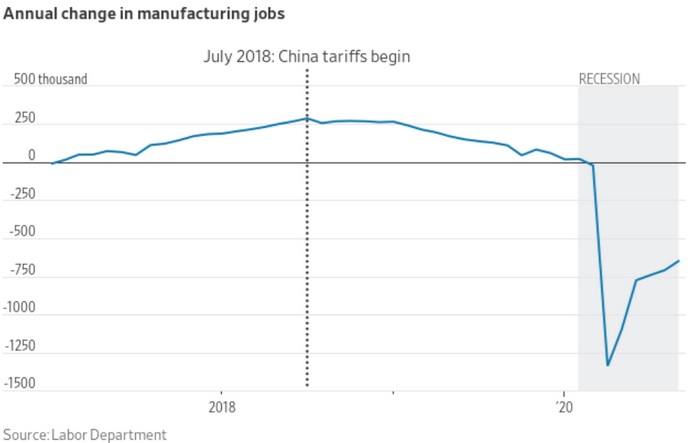
To augment my four-part video series about trade (dealing with the WTO, creative destruction, deficits, and economics), here’s part of my recent lecture about Trump’s trade policy to the Universidad de Libertad in Mexico City For those who (mistakenly) want to skip the video, my speech focused on these five themes. Trade deficits don’t matter. […]
Trade 101 for Trumpies
A negative productivity shock from working from home
08 Feb 2025 Leave a comment
in applied price theory, experimental economics, industrial organisation, labour economics, labour supply, managerial economics, occupational choice, organisational economics, personnel economics Tags: economics of pandemics
Some Links
06 Feb 2025 Leave a comment
in applied price theory, applied welfare economics, economic history, history of economic thought, international economics, politics - USA Tags: 2024 presidential election, free trade, game theory, tariffs
TweetNational Review‘s Charles Cooke explains that Trump’s trade war is needless. Two slices: How do I hate President Trump’s capricious levying of tariffs? Let me count the ways. They are constitutionally suspect, statutorily usurpative, diplomatically toxic, and culturally chaotic; they represent a profound political risk for the new administration — the potential upsides of which…
Some Links
Gender gaps in education and declining marriage rates
06 Feb 2025 Leave a comment
in applied price theory, econometerics, economics of love and marriage, economics of marriage, human capital, labour economics, law and economics, poverty and inequality Tags: assortative mating, economics of fertility
Over the past half-century, the share of men enrolled in college has steadily declined relative to women. Today, 1.6 million more women than men attend four-year colleges in the U.S. This trend has not lowered marriage rates for college women, a substantial share of whom have historically married economically stable men without college degrees. Both […]
Gender gaps in education and declining marriage rates
Levels of Industrial Policy
05 Feb 2025 Leave a comment
in applied price theory, comparative institutional analysis, development economics, economic history, entrepreneurship, industrial organisation, Public Choice, rentseeking Tags: industry policy
In arguments over industrial policy, there’s often a moment where someone makes an assertion like: “Every nation has industrial policy. Even not having an industrial policy is a type of industrial policy. The only relevant question is what kind of industrial policy we should choose.” In my experience, the people who make this argument then…
Levels of Industrial Policy
Property, liberty, transparency: the principled basis for the Regulatory Standards Bill
04 Feb 2025 Leave a comment
in Adam Smith, applied price theory, economics of bureaucracy, economics of regulation, law and economics, politics - New Zealand, property rights, Public Choice, rentseeking
Bryce Wilkinson writes – If you believe some of its critics, the pending Regulatory Standards Bill is a demonic measure to end New Zealand society as we know it. This is beyond false; it is ridiculous. In fact, it is a modest transparency measure. It will better inform the public about laws and regulations likely […]
Property, liberty, transparency: the principled basis for the Regulatory Standards Bill
Mocking European Statism
04 Feb 2025 1 Comment
in applied price theory, Austrian economics, comparative institutional analysis, economic growth, economics of bureaucracy, economics of regulation, entrepreneurship, environmental economics, financial economics, industrial organisation, international economics, labour economics, labour supply, law and economics, liberalism, macroeconomics, Marxist economics, property rights, Public Choice, public economics, rentseeking, survivor principle, theory of the firm Tags: employment law, European Union

I have a special page for humor involving Europe, but I have not added to it since sharing some Brexit humor in 2016. Let’s being the process of catching up with some amusing cartoons and memes mocking our government-loving cousins on the other side of the Atlantic Ocean. I’ve made the serious point that bureaucrats […]
Mocking European Statism
 Utopia, you are standing in it!
Recent Comments