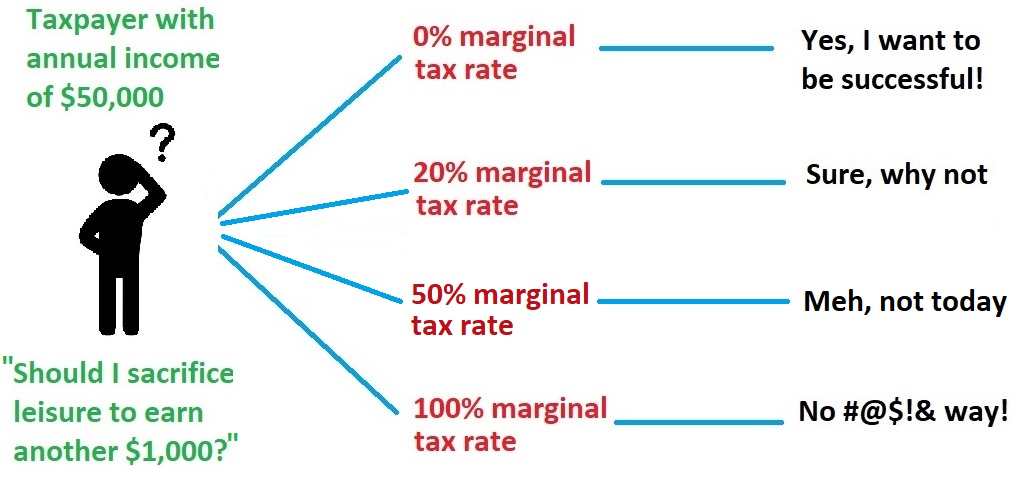
From a big-picture economic perspective, I worry most about the damage of high tax burdens on innovation, entrepreneurship, and investment. Those are things that generate enormous benefits for society, yet also things that are very sensitive to bad tax policy (specifically high marginal tax rates and the tax code’s bias against saving and investment). Sadly, […]
Economists have been thinking for a long time about the operation of buying and selling in markets. However, they have traditionally spent less time studying what happens inside a firm–a setting in which forces of supply and demand are replaced by managerial decision-making. Anyone who has had both a good boss and bad boss knows…
The exercise of US foreign policy (along with the European Union and the United Nations) has been increasingly characterized by the use (or threat) of trade sanctions. What do we know about how such sanctions work? Gabriel Felbermayr, T. Clifton Morgan, Constantinos Syropoulos, and Yoto V. Yotov review the evidence in “Economic Sanctions: Stylized Facts…
The super-rich are super-mobile. So, if a country decides to increase taxes on the super-rich (for example, with a wealth tax), some (but not all) of the super-rich will simply move elsewhere. This should not be a surprise to anyone. And yet, simplistic proposals to tax the super-rich are a favourite policy for some political…
From 1990 to 2010, rising numbers of H-1B holders caused 30–50 percent of all productivity growth in the US economy. This means that the jobs and wages of most Americans depend in some measure on these workers. The specialized workers who enter on this visa fuel high-tech, high-growth sectors of the 21st century economy with skills like computer […]
It seems natural enough, at least based on US experience, to believe that building and permitting are in a natural opposition: that is, stronger permitting means less building. Zachary Liscow has been looking for a way out of this opposition. He spells out some of his thoughts in “Reforming Permitting to Build Infrastructure” (Hutchins Center…
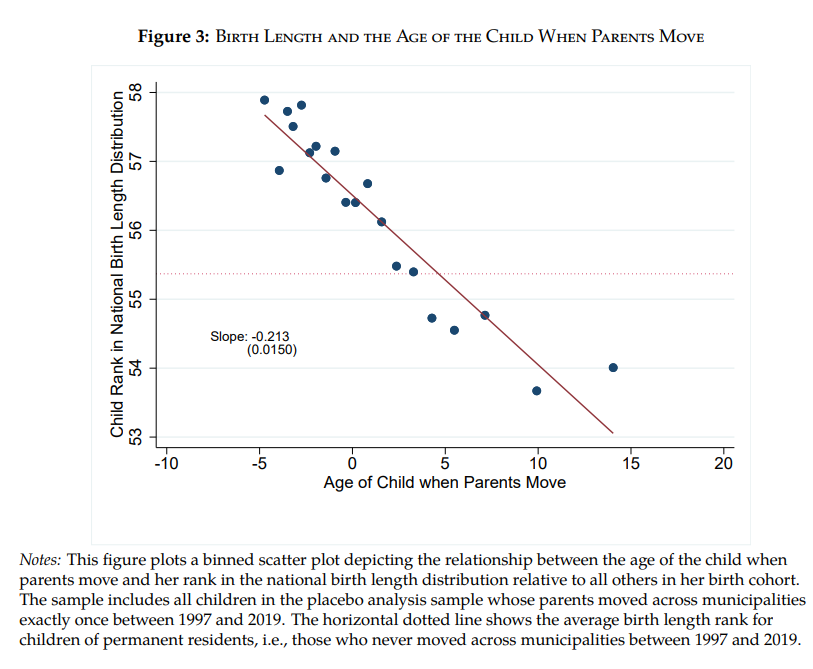
James Heckman and Sadegh Eshaghnia have launched a broadside in the WSJ against the Chetty-Hendren paper The Impacts of Neighborhoods on Intergenerational Mobility I: Childhood Exposure Effects. It’s a little odd to see this in the WSJ but since the Chetty-Hendren paper has been widely reported in the media, I suppose this is fair game. […]
The Government announced: The Coalition Government will support at risk regional air routes with up to $30 million in loans from the Regional Infrastructure Fund for small passenger airlines, Regional Development Minister Shane Jones and Associate Transport Minister James Meager say. “Reliable air services are critical for the economic and social wellbeing of regional New […]
I put a lot of focus on “convergence” and “divergence” because economic theory says rich countries should not grow faster than poor countries. So when there are examples of divergence, especially when looking at decades of data, we can learn very important lessons about economic policy. Those lessons, in every single case, teach us that […]
Maybe it’s just because I live in Minnesota, a state where the differences between immigrants from Sweden, Norway, and Finland are still apparent in the names of towns and the surnames of people. But when I run into people who would prefer that the US distribution of income be more equal, they often point to…
I was delighted to share a stage with Prof Mario Rizzo, co-author of Escaping Paternalism and other fine works, at the IEA earlier this year. I never got around to posting the video, but here it is. Mario is an articulate critique of behavioural economics and “nudge” policies. I also mentioned his work on the slippery slope…
I’ve written endlessly about the negative effect of high tax rates on productive behavior, as well as some quirky examples of how taxes lead to some unintended consequences. Today, let’s consider how government regulations distort behavior. We’ll start with a video from Reason about government policies that backfire. In this case, note the second example. […]
Why Evolution is True is a blog written by Jerry Coyne, centered on evolution and biology but also dealing with diverse topics like politics, culture, and cats.
In Hume’s spirit, I will attempt to serve as an ambassador from my world of economics, and help in “finding topics of conversation fit for the entertainment of rational creatures.”


Recent Comments