Between 2004 and 2021, before Russia’s invasion of Ukraine, the industrial price of energy tripled in nominal terms, or doubled relative to consumer prices. With almost identical population sizes, the UK has under 30 million homes, while France has around 37 million. 800,000 British families have second homes compared to 3.4 million French families. Per capita electricity generation in the UK […]
Facts about Britain
Facts about Britain
22 Sep 2024 Leave a comment
in applied price theory, economic growth, economics of bureaucracy, economics of regulation, energy economics, environmental economics, industrial organisation, labour economics, law and economics, macroeconomics, Public Choice, resource economics, transport economics, urban economics Tags: British politics
The Affordable Rent Act
22 Sep 2024 Leave a comment
in applied price theory, economics of regulation, income redistribution, law and economics, property rights, Public Choice, rentseeking, urban economics Tags: rent control
Bloomberg: Moraal is among the growing number of Dutch people struggling to find a rental property after a new law designed to make homes more affordable ended up aggravating a housing shortage. Aiming to protect low-income tenants, the government in July imposed rent controls on thousands of homes, introducing a system of rating properties based on […]
The Affordable Rent Act
The US Has Low Prices for Most Prescription Drugs
21 Sep 2024 Leave a comment
in applied price theory, economic history, health economics, industrial organisation Tags: drug lags
The US has high prices for branded drugs but it has some of the lowest prices for generic drugs in the world and generic drugs are 90% of prescriptions. I’ve been saying this for years but here is the latest study: U.S. prices for brand-name originator drugs were 422 percent of prices in comparison countries, […]
The US Has Low Prices for Most Prescription Drugs
Tax-Motivated International Migration
18 Sep 2024 Leave a comment
in applied price theory, entrepreneurship, labour economics, labour supply, poverty and inequality, public economics Tags: taxation and entrepreneurship, taxation and investment, taxation and labour supply
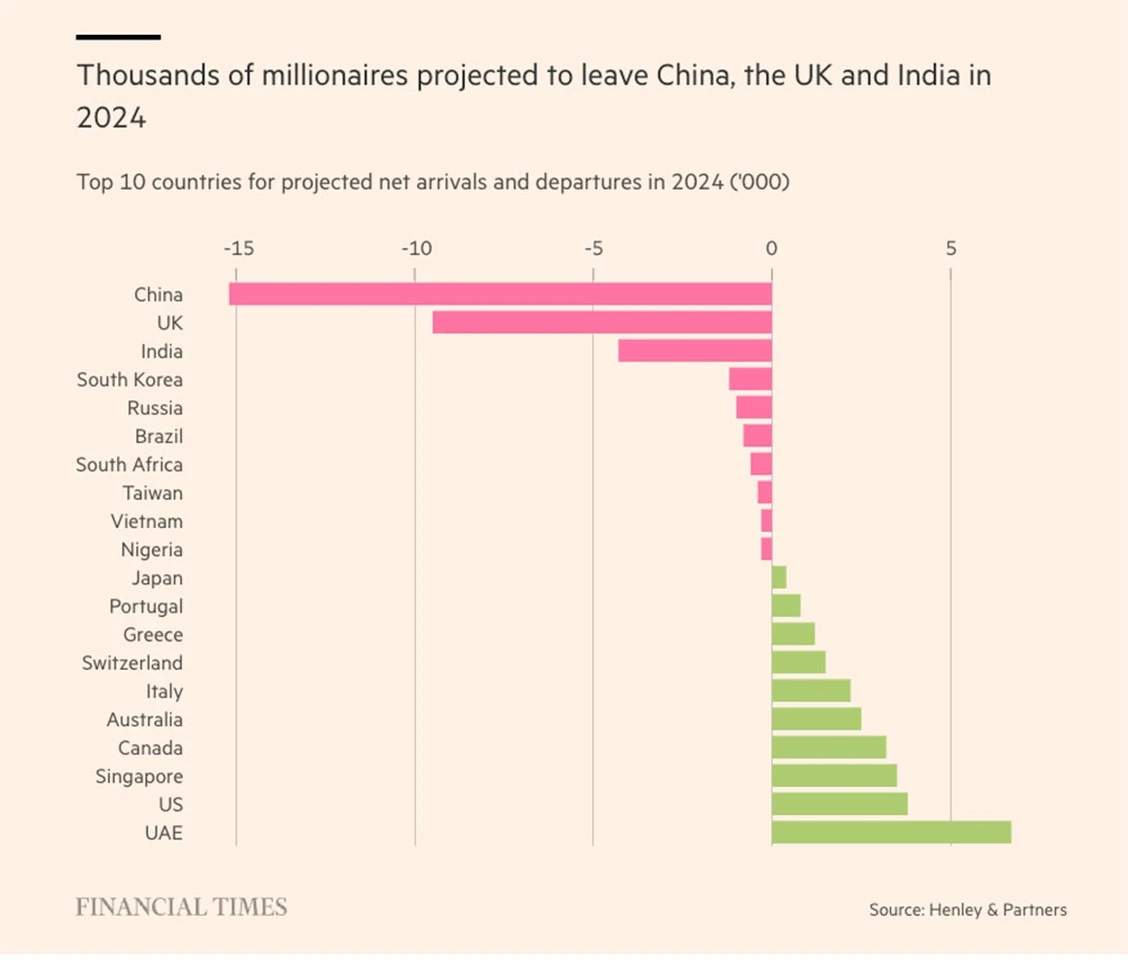
I wrote a few days ago about how Americans are moving from high-tax states to lower-tax states (mostly to states with no income taxes or flat taxes). Today, let’s look at international tax migration. I’ve addressed this issue before, but generally in the context of individual countries that are attracting or repelling entrepreneurs, investors, business […]
Tax-Motivated International Migration
Equality Act 2010
18 Sep 2024 Leave a comment
in applied price theory, comparative institutional analysis, economic history, history of economic thought, human capital, job search and matching, labour economics, labour supply, law and economics, occupational choice, poverty and inequality Tags: British politics, compensating differences, pay equity

The UK’s Orwellian sounding Equality Act 2010 is strikingly Marxist. It demands equal pay for work of equal value where these are defined as follows: A’s work is equal to that of B if it is like B’s work, rated as equivalent to B’s work, or of equal value to B’s work. A’s work is […]
Equality Act 2010
The Economic Consequences of the French Wealth Tax
17 Sep 2024 Leave a comment
in applied price theory, econometerics, economic history, entrepreneurship, fiscal policy, human capital, income redistribution, labour economics, labour supply, macroeconomics, occupational choice, poverty and inequality, Public Choice, public economics Tags: taxation and entrepreneurship, taxation and investment, taxation and labour supply
By Eric Pichet, here is the abstract: Despite attempts to ‘unwind’ the Impôt de Solidarité sur la Fortune (‘Solidarity Wealth Tax,’ the French wealth tax) during the last legislature (2002-2007), ISF yields had soared by 2006, jumping from €2.5 billion in 2002 to €3.6 billion. Analysis of the economic consequences of this ISF wealth tax […]
The Economic Consequences of the French Wealth Tax
Tax-Motivated Domestic Migration
17 Sep 2024 Leave a comment
in applied price theory, economic growth, entrepreneurship, Federalism, fiscal policy, human capital, income redistribution, labour economics, labour supply, macroeconomics, occupational choice, politics - USA, poverty and inequality, Public Choice, public economics Tags: capital gains tax, taxation and investment taxation and entrepreneurship, taxation and labour supply

I’m a big fan of tax competition. I cheer when jobs, investment, and people (or even booze) move from high-tax jurisdictions to low-tax jurisdictions. This increases the rewards for good policy and also increases the punishment for bad policy. Given my interest in the topic, I obviously can’t resist sharing this chart, which shows the […]
Tax-Motivated Domestic Migration
Monkeypox and Medsafe
15 Sep 2024 Leave a comment
in applied price theory, applied welfare economics, comparative institutional analysis, economics of bureaucracy, economics of information, economics of regulation, health economics, politics - New Zealand, Public Choice Tags: drug lags, economics of pandemics
In a sane world, medicines and vaccines already approved by trustworthy overseas regulators would automatically be able to be used in New Zealand as well.New Zealand is not sane. But neither is anywhere else really on that standard. Other places are just faster than NZ in getting things approved, with more practicable pathways for expedited…
Monkeypox and Medsafe
The Santa Claus Election
15 Sep 2024 Leave a comment
in applied price theory, comparative institutional analysis, economic growth, economics of education, entrepreneurship, fiscal policy, health and safety, income redistribution, industrial organisation, labour economics, labour supply, macroeconomics, politics - USA, Public Choice, public economics, unions Tags: 2024 presidential election, taxation and entrepreneurship, taxation and investment, taxation and labour supply

For libertarians, this is a very depressing election (a feeling we tend to have every four years, so a familiar experience). What basically happens is that two politicians try to bribe us with our own money. This year, we have Kamala Harris, who was even worse than Bernie Sanders in the big-spender contest. And we […]
The Santa Claus Election
Please legalise new supermarkets
11 Sep 2024 Leave a comment
in applied price theory, economics of regulation, environmental economics, politics - New Zealand, transport economics, urban economics Tags: land supply, zoning
Jaw-dropping bit from the Grocery Regulator, in interview at Interest.co.nz:“What we’ve been told by these players is when they come and they want to open up a large store in New Zealand, the cost to get a spade in the ground is double that of Australia,” he says in a new episode of the Of…
Please legalise new supermarkets
Uber messy
11 Sep 2024 Leave a comment
in applied price theory, comparative institutional analysis, economics of regulation, entrepreneurship, industrial organisation, labour economics, labour supply, law and economics, occupational choice, politics - New Zealand, property rights, Public Choice, transport economics, urban economics Tags: employment law, Uber
Caught a fun phone call from an accountant after this week’s column over at the Dom Post (and Christchurch Press, etc) on the court’s decision in the Uber case.If Uber drivers are employees, rather than contractors, as the Court sees things, how will depreciation on their cars be handled? Contractors can count all those expenses…
Uber messy
Rent controls make many tenants worse off in the Netherlands
10 Sep 2024 Leave a comment
in applied price theory, economic history, economics of regulation, income redistribution, Public Choice, rentseeking, transport economics, urban economics Tags: rent control
Rent controls have created shortages of housing, every time and in every place that they have been tried. In the latest futile attempt to create working rent controls, the Netherlands has worsened its housing shortage. As Bloomberg reported recently (paywalled, but try this alternative link):Two years ago, Nine Moraal and her two children moved into a…
Rent controls make many tenants worse off in the Netherlands
Uber ruling – driving in the wrong direction
09 Sep 2024 Leave a comment
in applied price theory, economics of regulation, labour economics, labour supply, law and economics, occupational choice, occupational regulation, property rights, Public Choice, rentseeking, transport economics, urban economics Tags: employment law, Uber
Dr Oliver Hartwich writes – Last week, an Uber driver surprised me in a conversation about the recent Court of Appeal decision classifying four Uber drivers as employees rather than contractors. My driver was blunt. He has no desire to be an employee. He values his flexibility to take breaks and drive when and where […]
Uber ruling – driving in the wrong direction
Employers are reluctant to admit workers work because they are paid wages
09 Sep 2024 Leave a comment
in applied price theory, labour economics, labour supply, managerial economics, organisational economics, personnel economics

https://www.facebook.com/groups/774813624767808/permalink/829599789289191/?ref=share&mibextid=NSMWBT
 Utopia, you are standing in it!
Recent Comments