Thomas Sowell on Wealth Creation, Human Capital & Colonialism
09 Dec 2018 Leave a comment
in applied price theory, comparative institutional analysis, constitutional political economy, development economics, economic growth, economic history, economics of bureaucracy, growth disasters, growth miracles, income redistribution, law and economics, macroeconomics, property rights, Public Choice, rentseeking Tags: economics of colonialism, Roman empire, Thomas Sowell
What makes countries rich or poor?
09 Dec 2018 Leave a comment
in applied price theory, comparative institutional analysis, constitutional political economy, development economics, economic history, economics of bureaucracy, economics of crime, economics of regulation, growth disasters, growth miracles, law and economics, property rights, Public Choice, rentseeking Tags: The Great Escape
Dr. Robert Murphy on the Dubious Economics of Climate Change
08 Dec 2018 Leave a comment
in applied price theory, applied welfare economics, Austrian economics, energy economics, environmental economics, global warming Tags: climate alarmists
The Economics of Pirates, Gypsies and Ordeals: Interview with Peter T. Leeson
08 Dec 2018 Leave a comment
in applied price theory, Austrian economics, comparative institutional analysis, constitutional political economy, economics of crime, law and economics, laws of war, market efficiency Tags: crime and punishment, law and order, market failure, pirates
Ideology trumps science once again: Daphna Joel and Cordelia Fine deny the notion of “male vs. female brains”
08 Dec 2018 Leave a comment

Cordelia Fine, a professor of the history and philosophy of science at the University of Melbourne, has carved out a niche for herself by attacking the notion that there are any evolved and genetically-based differences between males and females. Her books have been best-sellers (Testosterone Rex won the Royal Society book prize), probably because her conclusions appeal to those of a certain ideology. But those conclusions are flawed (see here, for instance). Fine’s critiques of some studies purporting to show sex differences are often good, but they’re combined with misguided characterizations of other work as well as the ignoring of results that go against her men-and-women-are-pretty-much-the-same thesis. In other words, Fine is tendentious, not objective, and her claims must always be taken with a grain of salt.
This is all on view in her op-ed with Daphna Joel (a professor of psychology and neuroscience at Tel Aviv…
View original post 1,763 more words
Climate Party! African Delegates Swamp Conference
07 Dec 2018 Leave a comment

 By Andrew Bolt ~
It’s a feeding frenzy at the UN climate conference. There’s the excuse for taxpayer-paid travel, of course, and the excuse to extort huge donations from the guilty rich:
An analysis of delegates by Carbon Brief found Guinea topped the list with 406 delegates, down 86 from last time. The Democratic Republic of Congo is second, with 237. Host nation Poland is third, with 211 delegates, followed by Ivory Coast, whose delegation this year has more than halved to 208 people…
Those huge delegations from these poor nations are actually down on last time? Wow.
Graham Lloyd puts it extremely diplomatically:
While some African countries give delegate tickets to non-governmental organisations, the make-up gives an indication of how important they consider the talks for securing development and mitigation funds.
Or as our Environment Minister Melissa Price memorably said to a former Kiribati Prime Minister who’d come…
View original post 240 more words
Google and Facebook Cross “The Creepy Line”
07 Dec 2018 Leave a comment

John Stossel highlights a very good movie that is out revealing how Google and Facebook cross The Creepy Line.
Follow the Climate Money
07 Dec 2018 Leave a comment

 Open image in new tab to enlarge.
How climate finance ‘flows’ around the world is an informative article from CarbonBrief. Excerpts below in italics followed by a comment from Bjorn Lomborg.
Climate finance is one of the bedrocks of negotiations at the United Nations Framework Convention on Climate Change (UNFCCC), including the “COP24” talks taking place this month in Katowice, Poland.
“Climate finance” refers to money – both from public and private sources – which is used to help reduce emissions and increase resilience against the negative impacts of climate change.
Rich countries have promised they will provide $100bn a year in climate finance to poorer nations by 2020. The UNFCCC’s recent biennial assessment found this sum had reached $75bn in 2016, a step forward compared to the $65bn given in 2015.
The OECD, a Paris-based intergovernmental economic organisation, asks its 36 member countries to report on their foreign aid…
View original post 919 more words
No deal: Pride’s Purge and retreat from settlement
06 Dec 2018 Leave a comment

As MPs prepare to vote over whether or not to accept the Brexit deal negotiated by Theresa May, we have the second post in the series on the tumultuous events of 1648-1649, as parliamentarians disputed with each other over a treaty which might end the civil wars. Dr Vivienne Larminie of the House of Commons 1640-1660 section moves on from 15 November to 6 December 1648, to look at a critical vote and a forcible change of direction…
Over the three weeks since the prime minister announced her Brexit deal, observers might have been forgiven for detecting unprecedented twists and turns in politics at Westminster. From day to day the balance has seemed to shift between rejection and acceptance of the proposed ‘divorce settlement’ with the EU, and between groups with radically different visions of the best way forward for a country where opinion is sharply divided. Yet while…
View original post 1,200 more words
Why the Nats can welcome the decision to let Immigration Minister stay
06 Dec 2018 Leave a comment

No-one had ever thought of him as a potential Olympic performer but Iain Lees-Galloway’s back somersault with double twist this week would surely have qualified him.
If he doesn’t make it to Tokyo, he still won an award from the Prime Minister – he retained his job as Immigration Minister, despite calls from the Opposition for his resignation.
It may be something he comes to regret, for he now carries the stigma of a minister who is little short of a walking disaster, one who can’t be left to make a decision on his own.
He may be grateful that Deputy PM Winston Peters sought to defend him in the House, although Peters in effect gave the game away when he conceded Lees-Galloway had made a “mistake”.
View original post 493 more words
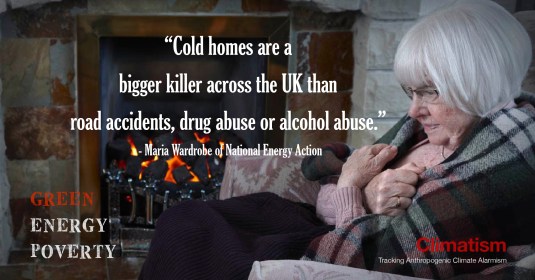
‘GREEN’ Energy Poverty : Thousands Dying Because They Can’t Afford Heating Bills
06 Dec 2018 2 Comments

“Giving society cheap, abundant energy would be the
equivalent of giving an idiot child a machine gun.”
– Prof Paul Ehrlich, Stanford University/Royal Society fellow
“Isn’t the only hope for the planet that the industrialized civilizations collapse? Isn’t it our responsibility to bring that about?” – Maurice Strong, founder of the UN Environment Programme (UNEP)
***
SEE now what their panic-making has inspired – symbolic global warming schemes that have hurt us infinitely more than any slight, and most probably beneficial, global warming ever could…
 Thousands dying because they can’t afford heating bills | Daily Mail Online
“More than 2,700 people are dying each year in England and Wales because they cannot afford to keep their homes warm, according to an official study.
The spiralling cost of gas…
View original post 1,133 more words
More Sex is Safer Sex | Prof Steven Landsburg
06 Dec 2018 Leave a comment
in applied price theory, applied welfare economics, development economics, economic history, economics of regulation, energy economics, environmental economics, health economics Tags: offsetting behaviour, unintended consequences
Hard truths about recycling – it’s mostly PR
05 Dec 2018 Leave a comment

From the RNZ website – Greg Roughan (formerly editor of Green Ideas)
Opinion – So the Sustainable Business Network (SBN) puts out a 47-page report on New Zealand’s plastic packaging system, and there’s a line that leaps out: recycling won’t fix the plastic crisis.
Geez. No kidding.
This is old news. At least, to the sort of person who reads 47-page reports on plastic. And it should be old news to the rest of us too. I really don’t mean to bag the SBN’s report here. Not even reusable bag it, because it’s excellent. But what I do want to say is, maybe if people are surprised about the whole ‘recycling doesn’t actually help much’ thing, then maybe it’s time for some hard truths?
It’s worth reading the whole piece.
Roughan makes some good points. Do not agree with his solutions, but he raises issues that need discusiing, rather than much…
View original post 11 more words
Steven Landsburg Discusses Incentives and Taxes
05 Dec 2018 Leave a comment
in applied price theory, applied welfare economics, development economics, economic growth, economic history, entrepreneurship, fiscal policy, human capital, labour economics, labour supply, macroeconomics, public economics Tags: taxation and entrepreneurship, taxation and investment, taxation and labour supply
Profile of Caludia Goldin: Why history is important, role of women in labor force and new expansion of NBER…
04 Dec 2018 Leave a comment

Nice profile of Prof Goldin in IMF’s Finance & Development:
Born in 1946 in the Bronx, a borough of New York City, Goldin recalls an early fascination with investigation and intellectual discovery, immersing herself in the wonders of Manhattan’s museums as she fell in love first with archeology, then bacteriology. She went to Cornell University initially to study microbiology but came to embrace the humanities and social sciences, especially history and economics, which became her undergraduate major. She completed her doctorate in industrial organization and labor economics in 1972 at the University of Chicago.
Goldin explains why history is important to economics, citing the book The Race between Education and Technology (2008), which she wrote with fellow Harvard labor economist Lawrence Katz, who is also her husband.
“Larry Katz and I looked at changes in income inequality post-1980 versus pre-1980 and investigated the theory that inequality has risen more post-1980 because of…
View original post 717 more words


Recent Comments