How we connect economically with the world is critical. Brian Easton writes – The British Labour Government is struggling. Partly it is because they were badly prepared in opposition: the Conservative Government was making such a charlie of itself that Labour expected that it would do better and gave little thought as to how it […]
Lessons from Brexit
Lessons from Brexit
19 Dec 2025 Leave a comment
in applied price theory, applied welfare economics, comparative institutional analysis, constitutional political economy, economic growth, international economic law, international economics, macroeconomics Tags: British politics, economics of customs unions, free trade, tariffs
DON BRASH – RMA Reform: A step forward. But concerns for equal citizenship
18 Dec 2025 Leave a comment
in applied price theory, comparative institutional analysis, economics of regulation, law and economics, politics - New Zealand, property rights, regulation, urban economics Tags: housing affordability, land supply, racial discrimination, zoning
The following is written in Don’s capacity as trustee for Hobson’s Pledge: It is almost the end of 2025 and, as you may know, the Government has recently introduced to Parliament the two Bills it seeks to replace the Resource Management Act (RMA) with. The Bills were pushed through first reading under urgency and have…
DON BRASH – RMA Reform: A step forward. But concerns for equal citizenship
Vertical Restraints in the EU: Economics Has Updated, Law Hasn’t Installed the Patch
17 Dec 2025 Leave a comment
in applied price theory, economics of regulation, industrial organisation, law and economics Tags: competition law

Online commerce has transformed how firms design their distribution systems, yet EU competition law continues to treat many online-sales restrictions as suspect by default. This tension lies at the heart of today’s vertical restraints debate. While the economic theory of vertical agreements has been largely settled for decades, the legal framework has not fully absorbed…
Vertical Restraints in the EU: Economics Has Updated, Law Hasn’t Installed the Patch
Is involuntary hospitalization working?
17 Dec 2025 Leave a comment
in applied price theory, econometerics, economic history, economics of crime, health economics, law and economics Tags: economics of mental health
From Natalia Emanuel, Valentin Bolotnyy, and Pim Welle: The involuntary hospitalization of people experiencing a mental health crisis is a widespread practice, as common in the US as incarceration in state and federal prisons and 2.4 times as common as death from cancer. The intent of involuntary hospitalization is to prevent individuals from harming themselves…
Is involuntary hospitalization working?
“AI is everywhere but in the productivity statistics…”
15 Dec 2025 Leave a comment
in applied price theory, econometerics, economic history, economics of information, entrepreneurship, history of economic thought, industrial organisation Tags: creative destruction
These people are saying it is there too. Though I am not quite sure what they (or anyone, for that matter) mean by AI: First, we argue that AI can already be seen in productivity statistics for the United States. The production and use effects of software and software R&D (alone) contributed (a) 50 percent…
“AI is everywhere but in the productivity statistics…”
New Zealand’s Planning Revolution: bye bye RMA
13 Dec 2025 Leave a comment
in applied price theory, economics of bureaucracy, economics of regulation, law and economics, politics - New Zealand, property rights, Public Choice, urban economics Tags: housing affordability, land supply, zoning

Inside the reform that will change how New Zealand is built Ani O’Brien writes – If you’ve ever tried to build a deck, subdivide a section, or watched a major infrastructure project slowly suffocate in a decade of “consenting hell,” you already know the RMA is New Zealand’s great productivity killer. For over 30 years, […]
New Zealand’s Planning Revolution: bye bye RMA
Humanity Has a Huge Surplus of Economic Misunderstanding
13 Dec 2025 Leave a comment
in applied price theory, history of economic thought, industrial organisation, international economics, politics - USA, Public Choice, rentseeking Tags: free trade, tarrifs
TweetHere’s a letter to AP Fact Check. Editor: Melissa Goldin does a deep dive into the cause(s) of the U.S. “agricultural trade deficit” (“FACT FOCUS: Trump blames Biden for the agricultural trade deficit. It’s not that simple,” December 10). To what extent is this “deficit” caused by the policies of Biden? To what extent is…
Humanity Has a Huge Surplus of Economic Misunderstanding
Getting NZ building again
11 Dec 2025 Leave a comment
in applied price theory, economics of regulation, law and economics, politics - New Zealand, property rights
Congressional leadership is corrupt
11 Dec 2025 Leave a comment
in applied price theory, econometerics, economic history, financial economics, politics - USA, Public Choice
Using transaction-level data on US congressional stock trades, we find that lawmakers who later ascend to leadership positions perform similarly to matched peers beforehand but outperform them by 47 percentage points annually after ascension. Leaders’ superior performance arises through two mechanisms. The political influence channel is reflected in higher returns when their party controls the…
Congressional leadership is corrupt
Productivity growth (or lack of it)
10 Dec 2025 Leave a comment
in applied price theory, econometerics, economic growth, economic history, fiscal policy, labour economics, macroeconomics, politics - New Zealand

In a post last week I included this chart of the latest annual OECD data on labour productivity, expressed in PPP terms. It was grim, in a familiar sort of way. New Zealand’s overall economic performance has long been poor (the halcyon days when New Zealand was in the top 3 in the world relegated […]
Productivity growth (or lack of it)
Evaluating the Sale of Warner Bros Discovery to Netflix from an Antitrust Perspective
09 Dec 2025 1 Comment
in applied price theory, economics of regulation, industrial organisation, market efficiency Tags: competition law

Warner Bros. Discovery (WBD) has announced that it is selling its major assets to Netflix, including Warner Bros. Pictures (home of Harry Potter), DC Studios, and HBO Max. Netflix was chosen among a group of bidders that also included Paramount and Comcast. This post explores some of the antitrust issues and hurdles that a combined…
Evaluating the Sale of Warner Bros Discovery to Netflix from an Antitrust Perspective
Antitrust at the Agencies: Meta Analysis Edition
09 Dec 2025 Leave a comment
in applied price theory, economics of regulation, industrial organisation, law and economics, politics - USA Tags: competition law

The memorandum and order in FTC v. Meta Platforms Inc. that U.S. District Court Judge James E. Boasberg filed Nov. 18, ruling in favor of Meta, has now been followed by a Dec. 2 revised order that contained fewer redactions. The memorandum doesn’t exactly provide the law & economics analysis I would have produced, had…
Antitrust at the Agencies: Meta Analysis Edition
Quotation of the Day…
09 Dec 2025 Leave a comment
in applied price theory, entrepreneurship, environmental economics, environmentalism

Tweet… is from page 223 of Art Carden’s and GMU Econ alum Caleb Fuller’s superb book, Mere Economics [original emphasis; footnotes deleted; link added]: The “finite resources” argument also begs the question because it assumes we know which materials are “resources” and which are not. Something is only a resource insofar as we can use…
Quotation of the Day…
The myth of the $140,000 poverty line
08 Dec 2025 Leave a comment
in applied price theory, labour economics, labour supply, poverty and inequality
That is my latest piece for The Free Press, focusing on the claims of Michael W. Green. Excerpt: Most of all, there is a major conceptual error in Green’s focus on high prices. To the extent that prices are high, it is not because our supply chains have been destroyed by earthquakes or nuclear bombs. […]
The myth of the $140,000 poverty line
Unfettered: Fishback 25 Years Later
07 Dec 2025 Leave a comment
in applied price theory, economic history, history of economic thought, labour economics, labour supply, poverty and inequality
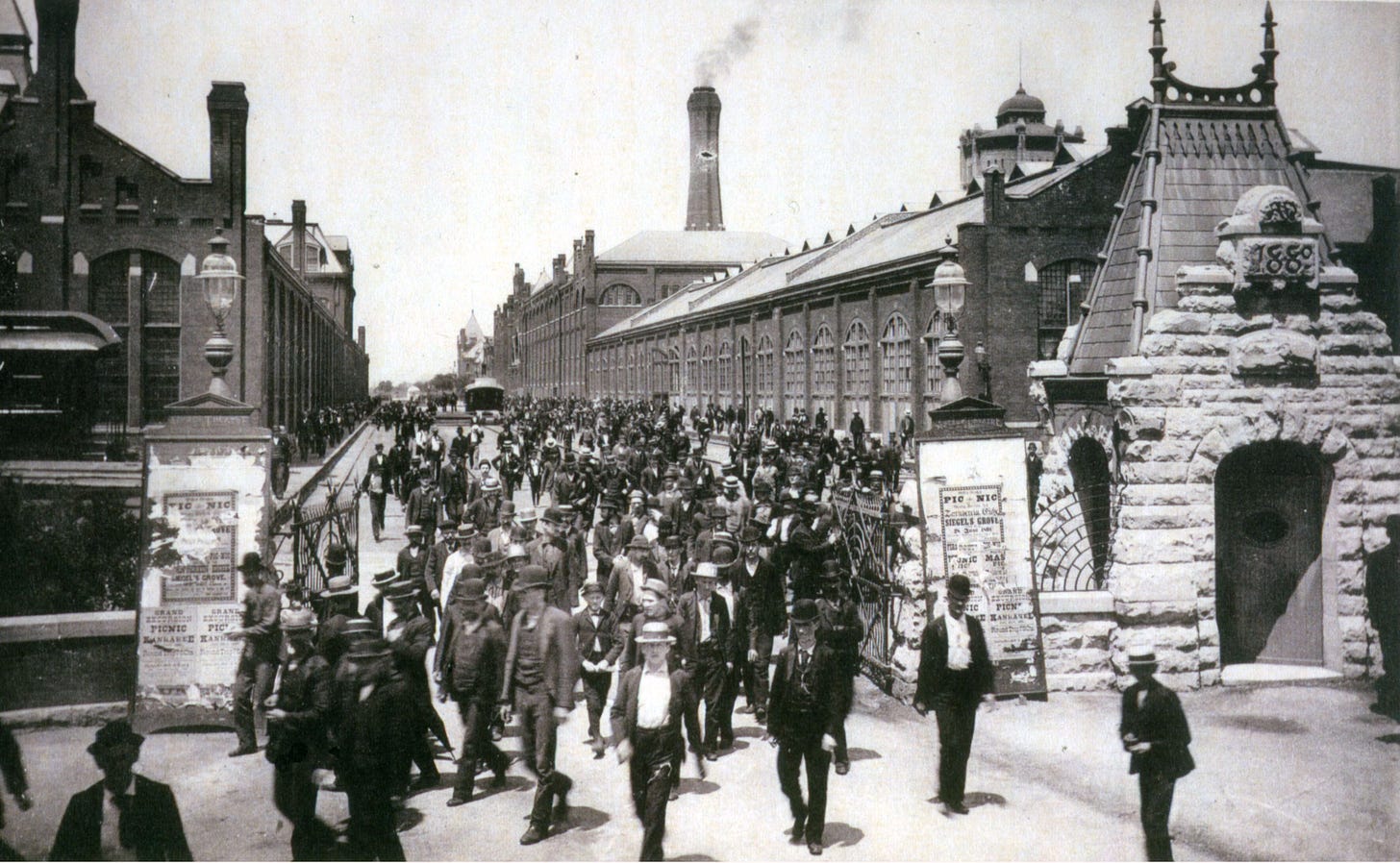
A quarter century ago, economist Price Fishback published “Operations of ‘Unfettered’ Labor Markets: Exit and Voice in American Labor Markets at the Turn of the Century” 1,762 more words
Unfettered: Fishback 25 Years Later
 Utopia, you are standing in it!
Recent Comments