20 Jul 2015
by Jim Rose
in applied price theory, applied welfare economics, comparative institutional analysis, development economics, economic history, economics of regulation, growth disasters, growth miracles
Tags: Argentina, Brazil, Chile, conspiracy theories, Index of Economic Freedom, Leftover Left, Mont Pelerin Society, neoliberalism, Twitter left, Venezuela
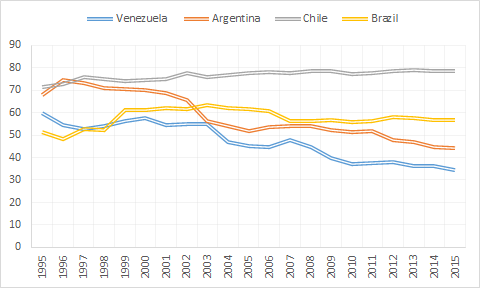
All was quiet on the neoliberalism front in Latin America for the last 20 years. In yet another defeat for the Mont Pelerin Society led transnational conspiracy, economic freedom has been pretty stable in Chile for 20 years and in the serious decline in Venezuela and Argentina – see figure 1. Not much happening in Brazil either on the neoliberalism front – see figure 1. I’ve always had my doubts about the ability of a transnational conspiracy to be led by a society with such a crappy website.
Figure 1: Index of Economic Freedom, Argentina, Brazil, Chile and Venezuela, 95 – 2015

Source: Index of Economic Freedom 2015.

18 Jul 2015
by Jim Rose
in applied price theory, applied welfare economics, comparative institutional analysis, economics of bureaucracy, economics of regulation, industrial organisation, law and economics, property rights, Public Choice, rentseeking, survivor principle
Tags: doing business, Eurosclerosis, Greece
17 Jul 2015
by Jim Rose
in applied price theory, applied welfare economics, comparative institutional analysis, development economics, economic history, economics of education, economics of regulation, entrepreneurship, environmental economics, growth disasters, growth miracles, history of economic thought, industrial organisation, Marxist economics, Public Choice
Tags: capitalism and freedom, China, fall of communism, Leftover Left, transitional economies
16 Jul 2015
by Jim Rose
in applied price theory, applied welfare economics, Austrian economics, comparative institutional analysis, constitutional political economy, development economics, economic history, economics of bureaucracy, economics of education, economics of regulation, economics of religion, energy economics, entrepreneurship, environmental economics, financial economics, growth disasters, growth miracles, income redistribution, industrial organisation, international economics, labour economics, labour supply, liberalism, poverty and inequality, Public Choice, rentseeking, survivor principle, transport economics, urban economics
Tags: Deirdre McCloskey, entrepreneurial alertness, The Great Enrichment, The Great Escape, The Great Fact, top 1%
13 Jul 2015
by Jim Rose
in applied price theory, applied welfare economics, economics of religion, law and economics, politics - USA, property rights
Tags: British economy, doing business, France, Germany
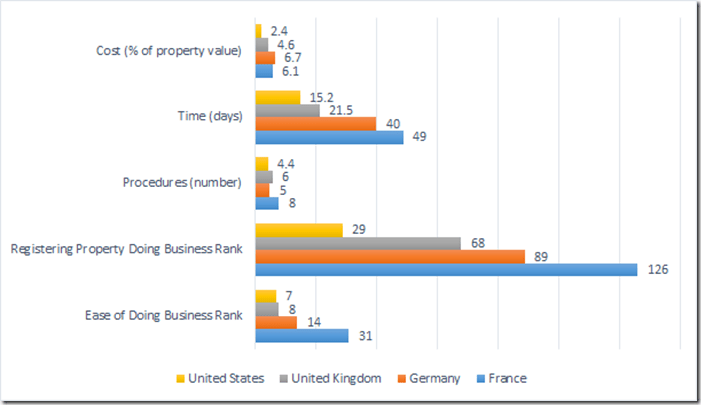
Figure 1: registering property rankings, USA, UK, Germany and France – World Bank Doing Business rankings, 2014
Source: Doing Business – Measuring Business Regulations – World Bank Group.
13 Jul 2015
by Jim Rose
in applied price theory, discrimination, economics of media and culture, entrepreneurship, gender, industrial organisation, labour economics, occupational choice, sports economics, survivor principle
Tags: gender wage gap, media bias, sex discrimination, superstar wages, superstars
11 Jul 2015
by Jim Rose
in applied price theory, applied welfare economics, Federalism, income redistribution, labour economics, labour supply, minimum wage, politics - USA, Public Choice, rentseeking
Tags: federalism, living wage, Puerto Rico, sovereign default
11 Jul 2015
by Jim Rose
in applied price theory, applied welfare economics, comparative institutional analysis, economics of regulation, industrial organisation, law and economics, politics - USA, property rights
Tags: British economy Doing Business, France, Germany, World Bank
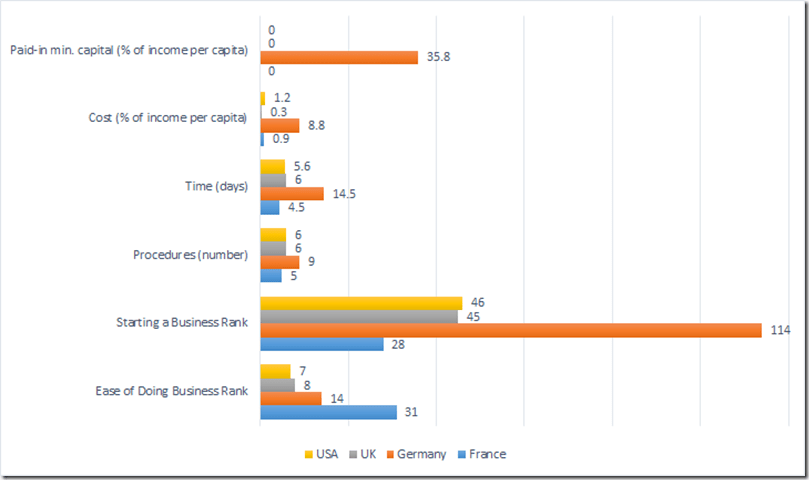
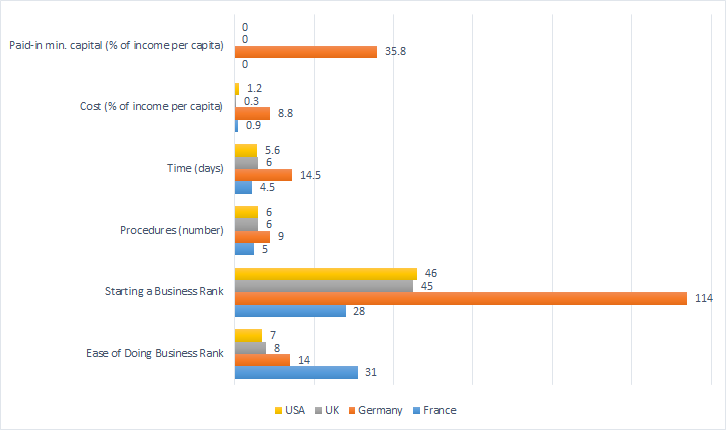
Figure 1: Starting a business rankings, USA, UK, Germany and France – World Bank Doing Business rankings, 2014
Source: Doing Business – Measuring Business Regulations – World Bank Group.
I have no idea why you have to pledge one third of German per capita income to start a business in Germany. It takes about a week and a half a dozen procedures to start a business in the other countries.
In New Zealand, you can start a business within the hour by registering for GST and registering your company online.
11 Jul 2015
by Jim Rose
in applied price theory, applied welfare economics, Austrian economics, comparative institutional analysis, constitutional political economy, development economics, economic history, history of economic thought, income redistribution, liberalism, Public Choice, rentseeking
Tags: distributive justice, social justice
10 Jul 2015
by Jim Rose
in applied price theory, applied welfare economics, econometerics, income redistribution, politics - Australia, politics - New Zealand, politics - USA, Public Choice, rentseeking
Tags: activists, British economy, British politics, do gooders, expressive voting, living wage, rational ignorance, rational irrationality, The fatal conceit, The pretence to knowledge, unintended consequences
Previous Older Entries Next Newer Entries






Recent Comments