A simple model of crime waves, riots and revolution

In ‘A simple model of crime waves, riots, and revolutions’, Alexander Tabarrok puts forward a model of crime waves that applies not only to crime but also to phenomena like riots, strikes, and revolutions.

  • In each of these cases, the probability of being punished is a decreasing function of the total amount of the activity.
  • The probability that a rioter is apprehended falls the more rioters there are.
  • The probability that a striker or a revolutionary is punished is less the greater the number of strikers and revolutionaries. This is true even if the revolution or strike fails.

The standard model of crime analyses a criminal’s decisions as if they were unrelated to the decisions of other criminals.

The game-theoretic approach examines the entire system of criminal decisions exploring the implications of interdependence.

As crime increases, police resources become strained at the margin and the probability of punishment falls, causing other criminals to increase their criminal activities.

As others turn to crime, the probability of punishment falls even further, giving each individual an additional reason to increase his criminal activities.

Joining into a revolution or a riot has the same calculus of independence. You are less likely to be caught and punished if you will face in the crowd.

This interdependence in the probability of detection, arrest and punishment lowers the cost of participation. Not surprisingly, judges of been aware of this for some time and have hand out severe punishments such as after the 2011 London riots. These riots fell away sharply once these penalties were handed out and more police were on the streets to catch rioters.

Organic yield gap shrinking? Study actually shows it’s less sustainable than conventional agriculture

Screen Shot 2014-12-18 at 3.37.22 PM

via Organic yield gap shrinking? Study actually shows it’s less sustainable than conventional ag | Genetic Literacy Project.

New low for economic analysis of NZ opposition leader and Dominion Post editorial on housing affordability

The editorial in today’s Dominion Post about the proposed reforms in New Zealand to the Resource Management Act to increase of urban land supply and make housing more affordable actually supported some absolute nonsense economic analysis by the Leader of the Opposition, Andrew Little:

Labour leader Andrew Little says part of the problem is in fact low and in many areas stagnating wages.

That is correct, but this merely points to a huge problem that successive governments have failed to solve. Nor is this Government likely to do much by way of living wage reforms or other non-market solutions.

The alleged professional journalist who wrote this editorial is ignorant of the most basic workings of the economy which he could pick up as an ordinary consumer and home owner.

If consumers become wealthier because of higher wages, they will use this increased income to demand more housing and land.

If the supply of land is fixed or otherwise constrained from expanding much, the only thing that will happen is that the price will go up with more money chasing the same amount of land and housing.

This will benefit the existing home owners in New Zealand. Workers who don’t own homes will simply have to pay more of their now higher wages to buy houses. Once again, the Labour Party betrays the interests of the working class to win middle-class home owner votes.

R&D tax incentives: New evidence on trends and effectiveness | VOX, CEPR’s Policy Portal

Figure 1: No relation between a country’s innovativeness and R&D tax credits

Figure 2. Proliferation of R&D tax credits in Europe

via R&D tax incentives: New evidence on trends and effectiveness | VOX, CEPR’s Policy Portal.

Some more economics of gun free zones

HT: Dan Mitchell

I had many similar experiences when explaining economics

The purse of the one percent | The Economist

image

http://www.economist.com/blogs/graphicdetail/2014/10/daily-chart-8?fsrc=scn/tw/te/bl/ed/purseoftheonepercent

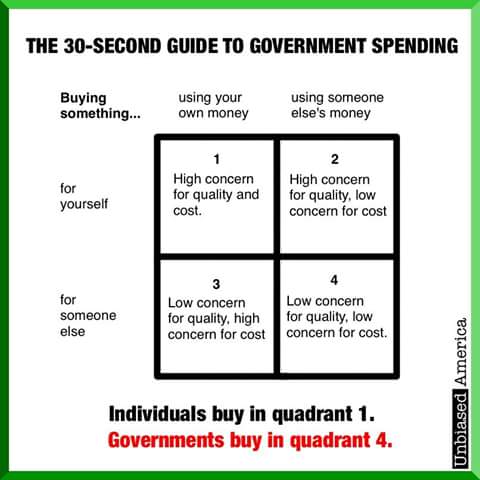
A guide to government spending

image

Image

Piketty and Capital Taxation in the 21st Century

via Capital Taxation in the 21st Century.

Economists find rare empirical evidence of love in unique marriage survey

The key research questions that reveal all are:

  • How happy are you in your  relative to how happy you would be if you weren’t in the marriage? [Much worse; worse; same; better; much better.]
  • How do you think your spouse answered that question?

via Economists find rare empirical evidence of love in unique marriage survey.

Some economics of gun free zones

McCoy Fort Hood Cartoon

HT: Dan Mitchell

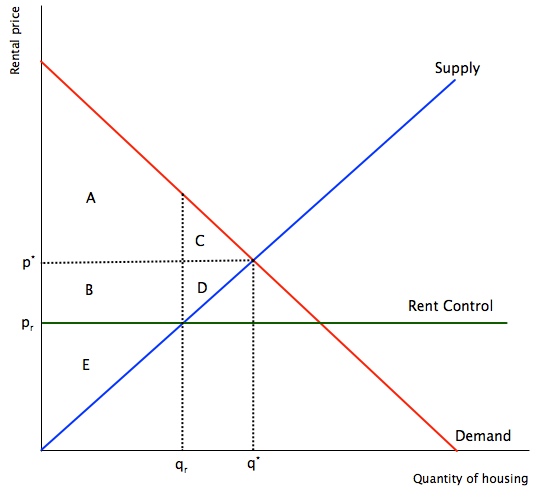
Posner and Easterbrook opine upon the law and economics of rent control

POSNER, Circuit Judge, with whom EASTERBROOK, Circuit Judge, joins in 819 F. 2d 732 – Chicago Board of Realtors Inc v. City of Chicago:

The stated purpose of the ordinance is to promote public health, safety, and welfare and the quality of housing in Chicago. It is unlikely that this is the real purpose, and it is not the likely effect.

Forbidding landlords to charge interest at market rates on late payment of rent could hardly be thought calculated to improve the health, safety, and welfare of Chicagoans or to improve the quality of the housing stock.

But it may have the opposite effect. The initial consequence of the rule will be to reduce the resources that landlords devote to improving the quality of housing, by making the provision of rental housing more costly. Landlords will try to offset the higher cost (in time value of money, less predictable cash flow, and, probably, higher rate of default) by raising rents. To the extent they succeed, tenants will be worse off, or at least no better off.

Landlords will also screen applicants more carefully, because the cost of renting to a deadbeat will now be higher; so marginal tenants will find it harder to persuade landlords to rent to them. Those who do find apartments but then are slow to pay will be subsidized by responsible tenants (some of them marginal too), who will be paying higher rents, assuming the landlord cannot determine in advance who is likely to pay rent on time. Insofar as these efforts to offset the ordinance fail, the cost of rental housing will be higher to landlords and therefore less will be supplied–more of the existing stock than would otherwise be the case will be converted to condominia and cooperatives and less rental housing will be built…

The provisions that authorize rent withholding, whether directly or by subtracting repair costs, may seem more closely related to the stated objectives of the ordinance; but the relation is tenuous. The right to withhold rent is not limited to cases of hazardous or unhealthy conditions. And any benefits in safer or healthier housing from exercise of the right are likely to be offset by the higher costs to landlords, resulting in higher rents and less rental housing.

The ordinance is not in the interest of poor people. As is frequently the case with legislation ostensibly designed to promote the welfare of the poor, the principal beneficiaries will be middle-class people.

They will be people who buy rather than rent housing (the conversion of rental to owner housing will reduce the price of the latter by increasing its supply); people willing to pay a higher rental for better-quality housing; and (a largely overlapping group) more affluent tenants, who will become more attractive to landlords because such tenants are less likely to be late with the rent or to abuse the right of withholding rent–a right that is more attractive, the poorer the tenant. The losers from the ordinance will be some landlords, some out-of-state banks, the poorest class of tenants, and future tenants.

The landlords are few in number (once owner-occupied rental housing is excluded–and the ordinance excludes it). Out-of-staters can’t vote in Chicago elections. Poor people in our society don’t vote as often as the affluent. See Filer, An Economic Theory of Voter Turnout 81 (Ph.D. thesis, Dept. of Econ., Univ. of Chi., Dec. 1977); Statistical Abstract of the U.S., 1982-83, at pp. 492-93 (tabs. 805, 806). And future tenants are a diffuse and largely unknown class.

In contrast, the beneficiaries of the ordinance are the most influential group in the city’s population. So the politics of the ordinance are plain enough, cf. DeCanio, Rent Control Voting Patterns,Popular Views, and Group Interests, in Resolving the Housing Crisis 301, 311-12 (Johnson ed. 1982), and they have nothing to do with either improving the allocation of resources to housing or bringing about a more equal distribution of income and wealth.

A growing body of empirical literature deals with the effects of governmental regulation of the market for rental housing. The regulations that have been studied, such as rent control in New York City and Los Angeles, are not identical to the new Chicago ordinance, though some–regulations which require that rental housing be "habitable"–are close. The significance of this literature is not in proving that the Chicago ordinance is unsound, but in showing that the market for rental housing behaves as economic theory predicts: if price is artificially depressed, or the costs of landlords artificially increased, supply falls and many tenants, usually the poorer and the newer tenants, are hurt…

Rothbard on Conspiracy Theory

Oxfam forgot to tell Davos that you need only $3650 to be among the wealthiest half of world citizens

https://twitter.com/Alea_/status/557073501593403392

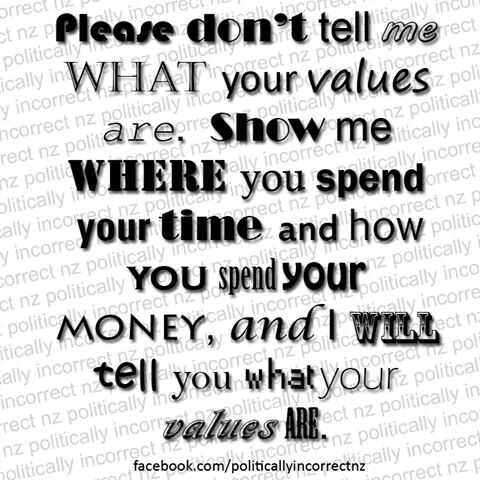
Nice definition of revealed preference

image

Image

Previous Older Entries Next Newer Entries

Coordination Problem

Celebrating humanity's flourishing through the spread of capitalism and the rule of law

Libertarian Land

Celebrating humanity's flourishing through the spread of capitalism and the rule of law

Arin’s Substack

Celebrating humanity's flourishing through the spread of capitalism and the rule of law

David Andolfatto

Celebrating humanity's flourishing through the spread of capitalism and the rule of law

Monetary Non-Neutrality

Celebrating humanity's flourishing through the spread of capitalism and the rule of law

Reason Magazine

Celebrating humanity's flourishing through the spread of capitalism and the rule of law

Coyote Blog

Celebrating humanity's flourishing through the spread of capitalism and the rule of law

Thoughts from the North

Celebrating humanity's flourishing through the spread of capitalism and the rule of law

Fardels Bear

A History of the Alt-Right

Vincent Geloso

Econ Prof at George Mason University, Economic Historian, Québécois

Bassett, Brash & Hide

Celebrating humanity's flourishing through the spread of capitalism and the rule of law

Truth on the Market

Scholarly commentary on law, economics, and more

The Undercover Historian

Beatrice Cherrier's blog

Matua Kahurangi

Celebrating humanity's flourishing through the spread of capitalism and the rule of law

Temple of Sociology

Celebrating humanity's flourishing through the spread of capitalism and the rule of law

Velvet Glove, Iron Fist

Celebrating humanity's flourishing through the spread of capitalism and the rule of law

Why Evolution Is True

Why Evolution is True is a blog written by Jerry Coyne, centered on evolution and biology but also dealing with diverse topics like politics, culture, and cats.

NoTricksZone

Celebrating humanity's flourishing through the spread of capitalism and the rule of law

Homepaddock

A rural perspective with a blue tint by Ele Ludemann

Kiwiblog

DPF's Kiwiblog - Fomenting Happy Mischief since 2003

The Dangerous Economist

Celebrating humanity's flourishing through the spread of capitalism and the rule of law

Watts Up With That?

The world's most viewed site on global warming and climate change

The Logical Place

Tim Harding's writings on rationality, informal logic and skepticism

Doc's Books

A window into Doc Freiberger's library

The Risk-Monger

Let's examine hard decisions!

Uneasy Money

Commentary on monetary policy in the spirit of R. G. Hawtrey

Barrie Saunders

Thoughts on public policy and the media

Liberty Scott

Celebrating humanity's flourishing through the spread of capitalism and the rule of law

Point of Order

Politics and the economy

James Bowden's Blog

A blog (primarily) on Canadian and Commonwealth political history and institutions

Science Matters

Reading between the lines, and underneath the hype.

Peter Winsley

Economics, and such stuff as dreams are made on

A Venerable Puzzle

"The British constitution has always been puzzling, and always will be." --Queen Elizabeth II

The Antiplanner

Celebrating humanity's flourishing through the spread of capitalism and the rule of law

Bet On It

Celebrating humanity's flourishing through the spread of capitalism and the rule of law

History of Sorts

WORLD WAR II, MUSIC, HISTORY, HOLOCAUST

Roger Pielke Jr.

Undisciplined scholar, recovering academic

Offsetting Behaviour

Celebrating humanity's flourishing through the spread of capitalism and the rule of law

JONATHAN TURLEY

Res ipsa loquitur - The thing itself speaks

Conversable Economist

In Hume’s spirit, I will attempt to serve as an ambassador from my world of economics, and help in “finding topics of conversation fit for the entertainment of rational creatures.”

The Victorian Commons

Researching the House of Commons, 1832-1868

Books & Boots

Reflections on books and art

Legal History Miscellany

Posts on the History of Law, Crime, and Justice

Sex, Drugs and Economics

Celebrating humanity's flourishing through the spread of capitalism and the rule of law

European Royal History

Exploring the Monarchs of Europe

Tallbloke's Talkshop

Cutting edge science you can dice with