Where not to invest in Europe: Greece econ.st/1TAd3CZ http://t.co/X9vtnz0uhQ—
The Economist (@EconBizFin) July 15, 2015
Where not to invest in Europe
18 Jul 2015 Leave a comment
in applied price theory, applied welfare economics, comparative institutional analysis, economics of bureaucracy, economics of regulation, industrial organisation, law and economics, property rights, Public Choice, rentseeking, survivor principle Tags: doing business, Eurosclerosis, Greece
Measurement error in the computer age
18 Jul 2015 1 Comment
in applied welfare economics, econometerics, economic history, entrepreneurship, technological progress Tags: age of the computer, capitalism and freedom, measurement error, Robert Solow

Maggie Thatcher on the Greek crisis
17 Jul 2015 Leave a comment
in applied welfare economics, budget deficits, comparative institutional analysis, constitutional political economy, currency unions, economic growth, economic history, economics of regulation, Euro crisis, fiscal policy, income redistribution, macroeconomics, Marxist economics, Public Choice, rentseeking Tags: Greece, growth of government, Margaret Thatcher, size of government
Matthew Kahn on Climate Change Adaptation
17 Jul 2015 Leave a comment
in applied price theory, applied welfare economics, environmental economics, global warming, urban economics Tags: climate alarmism, climate change adaptation, competition as a discovery procedure, global warming
Capitalism and The Great Fact in China
17 Jul 2015 Leave a comment
in applied price theory, applied welfare economics, comparative institutional analysis, development economics, economic history, economics of education, economics of regulation, entrepreneurship, environmental economics, growth disasters, growth miracles, history of economic thought, industrial organisation, Marxist economics, Public Choice Tags: capitalism and freedom, China, fall of communism, Leftover Left, transitional economies
As China grew freer economically, its poverty rate fell. buff.ly/1KohOxS http://t.co/OpaxOzNdNs—
HumanProgress.org (@humanprogress) June 29, 2015
More vital information on the dangers of DHMO
17 Jul 2015 Leave a comment
in applied welfare economics, economics of information, economics of media and culture, economics of regulation, environmental economics, environmentalism, health economics Tags: antiscience left, DHMO, expressive voting, green scare tactics, precautionary principle, rational ignorance, rational irrationality
And the rich got richer, who cares
16 Jul 2015 Leave a comment
in applied price theory, applied welfare economics, Austrian economics, comparative institutional analysis, constitutional political economy, development economics, economic history, economics of bureaucracy, economics of education, economics of regulation, economics of religion, energy economics, entrepreneurship, environmental economics, financial economics, growth disasters, growth miracles, income redistribution, industrial organisation, international economics, labour economics, labour supply, liberalism, poverty and inequality, Public Choice, rentseeking, survivor principle, transport economics, urban economics Tags: Deirdre McCloskey, entrepreneurial alertness, The Great Enrichment, The Great Escape, The Great Fact, top 1%
"The rich got richer, true. But…" —@DeirdreMcClosk buff.ly/1Imdv4o http://t.co/M3ERx3JTIn—
HumanProgress.org (@humanprogress) June 28, 2015
Why developing countries aren’t interested in global climate treaties
15 Jul 2015 Leave a comment
in applied welfare economics, development economics, energy economics, environmental economics, global warming, growth disasters, growth miracles Tags: climate alarmists, free-riders, game theory, global climate treaties, Green alarmists, healthier is wealthier, international treaties, richer is safer
A perspective on the overweening conceit of youth
14 Jul 2015 Leave a comment
in applied welfare economics, behavioural economics, economics of crime, economics of education, labour economics, law and economics Tags: child development, cognitive psychology, economics of personality traits, political psychology
Global poverty is in free fall – what does Oxfam have to say about what caused this?
14 Jul 2015 Leave a comment
in applied welfare economics, comparative institutional analysis, constitutional political economy, development economics, economic history, economics of bureaucracy, growth disasters, growth miracles, liberalism, Marxist economics, Public Choice Tags: extreme poverty, global poverty, ODA, overseas aid, Oxfam, professional activists, professional do-gooders, The Great Escape, The Great Fact
The world is getting better all the time, in 11 maps and charts vox.com/2015/7/13/8908… http://t.co/cBbN4L0dqF—
Vox (@voxdotcom) July 13, 2015
The Great Escape in Chinese life expectancies by age bracket
14 Jul 2015 Leave a comment
in applied welfare economics, development economics, economic history, growth disasters, growth miracles, health economics Tags: capitalism and freedom, China, life expectancies, The Great Escape
Life Expectancy by Age – for all countries in the world: bit.ly/1Ba1R8G
The chart shows progress in #China. http://t.co/z5IpbMkeFW—
Max Roser (@MaxCRoser) March 30, 2015
A stunning aspect of The Great Escape since my parents were born
13 Jul 2015 Leave a comment
in applied welfare economics, development economics, economic history, growth disasters, growth miracles, health economics Tags: Africa, British economy, British history, child mortality, child poverty, infant mortality, life expectancies, The Great Enrichment, The Great Escape, The Great Fact
"Today, children in sub-Saharan Africa are more likely…"—Prof. Angus Deaton, @Princeton
Data: buff.ly/1K2tELk http://t.co/lrTdiLi3F7—
HumanProgress.org (@humanprogress) July 12, 2015
Registering property in the USA, UK, Germany and France – World Bank Doing Business rankings compared
13 Jul 2015 Leave a comment
in applied price theory, applied welfare economics, economics of religion, law and economics, politics - USA, property rights Tags: British economy, doing business, France, Germany
Figure 1: registering property rankings, USA, UK, Germany and France – World Bank Doing Business rankings, 2014
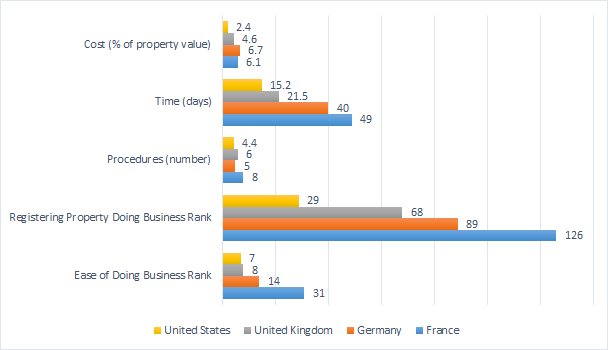
Source: Doing Business – Measuring Business Regulations – World Bank Group.
The history of camera
13 Jul 2015 Leave a comment
in applied welfare economics, economic history, entrepreneurship, technological progress Tags: cameras, creative destruction, mobile phones, smartphones, The Great Enrichment
Creative destruction in Polaroid cameras
12 Jul 2015 Leave a comment
in applied welfare economics, economic history, entrepreneurship, technological progress Tags: cameras, creative destruction, entrepreneurial alertness
On this day in 1948, the 1st polaroid camera was sold for $89.75 in Boston at the Jordan Marsh department store. http://t.co/hyuXjccsHw—
Historical Pics (@HistoricalPics) November 26, 2014
 Utopia, you are standing in it!
Recent Comments