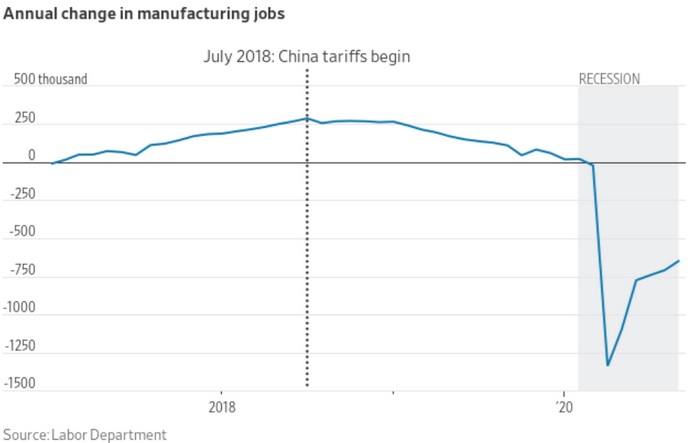
It appears that Trump wants to repeat the mistakes of the 1930s with a global trade war. That is going to be very bad news for workers, consumers, taxpayers, manufacturers, farmers, and exporters. But there are two bits of good news. At least for small slices of the populations First, lobbyists will get rich as […]
Chris Trotter writes – What does India want from New Zealand? Not our dairy products, that’s for sure, it’s got plenty of those. Indeed 45 percent of the Indian population are small-scale farmers, most of them running a few head of cattle – not to eat, you understand – but to milk. If it once […]
John Cochrane recommends the Economist article Aid cannot make poor countries rich. From 2004 to 2014, foreign aid increased by 75%, but it didn’t help: 2004, William Easterly: aid was just as likely to shrink the world’s poorest economies as to help them grow. 2005, World Bank: grants and loans did not move the needle…
Long ago, I co-blogged for EconLog with Arnold Kling. Now he’s running a book club for Liberty Fund. Last month, Arnold invited me and philosopher Rachel Ferguson to discuss Mike Huemer’s new Progressive Myths. Enjoy!
An excellent EconTalk episode with Pete Boettke on the socialist calculation debate. I like Boettke on the three Ps. The three Ps–property, prices, and profits and loss. Property incentivizes us. Prices guide us. Profits lure us to new changes and losses discipline us. Today, “incentives matter” is often considered the first lesson of economics. But […]
I have a new working paper out. It proposes a price theory-based explanation of why states nationalize the production of “public goods” (i.e., non-excludable and non-rivalrous). This is different than existing explanations as the theory ignores whether private provision is efficient or superior to public provision. I call it the “redistributive engine” theory whereby the […]
As a longtime critic of the FDA, you might expect me to support firing FDA employees—not so! My focus has always been on reducing approval time and costs to speed drugs to patients and increase the number of new drugs. Cutting staff is more likely to slow approvals and raise costs. To be fair, we’re […]
To augment my four-part video series about trade (dealing with the WTO, creative destruction, deficits, and economics), here’s part of my recent lecture about Trump’s trade policy to the Universidad de Libertad in Mexico City For those who (mistakenly) want to skip the video, my speech focused on these five themes. Trade deficits don’t matter. […]
In arguments over industrial policy, there’s often a moment where someone makes an assertion like: “Every nation has industrial policy. Even not having an industrial policy is a type of industrial policy. The only relevant question is what kind of industrial policy we should choose.” In my experience, the people who make this argument then…
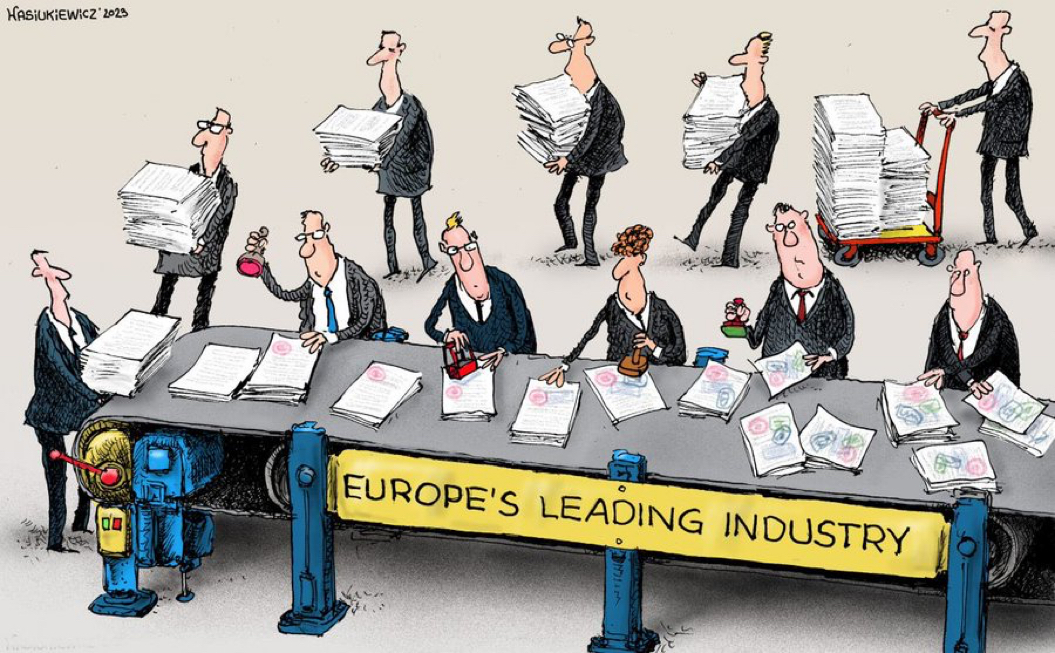
I have a special page for humor involving Europe, but I have not added to it since sharing some Brexit humor in 2016. Let’s being the process of catching up with some amusing cartoons and memes mocking our government-loving cousins on the other side of the Atlantic Ocean. I’ve made the serious point that bureaucrats […]
The Prime Minister’s speech 10 days or so ago kicked off a flurry of commentary. No one much anywhere near the mainstream (ie excluding Greens supporters) questioned the rhetoric. New Zealand has done woefully poorly on productivity for a long time and we really need better outcomes, and the sorts of policy frameworks that would […]
Michael Reddell writes – I’ve spent the last week writing a fairly substantial review of a recent book (“Australia’s Pandemic Exceptionalism: How we crushed the curve but lost the race”) by a couple of Australian academic economists on Australia’s pandemic policies and experiences. For all its limitations, there isn’t anything similar in New Zealand. What […]
Targeting big existing businesses may be tempting to politicians, but ensuring market openness will do more good Eric Crampton writes – It’s fair to say that economists like competition. It’s also fair to say that when politicians start talking about competition, economists ought to get a little bit nervous.
Why Evolution is True is a blog written by Jerry Coyne, centered on evolution and biology but also dealing with diverse topics like politics, culture, and cats.
“We do not believe any group of men adequate enough or wise enough to operate without scrutiny or without criticism. We know that the only way to avoid error is to detect it, that the only way to detect it is to be free to inquire. We know that in secrecy error undetected will flourish and subvert”. - J Robert Oppenheimer.



 Utopia, you are standing in it!
Recent Comments