Deirdre McCloskey: What are the biggest misunderstandings about capitalism?
30 Jun 2016 Leave a comment
in applied price theory, comparative institutional analysis, constitutional political economy, development economics, economic history, entrepreneurship Tags: capitalism and freedom
Why did voters vote to Leave or Remain? @JulieAnneGenter @Income_Equality
28 Jun 2016 Leave a comment
in constitutional political economy, international economic law, international economics, International law, Public Choice Tags: British economy, British politics, Common market, European Union, pessimism bias, single market, Twitter left, voter demographics
There were few difference across the political spectrum as to why voters voted to Remain or Leave. This is according to Lord Ashcroft’s survey on referendum day of over 12,000 voters.

Source: How the United Kingdom voted on Thursday… and why – Lord Ashcroft Polls
Labour and Tory voters voted to leave to regain control over immigration and sovereignty.
Labour and Tory voters who wanted to remain thought the EU and its single market was a good deal not worth putting at risk. It is all about identity politics, not inequality.
Vote Leave voters are a grumpy lot who think things have been getting worse for 30 years:
Leavers see more threats than opportunities to their standard of living from the way the economy and society are changing, by 71% to 29% – more than twice the margin among remainers…
By large majorities, voters who saw multiculturalism, feminism, the Green movement, globalisation and immigration as forces for good voted to remain in the EU; those who saw them as a force for ill voted by even larger majorities to leave.
The ever astute @JohnCassidy nails why #Brexit occurred
25 Jun 2016 Leave a comment
in constitutional political economy, international economic law, international economics, International law
@JulieAnneGenter @NZGreens @LewisHoldenNZ @DanHannanMEP’s best single case for #Brexit
24 Jun 2016 Leave a comment
in constitutional political economy, economics, industrial organisation, international economic law, International law, liberalism Tags: Brexit, British economy, British politics, Common market, customs unions
West Wing 4:6 – Free Trade is Essential for Human Rights
23 Jun 2016 Leave a comment
in constitutional political economy Tags: China, West Wing
Adam Smith and the Follies of Central Planning
20 Jun 2016 Leave a comment
in Adam Smith, applied price theory, applied welfare economics, Austrian economics, comparative institutional analysis, constitutional political economy, development economics, history of economic thought, Public Choice Tags: central planning, The fatal conceit, The pretence to knowledge
Deirdre McCloskey on the Nirvana fallacy in public policy
18 Jun 2016 Leave a comment
in applied welfare economics, comparative institutional analysis, constitutional political economy, economic history, Public Choice

Source: Quotation of the Day… – Cafe Hayek.
Should Britain stay or go after @MrRBourne’s best single #Brexit comment
16 Jun 2016 Leave a comment
in applied price theory, constitutional political economy, international economic law, international economics
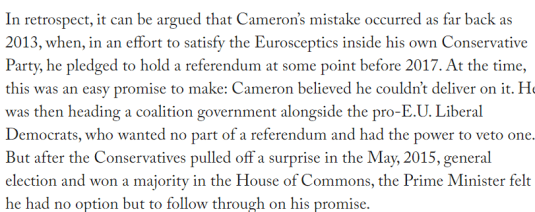
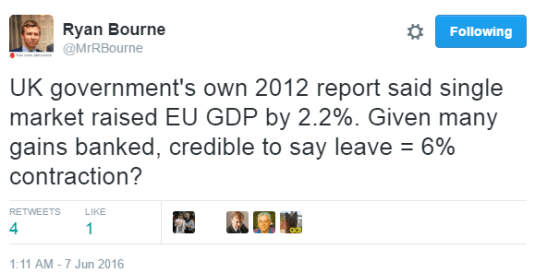
I have not as yet decided on in or out. It is a close call. Best to divide the economic estimates of the cost of #Brexit by two and you get a more accurate estimate.
What made me move most towards leaving is the remark in the linked video by the Conservative Party Euro MP Daniel Hannan that the recent austerity cuts totalling £36 billion while British contributions to the European Union budget were £38 billion.
The snapshot tweet is the single most sensible comment on the economic costs when quantified as a percentage of GDP. The costs of leaving might well be small.

The Remain campaign is incompetent. It is unable to hit on good soundbites, much less the central case against leaving.
The main case to remain is it will preserve the current travel privileges of British citizens. British can go anywhere in the European Union as they like for business, pleasure, a job or to retire. No need for visas. If the British were to leave, they have to renegotiate visa access.
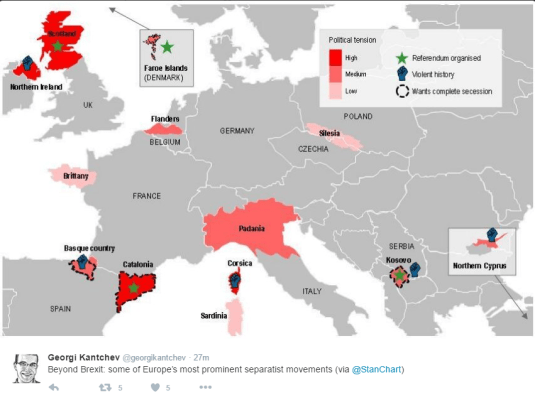
That renegotiation of these access will not be as easy as you might think because there are several secessionists minded provinces such as in Spain and Italy who are told that they will not be eligible for European Union membership if they succeed.
Spain has every intention of vetoing a European Union membership application from an independent Scotland to set an example to its own succession minded provinces.
Spain and Italy have every reason to be difficult over the British these are arrangements for the same reason. Signalling the costs of succession to the Lombard region of northern Italy, the Basque provinces and Catalonia
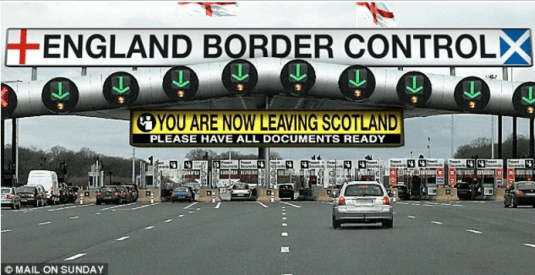
Scotland was told in no uncertain terms that if it left the United Kingdom, there would have to be border controls on the Scottish border, a new Hadrian’s Wall, because of EU law and border control agreements. Those border controls would have to remain until Scotland joined the European Union or otherwise made a deal.

The case to remain would be stronger if the British had stronger border controls against illegal immigration, and it just left the European Court of Justice and its increasingly silly decisions.
Much of the current wave of refugees arises from Turkey allowing illegal immigrants to cross its borders to go on to the European Union as a way of signalling that Turkey would be much more cooperative if it were a member of the European Union.
Number of asylum applications in EU has broken record set in 1992 – then and now compared: theguardian.com/world/ng-inter… http://t.co/qhpBagphGO—
Alberto Nardelli (@AlbertoNardelli) October 15, 2015
Turkey is increasingly undemocratic under the current president and there is always the background threat of a military coup. European Union member states must be democracies, which is why Turkey’s application for membership has stalled for many years.
How UK refugee commitment compares with other countries
bit.ly/1OuZamF http://t.co/LcnAsJePIN—
Guardian Data (@GuardianData) September 08, 2015
Parties ranging from UKIP to Alternative for Germany will get stronger and stronger unless control over borders is restored.
“Yes, Minister” on the Brexit Referendum
16 Jun 2016 Leave a comment
in constitutional political economy, international economics Tags: Brexit, British economy, British politics, Common market, European Union
F.A. Hayek and Robert Bork on Law, Legislation and Liberty
13 Jun 2016 Leave a comment
in Austrian economics, comparative institutional analysis, constitutional political economy, economics, F.A. Hayek Tags: Robert Bork
Democracy and Political Ignorance: Why Smaller Government Is Smarter
11 Jun 2016 Leave a comment
in applied price theory, applied welfare economics, comparative institutional analysis, constitutional political economy, economics, economics of information, income redistribution, Public Choice, public economics, rentseeking Tags: rational ignorance, rational irrationality, voter demographics
Why Capitalism is Better than Socialism
09 Jun 2016 Leave a comment
in applied price theory, applied welfare economics, comparative institutional analysis, constitutional political economy, development economics, economic history, history of economic thought, Marxist economics Tags: capitalism and freedom


Recent Comments