Can free trade agreements help solidify emerging democracies?
24 May 2016 Leave a comment
in constitutional political economy, defence economics, international economics, Public Choice, rentseeking Tags: autocracy, customs unions, emerging democracies, free trade agreements, military coups, preferential trading agreements
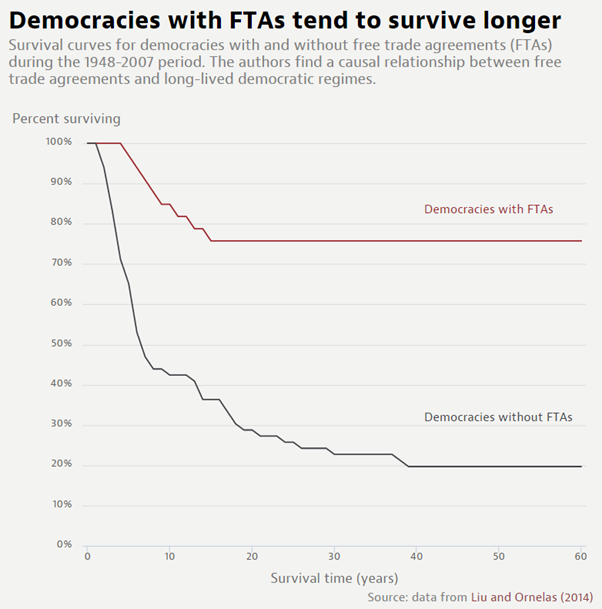
Source: “Free Trade Agreements and the Consolidation of Democracy” (April 2014) American Economic Journal: Macroeconomics. American Economic Association.
Sykes-Picot: Would redrawing the borders improve the Middle East?
22 May 2016 Leave a comment
in defence economics, economic history Tags: Middle-East politics
@BillClinton spot-on on #Hamas #warcrimes and rejection of peace
16 May 2016 Leave a comment
in defence economics, economics, laws of war, war and peace Tags: Bill Clinton, Hamas, Middle-East politics
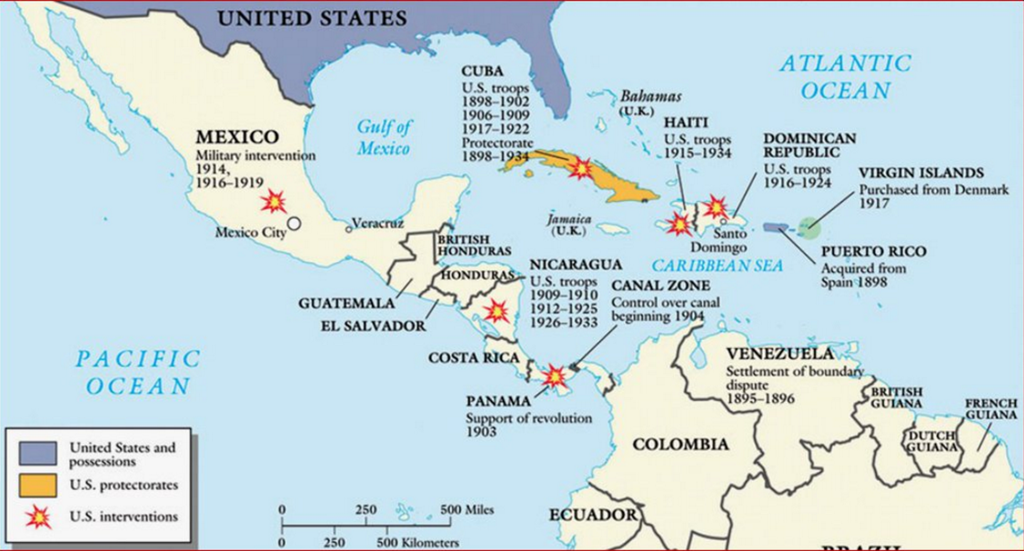
They Flew A Drone Over Auschwitz, And What They Captured Is More Devastating Than You’ll Expect.
13 May 2016 Leave a comment
in defence economics, economics of media and culture Tags: Auschwitz
The Mongol Empire
13 May 2016 Leave a comment
in defence economics, economic history Tags: age of empires, Mongol Empire
7 May 1945, 02:41 Central European Time, Germany signed the Allied "Unconditional Surrender"
08 May 2016 Leave a comment
in defence economics, economic history, laws of war, war and peace Tags: World War II

The decline in the US nuclear weapons stockpile
05 May 2016 Leave a comment
in defence economics Tags: arms control, arms race, Atomic weapons, Cold War, nuclear disarmament, nuclear weapons


The Vice Fund (now the Barriers Fund) continues to outperform S&P 500
03 May 2016 Leave a comment
in defence economics, energy economics, entrepreneurship, financial economics, health economics Tags: BDS, efficient markets hypothesis, entrepreneurial alertness, ethical investing
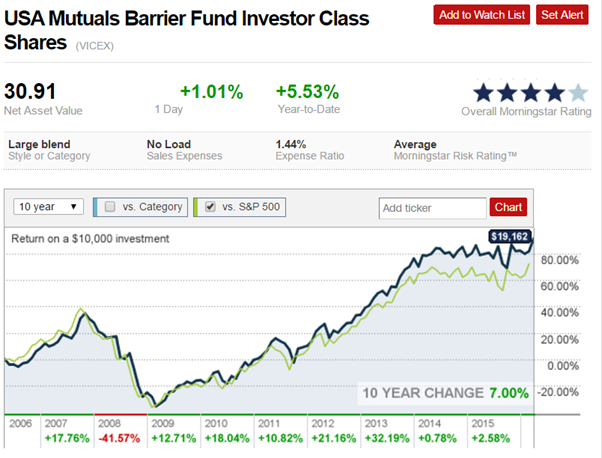
Source: VICEX – USA Mutuals Barrier Fund Investor Class Shares Mutual Fund Quote – CNNMoney.com
The Vice Fund has outperformed the S&P 500 since 2004 as shown by the green line. This mutual fund invests invest in sinful stocks as its managers describe it:
Designed with the goal of delivering better risk-adjusted returns than the S&P 500 Index. It invests primarily in stocks in the tobacco, alcohol, gaming and defence industries. Vice Funds believes these industries tend to thrive regardless of the economy as a whole.
The Vice Fund is now known as the Barrier Fund because it extended out of sinful stocks into industries with high barriers to entry. Minimum Investment is $2,000.
The Barrier Fund primarily invests in the following industries: Aerospace/Defense, Gaming, Tobacco and Alcoholic Beverages. These four industries were chosen because they demonstrate one or more of these compelling and distinctive investment characteristics:
- Natural barriers to new competition
- Steady demand regardless of economic condition
- Global Marketplace – not limited to the U.S. economy
- Potentially high profit margins
- Ability to generate excess cash flow and pay and increase dividends
The Barrier Fund believes numerous investment opportunities in these industries which have been largely overlooked by other funds.
The Fund has high management fees of 2%. Americans can buy Vanguard’s or Fidelity’s index funds and pay only 0.1% in expenses.
Why Are There Still Palestinian Refugees?
03 May 2016 Leave a comment
in defence economics Tags: Palestine
World War I: Every Day
25 Apr 2016 Leave a comment
in defence economics, economics of media and culture Tags: World War I


Recent Comments