I’ve written a couple of times about information interventions designed to attract more female students to study economics (see here and here). The results have generally been disappointing. That shouldn’t be too much of a surprise. If it was really simple to get people to change their behaviour with information, then advertising would be far…
Some weak evidence in favour of an information intervention in economics to close the gender gap
Some weak evidence in favour of an information intervention in economics to close the gender gap
05 May 2025 Leave a comment
in applied price theory, discrimination, econometerics, economics of education, experimental economics, gender, labour economics, labour supply, occupational choice Tags: gender gap, sex discrimination
Interview with Robert Barro: Empirical Macroeconomics
24 Apr 2025 1 Comment
in budget deficits, business cycles, econometerics, economic history, fiscal policy, macroeconomics
Jon Hartley serves as interlocutor in “Revisiting Empirical Macroeconomics with Robert Barro” (Hoover Institution, Capitalism and Freedom Podcast, March 25, 2025, audio and transcript available). Here are a few of the comments from Barro that especially caught my eye. One basic question in economics is about “the multiplier”–that is, how much will an increase in…
Interview with Robert Barro: Empirical Macroeconomics
Long-Run Effects of Trade Wars
24 Apr 2025 Leave a comment
in applied price theory, applied welfare economics, comparative institutional analysis, development economics, econometerics, history of economic thought, industrial organisation, labour economics, labour supply, politics - USA, unemployment Tags: 2024 presidential election, free trade, tariffs, unintended consequences
This short note shows that accounting for capital adjustment is critical when analyzing the long-run effects of trade wars on real wages and consumption. The reason is that trade wars increase the relative price between investment goods and labor by taxing imported investment goods and their inputs. This price shift depresses capital demand, shrinks the […]
Long-Run Effects of Trade Wars
Not much parliamentary scrutiny
01 Apr 2025 Leave a comment
in business cycles, econometerics, economic history, economics of bureaucracy, inflation targeting, labour economics, labour supply, macroeconomics, monetary economics, politics - New Zealand, Public Choice, unemployment Tags: economics of pandemics, monetary policy

This was the post I was planning to write this morning to mark Orr’s final day. That said, if the underlying events – deliberate attempts to mislead Parliament – were Orr’s doing, the post is more about the apparent uselessness of Parliament (specifically the Finance and Expenditure Committee) in holding him and the rest of […]
Not much parliamentary scrutiny
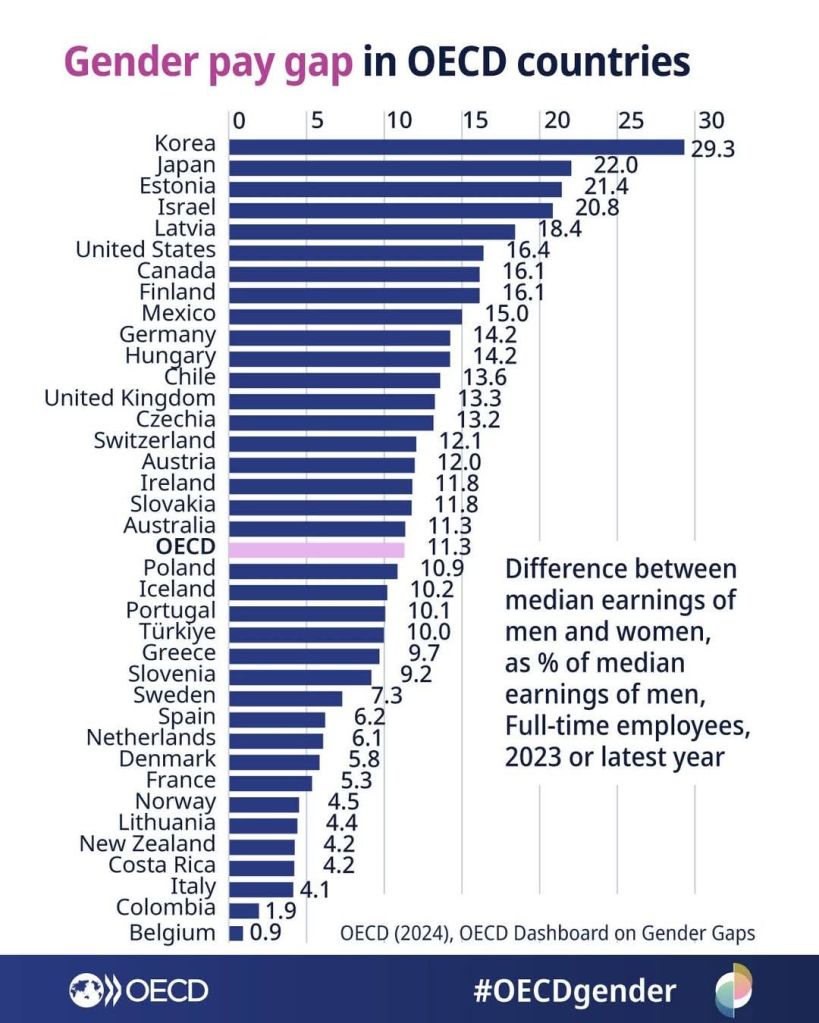
Minimal gender wage gap in NZ!
30 Mar 2025 Leave a comment
in discrimination, econometerics, economics of education, gender, human capital, labour economics, labour supply, occupational choice, politics - New Zealand, poverty and inequality Tags: gender wage gap, sex discrimination
Personality traits and gender gaps
30 Mar 2025 Leave a comment
in applied price theory, discrimination, econometerics, economics of education, gender, human capital, labour economics, labour supply, occupational choice Tags: gender wage gap
This paper examines the effects of the Big Five personality traits on labor market outcomes and gender wage gaps using a job search and bargaining model with parameters that vary at the individual level. The analysis, based on German panel data, reveals that both cognitive and noncognitive traits significantly influence wages and employment outcomes. Higher […]
Personality traits and gender gaps
The importance of the chronometer
24 Mar 2025 1 Comment
in applied price theory, econometerics, economic history, industrial organisation, transport economics, urban economics Tags: Age of Discovery
The chronometer, one of the greatest inventions of the modern era, allowed for the first time for the precise measurement of longitude at sea. We examine the impact of this innovation on navigation and urbanization. Our identification strategy leverages the fact that the navigational benefits provided by the chronometer varied across different sea regions depending […]
The importance of the chronometer
Beware: Flawed Energy Assumptions Incite Delusional Scenarios
23 Mar 2025 1 Comment
in econometerics, economic history, economics of climate change, energy economics, environmental economics, environmentalism, global warming

Mark P. Mills and Neil Atkinson blow the whistle on projections written in International Energy Agency’s (IEA) latest report, the World Energy Outlook. Below is the announcement of the report findings, key exhibits and Executive summary, excerpts in italics with my bolds and added images. Link to full study at the end. Overview Industry players […]
Beware: Flawed Energy Assumptions Incite Delusional Scenarios
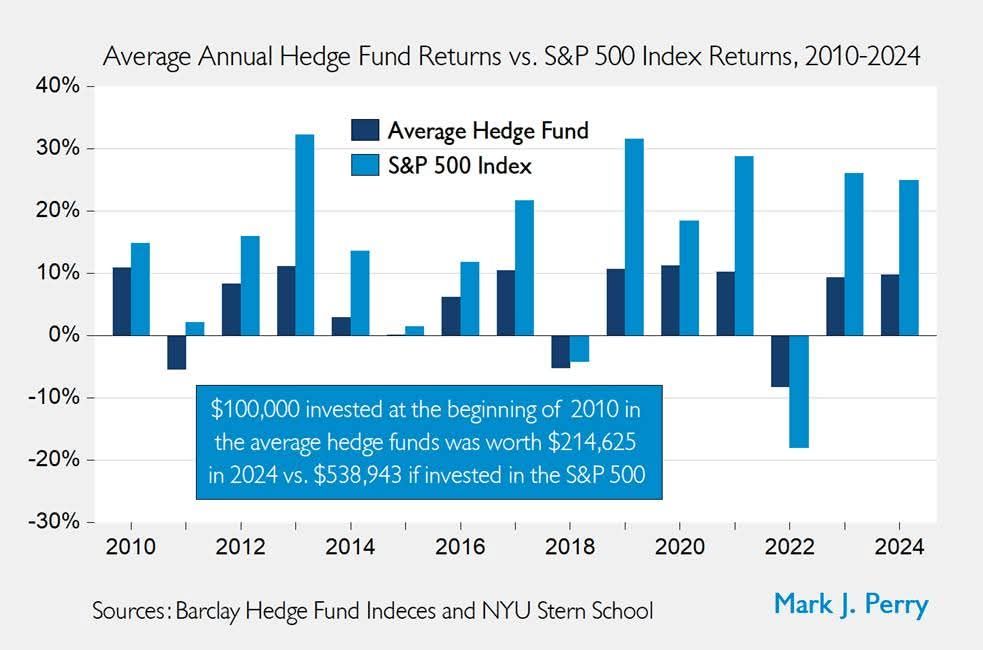
Beating the market
23 Mar 2025 Leave a comment
in econometerics, economics of information, entrepreneurship, financial economics Tags: active investing, efficient markets hypothesis, passive investing
The Anatomy of Marital Happiness
22 Mar 2025 Leave a comment
in applied price theory, econometerics, economic history, economics of love and marriage, industrial organisation, labour economics, population economics Tags: dating markets, economics of fertility, marriage and divorce, marriage premium
How can I not link to a new Sam Peltzman piece on such a topic? Here goes: Since 1972, the General Social Survey has periodically asked whether people are happy with Yes, Maybe or No type answers. Here I use a net “happiness” measure, which is percentage Yes less percentage No with Maybe treated as […]
The Anatomy of Marital Happiness
Institutional ownership of single-family housing
16 Mar 2025 Leave a comment
in applied price theory, applied welfare economics, econometerics, urban economics Tags: housing affordability
In the last decade, large financial institutions in the United States have purchased hundreds of thousands of homes and converted them to rentals. This paper studies the welfare consequences of institutional ownership of single-family housing. We build an equilibrium model of the housing market with two sectors: rental and homeownership. The model captures two key…
Institutional ownership of single-family housing
Is your master’s degree worthless?
11 Mar 2025 Leave a comment
in applied price theory, econometerics, economics of education, human capital, labour economics, labour supply
Economist: In America returns are especially large in computer science and in engineering. They are slightly smaller in other science subjects, in part because an undergraduate degree in these already bumps up salaries by quite a lot. Teachers who bag graduate degrees in education tend to earn more, even if wages for the profession as…
Is your master’s degree worthless?
Climate Crusade Is a Dead End
06 Mar 2025 Leave a comment
in econometerics, economic history, economics of climate change, economics of regulation, energy economics, environmental economics, environmentalism, global warming Tags: climate activists, climate alarmism

This post presents the main points and exhibits from Professor de Lange’s presentation February 26, 2025. Most images are self explanatory, with some excerpts in italics lightly edited from captions, and some added images as well. H/T Bud Bromley. Prof. de Lange demonstrates that there is no credible climate crisis, and that there is much […]
Climate Crusade Is a Dead End
15 years of US research on the minimum wage elasticity of employment
04 Mar 2025 Leave a comment
in applied price theory, econometerics, economic history, economics of regulation, labour economics, labour supply, minimum wage, poverty and inequality
It’s time to pick up my recent thread of posts on the minimum wage (most recently in this post). I want to return for a moment to more conventional research on the minimum wage, specifically looking at the effects of higher minimum wages on employment. The majority of minimum wage research has focused on estimating…
15 years of US research on the minimum wage elasticity of employment
Can Enhanced Street Lighting Improve Public Safety at Scale?
28 Feb 2025 Leave a comment
in applied price theory, econometerics, economics of crime, labour economics, law and economics, occupational choice Tags: crime and punishment, criminal deterrence, law and order
Street lighting is often believed to influence street crime, but most prior studies have examined small-scale interventions in limited areas. The effect of large-scale lighting enhancements on public safety remains uncertain. This study evaluates the impact of Philadelphia’s citywide rollout of enhanced street lighting, which began in August 2023. Over 10 months, 34,374 streetlights were […]
Can Enhanced Street Lighting Improve Public Safety at Scale?
 Utopia, you are standing in it!
Recent Comments