(President Franklin D. Roosevelt, Vice President elect Harry S. Truman, Vice President Henry Wallace) During my forty-four year teaching career on the secondary and university level I was often asked; “Who is your favorite President?” The answer came very easily, Harry S. Truman. My response was based on his personality, moral code, and his actions […]
THE TRIALS OF HARRY S. TRUMAN: THE EXTRAORDINARY PRESIDENCY OF AN ORDINARY MAN, 1945-1953 by Jeffrey Frank
THE TRIALS OF HARRY S. TRUMAN: THE EXTRAORDINARY PRESIDENCY OF AN ORDINARY MAN, 1945-1953 by Jeffrey Frank
09 Apr 2025 Leave a comment
in defence economics, economic history, politics - USA, war and peace Tags: Korean war, World War II
Resource Management and Property Rights
08 Apr 2025 Leave a comment
in applied price theory, economic history, economics of regulation, entrepreneurship, environmental economics, industrial organisation, law and economics, politics - New Zealand, property rights Tags: housing affordability, land supply
Brian Easton writes – While there have been decades of complaints – from all sides – about the workings of the Resource Management Act (RMA), replacing is proving difficult. The Coalition Government is making another attempt. To help answer the question, I am going to use the economic lens of the Coase Theorem, set out […]
Resource Management and Property Rights
The Regulation Review Committee’s tikanga decision
07 Apr 2025 Leave a comment
in economic history, economics of education, economics of regulation, human capital, labour economics, labour supply, law and economics, liberalism, Marxist economics, occupational regulation, politics - New Zealand, property rights Tags: Age of Enlightenment, free speech, political correctness, racial discrimination, regressive left
The Committee probably went as far as it could Gary Judd writes – What the Committee did The Regulation Review Committee decided (1) that making tikanga a compulsory subject for law students did not unduly trespass on personal rights and liberties, but (2) requiring tikanga to be incorporated in the other compulsory subjects was an […]
The Regulation Review Committee’s tikanga decision
Daniel Hannan on the Logical Contradictions in the Case for Trump’s Tariffs
06 Apr 2025 Leave a comment
in applied price theory, economic history, history of economic thought, industrial organisation, international economics, liberalism, politics - USA, Public Choice, rentseeking Tags: 2024 presidential election, free trade, tariffs
Tweet The post Daniel Hannan on the Logical Contradictions in the Case for Trump’s Tariffs appeared first on Cafe Hayek.
Daniel Hannan on the Logical Contradictions in the Case for Trump’s Tariffs
Operation Michael Runs Out Of Breath I THE GREAT WAR Week 193
05 Apr 2025 Leave a comment
in defence economics, economic history, war and peace Tags: World War I
Trump’s tariff claims are even stupider than anyone thought
04 Apr 2025 Leave a comment
in applied price theory, economic history, income redistribution, industrial organisation, international economic law, international economics, International law, politics - USA, Public Choice, rentseeking Tags: 2024 presidential election, free trade, tariffs
The White House released a list of countries and the tariff rates they charged the US. It was clearly wrong as NZ has an average tariff of around 1.7% on US imports and the list said 20%. I thought it was because they were including our GST of 15%. That would have been very dumb, […]
Trump’s tariff claims are even stupider than anyone thought
Prebs is Right – a 4 Year Parliamentary Term is no panacea to NZ’s stagnation. The problem is neither the Nats nor Labour have had a plan since 1993.
03 Apr 2025 Leave a comment
in comparative institutional analysis, constitutional political economy, economic growth, economic history, law and economics, macroeconomics, politics - New Zealand, Public Choice Tags: constitutional law
In an excellent article in the Herald, Richard Prebble (or “Prebs” as we call him) argues the proposals presented by National-ACT for a…
Prebs is Right – a 4 Year Parliamentary Term is no panacea to NZ’s stagnation. The problem is neither the Nats nor Labour have had a plan since 1993.
Richard Cobden and his constituencies
02 Apr 2025 Leave a comment
in constitutional political economy, economic history, liberalism, Public Choice Tags: British constitutional law

In this guest post, originally published on the Victorian Commons website, Professor Simon Morgan of Leeds Beckett University, the principal investigator on the Letters of Richard Cobden Online resource, shows how Cobden’s letters can shed light on his role as a constituency MP. The publication in 2023 of the Letters of Richard Cobden Online, an open access database […]
Richard Cobden and his constituencies
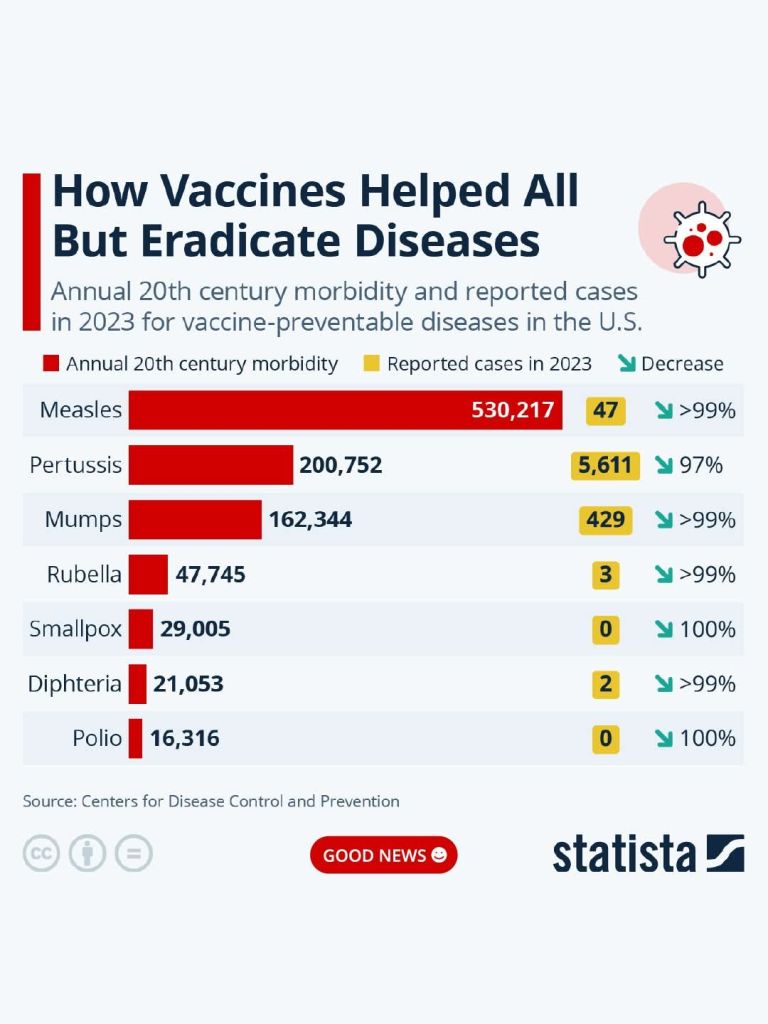
The Great Escape
02 Apr 2025 Leave a comment
in economic history, health economics Tags: anti-vaccination movement, child mortality, The Great Escape, vaccines
Public-Private-Partnerships?
02 Apr 2025 Leave a comment
in applied price theory, economic history, economics of bureaucracy, history of economic thought, industrial organisation, law and economics, managerial economics, organisational economics, politics - New Zealand, privatisation, property rights, Public Choice, public economics
New Zealand’s economic development has always been a partnership between the public and private sectors. Brian Easton writes – Public-Private-Partnerships (PPPs) have become fashionable again, partly because of the government’s ambitions to accelerate infrastructural development. There is, of course, an ideological element too, while some of the opposition to them is also ideological. PPPs […]
Public-Private-Partnerships?
The Protectionism Edition of Economics Humor
01 Apr 2025 Leave a comment
in applied price theory, applied welfare economics, comparative institutional analysis, economic history, history of economic thought, income redistribution, industrial organisation, international economics, politics - USA, Public Choice, rentseeking, survivor principle Tags: 2024 presidential election, free trade, tarrifs

It appears that Trump wants to repeat the mistakes of the 1930s with a global trade war. That is going to be very bad news for workers, consumers, taxpayers, manufacturers, farmers, and exporters. But there are two bits of good news. At least for small slices of the populations First, lobbyists will get rich as […]
The Protectionism Edition of Economics Humor
Not much parliamentary scrutiny
01 Apr 2025 Leave a comment
in business cycles, econometerics, economic history, economics of bureaucracy, inflation targeting, labour economics, labour supply, macroeconomics, monetary economics, politics - New Zealand, Public Choice, unemployment Tags: economics of pandemics, monetary policy

This was the post I was planning to write this morning to mark Orr’s final day. That said, if the underlying events – deliberate attempts to mislead Parliament – were Orr’s doing, the post is more about the apparent uselessness of Parliament (specifically the Finance and Expenditure Committee) in holding him and the rest of […]
Not much parliamentary scrutiny
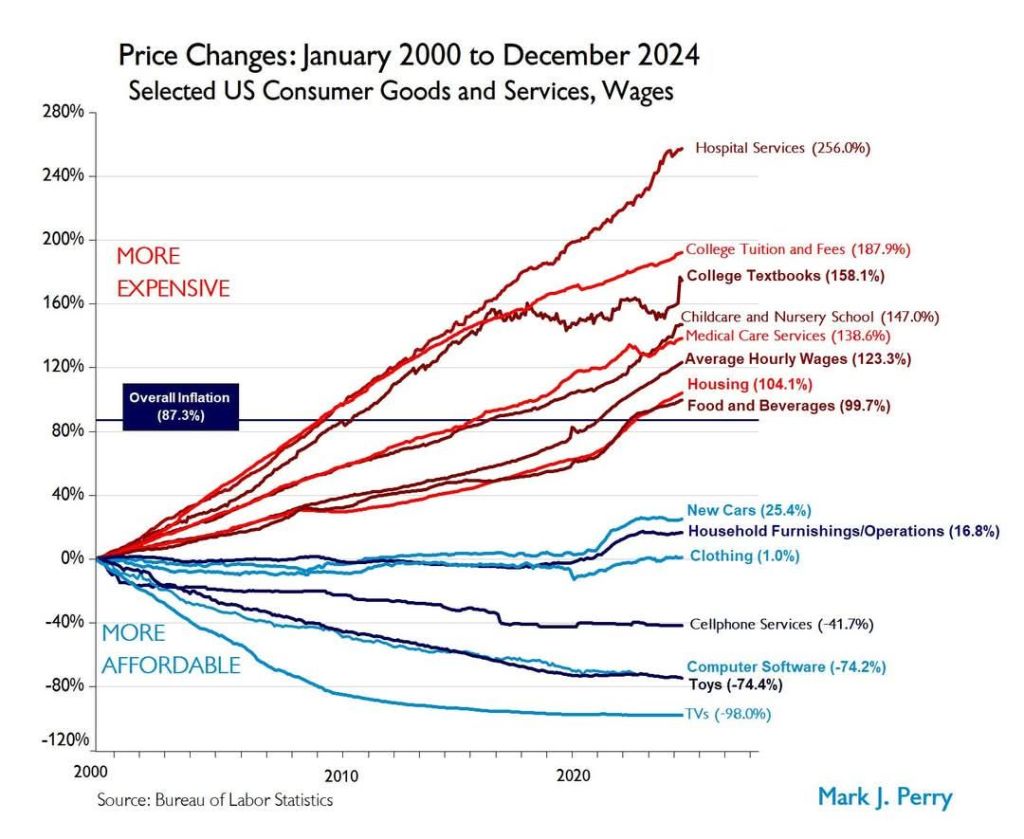
TVs are very cheap
01 Apr 2025 Leave a comment
in economic history, entrepreneurship Tags: The Great Enrichment
My first trip to Haiti
29 Mar 2025 Leave a comment
in development economics, economic history, growth disasters Tags: Haiti
This was in 1994, right after the Aristide regime was restored by Clinton. I had traveled a good deal by that time, mostly in North America, Europe, and southeast Asia. But I had never been anywhere truly dangerous. It seemed impossible to visit such places. It is not that I did any serious risk calculation, […]
My first trip to Haiti
At the end of World War I, Britain was in heavy financial debt to the U.S. The question of repayments would bedevil both countries for decades
27 Mar 2025 Leave a comment
in defence economics, economic history, financial economics, international economic law, international economics, International law, war and peace Tags: British politics France, World War I
See ‘Mellon vs. Churchill’ Review: The Payback Problem by Benn Steil. He reviewed the book Mellon vs. Churchill: The Untold Story of Treasury Titans at War by Jill Eicher. Excerpts:”In a nutshell, the debt story of the 1920s goes like this. Following World War I, 10 countries owed the U.S. more than $10 billion ($190 billion…
At the end of World War I, Britain was in heavy financial debt to the U.S. The question of repayments would bedevil both countries for decades
 Utopia, you are standing in it!
Recent Comments