The Reversal of Fortune
31 May 2016 Leave a comment
in development economics, economic history, economics, growth disasters, growth miracles Tags: The Great Fact

@RealDonaldTrump @BernieSanders are wrong on taxing imports
31 May 2016 Leave a comment
in applied price theory, applied welfare economics, economic history, international economics Tags: 2016 presidential election, left-wing populists, right-wing populists
Improvements in remaining life expectancy of Australians aged 25 to 29 since 1990
30 May 2016 Leave a comment
in economic history, health economics, population economics Tags: Australia, life expectancies, The Great Escape
The graph shows how many years you have left if aged 25 to 29 in 1990.
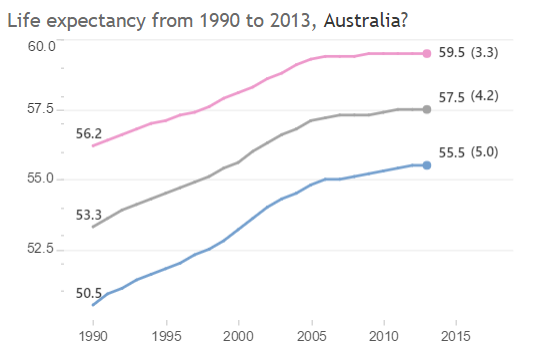
Source: Life Expectancy: progress from 1990 to 2013 | Health Intelligence.
How is The Great Escape going in #NewZealand?
30 May 2016 Leave a comment
in economic history, health economics Tags: life expectancies, The Great Escape

Remember this every time the Left says the government invented the Internet
30 May 2016 Leave a comment
in comparative institutional analysis, economic history, economics of bureaucracy, entrepreneurship, industrial organisation, politics - USA, Public Choice, survivor principle Tags: entrepreneurial alertness, industry policy, Internet, picking roses, picking winners

The Great Escape into the middle class in Latin America and the Caribbean (LAC)
30 May 2016 Leave a comment
in development economics, economic history, growth disasters, growth miracles Tags: Latin America, The Great Escape, Withering away of the proletariat
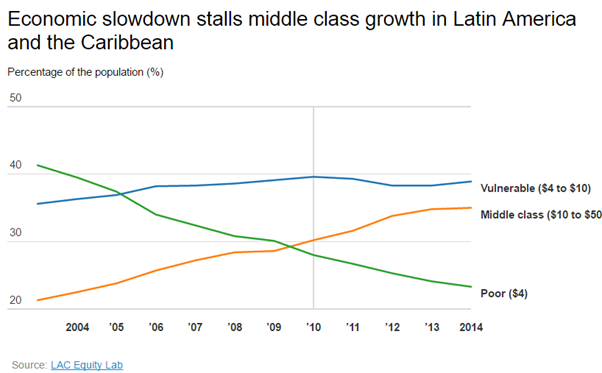
Source: World Bank Economic slowdown puts the brakes on middle class growth in Latin America | The Data Blog
Top 10 Evil Actions By Usually Nice Countries
29 May 2016 Leave a comment
in economic history, economics, International law, laws of war, war and peace
Are the Poor Getting Poorer?
28 May 2016 Leave a comment
in applied price theory, applied welfare economics, economic history, economics, labour economics, poverty and inequality Tags: pessimism bias, The Great Enrichment
Gap in GDP per Australian, Canadian, French, German, Japanese, New Zealander and British hour worked with the USA
28 May 2016 Leave a comment
in economic growth, economic history, labour economics, labour supply, macroeconomics, politics - Australia, politics - New Zealand, politics - USA, public economics Tags: Australia, British economy, Canada, Eurosclerosis, France, Germany, Japan, labour productivity, measurement error, taxation and labour supply
This data tells more of a story than I expected. Firstly, New Zealand has not been catching up with the USA. Japan stopped catching up with the USA in 1990. Canada has been drifting away from the USA for a good 30 years now in labour productivity.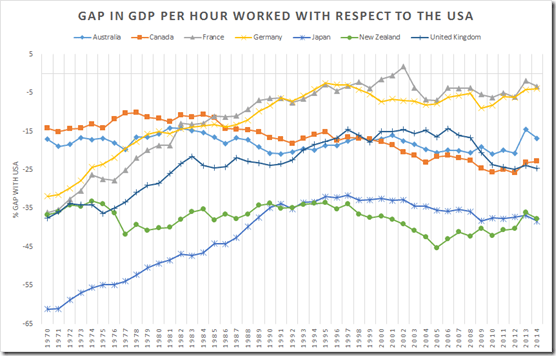
Data extracted on 28 May 2016 05:15 UTC (GMT) from OECD.Stat from OECD Compendium of Productivity Indicators 2016 – en – OECD.
Australia has not been catching up with the USA much at all since 1970. It has maintained a pretty consistent gap with New Zealand despite all the talk of a resource boom in the Australia; you cannot spot it in this date are here.
Germany and France caught up pretty much with the USA by 1990. Oddly, Eurosclerosis applied from then on terms of growth in income per capita.
European labour productivity data is hard to assess because their high taxes lead to a smaller services sector where the services can be do-it-yourself. This pumps up European labour productivity because of smaller sectors with low productivity growth.
@PikettyLeMonde pension fund socialism has finished taking over #capitalism #Piketty
28 May 2016 Leave a comment
in economic history, financial economics, politics - USA, public economics Tags: company tax, Leftover Left, pension fund socialism, Peter Drucker, tax havens, taxation and entrepreneurship, taxation and investment, Twitter left
Peter Drucker first pointed out in the 70s that the retirement savings of ordinary workers will end up opening the majority of public listed companies. That day has come much to the disappointment of the Leftover Left ranging from Thomas Piketty to Max Rashbrooke.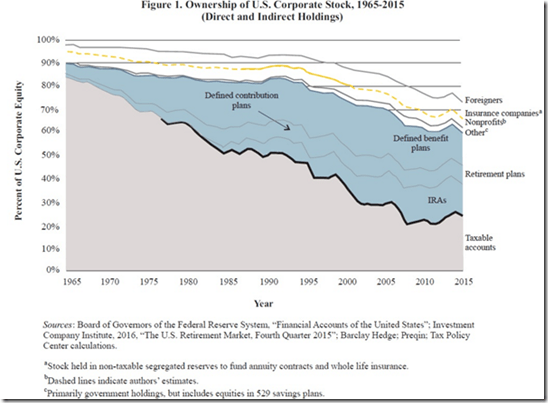
Source: CONVERSABLE ECONOMIST: US Corporate Stock: The Transition in Who Owns It.
Any call for higher taxes on investment incomes and capital and even tax havens is an attack on the retirement savings of ordinary workers.
One of the rich countries so glum
28 May 2016 Leave a comment
in development economics, economic history, economics, economics of information, economics of media and culture, growth miracles Tags: pessimism bias, The Great Escape, The Great Fact

Europe in 1226
26 May 2016 Leave a comment
in economic history Tags: British history, dark ages, European history


Recent Comments