.
Celebrating humanity's flourishing through the spread of capitalism and the rule of law
26 May 2016 Leave a comment
in economic history, labour economics, poverty and inequality Tags: child poverty, family poverty, regional economic development
.
25 May 2016 Leave a comment
in economic history, economics, labour economics, labour supply, minimum wage Tags: living wage, teenage unemployment
24 May 2016 Leave a comment
in economic history, entrepreneurship, human capital, industrial organisation, labour economics, labour supply, occupational choice, politics - USA, poverty and inequality Tags: entrepreneurial alertness, superstar wages, superstars, top 1%, top incomes
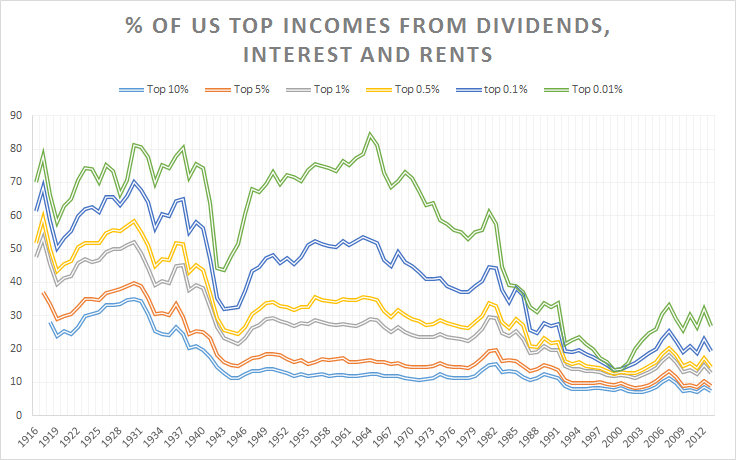
Looks like the Reagan Revolution coincided with the American rich going out to work for a living. They started earning most of their incomes from wages, salaries and pensions or from entrepreneurial income. The American rich are now working rich; top wage earners, not top income earners.
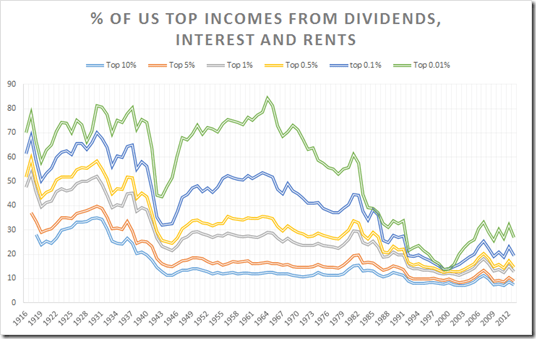
Source: The World Wealth and Income Database.
23 May 2016 Leave a comment
in discrimination, economic history, economics of media and culture, gender, human capital, labour economics, labour supply, occupational choice, poverty and inequality Tags: gender wage gap, middle class stagnation, reversing gender gap, wage stagnation
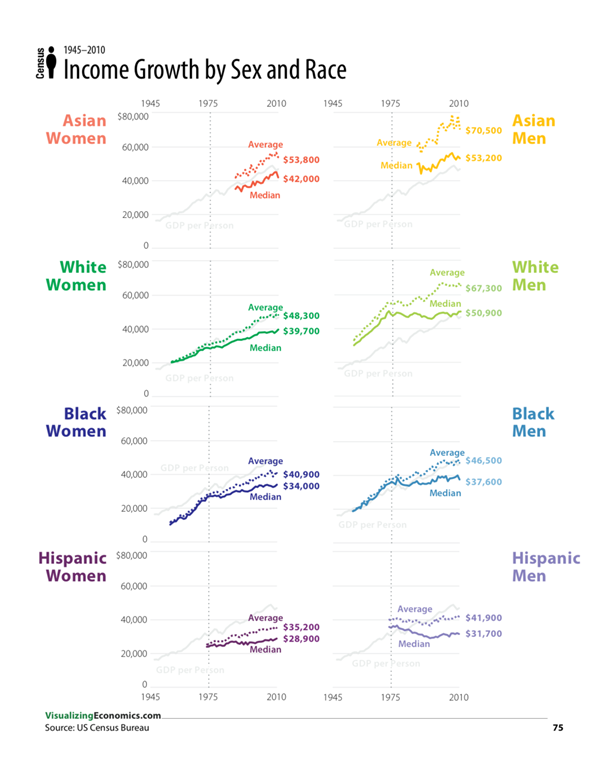
Source: Read Online — Visualizing Economics.
23 May 2016 Leave a comment
in economic history, economics of media and culture Tags: fashions, The Great Enrichment
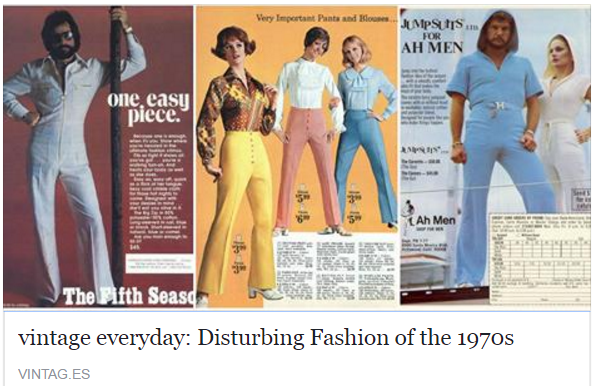 My explanation is the rapid income growth in the 1950s and 60s caught fashion designers short.
Comparing different income growth series 1900-2010 bit.ly/195NbKb http://t.co/9Uazhmayd4—
Catherine Mulbrandon (@VisualEcon) August 18, 2014
Up until the 1970s, and the swinging 60s in London where a tastes of that, clothing design for the masses is very much functional. It took 10 to 15 years for the fashion designers to work out how to respond to this sudden increase in demand for clothing as an expression of individual identity.
By the 1980s and 1990s, people were able to dress with distinction in finely cut clothing without the need to be gauche and loud.
23 May 2016 Leave a comment
in applied price theory, applied welfare economics, economic history, entrepreneurship, human capital, industrial organisation, labour economics, labour supply, occupational choice, poverty and inequality, survivor principle Tags: entrepreneurial alertness, envy, superstar wages, superstars, top 1%, top incomes
Everybody from the top 10% to the top 0.01% have to work for their living these days with much of their income coming from wages.
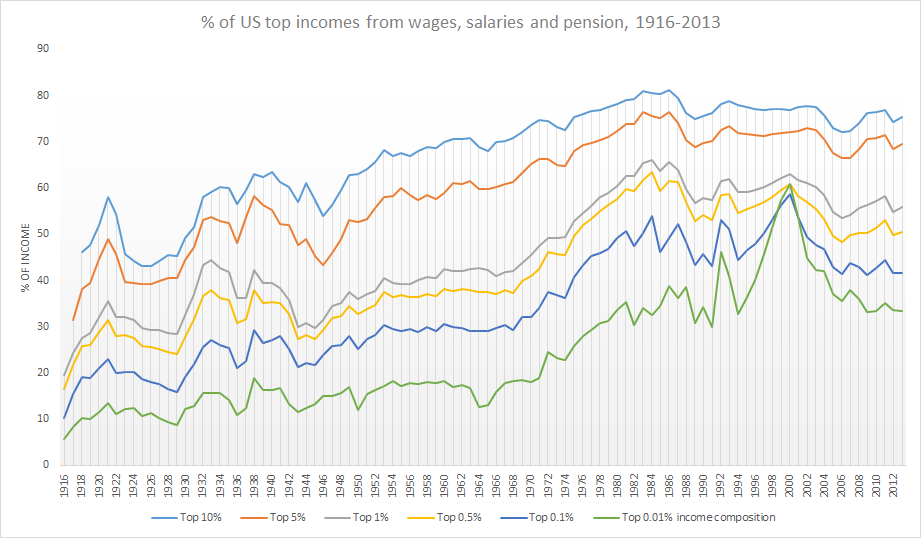
Source: The World Wealth and Income Database.
23 May 2016 Leave a comment
in applied welfare economics, comparative institutional analysis, economic history, economics of regulation, income redistribution, industrial organisation, politics - New Zealand, poverty and inequality, Public Choice, rentseeking Tags: child poverty, conspiracy theories, expressive voting, family poverty, Leftover Left, living standards, neoliberalism, Old Left, pessimism bias, rational irrationality, reactionary left, top 1%
New work by Chris Ball and John Creedy shows substantial *declines* in NZ inequality.
initiativeblog.com/2015/06/24/ine… http://t.co/f94fw4Bhae—
Eric Crampton (@EricCrampton) June 24, 2015
You really are still fighting the 1990 New Zealand general election if Max Rashbrooke makes more sense than you on the good old days before the virus of neoliberalism beset New Zealand from 1984 onwards.
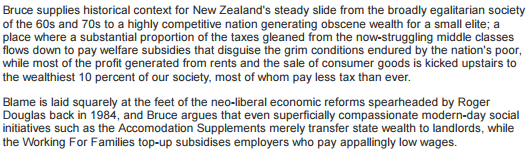
Source: Mind the Gap: Why most of us are poor | Stuff.co.nz.
Bryan Bruce in the caption looks upon the New Zealand of the 1960s and 70s as “broadly egalitarian”. Even Max Rashbrooke had to admit that was not so if you were Maori or female.
The present rate of technology adoption is nearly a vertical line —@blackrock https://t.co/3oS3YAI4ld—
Vala Afshar (@ValaAfshar) January 22, 2016
Maybe 65% of the population of those good old days before the virus of neoliberalism. were missing out on that broadly egalitarian society championed by Bryan Bruce.
As is typical for the embittered left, the reactionary left, gender analysis and the sociology of race is not for their memories of their good old days. New Zealand has the smallest gender wage gap of any of the industrialised countries.
The 20 years of wage stagnation that proceeded the passage of the Employment Contracts Act and the wages boom also goes down the reactionary left memory hole.
That wage stagnation in New Zealand in the 1970s and early 80s coincided with a decline in the incomes of the top 10%. When their income share started growing again, so did the wages of everybody after 20 years of stagnation. The top 10% in New Zealand managed to restore their income share of the early 1970s and indeed the 1960s. That it is hardly the rich getting richer.
23 May 2016 Leave a comment
in economic history Tags: American history, economics of federalism
23 May 2016 Leave a comment
in applied price theory, economic history, industrial organisation, labour economics, labour supply, unemployment Tags: economics of immigration
22 May 2016 Leave a comment
in defence economics, economic history Tags: Middle-East politics
19 May 2016 Leave a comment
in economic history, economics of love and marriage Tags: blended families, dating market, marriage and divorce, single mothers, single parents

18 May 2016 Leave a comment
in economic history, economics of love and marriage Tags: dating market, economics of fertility, France, marriage and divorce, World War I
18 May 2016 Leave a comment
in economic growth, economic history, fiscal policy, Robert E. Lucas Tags: industrial revolution
17 May 2016 Leave a comment
in development economics, economic history, growth disasters, growth miracles, health economics Tags: antimarket bias, Botswana, economics of AIDS, life expectancies, reactionary left, Swaziland, The Great Escape, Uganda
Since 1985, extreme poverty has halved in Botswana and dropped by a 3rd in Swaziland and Uganda.

Source: World Poverty – Our World In Data.
Life expectancies are increasing again in Swaziland and Botswana after the HIV epidemic has come under more control.

Source: Life Expectancy by Age in selected Country from 1990 to 2013 | Health Intelligence

Source: Life Expectancy by Age in selected Country from 1990 to 2013 | Health Intelligence
Closer to achieving #foodsecurity in #WestAfrica w/ 60% decline in under-nourished since 90s bit.ly/1M1Fzvt https://t.co/ezPM05lbEo—
(@OECD) October 28, 2015
The battle against Polio in Africa http://t.co/LYB2nGZlAB—
Amazing Maps™ (@amazingmap) June 30, 2015
"Freedom is making gradual progress in Africa…the trends are in the right direction" @bill_easterly #hayek15 https://t.co/Ua1GON7ha2—
IEA (@iealondon) December 02, 2015
Celebrating humanity's flourishing through the spread of capitalism and the rule of law
Celebrating humanity's flourishing through the spread of capitalism and the rule of law
Celebrating humanity's flourishing through the spread of capitalism and the rule of law
Celebrating humanity's flourishing through the spread of capitalism and the rule of law
Celebrating humanity's flourishing through the spread of capitalism and the rule of law
Celebrating humanity's flourishing through the spread of capitalism and the rule of law
A History of the Alt-Right
Econ Prof at George Mason University, Economic Historian, Québécois
Celebrating humanity's flourishing through the spread of capitalism and the rule of law
Scholarly commentary on law, economics, and more
Beatrice Cherrier's blog
Celebrating humanity's flourishing through the spread of capitalism and the rule of law
Celebrating humanity's flourishing through the spread of capitalism and the rule of law
Celebrating humanity's flourishing through the spread of capitalism and the rule of law
Why Evolution is True is a blog written by Jerry Coyne, centered on evolution and biology but also dealing with diverse topics like politics, culture, and cats.
Celebrating humanity's flourishing through the spread of capitalism and the rule of law
A rural perspective with a blue tint by Ele Ludemann
DPF's Kiwiblog - Fomenting Happy Mischief since 2003
Celebrating humanity's flourishing through the spread of capitalism and the rule of law
The world's most viewed site on global warming and climate change
Tim Harding's writings on rationality, informal logic and skepticism
A window into Doc Freiberger's library
Let's examine hard decisions!
Commentary on monetary policy in the spirit of R. G. Hawtrey
Thoughts on public policy and the media
Celebrating humanity's flourishing through the spread of capitalism and the rule of law
Politics and the economy
A blog (primarily) on Canadian and Commonwealth political history and institutions
Reading between the lines, and underneath the hype.
Economics, and such stuff as dreams are made on
"The British constitution has always been puzzling, and always will be." --Queen Elizabeth II
Celebrating humanity's flourishing through the spread of capitalism and the rule of law
Celebrating humanity's flourishing through the spread of capitalism and the rule of law
WORLD WAR II, MUSIC, HISTORY, HOLOCAUST
Undisciplined scholar, recovering academic
Celebrating humanity's flourishing through the spread of capitalism and the rule of law
Res ipsa loquitur - The thing itself speaks
In Hume’s spirit, I will attempt to serve as an ambassador from my world of economics, and help in “finding topics of conversation fit for the entertainment of rational creatures.”
Researching the House of Commons, 1832-1868
Articles and research from the History of Parliament Trust
Reflections on books and art
Posts on the History of Law, Crime, and Justice
Celebrating humanity's flourishing through the spread of capitalism and the rule of law
Exploring the Monarchs of Europe
Cutting edge science you can dice with
Small Steps Toward A Much Better World


Recent Comments