The Great Enrichment
23 Sep 2026 Leave a comment
in development economics, economic history, growth disasters, growth miracles, liberalism, Marxist economics Tags: The Great Enrichment
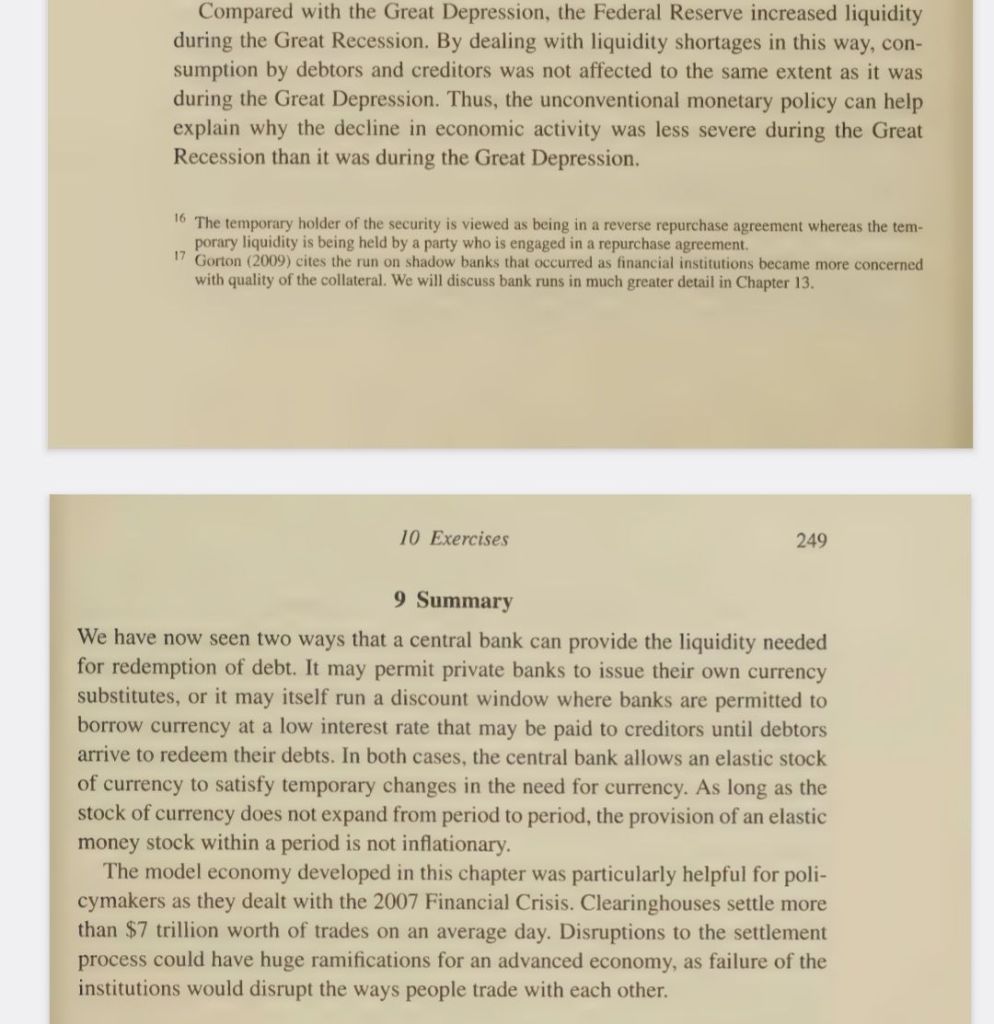
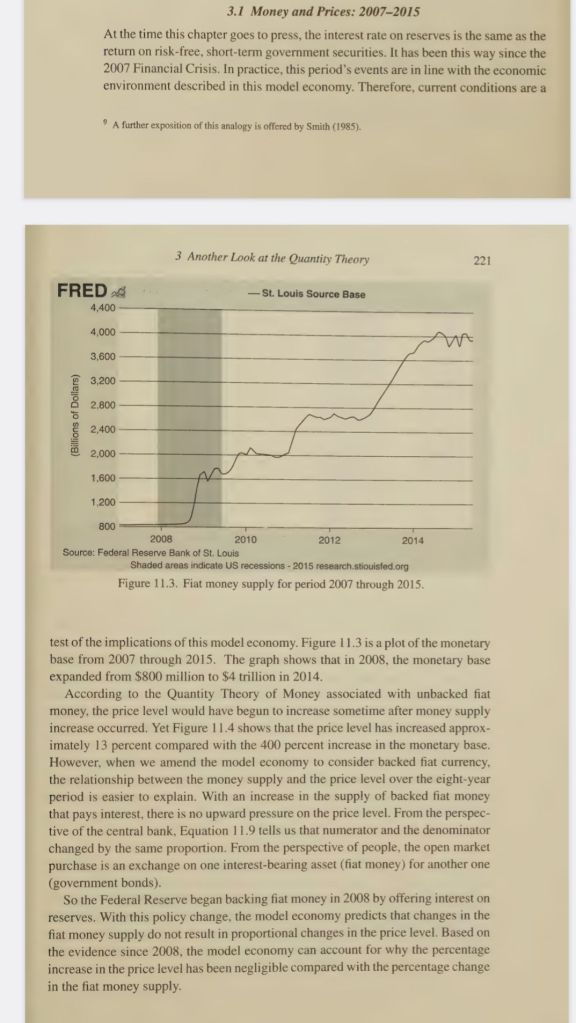
Scott Freeman’s textbook on the GFC
22 Sep 2026 Leave a comment
in applied price theory, budget deficits, business cycles, economic history, fiscal policy, global financial crisis (GFC), great depression, great recession, history of economic thought, labour economics, macroeconomics, monetarism, monetary economics, unemployment Tags: monetary policy
President Trump Stubbornly Clings to Archaic Mercantilist Economics
22 Sep 2026 Leave a comment
in Adam Smith, applied price theory, economic history, history of economic thought, income redistribution, industrial organisation, international economics, politics - USA, Public Choice, rentseeking Tags: free trade, tarrifs
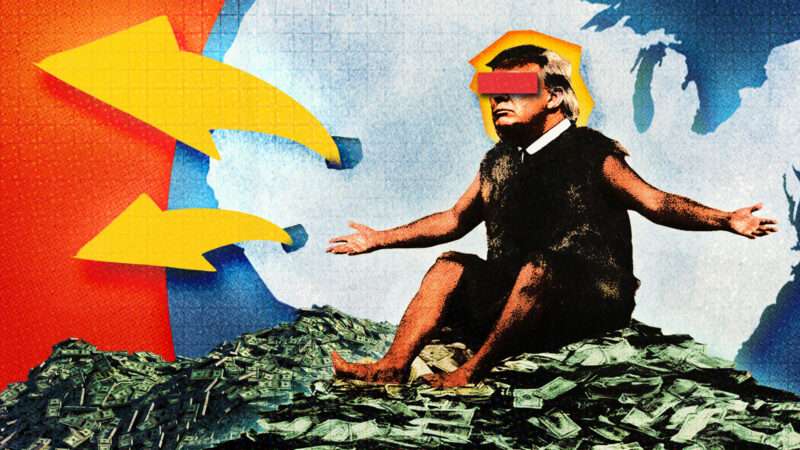
He who dies with the most hoarded cash does not, in fact, win.
President Trump Stubbornly Clings to Archaic Mercantilist Economics
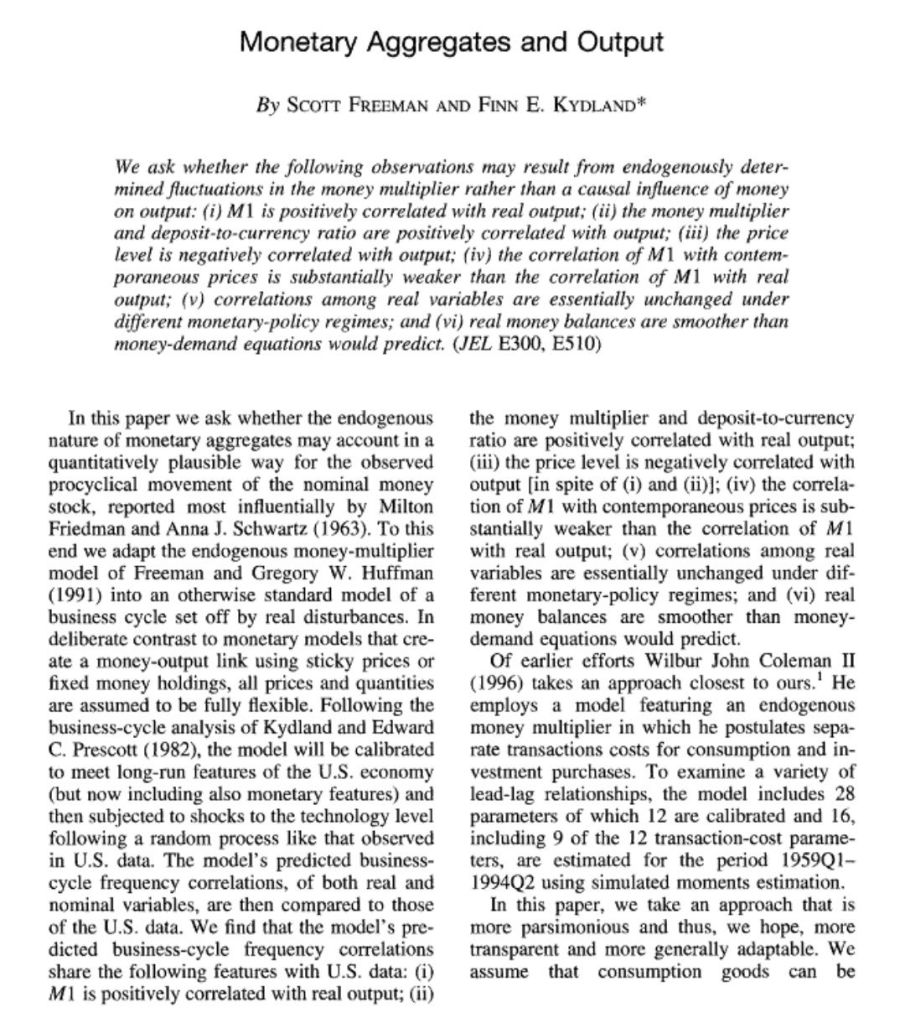
Scott Freeman on monetarism again
20 Sep 2026 Leave a comment
in business cycles, econometerics, economic growth, economic history, history of economic thought, macroeconomics, monetarism, monetary economics Tags: monetary policy
Who values democracy?
19 Sep 2026 Leave a comment
in applied price theory, comparative institutional analysis, constitutional political economy, econometerics, economic history
This paper examines the conventional view that redistribution is central to the democratization process using data from stock markets. Consistent with this view, democratizations have a large, negative impact on asset valuations driven by a rise in redistribution risk. Across 90 countries over 200 years, risk premia are substantially elevated— similar in magnitude to financial…
Who values democracy?
Why Papua New Guinea is so interesting
18 Sep 2026 Leave a comment
in development economics, economic history, growth disasters Tags: PNG
And this leads to the most interesting part of this story: how the highlanders were so isolated for so long. I want to acknowledge that the highlanders were not completely, hermetically sealed off from the outside world – it’s just that knowledge of outside world never actually made it to them or vice versa. Over…
Why Papua New Guinea is so interesting
Climate Doomsters Undone by Geology
18 Sep 2026 Leave a comment
in economic history, economics of climate change, energy economics, environmental economics, environmentalism, global warming Tags: climate alarmism

At American Greatness, Leslie Matthews reviews a new book by geologist Gregory Wrightstone: A Very Convenient Warming. Excerpts with my bolds and added images. Climate doomerism rests on far shakier ground than its confidence would suggest. Few books arrive with a thesis as deliberately provocative as its title. Gregory Wrightstone’s A Very Convenient Warming: How…
Climate Doomsters Undone by Geology
The Growth of Big Business: 1900-2020
18 Sep 2026 Leave a comment
in development economics, econometerics, economic history, entrepreneurship, industrial organisation, survivor principle Tags: creative destruction
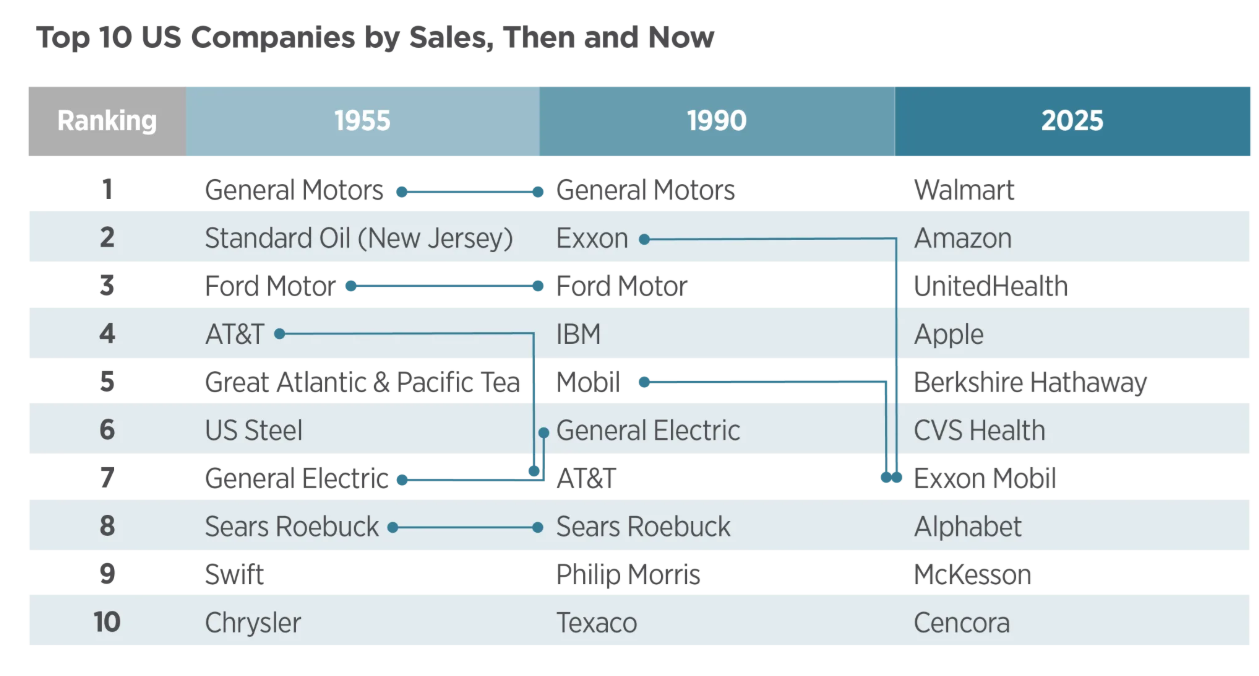
Big firms are playing a larger role in the US economy–but also in the economies of high-income countries around the world. Yueran Ma, Mengdi Zhang, and Kaspar Zimmermann compile the evidence in “Business Concentration Around the World: 1900-2020” (University of Chicago Becker-Friedman Institute for Economics, February 27, 2026, the link offers a readable overview and a followup link…
The Growth of Big Business: 1900-2020
The Great Enrichment continues
17 Sep 2026 Leave a comment
in economic history, labour economics, politics - USA, poverty and inequality
When Keynes Did Not Win the Nobel Peace Prize
17 Sep 2026 Leave a comment
in defence economics, economic history, history of economic thought, war and peace
On rare occasions, the Nobel Peace Prize has been given for work with direct and strong economic implications. For example, I think of the 2006 Prize given to Muhammad Yunus and Grameen Bank for their work on microfinance loans to the poor, or the 1970 prize to Norman Borlaug for his research leading to the Green Revolution…
When Keynes Did Not Win the Nobel Peace Prize
Scott Freeman on monetarism
16 Sep 2026 Leave a comment
in business cycles, econometerics, economic history, history of economic thought, labour economics, macroeconomics, Milton Friedman, monetarism, monetary economics, unemployment Tags: quantity theory of money
Richard Epstein on property rights, and anticipatory wars too
15 Sep 2026 Leave a comment
in defence economics, economic history, International law, law and economics, laws of war, Richard Epstein, war and peace Tags: Israel
Money and output: correlation or causality
14 Sep 2026 Leave a comment
in applied price theory, business cycles, economic history, financial economics, history of economic thought, macroeconomics, Milton Friedman, monetarism, monetary economics Tags: quantity theory of money
How to Make Life Better for the Middle Class (and Everyone Else)
14 Sep 2026 Leave a comment
in applied price theory, economic growth, economic history, macroeconomics, politics - USA Tags: The Great Enrichment
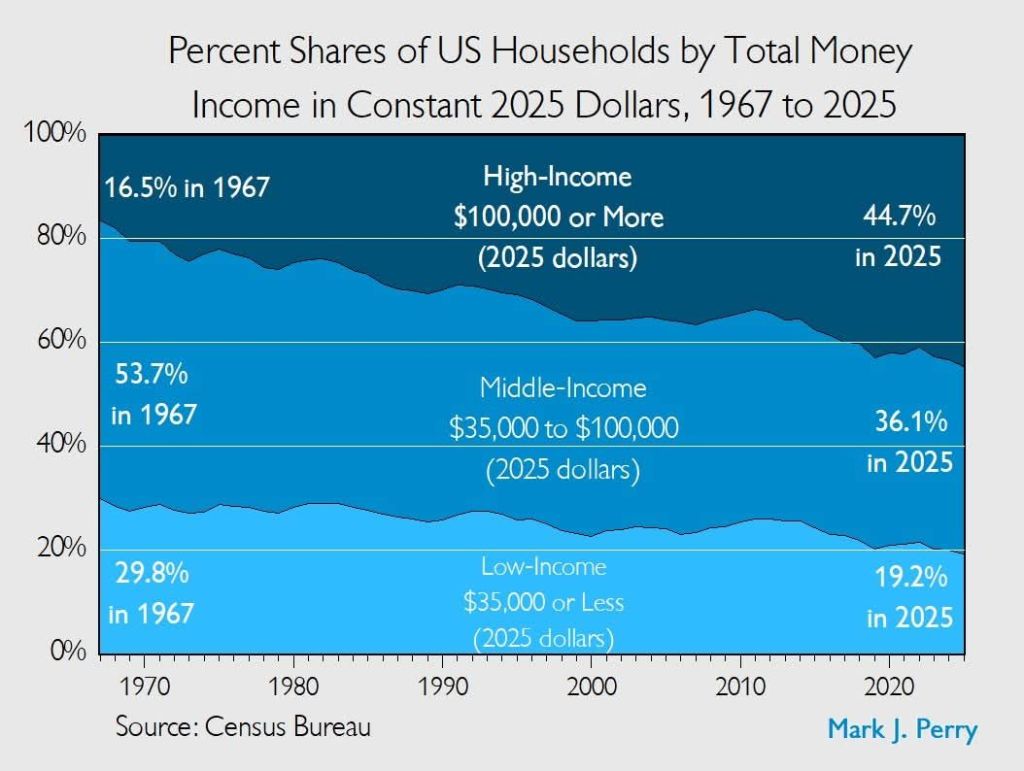
I have a four-part series (here, here, here, and here) documenting that Americans are getting richer over time, yet many people feel pessimism and dissatisfaction. This Kite & Key video helps to explain this seeming contradiction. If you don’t want to watch a 10-minute video, here are two charts that summarize the message. This first […]
How to Make Life Better for the Middle Class (and Everyone Else)
The gender wage gap is fading away
13 Sep 2026 Leave a comment
in applied price theory, discrimination, economic history, economics of education, gender, human capital, labour economics, labour supply, occupational choice, politics - New Zealand, poverty and inequality Tags: feminism, gender, gender wage gap, history, politics, sex discrimination, women
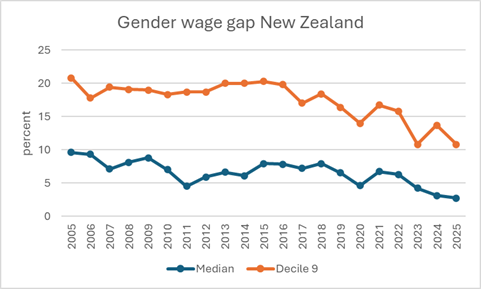
The gender wage gap has dropped by two-thirds in the last 30 years. It has halved since the first pay equity claim was filed 14 years ago. The gender wage gap is now barely 5.5% in June 2026 according to the recently released Statistics New Zealand data. It is a stretch to file pay equity claims asking for 30% more when the gender wage gap struggles to stay above 5%.
The gender wage gap data released by Statistics New Zealand recently is the raw data. There are no adjustments to that pay gap for differences in educational backgrounds, continuity of employment and dedication to demanding careers, unsocial hours, risk of injury, and the greater desire of women for work-life balance and jobs with more working from home options.
It is not mischievous to say that the gender wage gap may round down to zero once these factors are considered.
From time-to-time, detailed datasets become available on male and female workers that show that the gender wage gap goes down or close to zero. There are even detailed datasets where hiring and job assignments are made without any management intervention or possible bias.
There is a large gender wage gap driven by work-life balance under a bus and train drivers’ collective agreement in Massachusetts. The work-force was one-third female with hiring via a lottery among applicants with a clean record. Shifts are chosen by drivers strictly according to their seniority at each depot.
There was still a 11% gender wage gap because women drivers elected to work less overtime, they avoided overtime shifts on short notice, and they worked fewer shifts at nights and weekends. This gender wage gap among bus and train drivers cannot be the fault of their sexist employer because work was allocated by an exceptionally detailed union contract.
A 7% gender wage gap emerged even when a computer algorithm is allocating the work first come, first served.
A study of Uber drivers found a gender pay gap of zero once account is taken for male Uber drivers driving more at nights, weekends and in the more dodgy neighbourhoods with drinking establishments. Male Uber drivers also worked more hours per year which meant they had much more work experience than female Uber drivers. These additional hours meant men became more skilled in deciding when and where to best cruise for the best paying jobs. The fact that men drive faster explained the last two percentage points of the gender pay gap at Uber. Speed meant men were available for the next Uber job quicker.
The gender wage gap is just into the double digits for the top 10% of female earners in New Zealand in 2025 (see OECD graphic). This is because their chosen careers are often not family friendly. But even at the top end of town the gender pay gap has halved in the last 20 years.
OECD data explorer
Women’s willingness to trade work-life balance for lower wages and fewer promotions is a big driver of the gender wage gap and the channelling of women into family friendly occupations. The wages of men and women at all levels are similar in the years leading up to motherhood then everything changes.
Top American labour economist Claudia Goldin found that some careers severely penalise any time off such as for motherhood or working less than punishingly long or rigid hours. Goldin refers to these jobs as greedy jobs. Women’s preference for family friendly occupations that can pay less and a tendency to avoid greedy jobs will mean that the gender wage gap may always be with us at least at the big end of town.


Recent Comments