Celebrating humanity's flourishing through the spread of capitalism and the rule of law
30 Sep 2026 Leave a comment
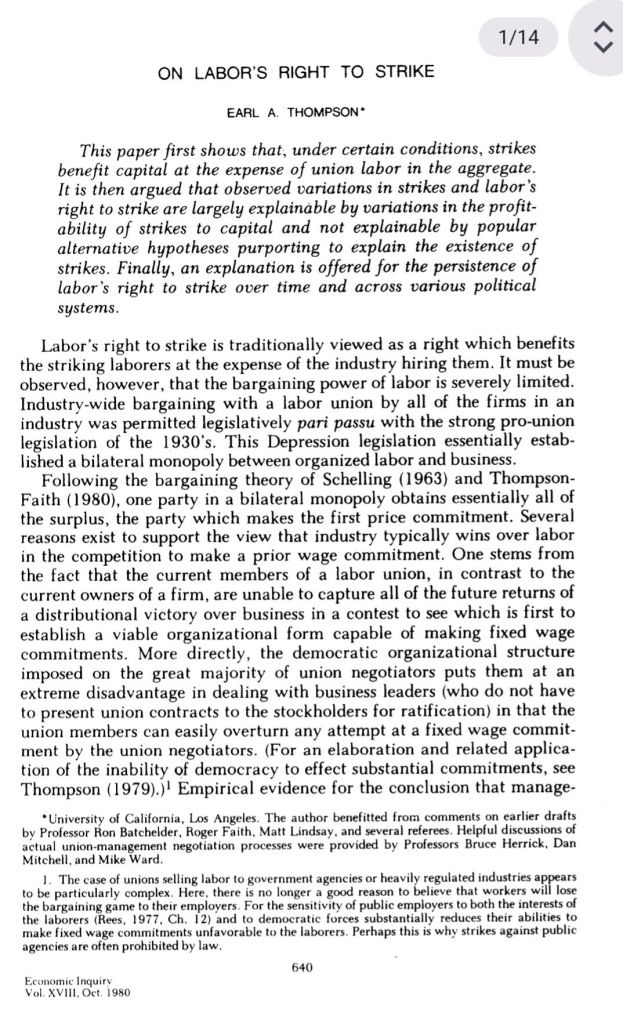
in applied price theory, economic history, history of economic thought, labour economics, unions Tags: union power
30 Sep 2026 Leave a comment
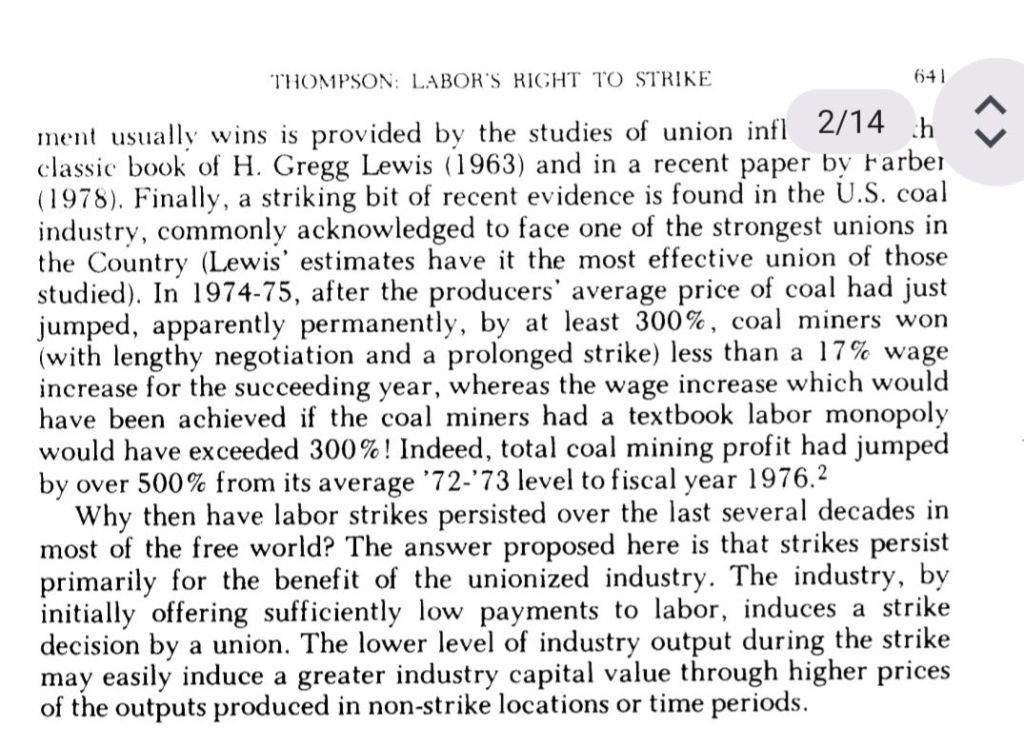
in applied price theory, business cycles, economic growth, economic history, entrepreneurship, history of economic thought, labour economics, labour supply, macroeconomics, monetary economics, unemployment Tags: real business cycle theory

29 Sep 2026 Leave a comment
in applied price theory, economic growth, economic history, entrepreneurship, financial economics, fiscal policy, history of economic thought, labour economics, labour supply, macroeconomics Tags: British politics, taxation and investment, taxation and labour supply

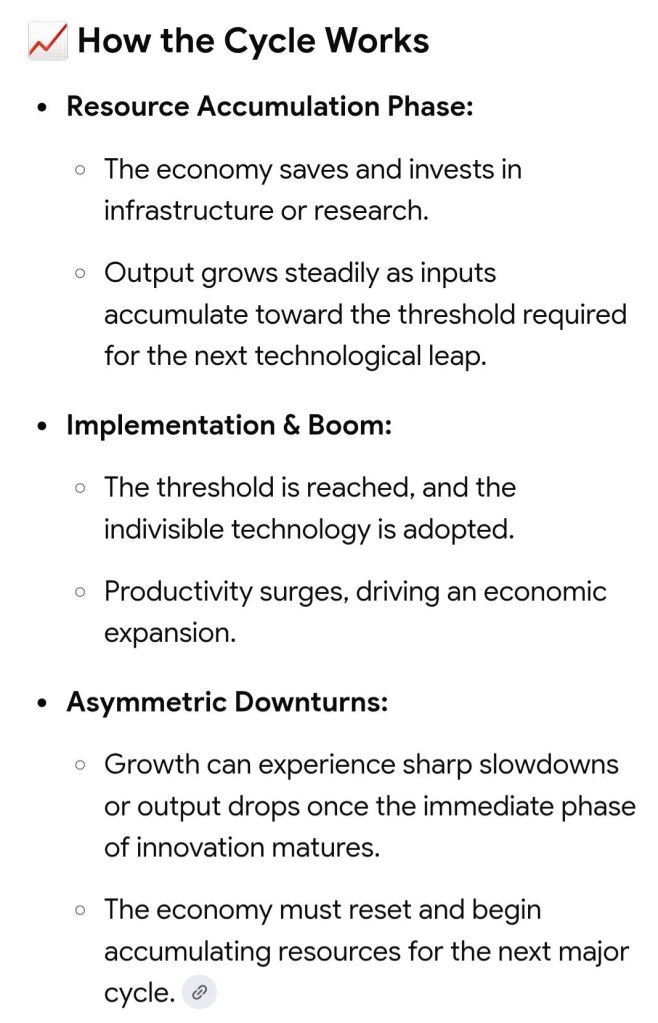
There are two reasons why I periodically write about the Laffer Curve. I want my left-leaning friends to understand to understand that higher tax rates on productive behavior will lead to less taxable income and some foregone tax revenue. I want my right-leaning friends to understand that tax cuts are only self-financing in rare cases […]
The U.K. Version of the Laffer Curve Strikes Again
29 Sep 2026 Leave a comment
in applied price theory, Austrian economics, development economics, economic history, growth disasters, growth miracles, liberalism, libertarianism, Marxist economics Tags: The Great Enrichment

I’ve addressed this issue in 2016 and 2021, so let’s continue this once-every-five-years tradition and ask whether supporters of economic liberty should stop advocating for “capitalism.” Instead, they should say they believe in “free enterprise” or the “free market.” I’ve used all of these terms, but polling data suggests that I’m making a mistake when […]
Capitalism or Free Enterprise?
29 Sep 2026 Leave a comment
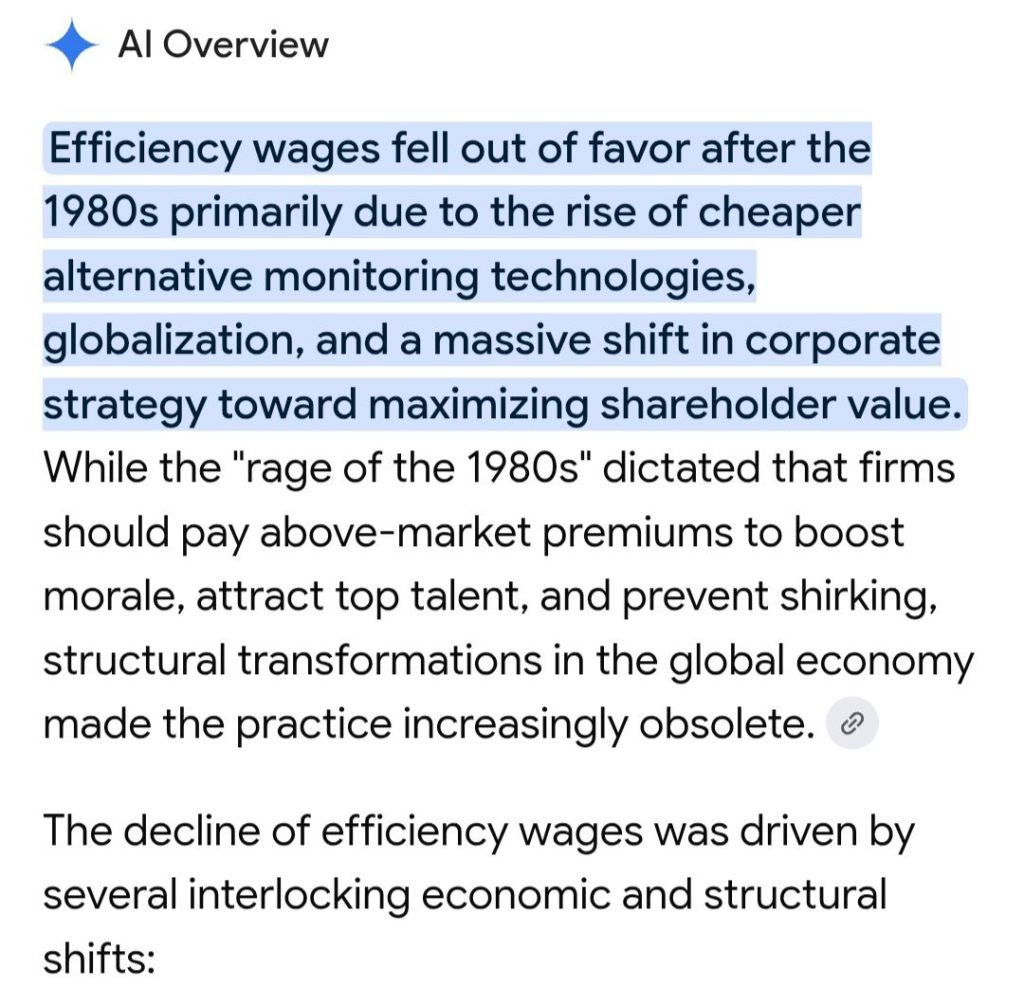
in applied price theory, economic history, history of economic thought, human capital, industrial organisation, international economics, labour economics, labour supply, occupational choice, poverty and inequality, survivor principle, unemployment Tags: efficiency wage

27 Sep 2026 Leave a comment
in politics - New Zealand, law and economics, property rights, economic history Tags: constitutional law
David Lupton has said that he thinks the Treaty itself should be put into legislation (as TPM advocates), not the principles. He sets out why below. The post Guest Post: Giving Modern Legal Effect to Te Tiriti o Waitangi first appeared on Kiwiblog.
Guest Post: Giving Modern Legal Effect to Te Tiriti o Waitangi
27 Sep 2026 Leave a comment
in applied price theory, business cycles, economic history, economics of regulation, global financial crisis (GFC), great depression, great recession, history of economic thought, industrial organisation, macroeconomics, monetary economics, politics - USA, Public Choice, rentseeking, survivor principle Tags: deposit insurance
8 November 2022
Committee Secretariat
Finance and Expenditure Select Committee
Parliament Buildings
Wellington
This submission has been prepared for the New Zealand Taxpayers’ Union by Research Fellow Jim Rose. Jim is an economist with three decades’ experience in the public sector in New Zealand and Australia. He has worked at the Ministry of Business, Innovation and Employment, the Department of Labour, the Ministry of Social Development, and the New Zealand Treasury, and in Canberra for the Productivity Commission, the Department of Prime Minister and Cabinet, and the Department of Finance. Jim has a master’s degree in economics from the Australian National University and a master’s degree in public policy from the National Graduate Institute for Policy Studies in Tokyo.
Founded by David Farrar and Jordan Williams in 2013, the Taxpayers’ Union’s mission is Lower Taxes, Less Waste, More Transparency.
We enjoy the support of some 200,000 registered members and supporters, making us the most popular campaign group championing fiscal conservatism and transparency. We are funded by our thousands of donors and approximately three percent of our income is from membership dues and donations from private industry.
We are a lobby group not a think tank. Our grassroots advocacy model is based on international taxpayer-group counterparts, particularly in the United Kingdom and Canada, and similar to campaign organisations on the left, such as Australia’s Get Up, New Zealand’s ActionStation, and Greenpeace.
The Union is a member of the World Taxpayers Associations – a coalition of taxpayer advocacy groups representing millions of taxpayers across more than 60 countries.
We give permission for the Select Committee to publish this submission.
We wish to speak to this submission in front of the Committee.
This submission on behalf the Taxpayers’ Union is limited to opposing the proposal in the Deposit Takers Bill to offer $100,000 in Crown deposit insurance per depositor per institution to deposit-taking finance companies. There will, however, be a short discussion on the insurance premium that deposit takers such as banks, finance companies, credit unions, and building societies will have to pay for their Crown deposit insurance.
This submission builds on a letter on behalf of the Taxpayers’ Union to the Minister of Finance in late 2020 and a submission to the public consultation on the draft Deposit Takers Bill last year. The Taxpayers’ Union met with the Treasury and Reserve Bank in October 2020.
We submit that implementing deposit insurance for finance companies would be a short-sighted policy and must be considered a policy option distinct from deposit insurance only for banks.
The previous Crown deposit guarantee scheme is barely mentioned in the thousands of pages sent to the Minister and the Cabinet as part of the review of the Reserve Bank legislation. This is especially disappointing considering the highly critical remarks in the Auditor-General’s 2011 review of the implementation of the 2008-2011 Crown retail deposit guarantee scheme by the Treasury.
Now as then, the Treasury and the Reserve Bank appear to be aloof to the mercurial nature of deposit insurance as a policy instrument. It can bite back at the taxpayer big time as the 2008-2011 scheme certainly did. The proposed deposit guarantee has not been jumbled together in a few days as was the guarantee cobbled together at the height of the GFC. This reincarnation is years in the making.
The Auditor-General’s 2011 review found that the Treasury was focused on how to pay out depositors with little regard to how to reduce risk to the Crown by offering deposit insurance to failing finance companies. Indeed, the Crown deposit guarantee was renewed for South Canterbury Finance despite the Treasury having concluded at the time that the finance company was likely to fail.
The Treasury received the inspector’s report on 17 July 2009. The report reaffirmed the seriousness of the risk factors suspected with the books and management of South Canterbury Finance. From April to August 2009, the Treasury investigated the affairs of South Canterbury Finance extensively. On 12 August 2009, the Treasury made a provision for the estimated loss if South Canterbury Finance failed. This provision reflected the Treasury’s judgment that South Canterbury Finance was more likely than not to fail. The provision was made with the benefit of the inspector’s report (Auditor-General 2011, p.103).
Would a fair deposit insurance premium towards the end be perhaps up to one-half of South Canterbury Finance’s deposits under a Crown guarantee? To quote the Audit report again:
The Treasury’s monthly financial statements did not include any provisions for pay-outs under the Scheme until June 2009, when the provision was estimated at $0.8 billion. The Treasury knew before June 2009 that further failures of finance companies were likely, so this information should have been better reflected in the monthly financial statements earlier than June 2009 (Auditor-General 2011, p.94).
About $1.6 billion of the $2 billion in initial losses to the Crown from the deposit guarantee scheme was from the failure of South Canterbury Finance. The Treasury didn’t face up to the facts as early as it should have with the 2008-2011 Crown deposit guarantee to finance companies. History is repeating.
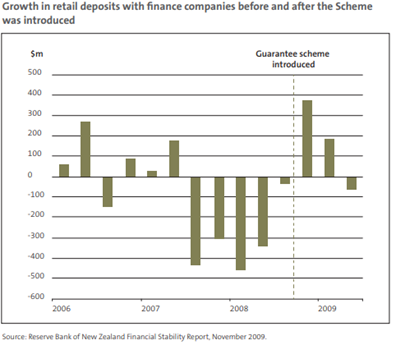
After bleeding money in 2007 and 2008, there is a surge in deposits after the 2008 Crown guarantee for finance companies, as in the chart below from the report by the Auditor-General (2011). South Canterbury Finance grew by 25% in deposits after the Crown guarantee (Auditor-General 2011); deposits in South Canterbury Finance increased from $75 million in 2004 to $2 billion in 2008 (O’Sullivan 2015); another company grew from $800,000 in deposits to $8 million in deposits off the back of the Crown retail deposit guarantee (Auditor-General, 2011).
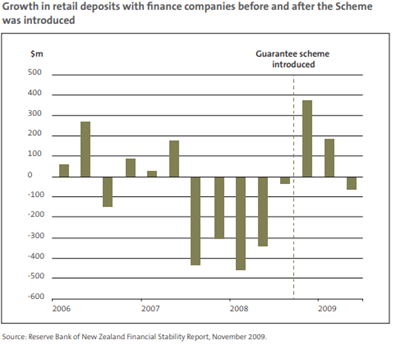
There is no discussion in the Treasury and Reserve Bank papers of the implications of the guarantee for a resurgence of investor interest in what is an intrinsically riskier sector. There is no mention in the Reserve Bank and Treasury review papers of the massive surge in investment in finance companies after the 2008 Crown retail deposit guarantee, as shown in the above chart from the report by the Auditor-General. Instead of bleeding $500 million every quarter as in the lead up to the GFC, $600 million flooded back into the sector off the back of the Crown retail deposit guarantee.
The proposition that depositors will invest in higher risk returns if they are government insured is well-established. The burst of deposits back into the finance company sector after the government guarantee in New Zealand is not an anomaly to be dismissed. Instead, a resurgence in growth in the finance company sector is inevitable if the Bill continues to include deposit insurance for the sector.
Martin, Puri, and Ufier (2018) examined the daily account level balances of a distressed bank in the USA at the height of the GFC. They studied the outflow (bank run-off) of uninsured depositors and the inflow (bank run-in) of insured deposits as this bank was in its death throes. The maximum level of federal deposit insurance increased from $100,000 to $250,000 per account holder as a stabilisation measure at the height of the GFC in 2008.
Martin, Puri, and Ufier (2018) found that this failing bank was able to replace about 1/3rd of its depositor base in its last year of life, despite public knowledge of the intensive regulatory scrutiny of its declining condition. Much of these new deposits came in in the last 90 days of the bank. The bank’s regulatory filings spoke of being significantly under-capitalised and then being critically under-capitalised. The new deposits were almost all term deposits paying slightly above market interest rates and were just under the Federal Deposit Insurance Corporation insurance limit. These deposits initially bunched at the $100,000 dollar limit, then bunched at the $250,000 insurance limit when this limit was increased at the height of the GFC in October 2008.
Iyer, Jensen, Johannesen and Sheridan (2019) had access to all personal deposit accounts and their balances in Denmark when they studied changes in deposit insurance for Danish banks. The Danish government guaranteed all bank liabilities in 2008. Prior to the GFC, deposit insurance was limited to 300,000 Danish kroner. The Danish government later limited deposit insurance to 750,000 Danish kroner in 2011. The Danish government also named six Danish banks as too big to fail.
Iyer, Jensen, Johannesen and Sheridan (2019) found that for the banks that were not too big to fail, accounts clustered around the insurance limit of 750,000 Danish kroner. There was no similar bunching of deposits at the deposit insurance limit for the six large banks deemed by the Danish Government to be too big to fail. Canny Danish depositors quickly sifted out where their deposits were fully guaranteed by the Danish government and where they were only partially guaranteed.
Iyer, Jensen, Johannesen and Sheridan (2019) also found the deposits above the insurance limit of 750,000 Danish kroner halved in the smaller banks that were not too big to fail but fell only by 20% in the six large banks that were publically marked by the Danish government as too big to fail.
Belgian depositors were just as canny as their Danish counterparts in sifting through the incentives behind explicit and implicit government guarantees. Atmaca, Kirschenmann, Ongena and Schoors (2020) used micro-data on 300,000 Belgian depositors of a large European bank during 2008 and 2009. In November 2008, Belgian deposit insurance was increased from €20,000 to €100,000 per customer-bank relation. The bank under study was, like several other EU banks, first nationalised and then re-privatised. In the run up to the GFC, more and more depositors limited their deposits to €20,000 for full coverage. Once coverage is increased to €100,000, €100,000 bunching largely substituted for €20,000 bunching. This €100,000 bunching faded away during the period of nationalisation, when implicit blanket guarantees applied. Bunching then returned in full force once the bank was re-privatised and the new €100,000 coverage limit becomes the binding guarantee for the depositors.
The record with the Crown deposit guarantee scheme between 2008 and 2011 and the overseas experience with changes in deposit insurance limits show conclusively that investors will run back into the sector if the finance companies are once again provided with Crown deposit insurance.
But the biggest error of all is repeated, both now and back at the height of the GFC, finance companies are being included in the deposit guarantee scheme very much as an afterthought. Obvious arguments as to why they should not be included have been missed.
To begin with, 28 finance companies failed in the preceding two years with no implications for the stability of the banking system. At their peak, there were about 65 finance companies in the country. Half of them failed inside two years with no implications for the stability of the banking system or public policy. As the then Governor of the Reserve Bank reflected later on his crisis management decision making about the finance companies:
At the end of 2006 and in early 2007, we started to hear about property finance companies in trouble. Most were very small, and as individual failures they did not greatly concern us. But in the second half of the 2007, bigger finance companies started to fall like flies. As each one entered into liquidation, receivership or moratorium, media speculation turned to the next. We saw angry scenes of elderly debenture holders haranguing hapless managers at meetings. The pattern seemed clear: poor governance, spider-web company structures, vulnerable business models, mismatched balance sheets, bad management and inadequate supervision by the trustee companies.
At the Reserve Bank we started to worry: were the combined failures big enough to lead to a deposit run on the banks? The answer seemed to be no; in fact the banks were benefitting from a flight to quality. Did the failures point to fragile business models and practices in the banks themselves? Again, we thought not, the banks being much more sophisticated organisations than many finance companies (Bollard 2012).
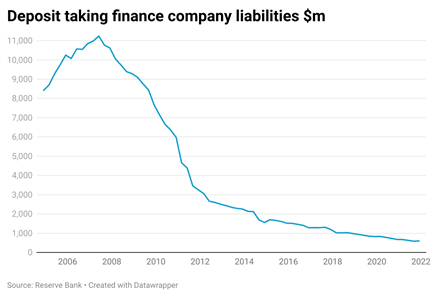
There are now six finance companies in New Zealand with their asset-based barely exceeding $1/2 billion, less than 1/20th of the deposit base of the sector prior to the GFC as the chart below shows. The inclusion of finance companies in the Crown guarantee was a dubious decision in 2008 when the finance company sector was more than 20 times its current size.
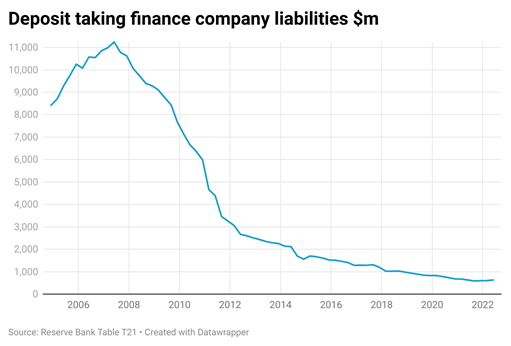
Six tiny finance companies plus a Christian charity engaged in social lending are irrelevant to the stability of the New Zealand financial system. These six and a Christian charity lender are all that is left of a sector that grew by 1/3rd in the four years before the GFC, by $4 billion, then quickly shrunk by nearly 90% in the aftermath of the GFC to 2017 and then continued in a further long decline.
Not only did the finance company sector shrink by 90% between 2008 and 2017, the sector shrunk a further 50% over the course of the review of the Reserve Bank legislation, which started with the change of government in 2017 and resulted in earlier legislation and now with the Deposit Takers Bill. The fact that the sector has almost faded away to oblivion was not highlighted in any of the official advice to ministers. Taxpayers, the Parliament and this Select Committee deserve better advice and research from the Treasury and the Reserve Bank.
There have been one or two Ponzi scheme prosecutions by the Serious Fraud Office almost every year since the GFC, according to an Official Information Act Response to us from that Office. There is no mention of Ponzi schemes in the consultation documents written by the Treasury or Reserve Bank.
The Serious Fraud Office have told us that they have not received any communication from the Treasury or the Reserve Bank about criminal offending in the finance company sector according to Official Information Act responses. There is no mention in the Treasury and Reserve Bank papers on deposit insurance of the 20 convictions obtained by the Serious Fraud Office against nine finance companies between 2007 and 2010. The South Canterbury Finance prosecution alleging a $1.6 billion fraud in obtaining the Crown deposit guarantee came later. That Serious Fraud Office prosecution was unsuccessful.
After the South Canterbury Finance prosecution and 20 other successful prosecutions, we submit that it was a basic responsibility of the Treasury and Reserve Bank to go to the Serious Fraud Office for advice on the extent of sharp practice in the finance company sector. The Treasury and the Bank have let taxpayers down. None of the Treasury and Reserve Bank advice to ministers warned of the fraud all too common in that sector despite our written urgings to them to do so in October 2020 and in mid-2021.
Fraud is more likely in the finance company sector because they are owner-operated concerns or privately held. The owners can directly benefit by resort to a Ponzi scheme. Ponzi schemes such as the Bernie Madoff scheme are often a last ditch response to declining deposits. New deposits are paid out as returns on the investment in the hope that things will turn around shortly, but they rarely do.
The banks are run by professional staff who do not want to jeopardise their careers with sharp practice. Indeed, bankers are notoriously conservative; the origin of the bonus culture in banking was to find some way for the shareholders in a bank to introduce a little bit more risk into the lending decisions of the bank’s managers (Laeven 2013). Banks have professional and independent auditors, both internal and external, as well as overseas owners keen to protect their global brands. There is also no way for miscreant staff to divert the proceeds of a Ponzi scheme into their pockets. None of these safeguards apply to the finance company sector. The more than 20 prosecutions in the finance company sector after the introduction of 2008-2011 Crown deposit guarantee scheme should make the Treasury, the Reserve Bank, and ministers and now the Select Committee wary of the sector.
Fraud at the fringes of the financial sector is not rare overseas. The American taxpayer paid out over $150 billion in the 1980s on deposit insurance to their equivalent of our building societies. At least $53 billion was lost to 1,000 Saving and Loan (S&L) associations, where there were fraud convictions (Akerlof and Romer 1993). The failure of thousands of these savings and loan associations had no implications for the stability of American banking (Gorton and Tallman 2018). The era that encompassed the S&L crisis was known as the Great Moderation because the sustained real US real GDP growth between 1983 and 2007 was punctuated by only two short recessions.
There were five criminal prosecutions of Ponzi schemes in 2013 alone and four more the next year. The Reserve Bank Governor cannot testify regularly in court about signing off on yet another finance company Ponzi scheme without job consequences. The Bank must be beyond reproach.
As a precaution against even the breath of a finance company Ponzi scheme scandal touching the Reserve Bank, the administration of any deposit insurance scheme should be squarely the responsibility of the Treasury. What is left of the international reputation of our Reserve Bank for independence and inflation targeting cannot be placed at risk because of a need to consider dismissing a Governor who yet again signs off on what turns out to be a Ponzi scheme.
The proposed extension of deposit insurance to the finance company sector is not the extension of the tried-and-true policy instrument; deposit insurance is not a safe pair of hands. Reasonable people can disagree on its merits for banks. The question is does moral hazard offset any stabilising influence deposit insurance might have in a banking crisis (Allen, Carletti, Goldstein and Leonello 2018; Gorton and Winton 2003). This ambiguous reputation is not gleaned from the thousands of pages of writings of the Treasury and Reserve Bank as part of the Reserve Bank Act review.
Federal deposit insurance was the only bill in the New Deal 100 days legislation opposed by President Roosevelt, the Treasury, the Federal Reserve Board, and the American Bankers Association (Calomiris and White 1994). In the depths of the Great Depression, on the heels of the four-day federal bank holiday and off the back of many thousands of banks closing, the Roosevelt administration regarded deposit insurance as too risky a bet in the deepest financial crisis in American history.
The congressional and public debates in 1933 were sophisticated regarding the issues of moral hazard and adverse selection (Calomiris and White 1994). It was well known that the eight state deposit insurance schemes failed because of fraud and risky lending by the banks. When deposit insurance by the state governments was voluntary, only the riskier banks joined, and they were more likely to fail after joining (Calomiris and White 1994).
Deposit insurance was a backroom deal to keep in business the tens of thousands of American banks that only had one office and highly undiversified lending portfolios (Calomiris and White 1994). Most of America’s 40,000 banks in the mid-1920s had only one office. Of the over 9,000 banks that failed between 1929 and 1993 in the Great Depression, barely a handful of the failed banks were banks with branches (Calomiris 2009, 2011, 2013). Deposit insurance took effect in 1934, which is after US banking had stabilised in the Great Depression (Gorton and Winton 2003). The better policy choice came a one-half a century later with the repeal of state and federal restrictions on intrastate and interstate branching to allow for a diversification of lending portfolios.
Canada was the next country to have adopted deposit insurance in 1967 for banks and mortgage companies. Again, it was a backroom deal; mortgage companies obtained federal deposit guarantees in return for not opposing the entry of trading banks into the mortgage business (Carr, Mathewson and Quigley 1995). A glaring anomaly in debates about bank crises is the tenacious stability of Canadian banking (Bordo, Redish and Rockoff 2015). The last bank failure, bar one, in Canada was in 1923. Canada’s banking system sailed through the Great Depression and the GFC because it had large banks with diversified portfolios (Bordo and Redish 1987; Bordo, Redish and Rockoff 2015).
Papers by Bryant (1980) and Diamond and Dybvig (1983) significantly improved the academic reputation of the concept of deposit insurance schemes. Banks have a maturity mismatch in their balance sheets, which they say is to blame for bank runs. Deposits are payable on demand, but most of these deposits finance long-term loans such as mortgages. A rumour may start that more customers than the bank’s cash reserves can cope with are about to withdraw their deposits. Regardless of whether this rumour is true, it can send depositors rushing to withdraw their money.
Diamond and Dybvig (1983) argued that if too many depositors suddenly seek to withdraw, the bank will run out of cash despite being solvent. In a run, depositors are not reacting to news about the quality of the bank’s portfolio. Instead, they are withdrawing because they see others queuing up to do so and do not want to be left with a deposit in a bank with no cash reserves and teetering on bankruptcy. The bank fails because the panic forces the bank to sell good assets in a fire-sale.
Importantly, in the Diamond-Dybvig model of bank panics, if there is government-supplied deposit insurance or there is a central bank acting as a lender of last resort, depositors do not initiate bank runs, as they trust that their deposits are safely insured by the taxpayer. The icing on the cake is that the deposit insurance under this Diamond-Dybvig scenario costs the taxpayer nothing because there are no bank panics to stem. But on closer inspection, deposit insurance is a high stakes trade-off:
What can be done to mitigate the risk of self-fulfilling panic? As Diamond and Dybvig noted, a government backstop — either deposit insurance, the willingness of the central bank to lend money to troubled banks or both — can short-circuit potential crises. Indeed, the mere knowledge that a backstop exists can often quell a bank run; no money need actually change hands. But providing such a backstop raises the possibility of abuse; banks may take on undue risks because they know they’ll be bailed out if things go wrong. Case in point: the huge costs to taxpayers of bailing out irresponsible players during the savings and loans crisis in the 1980s. So banks need to be regulated as well as backstopped. As I said, the Diamond-Dybvig analysis had remarkably large implications for policy. (Krugman 2022).
The Diamond-Dybvig model of banking explains how sound banks can fail in a crisis of the back of just rumours and how depositor panic can spread from one bank to another. The Diamond and Dybvig model of banking crises certainly is popular because these two authors just shared the Nobel Prize in economics in 2022 with former Fed chair Ben Bernanke.
During the GFC, many governments seemed to see Diamond and Dybvig type panic-based bank runs everywhere and used bank deposit guarantees to quell the financial panic. As Sargent observed:
When monetary policy authorities, deposit insurance authorities and others looked out their windows in the fall of 2008, they saw Bryant-Diamond-Dybvig bank runs all over the place. And the logic of the Bryant-Diamond-Dybvig model persuaded them that if they could arrest the runs by effectively convincing creditors that their loans—that is, their short-term deposits—to these “banks” were insured, that could be done at little or no eventual cost to the taxpayers. You could nip the run in the bud and really prevent the next Great Depression. This is a very optimistic view of those 2008 interventions enlightened by the Bryant and Diamond-Dybvig model (Rolick 2010).
Reasonable people can disagree over whether offering a government guarantee to the retail and wholesale deposits of banks and shadow banks was wise at the height of the GFC (Tarullo 2019; Bordo 2018; Gorton and Metrick 2013). It is a rear-guard action to argue that six finance companies that now barely cobble together $1/2 billion in assets warrant attention from the Minister of Finance when planning for the next banking crisis.
The purpose of the preceding and the coming discussions of deposit insurance is to show that setting up deposit insurance is a nuanced policy trade-off for banks but not so for finance companies. Finance companies are a sideshow in any financial crisis and certainly never seed a banking crisis.
Diamond and Dybvig were well-aware of the risk of moral hazard. They recommended a 1978 paper by Kareken and Wallace on deposit insurance because that paper was about what Diamond and Dybvig left out: moral hazard. Sargent (2010) summarises the Kareken and Wallace modelling as follows:
Kareken and Wallace compare that no-deposit-insurance situation to another situation in which a government agency provides deposit insurance that is either free or is priced too cheaply, meaning that it’s not priced with a proper risk-loading. Kareken and Wallace show that in that situation, banks have an incentive to become as risky as possible, and as large as possible. Therefore, with a positive probability, banks will fail and taxpayers will have to compensate banks’ depositors. It is in banks’ shareholders’ interest that the banks organize themselves this way. This lets them gamble with the insurers’ and depositors’ money. The Kareken and Wallace model’s prediction is that if a government sets up deposit insurance and doesn’t regulate bank portfolios to prevent them from taking too much risk, the government is setting the stage for a financial crisis (Roleck 2010).
From this angle, deposit insurance is now a pure bad that encourages risk-taking and crises unless bank portfolios are successfully regulated. The literature on regulation of bank portfolios is one of profound subtlety, where the correct amount of capital banks must hold is subject to intense debate (Aiyar, Calomiris and Wieladek 2015). The spotty record of regulators before the GFC also throws doubt on their ability to do better next time (Calomiris 2011, 2013). It is still debated as to whether the regulatory response to the GFC made things worse rather than better (Tarullo 2019).
Gropp, Gruendi and Guettler (2014) studied the response of 452 German savings banks after government guarantees were removed, following a lawsuit in the European Court of Justice in 2001. As a group, savings banks in Germany had assets totalling €1 trillion Euro and 22,000 branches. Gropp, Gruendi and Guettler (2014) found that the German savings banks cut off their most risky borrowers and raised interest rates to the rest after the deposit guarantee was removed. There were no similar effects in the control group of German banks to whom the guarantee was not applicable.
Lambert, North and Schuwer (2017) looked at what happened to insured deposits in 1,300 federally insured banks in the USA when their deposit insurance coverage was increased in October 2008 from $100,000 to $250,000. For some banks, the amount of insured deposits increased significantly. The most affected banks were found to increase their loans to risky commercial real estate, when compared to those banks that were largely unaffected by the deposit insurance limit change.
The studies by Martin, Puri, and Ufier (2018), Iyer, Jensen, Johannesen and Sheridan (2019), Gropp, Gruendi and Guettler (2014) and Lambert, North and Schuwer (2017) show that depositors chase down government-insured higher returns and that bankers take more risks when deposits are insured. The papers published by the Treasury and Reserve Bank to justify deposit insurance just don’t pick up on the nuances in the theoretical and empirical literature such as summarised by Thomas Sargent:
So, of those two models, the Kareken-Wallace model makes you very cautious about lender-of-last-resort facilities and very sensitive to the risk-taking activities of banks. The Diamond-Dybvig and Bryant model makes you very sensitive to runs and very optimistic about the ability of insurance to cure them. Both models leave something out, and I think in the real world we’re in a situation where we have to worry about runs and we also have to worry about moral hazard (Roleck 2010).
The policy trade-off regarding deposit insurance for banks is staving off bank runs while inviting banks to take on more risk in their lending. This is a far greater risk for US banks than for New Zealand banks, because the US still has thousands of small banks with less diversified loan portfolios (Calomiris 2008, 2011, 2013; Gorton and Winton 2003). The number of federally insured commercial banks in the US was 14,146 in 1934, 14,384 in 1975, 8,300 in 2000 and 4,377 in 2020. So many small banks in the US with few, if any branches, is why bank panics and bank runs are regarded as very much an American phenomenon in the economic literature, as Gorton and Winton (2003) explain:
On the basis of the stylized facts about cross-country banking history … it would seem straightforward to observe that banks are not fundamentally flawed institutions. In fact, it does not seem to be an exaggeration to say that most of the theoretical work on panics has been motivated by the USA experience, which has then been incorrectly generalized. Panics simply are not a feature of most economies that have banks. The world is more complicated; industrial organization seems to be at the center of the incidence of panics. Not surprisingly, therefore, almost all the empirical work on panics has been on the USA experience. Until bank “crises” around the world in the last ten years, there simply has not been much else to study (Gorton and Winton 2003, p. 508).
A British banking scholar would be likely to remember the names of each of their banks that failed over the last 200 years. Northern Rock is the only British bank to have failed since 1866. By contrast, banks fail every year in the USA, as in the Federal Deposit Insurance Corporation chart reproduced below that includes the hundreds of bank failures during and after the GFC. A total of 1,617 federally insured banks failed between 1980 and 1994 (Hane 1998).
(Source: Federal Deposit Insurance Corporation)
There were many more banking crises over the last 40 years around the world. Their most common cause was ever more generous safety nets, including the moral hazard arising from the proliferation of deposit insurance starting in the 1970s and 1980s. The leading scholar in the field finds:
Recent research that investigates the determinants of banking fragility across different countries in the current era reaches a similar conclusion: the expansion of government-sponsored deposit insurance and other bank safety net programs throughout the world in the past three decades accounts very well for the increasing frequency and severity of banking crises in the current era. Empirical studies of this era of unprecedented frequency and severity of banking system losses has concluded uniformly that deposit insurance and other policies that protect banks from market discipline, intended as a cure for instability, have instead become the single greatest source of banking instability (Calomiris 2009).
The Deposit Takers Bill plans to extend to the finance company sector what is a contentious policy instrument in the banking sector. Deposit insurance invites risk-taking but its redeeming feature is once the banking crisis it may have seeded occurs, it may quell a bank run or panic. When pondering deposit insurance for banks, the trade-off between the incentive to take more risks and seed a crisis must be weighed against the stabilising influence of deposit insurance when there is a crisis and the possibility of bank runs (Allen, Carletti, Goldstein and Leonello 2018; Gorton and Winton 2003).
What is lost in the advice to ministers and now to Parliament is that temporary guarantees of bank deposits at the height of financial crises can be in theory implemented with little cost to taxpayers. Crisis management tools such as the temporary system-wide deposit guarantees for banks in the GFC have little to do with the case for permanent deposit insurance for banks or finance companies.
Most countries initially manage banks in distress through the lender of last resort function. The central bank lends to a bank in distress against good collateral at a high rate (Bordo 1990, 2018; Gorton and Metrick 2013). The Reserve Bank would help an individual bank through its difficulties while its loans are restructured and the bank perhaps recapitalised. Any risk from lending against compromised assets of the distressed bank is factored into the interest rate charged with the capital base of that distressed bank acting as a buffer against further losses on a lender of last resort loan. No one suggests that finance companies should have lender of last resort access.
The possibility of bank failures is best dealt with by adequate capital ratios. The Reserve Bank was planning to require banks to increase their capital ratios but postponed this because of Covid-19. As a crisis prevention tool, higher capital adequacy ratios make banks sturdier. Higher capital ratios make even those banks that regard themselves as “too big to fail” sturdier. This contrasts with deposit insurance, which invites insured institutions, big and small, and depositors to take on more risk. Higher capital adequacy ratios create a larger buffer against bad loans undermining a bank, big or small.
Reasonable people can disagree on whether deposit insurance destabilises the financial system by incentivising risk-taking more than it stabilises it by calming potential depositor panics during a crisis:
Theory suggests that deposit insurance can either increase or decrease banking system risk. On the one hand, credible deposit insurance can make the banking system more stable by reducing liquidity risk. It does so by removing the incentive of depositors to withdraw funds from banks when bank risk increases. On the other hand, deposit insurance may be a source of “moral hazard”—it may increase the risk appetite of banks because their ability to attract deposits no longer reflects the risk of their portfolios. Deposit insurance can also cause “adverse selection,” including as the result of unwitting increases in risk when the absence of market discipline permits poor risk managers to operate banks. If the capital position and asset risk of banks are not regulated and supervised carefully, the insurance-induced risk taking may increase insolvency risk and undermine financial stability in the long run, despite the liquidity risk reductions that deposit insurance creates (Calomiris and Chen 2020).
The debate over deposit insurance for banks is nuanced. Observers must listen carefully to the competing arguments before making up their mind (Demirgüç-Kunt, Kane, and Laeven 2008; Calomiris and Jaremski 2016). Readers must also guard against the protagonists making incorrect generalisations from the uniquely fragile US banking system, past and present (Gorton and Winston 2003). No such policy trade-off exists between moral hazard and better financial and banking system crisis management when making the case for deposit insurance for finance companies.
The six finance companies with barely $1/2 billion in assets between them will have no role in future financial crises. The sector is at the edge of oblivion; one-twentieth of its size at the eve of the GFC.
The only policy issue here is that deposit insurance will encourage greater risk taking when finance company deposits are insured by the Crown. What do taxpayers get back in return for this windfall to the finance company sector? The higher returns in the finance company sector comes off the back of greater risk taking. Everyone knows that. At some point we must expect their investors to just beware.
As it stands, taxpayers will not know how much they will pay for deposit insurance until the Minister of Finance issues a Statement of Funding after the Bill is passed. Only then will depositors know how much they will pay and how quickly the Minister wants to accumulate the fund. That is unsatisfactory. We cannot submit our views to the Select Committee on the premium without such an estimate.
The discussion of the deposit insurance premium in the papers by the Treasury and the Reserve Bank focused on how long it will take to build a fund of a certain size relative the deposits to be insured. The Bank refers to 0.2% per year as a reasonable rate for the deposit insurance premium:
Looking at countries with banking systems and per capita GDP similar to New Zealand, a target size for a domestic insurance scheme of 2 percent of insured deposits would be large. At a per-depositor insurance limit of $30,000-$50,000, this implies an insurance fund of around $2-3 billion (Table 5B). The Review Team estimates this could be built up over a decade through a levy of 5 percent of the banking sector’s annual profits, or a premium of 20-basis points on banks’ insured deposits (Reserve Bank 2019, p. 92)
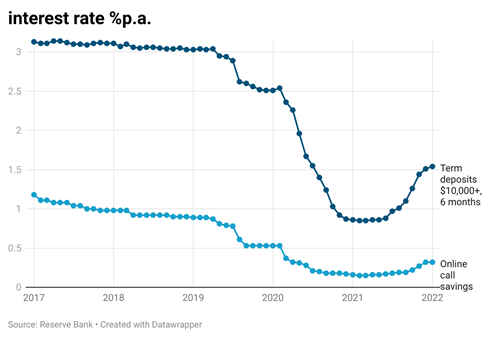
That was said in a 2019 consultation paper. A deposit insurance premium of 20-basis points was about equal to the return on an online call account a mere year ago before the sharp spike in inflation and nominal interest rates – see the chart below. The same chart shows that term deposit rates were closing in on the 20-basis points deposit insurance premium and that gap charted below is before tax.
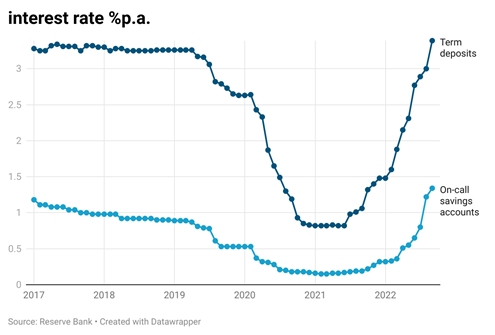
Interest rates on term deposits and on online call accounts dropped by about two thirds over the course of the review of the Reserve Bank legislation which started after the 2017 election. Deposit insurance has moved from clipping a small part of the interest rate return on deposits in 2019 to taking most or all of it in 2021 and still in 2022 after the spike in recent inflation is accounted for.
The estimate of a 20-basis point deposit insurance premium was for advice from the Reserve Bank and Treasury to have a deposit insurance limit per depositor of $30,000 to $50,000. The Bill has a much larger deposit insurance limit of $100,000. It will either take many decades to build up to the reserve fund target or the deposit insurance premiums for banks must be much more than 20-basis points.
The need for deposit insurance premiums to be risk rated for different institutions is mentioned in a sentence or two in the discussion papers and regulatory impact statement but there is no suggestion as to how high these premiums might go for different institutions including finance companies.
Before the surge in inflation, the interest rate paid by finance companies on six-month deposits was up to twice that of banks. A fair insurance premium for deposit takers in the finance company sector would be large given their previous experience with risky lending, with related party lending and exposure to real estate development. Prior to the GFC, all but five of the sixty odd finance companies lacked a credit agency rating. South Canterbury Finance was BBB rated when its deposits were guaranteed by the Crown in 2008. All but one of the six now remaining finance companies have credit agency ratings at a BB standing or less or no credit agency rating at all; see the table below.
| Finance company | Credit rating agency | Rating and outlook |
| Christian Savings Limited | Fitch Ratings | BB+, Stable |
| FE Investments Limited (in receivership) | n/a | Credit ratings have been withdrawn |
| Finance Direct Limited | n/a | Exempt |
| General Finance Limited | Equifax | BB-, Stable |
| Gold Band Finance Limited | n/a | Exempt |
| Liberty Financial Limited | Standard & Poor’s | BBB-, Stable |
| Mutual Credit Finance Limited | n/a | Exempt |
| Xceda Finance Limited | Equifax | B, Stable |
Source: Reserve Bank at https://www.rbnz.govt.nz/regulation-and-supervision/cross-sector-oversight/registers-of-entities-we-regulate/register-of-non-bank-deposit-takers-in-new-zealand
The BBB credit rating suggests investment grade; BB means a higher probability for default. BB and B bonds fall in the category of junk bonds, high-yield bonds, or speculative instruments. The B rating suggests a company can meet its financial commitments but may be left highly exposed to adverse economic conditions. For Moody’s, BB and B bonds are speculative and “subject to a substantial risk of defaulting on certain senior operating obligations and other contractual commitments.” It is a disservice to the taxpayer to contemplate deposit insurance for a sector that trades in junk bonds.
The previous pages presented ample evidence that investors watch interest rates keenly especially if higher but riskier returns that are government insured come on the market. Crown deposit insurance will encourage retirees to re-enter the finance company sector. Who wouldn’t be tempted to increase the returns on their retirement savings for no extra risk because of a Crown deposit guarantee? A canny retiree would deposit $100,000 with each of the six finance companies to bet on a sure thing.
Yours faithfully,
New Zealand Taxpayers’ Union Inc.
Jim Rose
Research Fellow
Jim@taxpayers.org.nz
Aiyar, Shekhar & Charles W Calomiris & Tomasz Wieladek, 2015. “Bank Capital Regulation: Theory, Empirics, and Policy,” IMF Economic Review vol. 63 (4), pp. 955-983, November.
Akerlof, George A., and Paul M. Romer, 1993. “Looting: The Economic Underworld of Bankruptcy for Profit,” Brookings Papers on Economic Activity vol. 24(2), pp. 1-74.
Allen, Franklin, Elena Carletti, Itay Goldstein and Agnese Leonello 2018. “Government guarantees and financial stability”. Journal of Economic Theory, Vol 177 pp. 518-557.
Atmaca, S, K Kirschenmann, S Ongena and K Schoors (2020), “Deposit insurance, bank ownership and depositor behavior”, CEPR Discussion Paper 15547.
Auditor-General 2011. The Treasury: Implementing and managing the Crown Retail Deposit Guarantee Scheme. Office of the Auditor-General, Wellington.
Bordo, Michael D. “The Lender of Last Resort: Alternative Views and Historical Experience.” Economic Review (Federal Reserve Bank of Richmond), Vol. 76/1, pp. 18-29, (January/February 1990).
Bordo, Michael D. 2018. “An Historical Perspective on the Quest for Financial Stability and the Monetary Policy Regime,” The Journal of Economic History, vol 78(2), pp. 319-357.
Bordo, Michael D. and Angela Redish. “Why did the Bank of Canada Emerge in 1935?” Journal of Economic History, Vol. XLVII, No. 2, June 1987, pp. 405-4 17.
Bordo, Michael D., Angela Redish and Hugh Rockoff, 2015. “Why didn’t Canada have a banking crisis in 2008 (or in 1930, or 1907, or …)?,” The Economic History Review, vol 68 (1), pp. 218-243.
Bryant, John. 1980. “A Model of Reserves, Bank Runs, and Deposit Insurance”. Journal of Banking & Finance 4(4), pp. 335–44.
Calomiris, Charles W., “Banking Crises,” In New Palgrave Dictionary of Economics, 2nd Edition, edited by Steven Durlauf and Lawrence Blume, 2009.
Calomiris, Charles W., “Banking crises yesterday and today,” Financial History Review, Cambridge University Press, vol. 17 (1), pp. 3-12, April 2010.
Calomiris, Charles W., “Banking Crises and the Rules of the Game,” In Monetary and Banking History: Essays in Honour of Forrest Capie, edited by Geoffrey Wood, Terence Mills, and Nicholas Crafts, Routledge, 2011, pp. 88-132.
Calomiris, Charles W., “Banking Fragility of the United States, 1790-2009”. In Handbook of Key Global Financial Markets, Institutions, and Infrastructure, edited by Gerard Caprio, Charles W. Calomiris, and Larry Neal. London: Elsevier Press, 2013.
Calomiris, Charles W. and Sophia Chen, 2020. “The Spread of Deposit Insurance and the Global Rise in Bank Asset Risk since the 1970s,” Journal of Financial Intermediation, January.
Calomiris, Charles W. and Matthew Jaremski, 2016. “Deposit Insurance: Theories and Facts,” Annual Review of Financial Economics, vol. 8(1), pages 97-120, October.
Calomiris, Charles W., and E. N. White. “The Origins of Federal Deposit Insurance”, In The Regulated Economy: A Historical Approach to Political Economy, C. Goldin and G. Libecap (eds.), NBER, University of Chicago Press, 1994, pp. 145-188.
Carr, Jack, Frank Mathewson and Neil Quigley. “The Economics of Canadian Deposit Insurance.” Department of Economics Research Reports, 9502. London, ON: Department of Economics, University of Western Ontario (1995).
Demirgüç-Kunt, A., E.J. Kane, and L. Laeven (eds.), 2008, Deposit Insurance around the World: Issues of Design and Implementation (Cambridge, MA: MIT Press).
Diamond, Douglas W., and Philip H. Dybvig. 1983. “Bank Runs, Deposit Insurance, and Liquidity.” Journal of Political Economy 91(3), pp. 401–19.
Gorton, Gary, and Andrew Metrick. 2013. “The Federal Reserve and Panic Prevention: The Roles of Financial Regulation and Lender of Last Resort.” Journal of Economic Perspectives, 27 (4): 45-64.
Gorton, Gary, and Ellis Tallman, Fighting Financial Crises: Learning from the Past. Chicago: University of Chicago Press, 2018.
Gorton, Gary., and Andrew Winton. “Financial Intermediation”. In Constantinides, George, Milton Harris, and Rene Stulz (eds). The Handbook of the Economics of Finance Elsevier Science, 2003 pp 431-552.
Gropp, Reint., Christian Gruendl, and Andre Guettler. “The Impact of Public Guarantees on Bank Risk-Taking: Evidence from a Natural Experiment”. Review of Finance, Volume 18, Issue 2, April 2014, pp. 457–488.
Hane, George. “The Banking Crises of the 1980s and Early 1990s: Summary and Implications”. FDIC Banking Review, 1998 Vol. 11, No. 1, pp. 1-21.
Iyer R., Jensen, TL., Johannesen, N., and Sheridan, A. 2019. “The distortive effects of too-big-to-fail: evidence from the Danish market for retail deposits”, The Review of Financial Studies, Vol:32, pp. 4653-4695.
Kareken, John H., and Neil Wallace. 1978. “Deposit Insurance and Bank Regulation: A Partial-Equilibrium Exposition.” Journal of Business 51(July), pp. 413–38.
Krugman, P. “A Nobel Prize for the Economics of Panic”, New York Times (11 October 2022) at https://www.nytimes.com/2022/10/11/opinion/nobel-economics-bernanke-diamond-dybvig.html
Laeven, Luc, 2013. “Corporate Governance: What’s Special About Banks?” Annual Review of Financial Economics, vol. 5(1), pp. 63-92, November.
Lambert, C., F. Noth, and U. Schüwer (2014). “How do insured deposits affect bank risk? Evidence from the 2008 Emergency Economic Stabilization Act.” Journal of Financial Intermediation 29 (October), pp. 81–102.
Martin, Christopher., Manju Puri and Alexander Ufier, 2018. “Deposit Inflows and Outflows in Failing Banks: The Role of Deposit Insurance,” NBER Working Papers 24589, National Bureau of Economic Research.
O’ Sullivan, Fran. “Vital witness missing at SCF trial”. New Zealand Herald, 15 October 2014.
Reserve Bank 2019. Safeguarding the future of our financial system In-principle decisions and follow-up questions on: The role of the Reserve Bank and how it should be governed Consultation Document 2A Phase 2 of the Reserve Bank Act Review June 2019. Reserve Bank of New Zealand, Wellington.
Rolick, A., 2010. “Interview with Thomas Sargent”. The Region, Federal Bank of Minneapolis, vol. 24, issue Sep, pp. 26-39.
Tarullo, Daniel K. “Financial Regulation: Still Unsettled a Decade After the Crisis.” The Journal of Economic Perspectives 33, no. 1 (2019): 61–80.
27 Sep 2026 Leave a comment
in applied price theory, development economics, econometerics, economic history, human capital, labour economics, labour supply, population economics
From Jesus Fernandez-Villaverde and Patrick Norrick: As of 2026, humanity is likely below replacement fertility. That has never happened before, not in wars or pandemics. But the real surprise is that the fall has been concentrated in low- and middle-income countries and among poorer and less educated women. We fit a single-factor model to 236…
The Economics of a Shrinking World
25 Sep 2026 1 Comment
in economic history, politics - USA Tags: constitutional law, free speech, political correctness
In the 1930s, New Jersey passed the most sweeping hate speech law in American history. [UPDATE: Originally erroneously posted under Eugene Volokh’s byline; this post is from guest-blogger Samantha Barbas.]
The Anti-Nazi Law
25 Sep 2026 Leave a comment
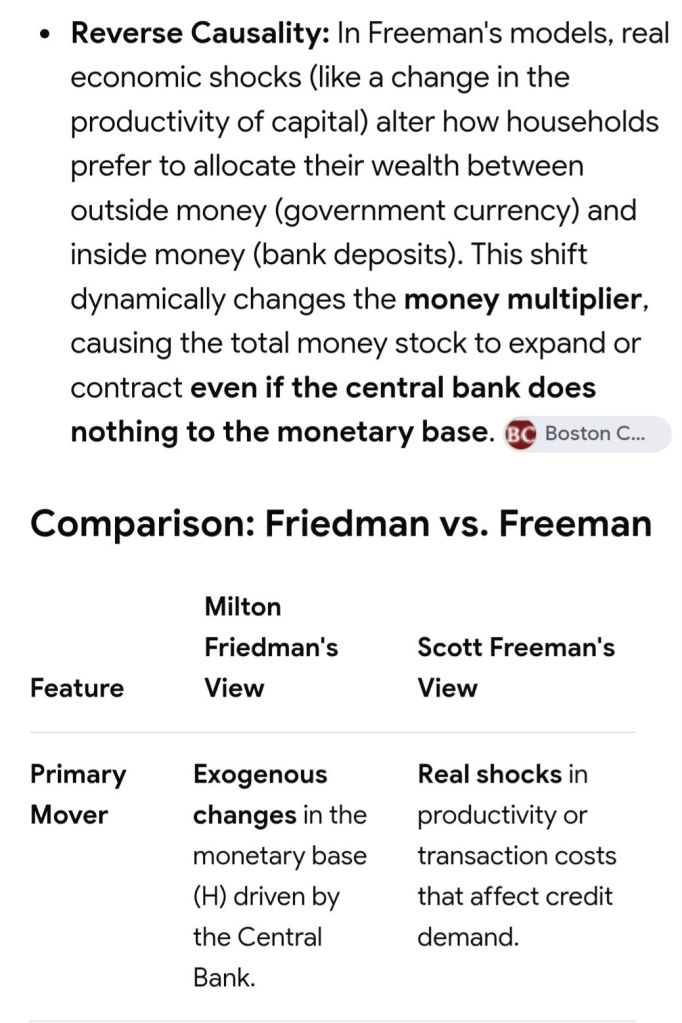
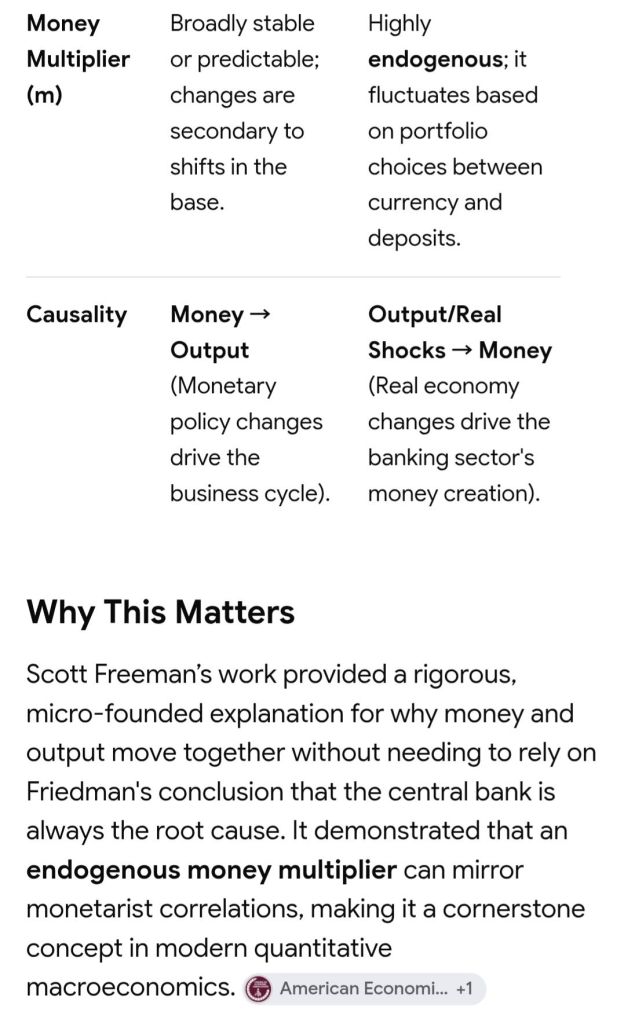
in applied price theory, business cycles, econometerics, economic history, history of economic thought, macroeconomics, Milton Friedman, monetarism, monetary economics Tags: monetary policy
24 Sep 2026 Leave a comment
in economic history, health economics Tags: The Great Enrichment, The Great Escape

The importance of clean water for public health is thoroughly uncontroversial in modern times. In the temporary absence of a safe water source, one recommendation is to boil water for drinking, which will kill off most bacteria and other pathogens. 668 more words
Tea drinking and mortality in pre-industrial England
24 Sep 2026 Leave a comment
in defence economics, economic history, International law, laws of war, politics - USA, war and peace Tags: World War II
‘No man ever came to the presidency of the United States under more difficult circumstances than does Harry S. Truman.’ (Uncredited Los Angeles Times columnist in April 1945) ‘Those French ought to be taken out and castrated.’ (One of Truman’s shooting-from-the-hip opinions) This is the tenth new book I’ve ordered from Amazon which has arrived […]
The Accidental President by A.J. Baime (2017)
24 Sep 2026 Leave a comment
in applied price theory, economic history, economics of regulation, income redistribution, law and economics, liberalism, Marxist economics, property rights, Public Choice, regulation, rentseeking, urban economics Tags: Germany, rent control

The Left wants to cure the city’s high housing costs by expropriating 225,000 apartments owned by large real estate corporations.
The Far-Left Wins Berlin’s Election on the Promise of Seizing Private Apartments
24 Sep 2026 Leave a comment
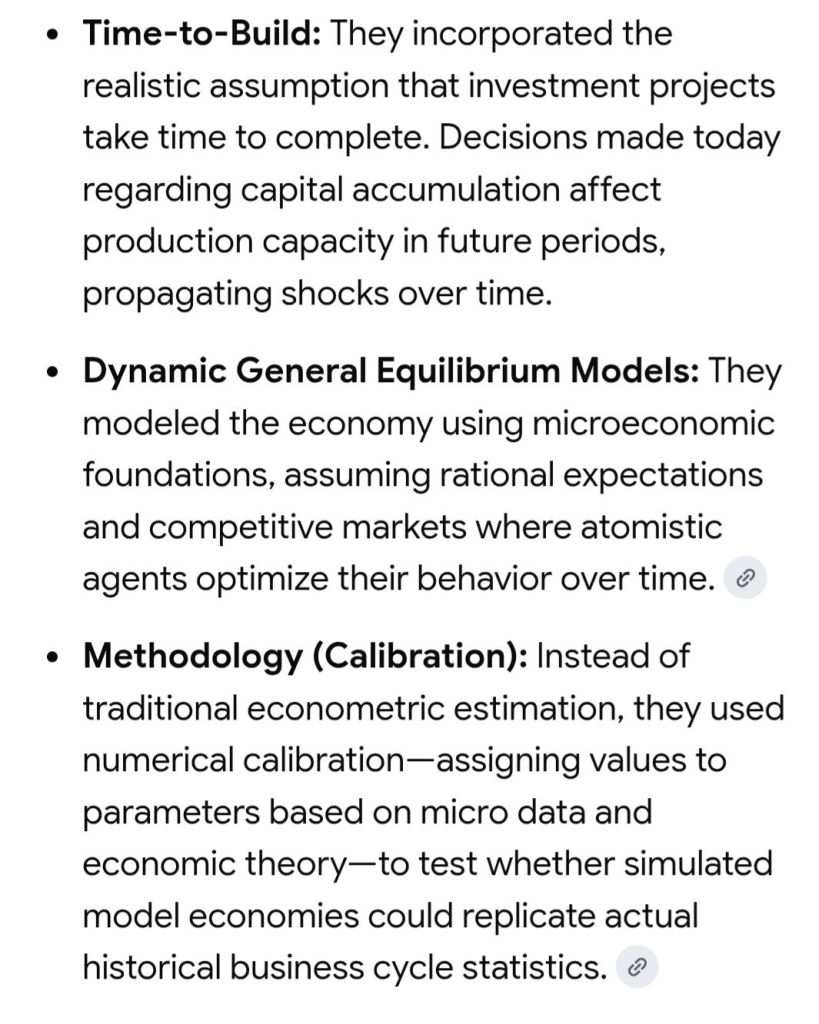
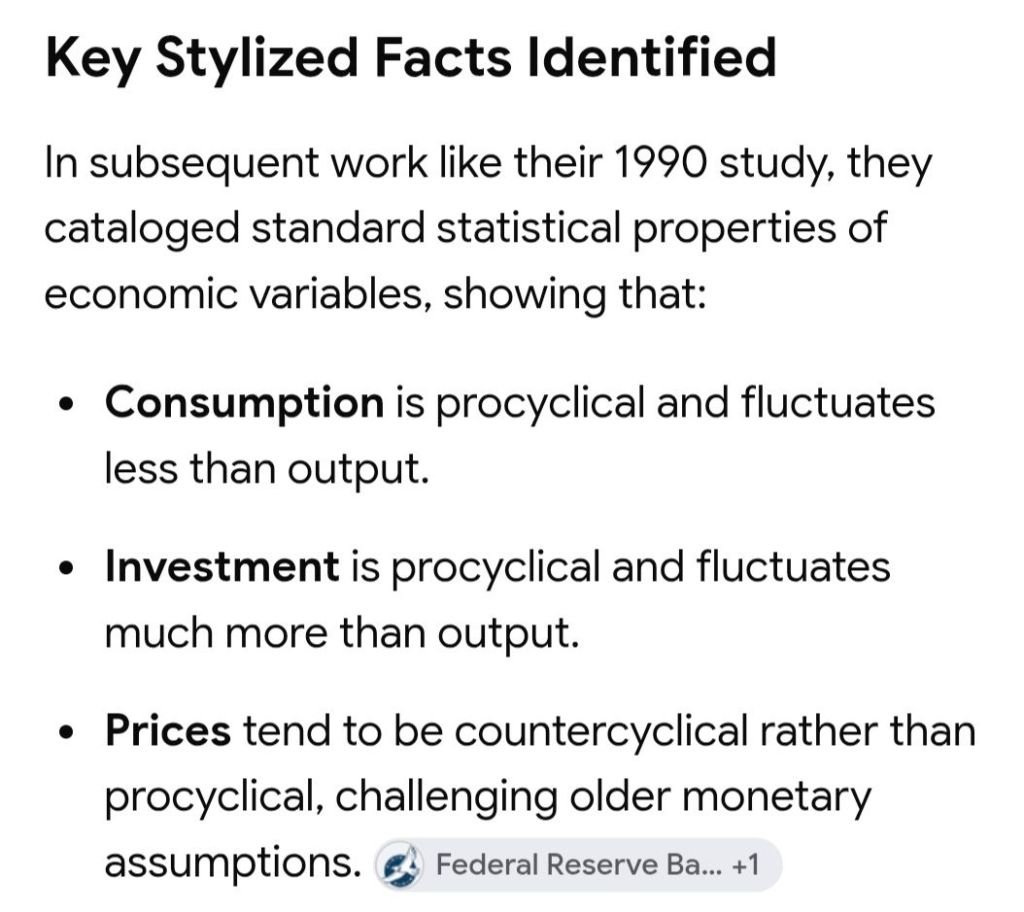
in business cycles, econometerics, economic history, Edward Prescott, history of economic thought, labour economics, labour supply, macroeconomics, monetary economics, unemployment

23 Sep 2026 Leave a comment
in applied price theory, economic history, economics of regulation, global financial crisis (GFC), great depression, great recession, history of economic thought, industrial organisation, macroeconomics, monetary economics, politics - New Zealand, politics - USA, Public Choice, rentseeking Tags: deposit insurance, monetary policy
21 February 2021
David Hargreaves
Manager, Policy Projects
Financial System Policy and Analysis Department
Reserve Bank of New Zealand
Wellington 6140
By email: dta@rbnz.govt.nz
Dear David,

| Finance company | Credit rating agency | Rating and outlook |
| Christian Savings Limited | Fitch Ratings | BB, Stable |
| FE Investments Limited (in receivership) | n/a | Credit ratings have been withdrawn |
| Finance Direct Limited | n/a | Exempt |
| General Finance Limited | Equifax | BB-, Positive |
| Gold Band Finance Limited | n/a | Exempt |
| Liberty Financial Limited | Standard & Poor’s | BBB-, Stable |
| Mutual Credit Finance Limited | n/a | Exempt |
| Xceda Finance Limited | Equifax | B, Stable |
Source: Reserve Bank
Yours sincerely,
New Zealand Taxpayers’ Union Inc.
Jim Rose
Research Fellow
Jim@taxpayers.org.nz
Aiyar, Shekhar & Charles W Calomiris & Tomasz Wieladek, 2015. “Bank Capital Regulation: Theory, Empirics, and Policy,” IMF Economic Review vol. 63 (4), pp. 955-983, November.
Akerlof, George A., and Paul M. Romer, 1993. “Looting: The Economic Underworld of Bankruptcy for Profit,” Brookings Papers on Economic Activity vol. 24(2), pp. 1-74.
Allen, Franklin, Elena Carletti, Itay Goldstein and Agnese Leonello 2018. “Government guarantees and financial stability”. Journal of Economic Theory, Vol 177 pp. 518-557.
Auditor-General 2011. The Treasury: Implementing and managing the Crown Retail Deposit Guarantee Scheme. Office of the Auditor-General, Wellington.
Bordo, Michael D. “The Lender of Last Resort: Alternative Views and Historical Experience.” Economic Review (Federal Reserve Bank of Richmond), Vol. 76/1, pp. 18-29, (January/February 1990).
Bordo, Michael D. 2018. “An Historical Perspective on the Quest for Financial Stability and the Monetary Policy Regime,” The Journal of Economic History, vol 78(2), pp. 319-357.
Bordo, Michael D. and Angela Redish. “Why did the Bank of Canada Emerge in 1935?” Journal of Economic History, Vol. XLVII, No. 2, June 1987, pp. 405-4 17.
Bordo, Michael D., Angela Redish and Hugh Rockoff, 2015. “Why didn’t Canada have a banking crisis in 2008 (or in 1930, or 1907, or …)?,” The Economic History Review, vol 68 (1), pp. 218-243.
Bryant, John. 1980. “A Model of Reserves, Bank Runs, and Deposit Insurance. Journal of Banking & Finance 4(4), pp. 335–44.
Calomiris, Charles W., “Banking Crises,” In New Palgrave Dictionary of Economics, 2nd Edition, edited by Steven Durlauf and Lawrence Blume, 2009.
Calomiris, Charles W., “Banking crises yesterday and today,” Financial History Review, Cambridge University Press, vol. 17 (1), pp. 3-12, April 2010.
Calomiris, Charles W., “Banking Crises and the Rules of the Game,” In Monetary and Banking History: Essays in Honour of Forrest Capie, edited by Geoffrey Wood, Terence Mills, and Nicholas Crafts, Routledge, 2011, pp. 88-132.
Calomiris, Charles W., “Banking Fragility of the United States, 1790-2009”. In Handbook of Key Global Financial Markets, Institutions, and Infrastructure, edited by Gerard Caprio, Charles W. Calomiris, and Larry Neal. London: Elsevier Press, 2013.
Calomiris, Charles W. and Sophia Chen, 2020. “The Spread of Deposit Insurance and the Global Rise in Bank Asset Risk since the 1970s,” Journal of Financial Intermediation, January.
Calomiris, Charles W. and Matthew Jaremski, 2016. “Deposit Insurance: Theories and Facts,” Annual Review of Financial Economics, vol. 8(1), pages 97-120, October.
Calomiris, Charles W., and E. N. White. “The Origins of Federal Deposit Insurance”, In The Regulated Economy: A Historical Approach to Political Economy, C. Goldin and G. Libecap (eds.), NBER, University of Chicago Press, 1994, pp. 145-188.
Carr, Jack, Frank Mathewson and Neil Quigley. “The Economics of Canadian Deposit Insurance.” Department of Economics Research Reports, 9502. London, ON: Department of Economics, University of Western Ontario (1995).
Demirgüç-Kunt, A., E.J. Kane, and L. Laeven (eds.), 2008, Deposit Insurance around the World: Issues of Design and Implementation (Cambridge, MA: MIT Press).
Diamond, Douglas W., and Philip H. Dybvig. 1983. “Bank Runs, Deposit Insurance, and Liquidity.” Journal of Political Economy 91(3), pp. 401–19.
Gorton, Gary, and Andrew Metrick. 2013. “The Federal Reserve and Panic Prevention: The Roles of Financial Regulation and Lender of Last Resort.” Journal of Economic Perspectives, 27 (4): 45-64.
Gorton, Gary, and Ellis Tallman, Fighting Financial Crises: Learning from the Past. Chicago: University of Chicago Press, 2018.
Gorton, Gary., and Andrew Winton. “Financial Intermediation”. In Constantinides, George, Milton Harris, and Rene Stulz (eds). The Handbook of the Economics of Finance Elsevier Science, 2003 pp 431-552.
Gropp, Reint., Christian Gruendl, and Andre Guettler. “The Impact of Public Guarantees on Bank Risk-Taking: Evidence from a Natural Experiment”. Review of Finance, Volume 18, Issue 2, April 2014, pp. 457–488.
Hane, George. “The Banking Crises of the 1980s and Early 1990s: Summary and Implications”. FDIC Banking Review, 1998 Vol. 11, No. 1, pp. 1-21.
Iyer R., Jensen, TL., Johannesen, N., and Sheridan, A. 2019. “The distortive effects of too-big-to-fail: evidence from the Danish market for retail deposits”, The Review of Financial Studies, Vol:32, pp. 4653-4695.
Kareken, John H., and Neil Wallace. 1978. “Deposit Insurance and Bank Regulation: A Partial-Equilibrium Exposition.” Journal of Business 51(July), pp. 413–38.
Laeven, Luc, 2013. “Corporate Governance: What’s Special About Banks?,” Annual Review of Financial Economics, vol. 5(1), pp. 63-92, November.
Lambert, C., F. Noth, and U. Schüwer (2014). “How do insured deposits affect bank risk? Evidence from the 2008 Emergency Economic Stabilization Act. Journal of Financial Intermediation 29 (October), pp. 81–102.
Martin, Christopher., Manju Puri and Alexander Ufier, 2018. “Deposit Inflows and Outflows in Failing Banks: The Role of Deposit Insurance,” NBER Working Papers 24589, National Bureau of Economic Research.
O’ Sullivan, Fran. “Vital witness missing at SCF trial”. New Zealand Herald, 15 October 2014.
Reserve Bank 2019. Safeguarding the future of our financial system In-principle decisions and follow-up questions on: The role of the Reserve Bank and how it should be governed Consultation Document 2A Phase 2 of the Reserve Bank Act Review June 2019. Reserve Bank of New Zealand, Wellington.
Rolick, A., 2010. “Interview with Thomas Sargent”. The Region, Federal Bank of Minneapolis, vol. 24, issue Sep, pp. 26-39.
Tarullo, Daniel K. “Financial Regulation: Still Unsettled a Decade After the Crisis.” The Journal of Economic Perspectives 33, no. 1 (2019): 61–80.
Celebrating humanity's flourishing through the spread of capitalism and the rule of law
Celebrating humanity's flourishing through the spread of capitalism and the rule of law
Celebrating humanity's flourishing through the spread of capitalism and the rule of law
Celebrating humanity's flourishing through the spread of capitalism and the rule of law
Celebrating humanity's flourishing through the spread of capitalism and the rule of law
Celebrating humanity's flourishing through the spread of capitalism and the rule of law
Celebrating humanity's flourishing through the spread of capitalism and the rule of law
Celebrating humanity's flourishing through the spread of capitalism and the rule of law
Celebrating humanity's flourishing through the spread of capitalism and the rule of law
A History of the Alt-Right
Econ Prof at George Mason University, Economic Historian, Québécois
Celebrating humanity's flourishing through the spread of capitalism and the rule of law
Scholarly commentary on law, economics, and more
Beatrice Cherrier's blog
Celebrating humanity's flourishing through the spread of capitalism and the rule of law
Celebrating humanity's flourishing through the spread of capitalism and the rule of law
Celebrating humanity's flourishing through the spread of capitalism and the rule of law
Why Evolution is True is a blog written by Jerry Coyne, centered on evolution and biology but also dealing with diverse topics like politics, culture, and cats.
Celebrating humanity's flourishing through the spread of capitalism and the rule of law
A rural perspective with a blue tint by Ele Ludemann
DPF's Kiwiblog - Fomenting Happy Mischief since 2003
Celebrating humanity's flourishing through the spread of capitalism and the rule of law
The world's most viewed site on global warming and climate change
Tim Harding's writings on rationality, informal logic and skepticism
A window into Doc Freiberger's library
Let's examine hard decisions!
Commentary on monetary policy in the spirit of R. G. Hawtrey
Thoughts on public policy and the media
Celebrating humanity's flourishing through the spread of capitalism and the rule of law
Politics and the economy
A blog (primarily) on Canadian and Commonwealth political history and institutions
Reading between the lines, and underneath the hype.
Economics, and such stuff as dreams are made on
"The British constitution has always been puzzling, and always will be." --Queen Elizabeth II
Celebrating humanity's flourishing through the spread of capitalism and the rule of law
Celebrating humanity's flourishing through the spread of capitalism and the rule of law
WORLD WAR II, MUSIC, HISTORY, HOLOCAUST
Undisciplined scholar, recovering academic
Celebrating humanity's flourishing through the spread of capitalism and the rule of law
Res ipsa loquitur - The thing itself speaks
In Hume’s spirit, I will attempt to serve as an ambassador from my world of economics, and help in “finding topics of conversation fit for the entertainment of rational creatures.”
Researching the House of Commons, 1832-1868
Reflections on books and art
Posts on the History of Law, Crime, and Justice
Celebrating humanity's flourishing through the spread of capitalism and the rule of law
Exploring the Monarchs of Europe


Recent Comments