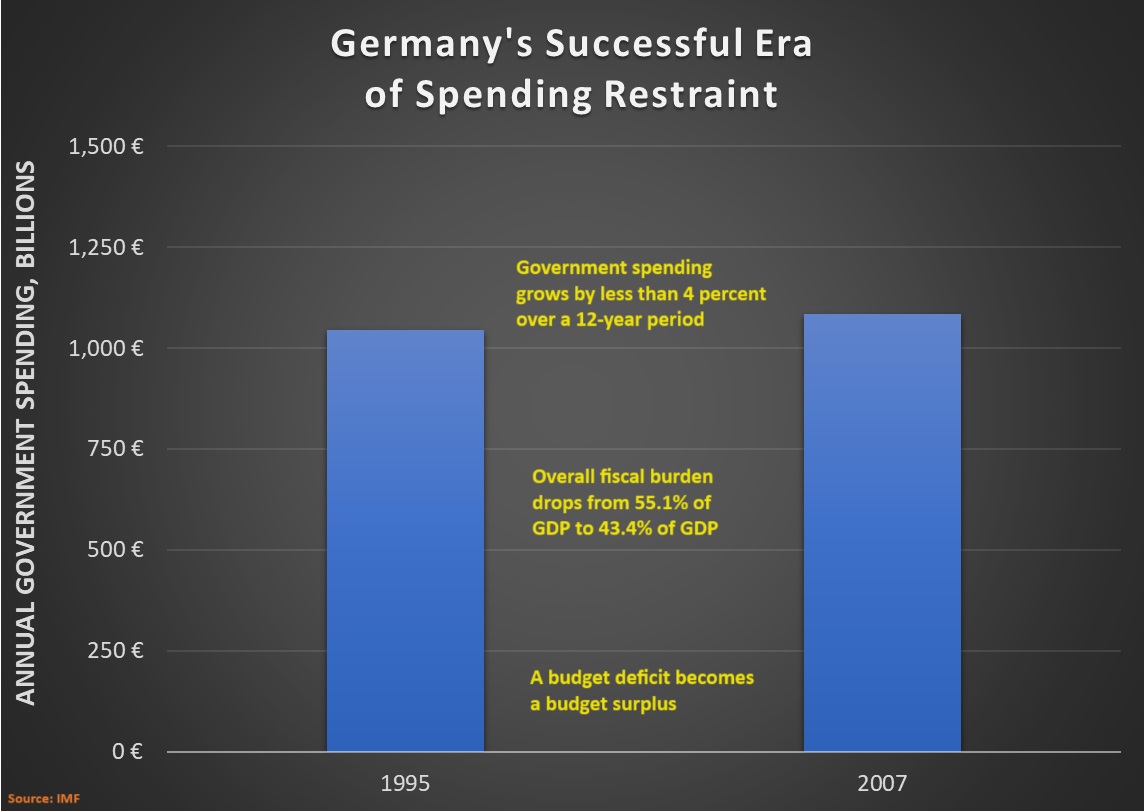
A lot has happened if you look at the past 100 years of German economic policy. Hyperinflation leading to Hitler’s National Socialists taking power. An impressive free-market revival after World War II. A growing welfare state after the imposition of a value-added tax in the 1960s. Some semi-impressive spending restraint starting in the mid-1990s. Very […]
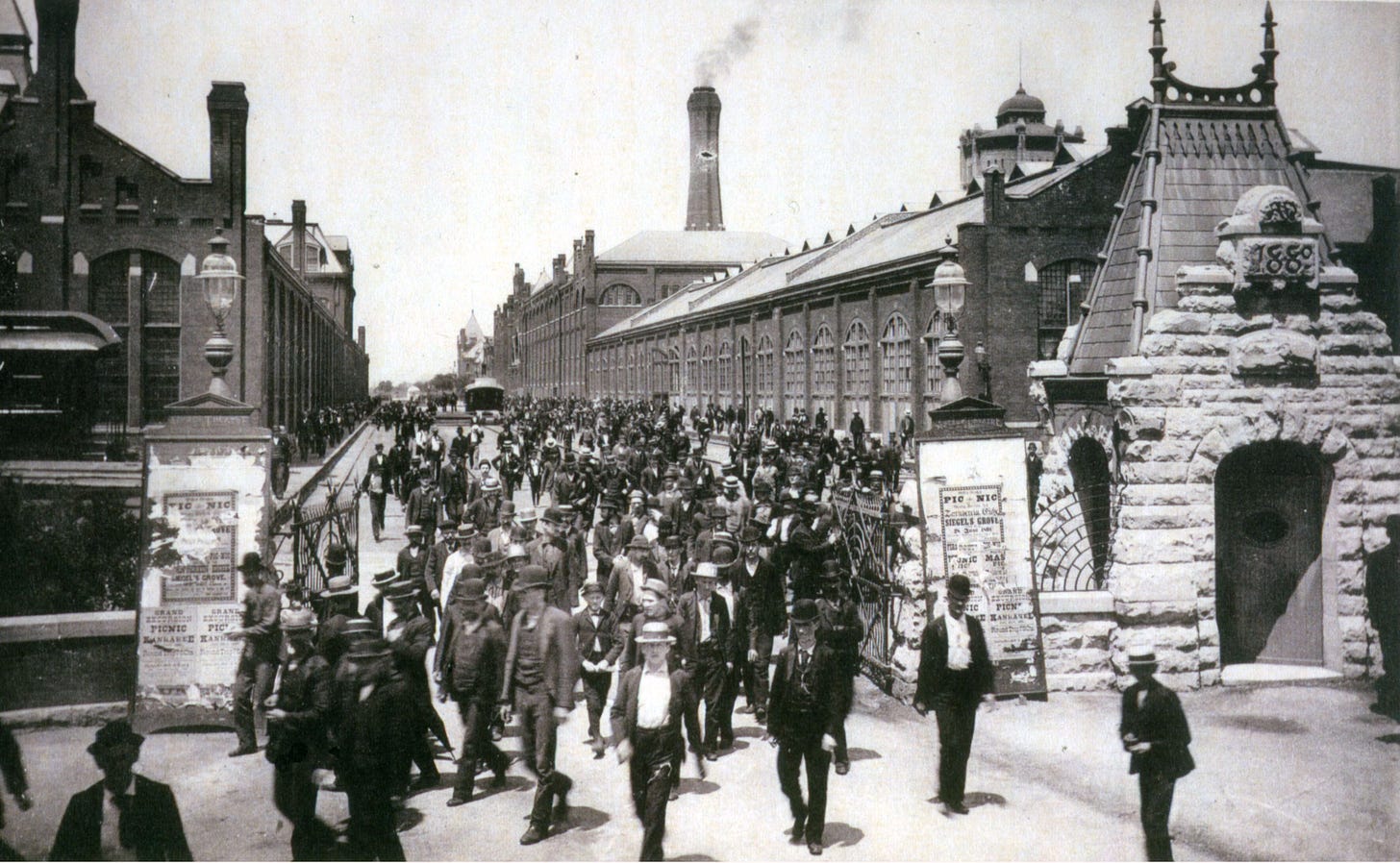
A quarter century ago, economist Price Fishback published “Operations of ‘Unfettered’ Labor Markets: Exit and Voice in American Labor Markets at the Turn of the Century” 1,762 more words
From a forthcoming paper by Thomas Drechsel: This paper combines new data and a narrative approach to identify variation in political pressure on the Federal Reserve. From archival records, I build a data set of personal interactions between U.S. Presidents and Fed officials between 1933 and 2016. Since personal interactions do not necessarily reflect political…
I often get asked when the United States will suffer a Greek-style fiscal crisis. My answer is always “I don’t know,” though I freely admit we are heading in that direction. My lack of specificity isn’t merely because economists are lousy forecasters. I tell people it’s all about investor sentiment, and it’s hard to know […]
(Zbigniew Brzezinski in 1987. He had considerable influence in global affairs, both before and long after his official tour of duty in the White House.Credit) When I was a graduate student in the early 1970s I was enrolled in a 20th century diplomatic history course. The professor, a Holocaust survivor from Eastern Europe with a […]
In my own family, the reverence that we have for the dishwasher (and other time-saving devices) is such that we have a cat named “Josephine” after the Josephine Cochrane–the inventor of the first commercially viable dishwasher. (Also named because, as a kitten, she liked to forage in the back of the dishwasher.) Erin Braid provides…
Wayne Jackson writes – The 50th anniversary of New Zealand’s Household Economic Survey (HES) provides a unique vantage point to assess how far households have come in terms of income, expenditure, and wealth accumulation. Comparing 1974 with 2024 reveals a story of rising prosperity, shifting household structures, and widening disparities. From dual‑income households to skyrocketing […]
The Constitution of Innovation The continent faces two options. By the middle of this century, it could follow the path of Argentina: its enormous prosperity a distant memory; its welfare states bankrupt and its pensions unpayable; its politics stuck between extremes that mortgage the future to save themselves in the present; and its brightest gone…
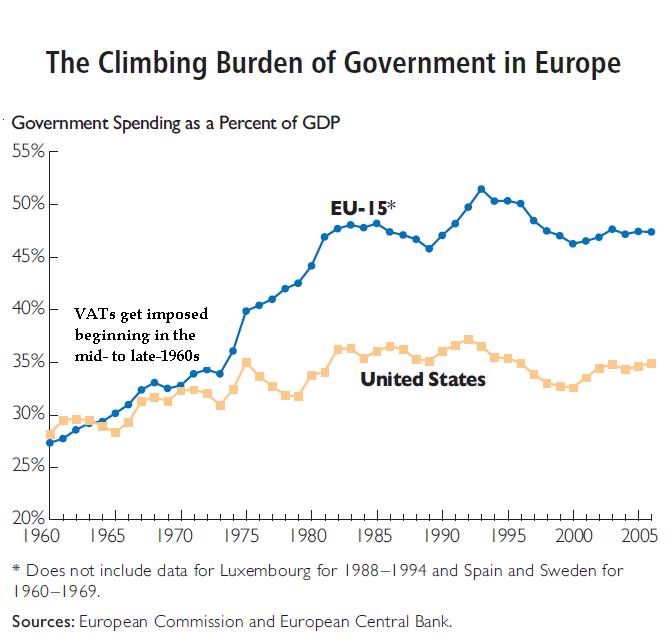
The case against the value-added tax (VAT) is not complicated. Simply stated, this hidden type of national sales tax was a key precursor for the expansion of the European welfare state. As you can see in the chart, the burden of government spending in Europe after World War II was similar to the size of […]
The growth of industry disrupted old economic patterns but produced undreamed-of wealthBy Phil Gramm and Michael Solon. Excerpts:”From the colossal changes wrought by the Industrial Revolution to the Digital Revolution of the last quarter-century, improvements in technology have created an array of jobs that far exceeded—in quantity and quality—the ones eliminated, elevating standards of living.””the…
Why Evolution is True is a blog written by Jerry Coyne, centered on evolution and biology but also dealing with diverse topics like politics, culture, and cats.
“We do not believe any group of men adequate enough or wise enough to operate without scrutiny or without criticism. We know that the only way to avoid error is to detect it, that the only way to detect it is to be free to inquire. We know that in secrecy error undetected will flourish and subvert”. - J Robert Oppenheimer.



 Utopia, you are standing in it!
Recent Comments